Key Takeaways
- AI is dramatically improving diagnostic accuracy and speed in Indian hospitals, from detecting early signs of cancer to identifying diabetic retinopathy.
- The integration of AI is making advanced medical insights more accessible, particularly in remote and underserved regions of India.
- Challenges remain, including data privacy concerns, regulatory frameworks, and the need for extensive clinician training.
- New AI-powered tools are not just aiding doctors but are also empowering patients with better understanding and early intervention opportunities.
AI’s Precision in Early Disease Detection
Imagine a future where diseases are caught not when they become symptomatic, but when they are mere whispers in your body’s intricate symphony. This future is rapidly unfolding in India, thanks to the burgeoning integration of Artificial Intelligence (AI) into healthcare diagnostics. Across major cities and increasingly in Tier 2 and Tier 3 towns, AI algorithms are being trained on vast datasets to identify subtle patterns invisible to the human eye.
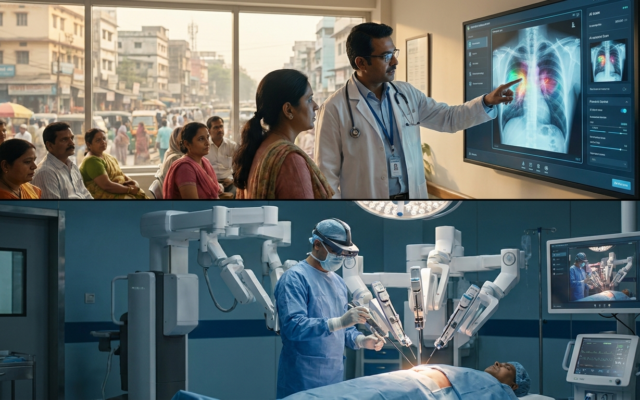
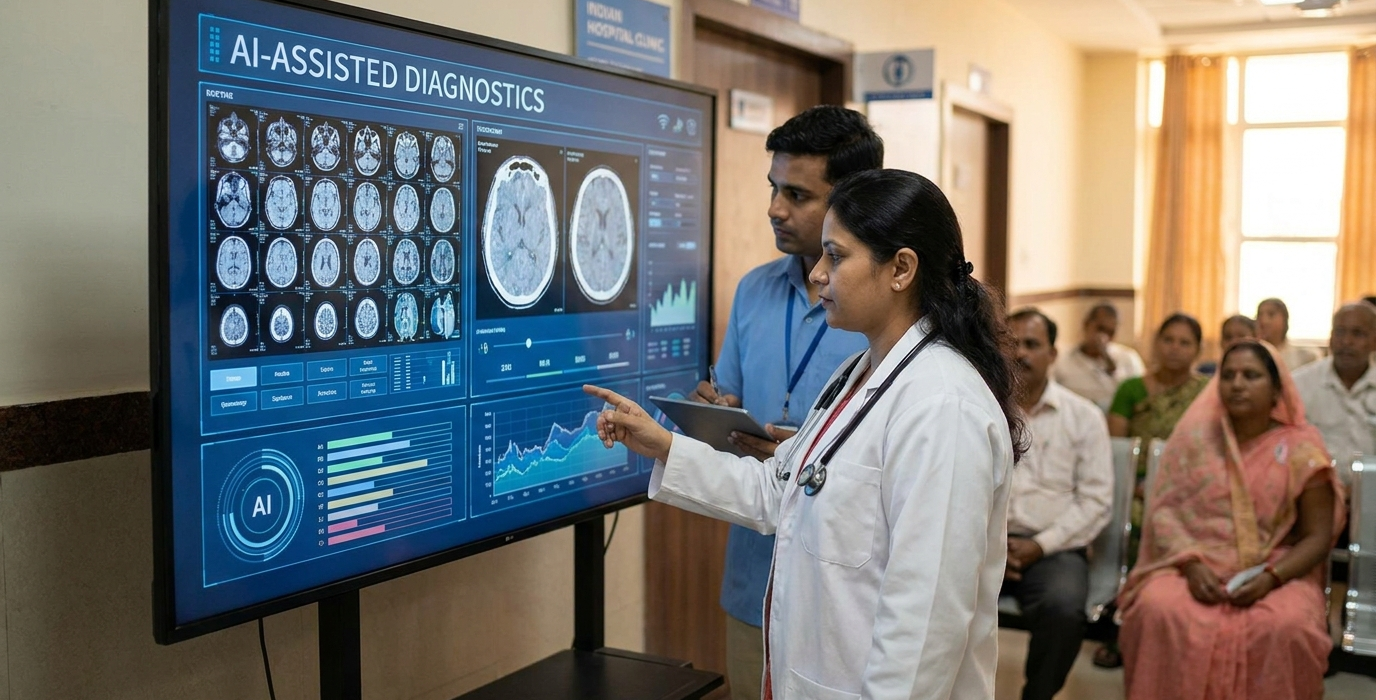
One of the most significant impacts is in the realm of medical imaging. AI is proving exceptionally adept at sifting through X-rays, CT scans, and MRIs with remarkable speed and accuracy. For instance, AI models can now flag suspicious lung nodules in chest X-rays with a sensitivity that sometimes surpasses that of experienced radiologists, allowing for earlier intervention in potential cases of lung cancer.
Similarly, in ophthalmology, AI-powered tools are revolutionizing the screening for diabetic retinopathy, a leading cause of blindness among diabetics. These systems can analyze retinal fundus images to detect early signs of damage, often before a patient experiences any vision loss. This is particularly crucial in a country like India, which has a high prevalence of diabetes. Early detection through AI means timely treatment, preserving sight for millions.
A New Era for Radiology
Radiology departments are at the forefront of this AI-driven transformation. The sheer volume of imaging data generated daily can be overwhelming. AI acts as a powerful co-pilot, prioritising scans that show potential abnormalities and highlighting areas of concern for the human radiologist to review. This not only reduces the workload but also minimises the risk of missed diagnoses due to fatigue or oversight. Hospitals in Bengaluru and Chennai have reported a significant reduction in turnaround times for critical scan interpretations since implementing AI-assisted workflows. The ability to process more scans faster translates directly into quicker treatment plans and better patient outcomes. It’s a tangible leap forward in making advanced diagnostics accessible to a larger population.
Democratising Access to Specialist Insights
One of the most profound implications of AI in Indian healthcare is its potential to bridge the vast urban-rural divide in medical expertise. Specialist doctors, particularly in fields like oncology, cardiology, and neurology, are concentrated in metropolitan centres. This leaves many in remote villages with limited access to advanced diagnostic capabilities and specialist opinions. AI is changing this paradigm by bringing sophisticated analytical power directly to local clinics and district hospitals.
Imagine a primary health centre in a remote district of Rajasthan, equipped with an AI-powered ECG analysis tool. This tool can interpret an ECG in real-time, flagging potential cardiac abnormalities and providing an initial assessment that can be relayed to a cardiologist in a city hundreds of kilometres away. This “virtual specialist” capability is a game-changer, enabling early triage and intervention that can save lives.
Furthermore, AI is being used to analyse pathology slides and genetic data. In regions where access to advanced genetic sequencing and expert interpretation is scarce, AI can process this complex data, identifying predispositions to certain diseases or suggesting tailored treatment pathways. This democratisation of expertise means that a patient in a small town in Uttar Pradesh could potentially receive diagnostic insights as advanced as someone in a major metro hospital.
AI as a Catalyst for Remote Healthcare
Telemedicine platforms are increasingly incorporating AI to enhance their diagnostic support. These platforms connect patients in underserved areas with healthcare providers remotely. AI algorithms can pre-screen patient data, summarise key findings, and even suggest potential diagnoses, making the remote consultation more efficient and effective. This is a critical step towards achieving universal healthcare access, a long-standing goal for India.
AI in Pathology: Unveiling Microscopic Details
The microscopic world of pathology, where diseases are diagnosed by examining tissues and cells, is another area witnessing a significant AI-driven revolution. Traditionally, this involves highly skilled pathologists meticulously scrutinising glass slides under a microscope. While human expertise remains paramount, AI is stepping in as a powerful assistant, enhancing both the speed and accuracy of pathological diagnoses.
AI algorithms are being trained to identify cancerous cells, grade tumours, and detect specific biomarkers with remarkable precision. For instance, in detecting breast cancer, AI can analyse mammograms and subsequent biopsy slides, highlighting areas of suspicion and quantifying the extent of cancerous cell proliferation. This assists pathologists by drawing their attention to critical regions, reducing the chances of subtle abnormalities being overlooked.
Beyond cancer, AI is making strides in diagnosing infectious diseases and inflammatory conditions. By analysing patterns in cellular morphology and tissue architecture, AI can help differentiate between various types of infections or inflammatory responses, leading to more targeted treatments. This is particularly beneficial in managing the diverse range of infectious diseases prevalent in India.
Speeding Up Turnaround Times
The turnaround time for pathology reports can often be a bottleneck in patient care. AI can significantly accelerate this process. By automating the initial screening and analysis of large volumes of slides, AI can help pathologists focus their efforts on complex cases and finalising diagnoses. This speed improvement is crucial for patients awaiting critical information for their treatment decisions. Hospitals in Ahmedabad have begun implementing AI-powered digital pathology platforms, aiming to reduce biopsy analysis time by up to 30% in the coming year.
Surprising Insights: Beyond the Obvious
While AI’s role in detecting major diseases like cancer and heart conditions is widely discussed, its applications in less obvious areas are equally transformative. One such area is mental health, where AI is being used to analyse speech patterns and text inputs to detect early signs of depression and anxiety. By identifying subtle changes in tone, pace, and word choice, AI can flag individuals who may be at risk, prompting early intervention and support. This is a critical development for a country like India, where mental health stigma can be a significant barrier to seeking help.
Another surprising application is in the field of nutritional diagnostics. AI algorithms can analyse a patient’s dietary habits, genetic predispositions, and even microbiome data to identify potential nutrient deficiencies or imbalances. This goes beyond simple blood tests, offering a more holistic and personalised approach to dietary recommendations. Imagine an AI system that can suggest specific dietary adjustments for a patient in Kerala based on their susceptibility to certain digestive issues, optimizing their gut health and overall well-being.
The Power of Predictive Analytics
AI’s predictive capabilities are not just about diagnosing existing conditions but also about anticipating future health risks. By analysing a patient’s comprehensive medical history, lifestyle data, and even environmental factors, AI models can predict their likelihood of developing chronic diseases like diabetes or cardiovascular issues in the future. This allows for proactive lifestyle interventions and preventive care strategies, shifting the focus from treatment to prevention.
Navigating the Challenges: Data, Ethics, and Training
Despite the immense promise, the widespread adoption of AI in Indian healthcare is not without its hurdles. Data privacy and security are paramount concerns. The sensitive nature of health information requires robust frameworks to ensure patient data is protected from breaches and misuse. The existing legal and regulatory landscape in India is still evolving to adequately address these AI-specific challenges.
Another significant challenge is the need for rigorous validation and regulatory approval. AI algorithms must be thoroughly tested and proven safe and effective before they can be deployed in clinical settings. This involves extensive clinical trials and a clear pathway for regulatory bodies to assess and approve these novel technologies. Ensuring that AI tools are unbiased and equitable across diverse patient populations, including those from different socio-economic backgrounds and geographical regions, is also a critical ethical consideration.
The Human Element: Training and Trust
Furthermore, the successful integration of AI hinges on training healthcare professionals. Doctors, nurses, and technicians need to be educated on how to use AI tools effectively, interpret their outputs, and understand their limitations. Building trust between clinicians and AI systems is crucial; AI should be viewed as a collaborator, not a replacement, for human expertise. The cultural context of healthcare in India, where patient-doctor relationships are deeply valued, means that AI must be implemented in a way that complements, rather than disrupts, these existing dynamics. The aim is to enhance, not erode, the human touch in medicine.
The Future is Here: AI-Powered Patient Empowerment
The ultimate beneficiary of AI in healthcare is the patient. Beyond just faster and more accurate diagnoses, AI is empowering individuals to take a more active role in their health management. Wearable devices integrated with AI algorithms can now provide continuous monitoring of vital signs, alerting users and their doctors to potential issues long before they become critical. This shifts the focus from reactive treatment to proactive wellness.
Consider a patient managing a chronic condition like hypertension in Mumbai. An AI-powered app can analyse their daily readings, medication adherence, and lifestyle data (diet, exercise) to provide personalised feedback and predict potential blood pressure spikes. It can also offer gentle reminders and motivational nudges, fostering better self-care habits. This level of personalised, continuous support was unimaginable even a few years ago.
Personalised Medicine and Beyond
AI is also paving the way for true personalised medicine. By analysing a patient’s genetic makeup, lifestyle, and medical history, AI can help doctors tailor treatment plans with unprecedented precision. This means selecting the most effective drugs and therapies for an individual, minimising side effects, and maximising treatment success. This approach moves away from one-size-fits-all medicine towards a future where healthcare is uniquely designed for you.
“AI isn’t just a tool for doctors; it’s becoming a vital partner in making healthcare more accessible, accurate, and personalised for every Indian, irrespective of where they live.”
Frequently Asked Questions
What are the biggest benefits of AI in Indian healthcare diagnostics?
The key benefits include improved diagnostic accuracy, faster turnaround times for results, early detection of diseases like cancer and diabetic retinopathy, and democratisation of access to specialist-level insights, especially in remote areas. AI also contributes to reduced healthcare costs in the long run by preventing advanced disease stages.
Are AI diagnostic tools replacing doctors in India?
No, AI tools are designed to augment, not replace, doctors. They act as sophisticated assistants, helping clinicians process vast amounts of data, identify subtle patterns, and prioritise cases. The final diagnosis and treatment decisions remain with the human medical professionals, who provide the crucial context, empathy, and ethical judgment.
What are the main challenges to widespread AI adoption in Indian healthcare?
The primary challenges include ensuring data privacy and security, establishing clear regulatory frameworks for AI medical devices, the high cost of implementation, and the need for extensive training of healthcare professionals. Addressing potential biases in AI algorithms to ensure equitable care is also a critical concern.
How is AI helping to improve access to healthcare in rural India?
AI is crucial in bridging the rural-urban healthcare gap by enabling remote diagnostics. AI-powered tools can analyse medical images and data at local clinics, providing preliminary interpretations that can be shared with specialists in urban centres. This allows for faster triage and referral, significantly improving access to timely medical advice for populations far from major hospitals.
Can AI help patients manage chronic diseases better?
Absolutely. AI-powered applications and wearables can offer continuous monitoring of vital signs, medication adherence, and lifestyle factors. They provide personalised feedback, predictive insights into potential health issues, and motivational support, empowering patients to manage chronic conditions like diabetes, hypertension, and heart disease more effectively from their homes.