Key Takeaways
- AI-powered precision farming tools are offering Indian farmers unprecedented insights into soil health, weather patterns, and pest detection, leading to significant yield increases.
- From AI-driven drone imagery analysis to smart irrigation systems, the adoption of these technologies is becoming more accessible and affordable, even for smallholder farmers.
- Specific AI applications in 2026 are optimizing resource allocation, reducing waste, and enhancing crop resilience against climate change impacts, vital for India’s food security.
- The integration of AI is fostering a new generation of tech-savvy farmers, creating new employment opportunities and driving rural economic growth.
Precision Farming Takes Root: AI’s Groundbreaking Impact on Indian Fields
The hum of drones is becoming as familiar in Indian farmlands as the rustle of crops. In 2026, Artificial Intelligence (AI) is no longer a futuristic concept for agriculture; it’s a tangible reality reshaping how farmers cultivate their land, from the fertile plains of Punjab to the rain-fed regions of Karnataka. We’re witnessing a profound shift from traditional, often guesswork-driven methods, to data-backed, highly efficient practices. This transformation is crucial for India, a nation where agriculture remains a cornerstone of the economy and sustains millions.
AI-powered tools are offering farmers unprecedented insights. Imagine knowing exactly when and where to water your crops, or identifying a pest infestation before it devastates your harvest. This is the promise of precision farming, and AI is delivering on it. By analyzing vast datasets – from satellite imagery and weather forecasts to soil sensor readings – AI algorithms can predict crop health, disease outbreaks, and optimal harvest times with remarkable accuracy. This allows for targeted interventions, minimizing the use of water, fertilizers, and pesticides, leading to both cost savings and environmental benefits. The days of broad-stroke application are rapidly fading.
The accessibility of these technologies is also a game-changer. While initially perceived as expensive, various startups and government initiatives are making AI-driven solutions more affordable and user-friendly. This means that even smallholder farmers, who form the backbone of Indian agriculture, can now leverage these advanced tools to improve their livelihoods. We are seeing a democratisation of cutting-edge agricultural technology. The impact is visible in the improved yields and reduced losses reported across various states.
The Eye in the Sky: AI-Powered Drones and Satellite Imagery
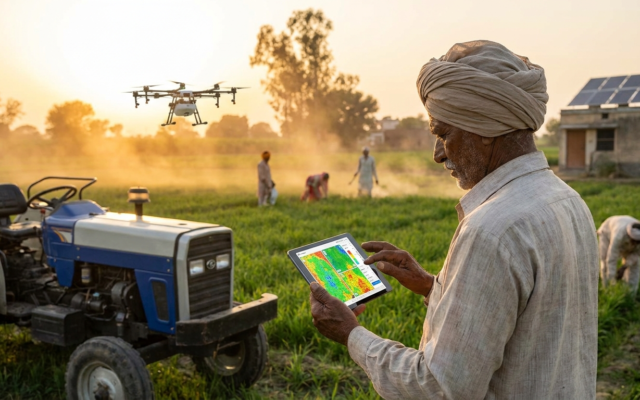
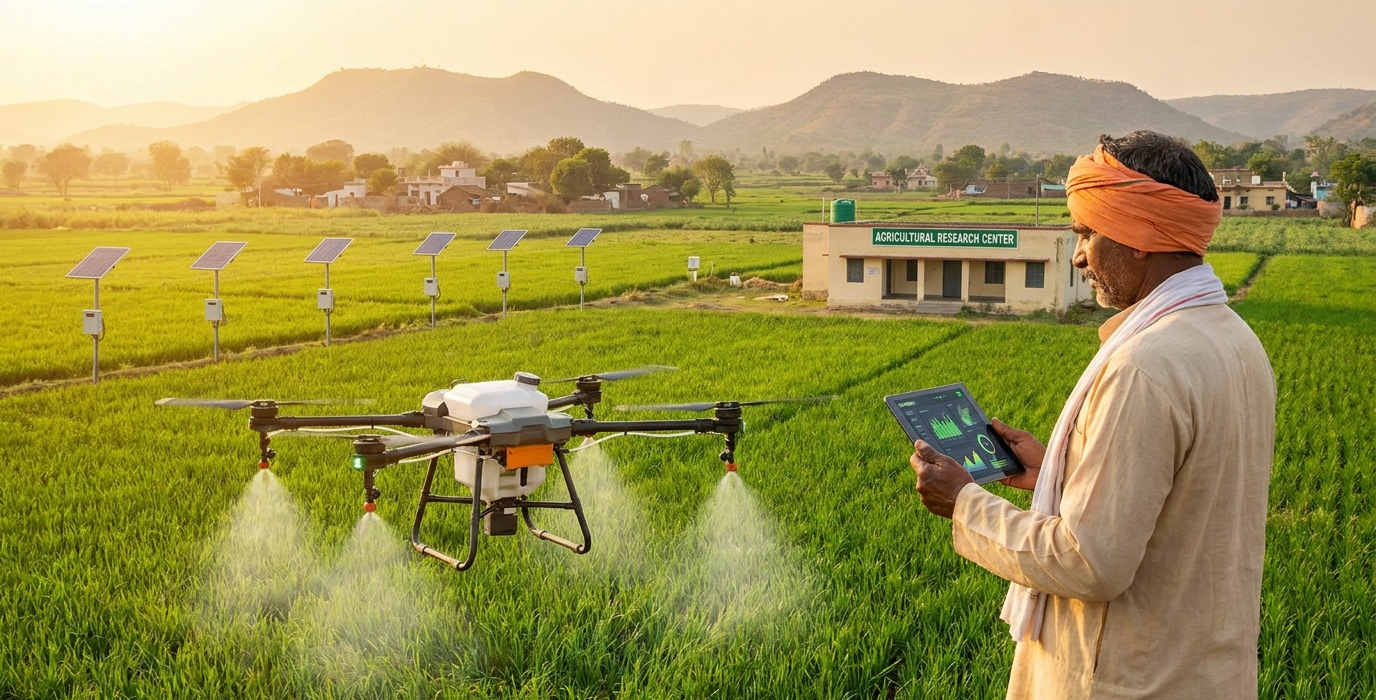
One of the most visible manifestations of AI in Indian agriculture in 2026 is the widespread use of drones and satellite imagery. These technologies, coupled with sophisticated AI algorithms, provide farmers with a bird’s-eye view of their fields, offering insights previously unimaginable. Drones equipped with multispectral cameras can capture data beyond what the human eye can see, identifying subtle variations in plant health, nutrient deficiencies, and water stress. This allows for incredibly precise application of fertilizers and pesticides, only where and when they are needed.
AI algorithms then process this raw imagery, transforming it into actionable intelligence. We’re talking about identifying specific patches of a field that require more nitrogen, or pinpointing areas where fungal infections are beginning to spread. This level of detail enables targeted interventions, drastically reducing the overall quantity of inputs required. For example, a farmer in Maharashtra might receive an alert via their smartphone indicating a specific section of their sugarcane field is showing early signs of a pest, along with a recommended course of action.
Furthermore, satellite imagery, analyzed by AI, can monitor vast agricultural landscapes, tracking crop growth patterns over time and predicting potential yield. This is invaluable for large-scale farming operations and for government agencies monitoring food security. The sheer volume of data processed by AI allows for early detection of widespread issues, such as drought stress or disease outbreaks, enabling proactive measures. This proactive approach is key to mitigating the effects of unpredictable weather.
Smart Irrigation and Resource Management: Conserving Water with AI
Water scarcity is a growing concern across India, and AI is stepping in as a critical ally in managing this precious resource. Smart irrigation systems, powered by AI, are revolutionizing how water is used in agriculture. These systems go far beyond simple timers; they integrate real-time data from soil moisture sensors, weather forecasts, and even the specific water needs of different crops at various growth stages. AI algorithms then precisely control irrigation schedules, ensuring that crops receive the optimal amount of water, no more and no less.
Consider a farmer in Rajasthan, a region known for its arid climate. An AI-powered irrigation system can analyze the soil’s moisture content, predict the likelihood of rainfall in the coming days, and factor in the crop’s current water requirements. Based on this comprehensive analysis, the system will automatically adjust watering cycles, preventing over-watering, which can lead to root rot and nutrient leaching, and under-watering, which stunts growth. This intelligent approach can lead to water savings of up to 30-40% in many cases.
The benefits extend beyond just water conservation. By ensuring consistent and appropriate hydration, AI-driven irrigation promotes healthier root development, leading to stronger plants and ultimately, higher yields. It also minimizes the energy costs associated with pumping water, as irrigation only occurs when and where it’s truly necessary. We’re seeing AI move beyond just observing to actively managing critical farm operations, making our agriculture more resilient and sustainable.
Predictive Analytics for Crop Health: Battling Pests and Diseases
The constant battle against pests and diseases is one of the most challenging aspects of farming. In 2026, AI is transforming this fight from a reactive skirmish to a proactive strategy. Predictive analytics, powered by AI, can now forecast the likelihood of pest infestations and disease outbreaks with a high degree of accuracy. This is achieved by analyzing historical data, current weather conditions, crop types, and even local ecological factors.
For instance, AI models can predict that a specific combination of high humidity and rising temperatures in Gujarat might create ideal conditions for a particular type of fungal blight to affect groundnuts. This prediction can be sent as an early warning to farmers in the affected region. Armed with this foresight, farmers can implement preventative measures, such as applying targeted, low-impact treatments or adjusting their planting schedules, before the problem even manifests significantly. This proactive approach is far more effective and less costly than treating an established infestation.
Moreover, AI-powered image recognition can be used to identify pests and diseases from photographs taken by farmers or drones. Users can upload an image of a suspicious-looking leaf or insect, and the AI can instantly identify the problem and suggest appropriate, often organic, solutions. This democratizes expert diagnostic capabilities, making them accessible to farmers in remote areas. This is a significant step towards reducing crop losses and ensuring food security.
Optimizing Yields and Varieties: AI in Crop Selection and Planning
Choosing the right crop and variety for a specific region is a critical decision that impacts profitability and sustainability. AI is now providing farmers with data-driven recommendations for crop selection and planting strategies, optimizing for maximum yield and resilience. By analyzing factors such as soil type, historical weather patterns, market demand, and even the predicted impact of climate change, AI algorithms can suggest the most suitable crops and varieties for a particular plot of land.
Imagine a farmer in Tamil Nadu looking to diversify their crops. An AI platform could analyze their land’s characteristics, local rainfall patterns, and current market prices for various produce. It might then recommend a drought-resistant variety of millets that is also in high demand, rather than traditional rice, offering a potentially higher return on investment and better water efficiency. This goes beyond simple recommendations; AI can simulate different planting densities and timings to identify the optimal strategy.
This intelligent approach to crop planning helps mitigate risks associated with unpredictable weather and fluctuating market conditions. It ensures that farmers are planting crops that are best suited to their environment and have the highest chance of a successful harvest. This is particularly important as we navigate increasingly variable climate conditions. The goal is to maximize output while minimizing environmental impact and economic risk.
“AI isn’t just about technology; it’s about empowering farmers with knowledge. In 2026, we’re seeing AI translate complex data into simple, actionable advice that directly improves livelihoods.”
The Future Farmer: AI, Education, and Rural Empowerment
The integration of AI in agriculture is not just about advanced tools; it’s also about cultivating a new generation of tech-savvy farmers. This shift is creating new educational needs and employment opportunities within rural communities. Training programs are now incorporating AI literacy, teaching farmers how to interpret data, operate drone-based systems, and utilize AI-powered farm management software. This upskilling is crucial for them to fully benefit from these innovations.
Beyond direct farming applications, AI is also driving innovation in related sectors. There’s a growing demand for data analysts who can interpret agricultural data, drone operators for field surveys, and technicians who can maintain AI-powered equipment. These are new career paths emerging directly from the AgriTech revolution, providing alternative income streams and retaining talent in rural areas. The Indian government’s focus on digital infrastructure, including widespread internet access, is a vital enabler for these changes.
Furthermore, AI is facilitating better access to financial services and insurance for farmers. By providing more accurate yield predictions and risk assessments, AI can help insurance companies offer tailored products and enable financial institutions to extend credit more readily. This financial inclusion is a critical component of empowering farmers and ensuring the long-term sustainability of Indian agriculture. The ripple effects of AI are far broader than just the fields themselves.
Frequently Asked Questions
What are the biggest benefits of AI in Indian agriculture in 2026?
The primary benefits include increased crop yields, reduced input costs (water, fertilizers, pesticides), improved resource efficiency, and enhanced resilience against climate change and pests. AI provides data-driven insights for better decision-making.
Are AI farming tools affordable for smallholder farmers in India?
While initial investments could be high, the cost is decreasing. Subscription-based models, government subsidies, and shared access initiatives are making AI-powered tools, like drone services and AI-driven advisories, more accessible to smallholder farmers in 2026.
How does AI help combat climate change impacts on crops?
AI enables precision irrigation to conserve water, predictive analytics for early detection of stress factors (like drought or heat), and optimized crop selection for varieties resilient to changing weather patterns. This helps farms adapt.
Can AI help Indian farmers access better markets?
Yes, AI can provide real-time market trend analysis and demand forecasting. This helps farmers make informed decisions about what to grow and when to sell, potentially securing better prices and reducing post-harvest losses.