Key Takeaways
- AI is revolutionizing medical diagnostics in India, leading to faster and more accurate disease detection.
- From early cancer screening in Mumbai to diabetic retinopathy prediction in rural Karnataka, AI’s impact is widespread and diverse.
- Challenges remain, including data privacy, regulatory frameworks, and equitable access to these advanced technologies.
- The future promises AI-powered personalized treatment plans and improved patient outcomes across the nation.
The Dawn of AI-Assisted Diagnostics: A New Era in Indian Healthcare
Imagine walking into a clinic in a bustling Mumbai suburb and receiving a preliminary diagnosis for a complex condition within minutes, not days. This is no longer a distant dream; it’s the rapidly unfolding reality powered by Artificial Intelligence (AI) in India’s healthcare landscape. For decades, medical professionals have relied on their keen observation and extensive training, but AI is emerging as a powerful co-pilot, augmenting human expertise with unparalleled analytical capabilities. We are witnessing a fundamental shift in how diseases are detected and managed, promising earlier interventions and better prognoses for millions.
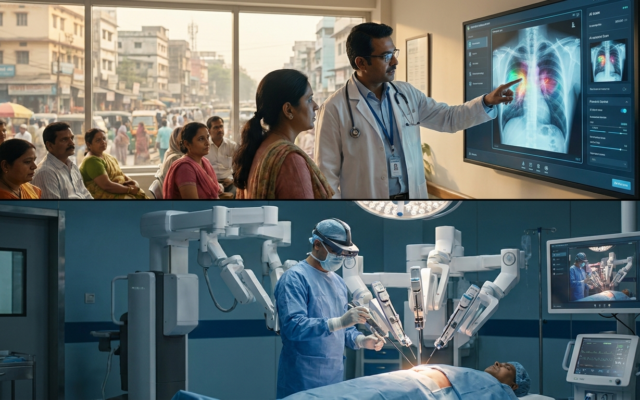
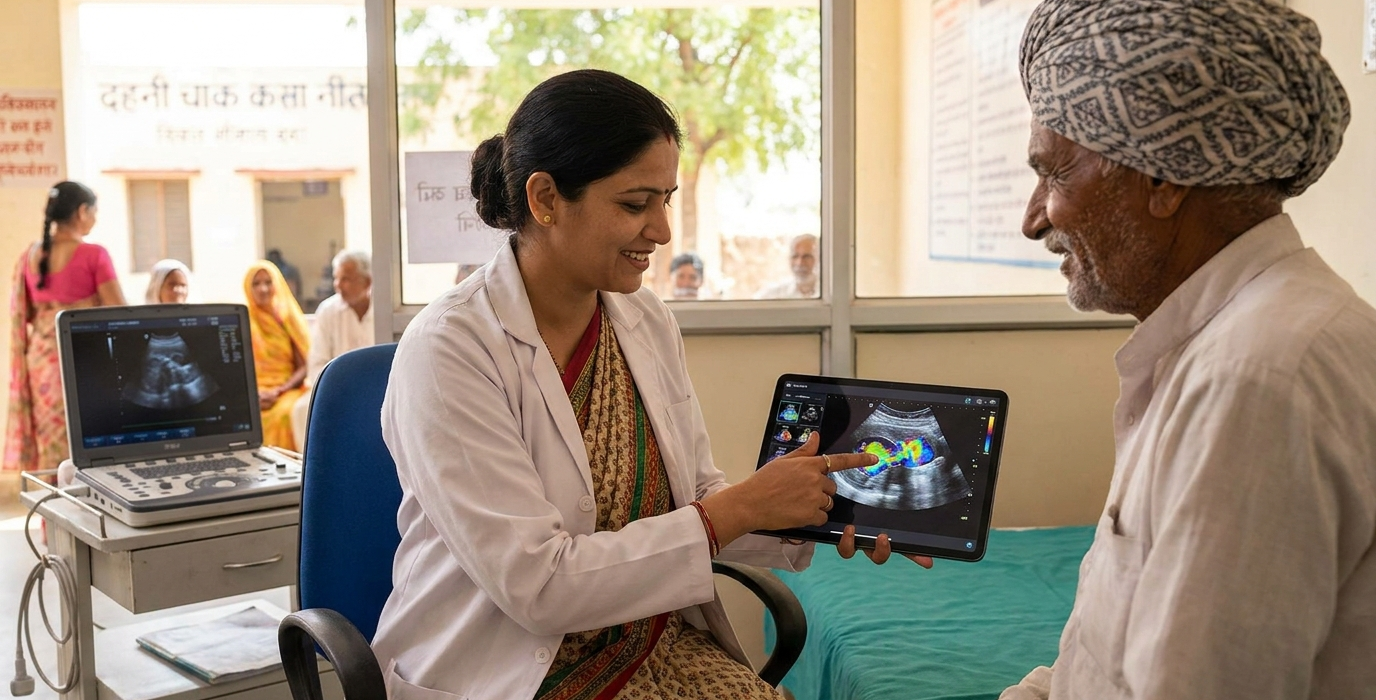
This transformation isn’t confined to metropolitan hospitals. AI’s reach is extending to remote corners of the country, bridging geographical and infrastructural gaps. Think of a diagnostic tool powered by AI that can analyze X-rays for tuberculosis in a village clinic in Rajasthan, providing an initial assessment that a specialist can then review. Such advancements are critical in a nation where access to specialized medical expertise can be a significant challenge. The sheer volume of medical data generated daily – from scans and lab reports to patient histories – is overwhelming for humans alone. AI algorithms can process this vast information at speeds unimaginable to us, identifying subtle patterns and anomalies that might otherwise be missed.
The implications for public health are profound. By enabling quicker and more precise diagnoses, AI can significantly reduce the burden on healthcare systems, allowing doctors to focus on treatment and patient care. We’re talking about a future where diseases are caught at their nascent stages, making them more treatable and less life-threatening. This proactive approach, driven by intelligent machines, is set to redefine patient outcomes across India and beyond. The journey is just beginning, but the trajectory is clear: AI is poised to be a cornerstone of modern Indian medicine.
AI’s Sharpened Eye: Detecting Diseases with Unprecedented Accuracy
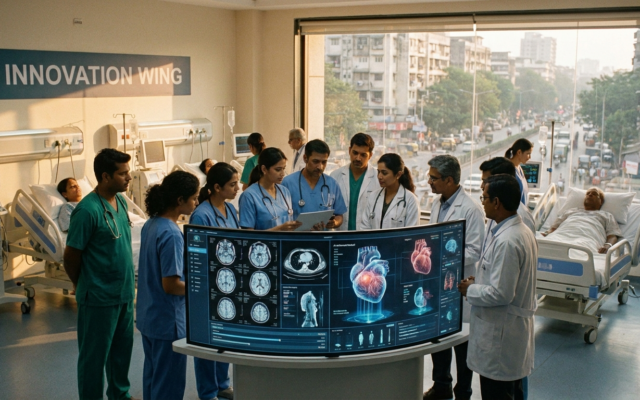
One of the most significant contributions of AI in Indian healthcare is its ability to enhance diagnostic accuracy, particularly in areas where human error or fatigue can play a role. Consider the field of medical imaging. AI algorithms, trained on millions of X-rays, CT scans, and MRIs, can now identify signs of disease with remarkable precision. For instance, AI-powered tools are proving invaluable in detecting early signs of lung cancer or identifying subtle fractures that might be difficult to spot with the naked eye. This not only speeds up the diagnostic process but also reduces the chances of missed diagnoses, which can have serious consequences for patients.
In ophthalmology, AI is making a huge difference in screening for conditions like diabetic retinopathy, a leading cause of blindness. In states like Karnataka, where diabetes prevalence is high, AI systems can analyze retinal images from primary healthcare centers, flagging patients who require specialist attention. This is crucial for early intervention, potentially saving the vision of countless individuals. Similarly, in cardiology, AI is being used to analyze electrocardiograms (ECGs) to detect abnormalities that might indicate an increased risk of heart attack, allowing for prompt medical intervention.
The key here is the ability of AI to analyze vast datasets and identify complex correlations that humans might not readily perceive. These systems don’t get tired, they don’t have off days, and they can process information at an incredible speed. This augmentative power is what makes AI such a game-changer. It’s not about replacing doctors but about providing them with advanced tools that empower them to make better, faster decisions. We are essentially equipping our medical professionals with a super-powered assistant that can sift through mountains of data to highlight critical information, leading to more confident and accurate diagnoses.
Bridging Gaps: AI in Rural and Underserved Areas
The story of AI in Indian healthcare wouldn’t be complete without acknowledging its transformative potential in rural and underserved regions. These areas often face a severe shortage of medical specialists and infrastructure, making access to timely and accurate diagnoses a significant challenge. AI-powered telemedicine platforms and diagnostic tools are emerging as powerful solutions, bringing advanced medical capabilities directly to remote communities. Imagine a village in Bihar where a local health worker, using a smartphone app equipped with AI, can capture an image of a skin lesion. The AI analyzes the image and provides a preliminary assessment, flagging potential serious conditions that require a doctor’s review.
This democratizes healthcare, making expert-level diagnostics accessible without the need for patients to travel long distances to city hospitals. Furthermore, AI can analyze data from wearable devices and remote monitoring systems, allowing healthcare providers to keep track of patients with chronic conditions even when they are miles away. This proactive approach helps prevent complications and reduces hospital readmissions. Such systems can also assist in epidemiological surveillance, identifying disease outbreaks in their early stages by analyzing patterns in reported symptoms across a region, enabling faster public health responses.
One surprising fact is that some AI diagnostic tools are being developed using federated learning. This means the AI models are trained on data from multiple hospitals and clinics without the sensitive patient data ever leaving its original location. This addresses crucial privacy concerns while still allowing for the development of robust and accurate AI models that benefit a wider population. This approach is particularly valuable in India, where diverse regional health data is essential for creating universally effective AI solutions. The goal is to ensure that no matter where you live in India, you have access to the best possible diagnostic capabilities.
AI and Cancer Screening: Early Detection Saves Lives
Cancer remains a significant health challenge globally, and India is no exception. AI is emerging as a powerful ally in the fight against cancer, primarily through its ability to enhance early detection and screening processes. In cities like Chennai, renowned for its medical tourism, AI is being deployed in mammography analysis to identify suspicious lesions that could indicate breast cancer. These systems can analyze thousands of mammograms with incredible speed and consistency, flagging potential areas of concern for radiologists to review. This not only speeds up the screening process but also helps radiologists by acting as a second pair of eyes, reducing the likelihood of subtle cancers being overlooked.
Beyond breast cancer, AI is also making strides in the detection of other forms of cancer. For example, AI algorithms are being trained to analyze lung CT scans for nodules that might be cancerous, often at a much earlier stage than traditional methods. Similarly, AI is being explored for analyzing endoscopic images to detect early signs of gastrointestinal cancers, a critical step in improving survival rates. The ability of AI to identify minuscule anomalies in imaging data is its greatest strength in this domain.
A fascinating aspect is how AI is helping to standardize the quality of cancer screening. In a country as vast as India, the expertise of radiologists and pathologists can vary. AI algorithms, once trained and validated, provide a consistent level of analysis, ensuring that more patients receive a thorough initial assessment. This consistency is vital for catching cancers early, when treatment is most effective and less invasive. We are moving towards a future where AI-driven screenings are a routine part of preventative healthcare, significantly improving the chances of successful treatment and long-term survival for cancer patients across India.
The Patient Journey: From Diagnosis to Personalized Treatment
The impact of AI extends beyond just diagnosis; it’s increasingly shaping the entire patient journey, including treatment planning and personalized care. Once a diagnosis is made, AI can help clinicians sift through vast amounts of research and clinical trial data to identify the most effective treatment options for an individual patient, considering their specific genetic makeup, medical history, and even lifestyle factors. This move towards precision medicine, powered by AI, promises to revolutionize how we treat diseases. Instead of a one-size-fits-all approach, treatments can be tailored to maximize efficacy and minimize side effects.
Consider a patient diagnosed with a complex cardiac condition. An AI system could analyze their complete medical profile, compare it with thousands of similar cases, and suggest the most optimal therapeutic pathway, potentially combining medication, lifestyle changes, and specific interventional procedures. This is particularly relevant in chronic disease management, where long-term treatment strategies need constant evaluation and adjustment. AI can monitor patient progress remotely, identify early signs of complications, and alert healthcare providers, enabling timely interventions.
AI isn’t just about faster diagnoses; it’s about ushering in an era of truly personalized medicine, where every patient’s treatment plan is as unique as they are.
Furthermore, AI is being used to predict patient response to different therapies. This means doctors can, with higher confidence, choose the drug or treatment that is most likely to work for a particular patient from the outset, saving valuable time and resources, and crucially, avoiding potentially ineffective or harmful treatments. This predictive capability is a significant leap forward in patient care, ensuring that individuals receive the most appropriate and effective interventions right from the start of their treatment journey. The integration of AI promises a future where healthcare is not just reactive but proactively tailored to individual needs.
Navigating the Challenges: Data, Regulation, and Access
While the potential of AI in Indian healthcare is immense, we cannot ignore the significant challenges that lie ahead. One of the primary hurdles is data privacy and security. Medical data is highly sensitive, and ensuring that AI systems comply with robust privacy regulations, like the upcoming Digital Personal Data Protection Act 2023 amendments, is paramount. Building patient trust requires transparent data handling practices and strong cybersecurity measures. We need to be confident that our personal health information is protected.
Another critical area is regulatory framework development. As AI in healthcare rapidly evolves, governments and regulatory bodies need to establish clear guidelines for the validation, deployment, and ethical use of these technologies. This includes ensuring the accuracy and reliability of AI algorithms and defining accountability in case of errors. The Medical Devices (Amendment) Rules, 2024, are a step in the right direction, but continuous adaptation will be necessary. We must ensure these tools are safe and effective before widespread adoption.
Equitable access to AI-powered healthcare solutions is also a major concern. The initial investment in AI technology can be substantial, potentially widening the gap between well-funded urban hospitals and under-resourced rural clinics. Efforts must be made to ensure that these advancements benefit all sections of society, not just a privileged few. Innovative business models and government initiatives will be crucial to drive down costs and promote widespread adoption. For instance, public-private partnerships could play a vital role in deploying AI diagnostic tools in remote areas. A surprising fact is that the Indian Council of Medical Research (ICMR) has been actively supporting research into AI for healthcare, including setting up ethics guidelines, indicating a strong governmental push to address these very challenges.
Frequently Asked Questions
What is the primary benefit of AI in Indian healthcare diagnostics?
The primary benefit is faster and more accurate disease detection, leading to earlier interventions and improved patient outcomes. AI can analyze vast amounts of medical data, identifying subtle patterns that humans might miss.
How is AI being used to improve access to healthcare in rural India?
AI is powering telemedicine platforms and mobile diagnostic tools that bring expert-level assessments to remote areas. This helps bridge the gap caused by a shortage of specialists and infrastructure.
Are there concerns about patient data privacy with AI in healthcare?
Yes, data privacy and security are major concerns. Robust regulatory frameworks and advanced cybersecurity measures are crucial to protect sensitive patient information and build trust.
Can AI replace doctors in India?
No, AI is not intended to replace doctors. Instead, it acts as a powerful assistive tool, augmenting their expertise and enabling them to make more informed and timely decisions. The human touch remains essential in patient care.