Key Takeaways
- Artificial intelligence is transforming Indian healthcare by enhancing diagnostic accuracy, personalizing treatment plans, and accelerating drug discovery, promising more accessible and efficient medical care.
- AI-powered tools are proving crucial in early disease detection, especially in areas like oncology and cardiology, where subtle patterns can be missed by the human eye.
- The integration of AI is streamlining administrative tasks, freeing up medical professionals to focus on patient care and research.
- Challenges remain in data privacy, regulatory frameworks, and ensuring equitable access to these advanced technologies across India’s diverse population.
The AI Doctor Will See You Now: Revolutionizing Diagnostics
Imagine walking into a clinic in Bengaluru and, within minutes, receiving a preliminary diagnosis for a complex condition, flagged with remarkable accuracy by an AI system. This isn’t science fiction; it’s the rapidly unfolding reality across India’s healthcare landscape. Artificial intelligence is moving beyond theoretical research and into the frontline of patient care, fundamentally changing how diseases are diagnosed. AI algorithms, trained on vast datasets of medical images and patient records, can now detect anomalies with a precision that often rivals, and sometimes surpasses, human experts.
Consider the field of radiology. AI models are becoming adept at spotting early signs of cancer in mammograms or identifying minute indicators of diabetic retinopathy in retinal scans. This early detection is paramount, as it significantly improves treatment outcomes and patient survival rates. Similarly, in cardiology, AI can analyze ECG readings to predict potential cardiac events with greater speed and accuracy. These systems aren’t just faster; they’re also more consistent, reducing the variability that can sometimes occur between different human interpretations.
The impact extends to pathology as well. AI-powered microscopes can analyze tissue samples, identifying cancerous cells or other abnormalities with incredible detail. This not only speeds up the diagnostic process but also allows pathologists to focus on the most complex cases, thereby optimizing their expertise. The sheer volume of data that AI can process, identifying subtle correlations invisible to the naked eye, is its most significant advantage.
From Pixel to Prognosis: The Power of Image Analysis
AI’s prowess in image analysis is arguably its most impactful application in diagnostics. Algorithms are meticulously trained on millions of medical images, learning to recognize patterns associated with various diseases. For instance, in the fight against tuberculosis, AI is being deployed to analyze chest X-rays, identifying potential signs of the disease in areas with limited access to radiologists. This is a game-changer for rural India, where healthcare infrastructure can be stretched thin.
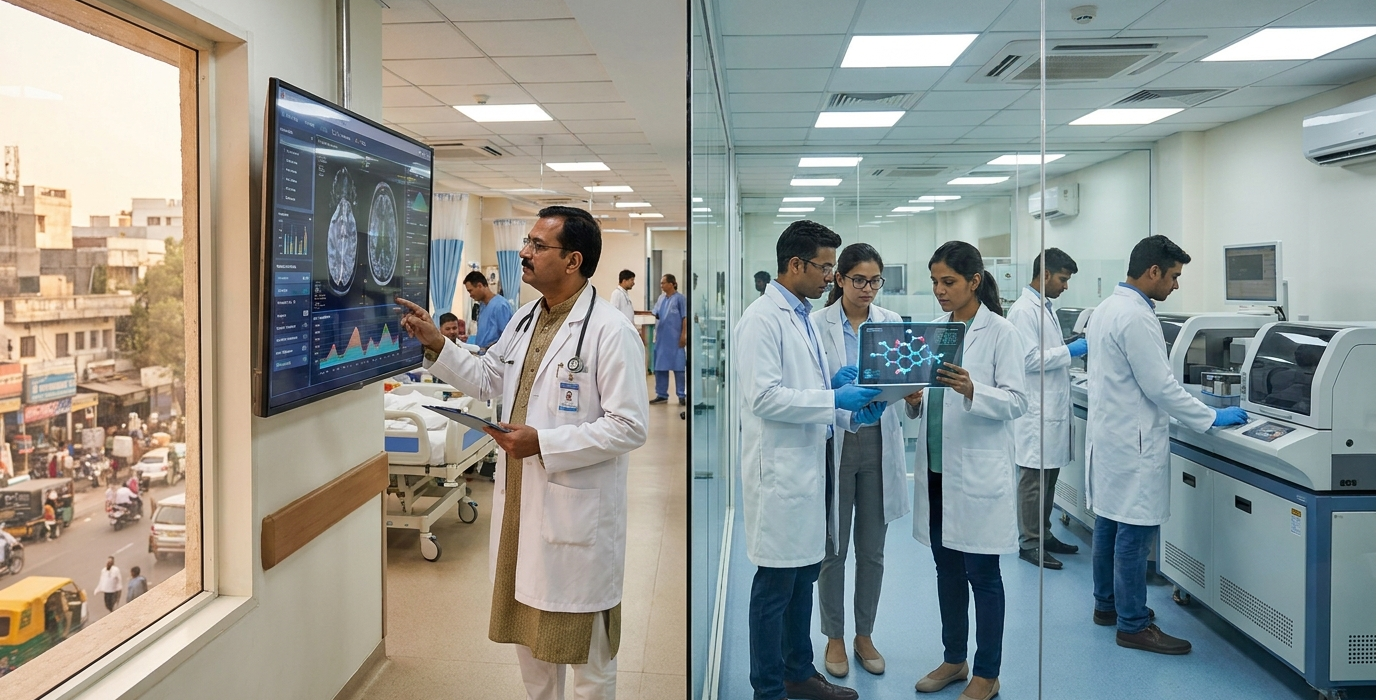
Another astonishing development is the use of AI in analyzing CT scans for neurological conditions. AI can detect the earliest signs of stroke or brain tumors, often far sooner than a human radiologist might initially perceive them. This rapid identification is critical, as timely intervention can drastically alter a patient’s prognosis. The AI doesn’t replace the radiologist; it acts as an intelligent assistant, highlighting areas of concern and providing crucial data points for a faster, more confident diagnosis.
The implications are profound. By augmenting human capabilities, AI promises to democratize access to high-quality diagnostics across India. This means that a patient in a remote village in Rajasthan could potentially benefit from the same level of diagnostic insight as someone in a metropolitan hospital. The ongoing refinement of these AI models, driven by diverse Indian patient data, ensures their increasing relevance and accuracy for our unique population.
Personalized Medicine: Tailoring Treatments to You
Beyond diagnosis, artificial intelligence is ushering in an era of truly personalized medicine, moving away from a one-size-fits-all approach. Every individual is unique, and their response to treatment can vary significantly based on their genetic makeup, lifestyle, and the specific characteristics of their illness. AI is the key to unlocking this personalized approach, analyzing an overwhelming amount of patient data to predict the most effective treatment strategies.
Imagine a cancer patient in Chennai. Instead of a generic chemotherapy regimen, an AI system can analyze their tumor’s genetic profile, their medical history, and even their gut microbiome data to recommend a targeted therapy that is most likely to be effective, while minimizing side effects. This level of precision was once the realm of expensive, specialized research labs; now, it’s becoming increasingly accessible.
AI algorithms can predict how a patient will respond to different medications, identify potential drug interactions, and even suggest optimal dosages. This is particularly vital for chronic conditions like diabetes or hypertension, where lifelong management requires constant monitoring and adjustments. AI can help create dynamic treatment plans that evolve with the patient, ensuring they receive the best possible care at every stage.
The Algorithmic Pharmacist: Optimizing Drug Regimens
The application of AI in optimizing drug regimens is a critical component of personalized medicine. By processing vast amounts of clinical trial data, real-world evidence, and individual patient profiles, AI can help physicians make more informed decisions about medication. For example, in managing complex conditions like autoimmune diseases, where multiple medications are often prescribed, AI can flag potential conflicts or suggest combinations that offer synergistic benefits.
We are seeing AI tools that can analyze a patient’s response to a particular drug over time, identifying subtle trends that might indicate a need for adjustment. This proactive approach can prevent complications and improve patient adherence to treatment. The goal is to ensure that each patient receives the most effective treatment with the fewest adverse effects, a cornerstone of modern, patient-centric healthcare.
Furthermore, AI is being used to predict which patients are most likely to benefit from certain clinical trials, accelerating the recruitment process and bringing life-saving treatments to those who need them most. This intelligent matching of patients to trials is a significant step forward in medical research and development.
Accelerating Discovery: The AI-Powered Pharmaceutical Revolution
The journey from a scientific hypothesis to a marketable drug is notoriously long, expensive, and fraught with failure. Traditionally, it could take over a decade and billions of dollars to bring a new medicine to market. Artificial intelligence is dramatically shortening this timeline and reducing costs, fundamentally revolutionizing drug discovery and development.
AI algorithms can sift through massive biological and chemical databases, identifying potential drug candidates at an unprecedented speed. Instead of scientists manually testing millions of compounds, AI can predict which molecules are most likely to interact with a specific disease target. This greatly narrows down the field, allowing researchers to focus their efforts on the most promising leads.
Consider the development of new antibiotics. With the growing threat of antimicrobial resistance, finding novel drugs is a global priority. AI is being used to screen existing compounds for unexpected antibiotic properties and to design entirely new molecules that can combat resistant bacteria. This ability to explore vast chemical spaces efficiently is a game-changer.
From Molecules to Medicine: AI’s Role in Pre-Clinical Research
In the pre-clinical stages, AI is proving invaluable in predicting the efficacy and safety of potential drugs. Algorithms can analyze the molecular structure of compounds and predict their interactions with biological systems, flagging potential toxicity issues early in the process. This means that resources are not wasted on compounds that are unlikely to succeed, streamlining the entire development pipeline.
AI is also being used to simulate how drugs will behave in the human body, a process known as pharmacokinetic and pharmacodynamic modeling. This allows researchers to better understand absorption, distribution, metabolism, and excretion, and how these factors influence a drug’s effectiveness and safety. This predictive power can significantly reduce the need for animal testing and accelerate the transition to human clinical trials.
One particularly exciting area is the use of AI in identifying novel drug targets. By analyzing complex biological pathways and disease mechanisms, AI can pinpoint specific proteins or genes that, when modulated, could treat a disease. This ability to uncover new therapeutic avenues opens up possibilities for treating conditions that were previously considered intractable.
Streamlining Operations: The Invisible Hand of AI in Hospitals
Beyond the direct patient-facing applications, artificial intelligence is also working behind the scenes to make our healthcare system more efficient and cost-effective. Hospitals and clinics in India are increasingly adopting AI-powered solutions to manage administrative tasks, optimize resource allocation, and improve overall operational flow. This “invisible hand” of AI ensures that the system runs more smoothly, freeing up valuable time for medical professionals.
One of the most significant impacts is in appointment scheduling and patient flow management. AI systems can predict patient no-show rates, optimize appointment slots to minimize wait times, and even manage the allocation of hospital beds. This leads to a better patient experience and reduces the strain on healthcare staff. Think about the chaos of a busy OPD in a large government hospital in Delhi; AI can bring a new level of order to this environment.
AI is also being used to automate billing and coding processes, which are often complex and time-consuming. By accurately assigning medical codes to diagnoses and procedures, AI can reduce errors, accelerate reimbursement cycles, and improve the financial health of healthcare institutions. This allows hospitals to reinvest more resources into patient care and infrastructure.
The AI Scribe: Automating Documentation and Data Management
Medical documentation is a critical but often burdensome task for doctors and nurses. AI-powered tools can now transcribe patient-doctor conversations in real-time, automatically generating clinical notes. This dramatically reduces the time physicians spend on paperwork, allowing them to dedicate more attention to their patients. Imagine a doctor in a bustling private hospital in Mumbai no longer having to spend hours typing up notes after each consultation.
Furthermore, AI is enhancing data management and analysis within hospitals. By organizing and extracting insights from electronic health records (EHRs), AI can help identify trends in patient populations, monitor outbreaks of infectious diseases, and assess the effectiveness of different treatment protocols. This data-driven approach is crucial for continuous quality improvement in healthcare delivery.
The integration of AI in hospital operations also extends to supply chain management and inventory control. AI can predict demand for medical supplies, optimize stock levels, and prevent shortages, ensuring that essential resources are always available when needed. This operational efficiency translates directly into better patient care and reduced waste.
Ensuring Equity and Addressing Challenges: The Road Ahead
While the potential of AI in Indian healthcare is immense, we must also acknowledge and proactively address the challenges that lie ahead. Ensuring equitable access to these advanced technologies across India’s diverse socio-economic spectrum is paramount. The digital divide, varying levels of digital literacy, and the cost of implementation are significant hurdles that need careful consideration and strategic planning.
For AI to truly benefit all Indians, its development and deployment must be inclusive. This means training AI models on data that is representative of our entire population, not just urban centers or specific demographic groups. We need to ensure that AI tools are designed to be user-friendly and adaptable to the needs of healthcare providers in rural and remote areas.
Data privacy and security are also critical concerns. As AI systems rely on vast amounts of sensitive patient data, robust regulations and ethical guidelines are essential to protect patient confidentiality and prevent misuse. Establishing clear frameworks for data governance and consent is a non-negotiable step.
“The true measure of AI’s success in Indian healthcare will be its ability to bridge existing gaps, making quality medical care more accessible and affordable for every citizen, regardless of their location or economic status.”
Navigating the Regulatory and Ethical Landscape
The rapid pace of AI development often outstrips existing regulatory frameworks. India needs to establish clear guidelines for the validation, approval, and ongoing monitoring of AI-powered medical devices and software. This will ensure that these technologies are safe, effective, and reliable. Collaboration between government bodies, technology developers, and healthcare professionals is crucial in shaping these policies.
Ethical considerations also loom large. How do we ensure transparency in AI decision-making? Who is accountable when an AI system makes an error? These are complex questions that require thoughtful deliberation and robust ethical frameworks. We must foster a culture of responsible innovation, where the well-being of the patient remains at the center of all AI applications in healthcare.
Furthermore, the integration of AI necessitates upskilling the healthcare workforce. Doctors, nurses, and technicians will need training to effectively use and interpret AI tools. Investing in education and professional development programs will be crucial to harness the full potential of AI and ensure that healthcare professionals are partners in this technological revolution, not displaced by it.
Frequently Asked Questions
What are the main benefits of AI in Indian healthcare?
AI enhances diagnostic accuracy, enables personalized treatment plans, accelerates drug discovery, and streamlines hospital operations, leading to more efficient, accessible, and effective healthcare for patients across India.
How is AI helping in early disease detection?
AI algorithms analyze medical images like X-rays, CT scans, and retinal scans with high precision to detect subtle signs of diseases such as cancer, diabetic retinopathy, and neurological conditions, often earlier than human observation.
Will AI replace doctors in India?
No, AI is designed to augment, not replace, doctors. It acts as a powerful tool to assist medical professionals in diagnosis, treatment planning, and administrative tasks, freeing them to focus on complex cases and patient interaction.
What are the biggest challenges to AI adoption in Indian healthcare?
Key challenges include ensuring data privacy and security, establishing robust regulatory frameworks, bridging the digital divide for equitable access, and upskilling the healthcare workforce to effectively utilize AI technologies.