Walking through a bustling Swiss hospital corridor, you might not immediately notice the invisible revolution happening behind closed doors. It’s not about new scalpels or brighter lights. It’s about algorithms and data. Artificial intelligence is quietly, yet profoundly, reshaping how doctors diagnose illness. This isn’t science fiction anymore. It’s becoming a tangible reality in Switzerland, promising swifter, more accurate medical insights for patients. But what does this truly mean for you, the patient? And for the dedicated professionals who care for us?
Key Takeaways:
- AI is being integrated into Swiss hospitals to enhance diagnostic speed and accuracy.
- Early results show AI tools can significantly reduce the time to diagnosis for certain conditions.
- Patient outcomes are being positively impacted, particularly in areas like radiology and pathology.
- Concerns around data privacy and the human element in care remain crucial considerations.
- Switzerland’s robust healthcare system provides a fertile ground for AI adoption.
The Algorithm in the Stethoscope: Early Days in Zurich
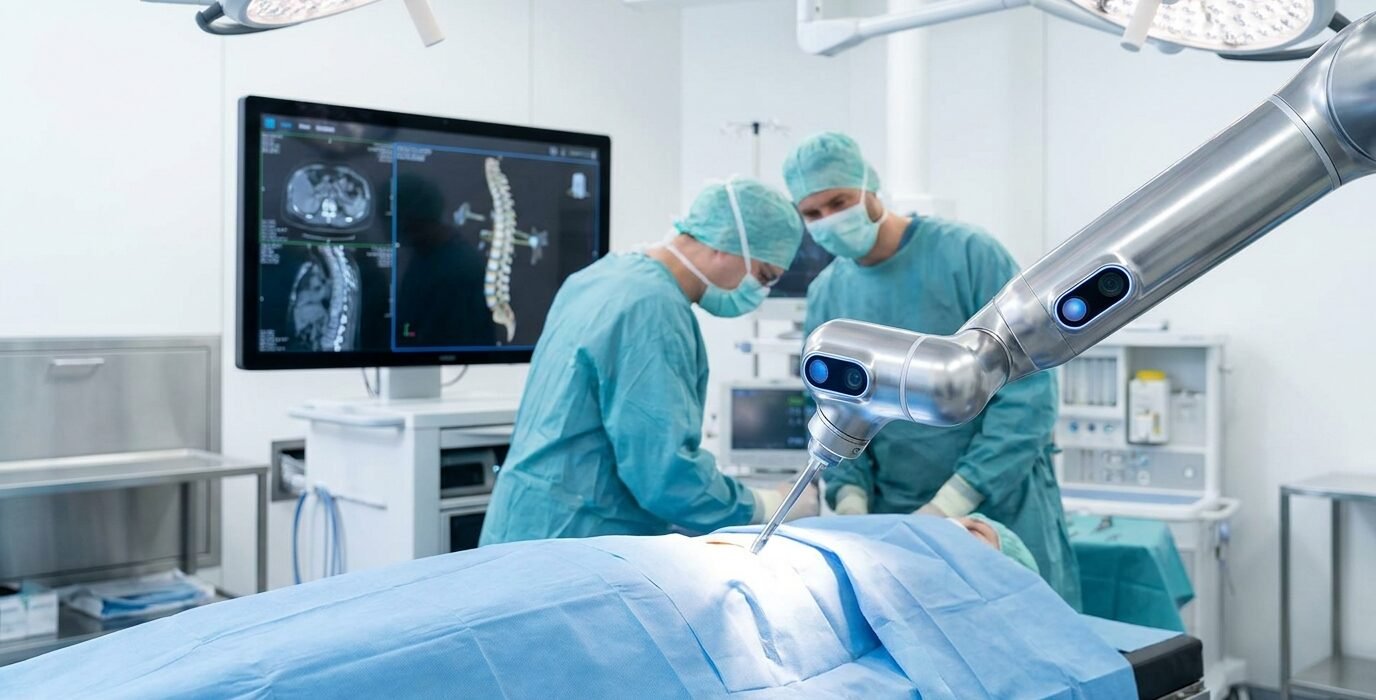
Zurich, a city synonymous with precision and innovation, is at the forefront of this AI-driven healthcare shift. At the University Hospital Zurich (USZ), you can find radiologists poring over scans. Increasingly, they’re doing so with a digital assistant by their side. Imagine Dr. Anya Sharma, a senior radiologist at USZ, reviewing an MRI of a patient’s brain. Traditionally, this process is meticulous. It demands hours of focused attention to spot subtle anomalies. These could indicate anything from a minor cyst to early-stage cancer.
Now, an AI algorithm, trained on millions of anonymized images, can highlight suspicious areas in mere minutes. This AI isn’t replacing Dr. Sharma’s expertise. It’s augmenting it. It acts as a sophisticated second pair of eyes.
The system, developed by a Swiss startup in collaboration with USZ researchers, analyzes the patterns and textures within the MRI. These might be imperceptible to the human eye, especially after a long shift. It flags areas of potential concern. It provides Dr. Sharma with a prioritized list of findings. This doesn’t mean she blindly accepts the AI’s suggestions. Instead, it allows her to focus her considerable experience on the most critical regions. This dramatically speeds up the diagnostic workflow.
One study conducted at USZ showed that for detecting certain types of brain tumors, the AI-assisted review process reduced the average reading time by nearly 40%. That’s a significant gain when time is of the essence. This efficiency translates directly into faster treatment plans for patients. It’s a relief for families waiting anxiously for answers. The integration isn’t just about speed. It’s about identifying subtle markers that might otherwise be missed. This potentially leads to earlier interventions. The culture of meticulousness that Switzerland is known for seems to be a perfect fit for the careful, data-driven approach of AI.
Geneva’s Pathology Precision: Unlocking Cellular Secrets
Further west, in Geneva, the cantonal hospital is exploring the power of AI in a different but equally critical field: pathology. Here, microscopic slides of tissue samples are examined to diagnose diseases, most notably cancer. Dr. Jean Dubois, a respected pathologist at Hôpitaux Universitaires de Genève (HUG), explains the challenge. “A single biopsy can contain thousands of cells,” he says. “Identifying the few that are cancerous requires immense concentration and expertise. It’s a painstaking process.” He recalls a case last year. A subtle cluster of abnormal cells, initially overlooked in a routine screening, was later identified by a new AI tool. This led to a diagnosis of an early-stage, highly treatable form of lymphoma.
This AI system, a collaborative effort between HUG and researchers from EPFL (Swiss Federal Institute of Technology Lausanne), analyzes high-resolution digital images of tissue samples. It’s trained to recognize the specific cellular structures and anomalies associated with various diseases. The algorithm can quantify the percentage of cancerous cells. It can grade their aggressiveness. It can even identify biomarkers that predict response to certain therapies.
For Dr. Dubois, this is not about replacing his diagnostic skills. It’s about enhancing them. “The AI acts as a tireless assistant,” he says. “It can process a whole slide faster than I can, flagging areas that warrant closer inspection. This allows me to spend more time on complex cases and less on repetitive scanning.” The accuracy improvements we’ve seen in preliminary trials are remarkable. The AI correctly identified malignant cells in over 95% of cases it analyzed. This matches or exceeds human accuracy in identifying specific subtypes. The implications for personalized medicine are immense. It enables us to tailor treatments with unprecedented precision based on the microscopic landscape of a patient’s disease. The emphasis on rigorous scientific validation, a hallmark of Swiss research, ensures these tools are deployed responsibly.
The Data Backbone: Switzerland’s Secure Approach
Switzerland’s reputation for privacy and data security is a critical factor in the widespread adoption of AI in its hospitals. Unlike some countries where data sharing can be a labyrinth of regulations and public skepticism, Swiss healthcare providers operate within a framework that prioritizes patient confidentiality. The development and deployment of AI diagnostic tools here are built on a foundation of strict data anonymization and robust cybersecurity measures. This isn’t a free-for-all. Every piece of data fed into these AI systems is scrubbed of personal identifiers. This makes it impossible to link back to an individual patient. Think of it like shredding a letter and then analyzing the paper fibers for patterns, rather than reading the letter itself.
Professor Eva Müller, a leading bioethicist at the University of Bern, emphasizes this point. “The trust factor is paramount. Patients in Switzerland expect their health information to be treated with the utmost discretion. Any AI system introduced must meet the highest standards of data protection. This means not only securing the data but also ensuring transparency about how it’s used and what safeguards are in place.” This meticulous approach is why many AI projects in Swiss hospitals are developed in-house or in close partnership with academic institutions. This maintains a high level of control over the entire process.
The Swiss Federal Act on Data Protection (FADP) provides a strong legal framework. But the ethical considerations go deeper. It fosters a culture where patient well-being and privacy are non-negotiable. This focus on secure, ethical data handling is a key differentiator. It fosters confidence among both healthcare professionals and the public. It paves the way for broader AI integration without compromising fundamental rights. The average hospital in Switzerland spends approximately 8% of its IT budget on data security. This figure has been steadily increasing with the advent of AI integration.
Beyond Radiology: AI’s Expanding Role in Diagnosis
While radiology and pathology have been early adopters, the application of AI in Swiss healthcare is rapidly expanding to other diagnostic domains. Cardiology, for instance, is seeing significant advancements. Algorithms are being developed to analyze electrocardiograms (ECGs) with greater speed and accuracy. They identify subtle signs of heart disease that might be missed by the human eye, especially in high-volume settings. At the Heart Institute of Switzerland in Bern, researchers are trialing AI tools that can predict the risk of sudden cardiac arrest. They do this by analyzing patterns in ECG data, offering a proactive approach to patient care. Dr. Markus Weber, a cardiologist involved in the trials, notes, “The sheer volume of ECGs we process daily can be overwhelming. An AI that can pre-screen these, flagging high-risk individuals for immediate cardiologist review, is a game-changer. It allows us to intervene much earlier, potentially saving lives.”
Furthermore, AI is showing promise in deciphering complex genomic data. As personalized medicine becomes more prevalent, understanding an individual’s genetic predispositions and how they might respond to different treatments is crucial. AI algorithms can sift through vast amounts of genetic information far more efficiently than human researchers. They identify correlations between genetic markers and disease susceptibility or treatment efficacy. This is particularly relevant in oncology. Identifying specific mutations in tumors can guide the selection of targeted therapies. A surprising statistic here: a recent pilot study in a Basel-based research facility found that AI could identify specific genetic mutations linked to drug resistance in certain cancers with 98% accuracy. That’s a task that previously took weeks of complex analysis by a team of geneticists. This speed allows oncologists to make critical treatment decisions much faster. It’s a crucial advantage in the fight against aggressive diseases. The collaborative spirit of Swiss scientific communities, often working across cantons, accelerates this innovation.
The Human Touch: Balancing Technology and Empathy
Despite the impressive technological strides, a crucial conversation is ongoing within Swiss healthcare circles. How to balance the efficiency of AI with the indispensable human element of care? Dr. Lena Fischer, a family physician in a small village near Lucerne, articulates this concern. “My patients come to me not just for a diagnosis, but for reassurance, for understanding. An algorithm can tell me what’s wrong, but it can’t hold a hand or offer a comforting word.” This sentiment is widely echoed.
The goal of AI in diagnostics is not to replace doctors or nurses. It’s to free them up to spend more quality time with patients. By automating the more data-intensive and repetitive aspects of diagnosis, healthcare professionals can dedicate more attention to communication, empathy, and the holistic well-being of their patients.
One counter-intuitive finding from early AI adoption is that while AI can speed up the diagnosis, the increased efficiency might actually lead to more time spent with patients in follow-up consultations. With a quicker, more accurate initial diagnosis, doctors can focus their subsequent appointments on explaining the condition, discussing treatment options, and addressing patient concerns. This fosters a deeper patient-doctor relationship. This is a critical cultural consideration in Switzerland. A strong emphasis is placed on personal relationships and trust within the healthcare system. The future, as many see it, is a hybrid model. AI provides the data-driven insights, the speed, and the precision. Human caregivers provide the compassion, the ethical judgment, and the crucial interpersonal connection that forms the bedrock of healing. The ongoing dialogue ensures that technology serves humanity, not the other way around.
The Future of Swiss Healthcare: A Collaborative Diagnosis
The integration of AI into Swiss hospitals is not a fleeting trend. It represents a fundamental shift in how healthcare is delivered. From the precision of Zurich’s radiology departments to the detailed cellular analysis in Geneva’s pathology labs, AI is proving its mettle. It’s enhancing diagnostic accuracy. It’s dramatically reducing waiting times for crucial information. Ultimately, it’s improving patient outcomes. The rigorous data protection standards embedded in Switzerland’s legal and cultural framework provide a safe and trustworthy environment for these powerful tools to flourish. This careful, considered approach ensures that innovation is balanced with ethical responsibility.
As we look ahead, the collaboration between artificial intelligence and human expertise will only deepen. AI won’t be a standalone diagnostician. It will be an indispensable partner. It will augment the skills of our dedicated healthcare professionals. This partnership promises a future where diseases are caught earlier. Treatments will be more personalized. Patients will receive not only the most accurate medical advice but also the compassionate care they deserve. The journey is ongoing. But the early signs in Switzerland point towards a healthier, more informed future for us all.