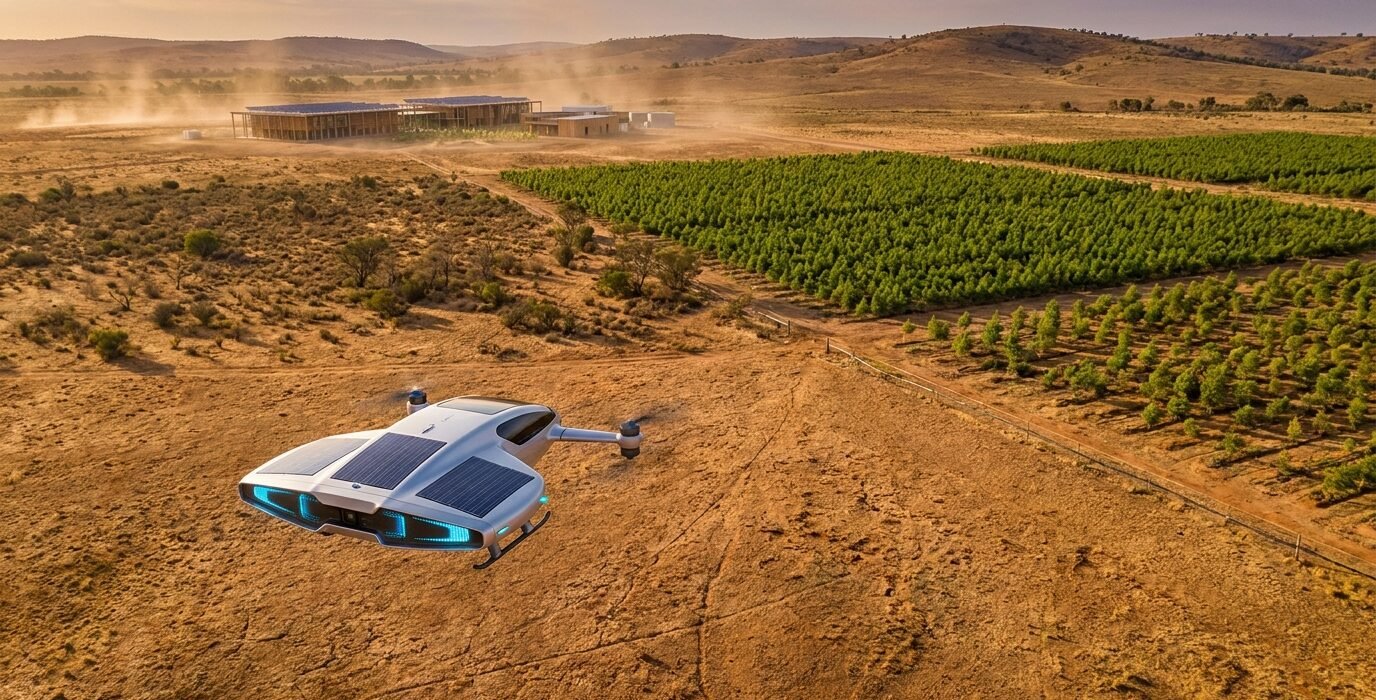
The scent of eucalyptus hangs heavy. Vast, ancient landscapes stretch to the horizon. Australia’s untamed beauty is unparalleled. But this unique environment battles immense challenges. Devastating bushfires rage. Desertification creeps relentlessly. Precious wildlife vanishes. For decades, Australians have grappled with these forces. Often, a sense of helplessness pervades. Nature’s power feels overwhelming. Now, a new wave of innovation rises. It springs from Australia’s own tech scene. Armed with the age’s most sophisticated tool: artificial intelligence. Startup founders, scientists, conservationists nationwide are harnessing AI’s might. They use it to understand these complex problems. More importantly, to fight them. This isn’t science fiction. It’s happening now. In labs. On farms. In Australia’s wild heart. It offers a glimmer of hope. For our planet’s future.
Key Takeaways:
- Australian startups are developing AI solutions to address specific environmental crises like bushfires, water scarcity, and biodiversity loss.
- These innovations leverage machine learning and big data to provide predictive insights and actionable management strategies.
- Real-world applications are already demonstrating success in areas such as early bushfire detection and improved agricultural practices.
- The focus is on creating accessible and practical tools for farmers, land managers, and conservationists across diverse Australian landscapes.
- AI is empowering a new generation of environmental stewardship, combining cutting-edge technology with a deep understanding of Australia’s unique ecology.
The Bushfire Battleground: AI’s Fiery First Response
The roar of a bushfire is a sound etched into the Australian psyche. We all remember the Black Summer of 2019-2020. It was a period of unprecedented devastation. Millions of hectares scorched. Communities brought to their knees. The sheer scale and speed of these infernos are terrifying. Traditional methods, while vital, struggle. They can’t keep pace. Australian bushfires are dynamic. They are unpredictable. This is where AI steps in. It offers a more proactive approach. A more precise one.
Companies like Fireball are leading the charge. They develop sophisticated AI-powered sensors. These detect the faintest smoke plumes. Even in remote areas. Often minutes or hours before human observers. These sensors sit on strategic towers. Across fire-prone regions. They feed data into an AI platform. This platform analyzes atmospheric conditions. Fuel loads. Weather patterns. It predicts fire spread. With remarkable accuracy.
Imagine a farmer in Victoria’s Mallee region. They wake to a dangerous day. No longer relying solely on radio broadcasts. Or visual checks. They might receive an AI-generated alert. On their phone. It details the exact risk level. For their property. The most probable direction of a fire’s advance. Even recommendations for immediate actions. This isn’t about replacing human expertise. It’s about augmenting it. With real-time, data-driven insights.
The AI models learn. They study historical fire data. Satellite imagery. Live sensor feeds. They become increasingly adept. At identifying subtle indicators. Humans might miss. Researchers at the Bushfire and Natural Hazards CRC shared a surprising statistic. Early detection can slash suppression costs. By up to 70%. This highlights the immense benefit. Economic and environmental. The goal is clear. Move from reactive firefighting. To proactive prevention. To rapid containment. Saving lives. Saving property. Saving our irreplaceable natural heritage. The speed of these AI systems is astonishing. They process vast amounts of information. Human teams simply cannot match this. It allows for quicker decisions. Crucial when every minute counts.
Taming the Thirst: AI and Australia’s Water Crisis
Water is life in Australia. Its scarcity is a persistent, gnawing challenge. From the sprawling agricultural heartlands of the Murray-Darling Basin. To the parched outback. Managing our precious water resources is paramount. Climate change exacerbates this issue. Rainfall patterns become erratic. Droughts lengthen. Here, AI proves a game-changer. For agriculture. For water management agencies.
Companies are developing AI-driven irrigation systems. They precisely monitor soil moisture levels. Plant health. Weather forecasts. Delivering the exact amount of water a crop needs. Precisely when it’s needed. This drastically reduces water wastage. A critical concern. For a continent reliant on its agricultural output.
Growcom, a Queensland-based organisation, explores AI for horticulture. They’ve seen firsthand. How AI transforms farming. For example, by analyzing drone imagery. Combined with soil sensor data. AI algorithms identify areas of water stress. Even before visible signs appear. Farmers can irrigate only where needed. Not uniformly. This is inefficient. This precision farming approach saves water. It also leads to healthier crops. Increased yields.
Sarah Jenkins, a third-generation farmer near Griffith in NSW, shared her experience. She trialed an AI-powered irrigation system. “Before, it was a bit of a guessing game,” she explained. “You’d water based on how the plants looked. Or what the old timers told you. Now, the system tells me exactly what each section of the field needs. It’s saved me thousands of litres of water. My citrus trees have never looked better.” This represents a significant shift. From traditional, resource-intensive methods. The ability of AI to process diverse data streams. Satellite imagery, ground sensors. It provides a holistic view. Of water needs. Previously unattainable. A surprising fact: even a 10% reduction in agricultural water use. It can have a substantial impact. On overall water security. In drought-prone regions.
Guardians of the Wild: AI for Biodiversity Conservation
Australia is a global biodiversity hotspot. Home to an astonishing array of unique flora and fauna. Yet, many species face severe threats. Habitat loss. Invasive species. Climate change. Protecting them is monumental. Often involving vast, remote areas. Elusive creatures. This is where AI offers powerful new tools. For conservationists.
Imagine using AI to analyze thousands of hours of audio recordings. From rainforests in the Daintree. Identifying the calls of endangered cassowaries. The subtle chirps of rare frogs. All without human oversight. This is the reality for companies like Wildlife Drones. They use AI-powered image recognition. To automatically identify and track threatened species. From drone footage.
Researchers also employ AI. To monitor ecosystem health. By analyzing satellite imagery. Ground-based sensor data. AI detects subtle changes. In vegetation, water quality, soil composition. These changes can indicate environmental degradation. Or the presence of invasive species. This allows for early intervention. Before significant damage occurs.
Dr. Anya Sharma, a leading ecologist at the University of Sydney, shared her enthusiasm. “For years, we’ve struggled with the sheer volume of data we collect,” she said. “AI is allowing us to process this data rapidly. Identify patterns that would otherwise remain hidden. It’s like having a legion of tireless researchers working 24/7.” A particularly inspiring project involves AI. To monitor the Great Barrier Reef. AI algorithms analyze underwater imagery. To detect coral bleaching events. Identify the presence of crown-of-thorns starfish. A major coral predator. They even track the recovery of damaged reef sections. This allows marine biologists to focus their efforts. On the most critical areas. The potential for AI to revolutionize conservation efforts is immense. Providing us with a clearer picture. Of the health of our planet’s most vulnerable inhabitants. It’s a testament to how technology can be a powerful ally. In our fight to preserve the natural world.
Predicting the Unpredictable: AI in Climate Modelling and Adaptation
Climate change presents Australia with profound challenges. Rising sea levels threaten coastal communities. Byron Bay faces the brunt. More intense heatwaves impact cities. Perth endures them. Predicting these changes with greater accuracy is crucial. For effective adaptation. For mitigation strategies. AI proves an invaluable tool. It helps scientists build sophisticated climate models. Understand intricate feedback loops. Within our climate system.
Machine learning algorithms sift through vast historical climate data. They identify trends. Forecast future scenarios. With a level of detail previously unimaginable. One of the most exciting applications is predicting extreme weather events. AI analyzes satellite data. Atmospheric pressure readings. Ocean temperatures. Providing earlier warnings. More precise warnings. For cyclones, floods, heatwaves. This gives communities more time. To prepare. To evacuate. To minimize damage.
Consider the recent floods. Affecting parts of Queensland. Complex weather systems are always involved. But AI-powered predictive models. They help disaster management agencies. Better anticipate the scale and duration. Of such events. A surprising revelation from the CSIRO: AI is also used to model climate change impacts. On specific agricultural regions. Helping farmers understand future crop viability. To adapt their planting strategies. This forward-thinking approach is vital. For Australia’s food security. Furthermore, AI assists in developing new materials. Sustainable technologies. To reduce our carbon footprint. It’s about using intelligence. To anticipate what’s coming. To build a more resilient future. For all Australians. This integration of AI into climate science. Represents a significant leap forward. In our ability to confront the existential threat. Of a changing climate.
AI on the Farm: Revolutionising Australian Agriculture
Australian agriculture is tied to the land. Its often harsh climate. Farmers across the continent. From WA’s wheat belt. To the Barossa Valley’s vineyards. Constantly battle unpredictable weather. Soil degradation. The ever-present threat of pests and diseases. Now, AI moves from research labs. Into the paddies and fields. Offering practical solutions. Transforming how we produce food. Precision agriculture, powered by AI. It’s no longer futuristic. It’s a rapidly growing reality.
Companies develop AI-driven platforms. They analyze data from multiple sources. Drones, satellite imagery, weather stations, soil sensors. Providing farmers with hyper-localised insights. Understanding the specific needs. Of a particular paddock. Or even a single plant. For instance, AI identifies nutrient deficiencies. Long before they’re visible. Allowing for targeted fertilizer application. This saves money on inputs. It reduces environmental runoff. A major concern for our waterways.
I recently heard from a sheep farmer in Tasmania. He uses an AI-powered system. To monitor his flock’s health. Their grazing patterns. The system uses facial recognition technology. To identify individual sheep. Track their movement. Alerting him to signs of illness or distress. This allows for early intervention. Preventing potential outbreaks. Improving animal welfare. This granular data analysis is a significant departure. From traditional farming practices. A fascinating, albeit concerning, statistic: global food production needs to increase by 70% by 2050. AI in agriculture is seen as a key enabler. For meeting this demand sustainably. The future of farming in Australia. Is undeniably intertwined with AI. Ensuring both productivity. And environmental stewardship.
The Human Element: Empowering People with AI for Environmental Action
While the technology is remarkable, its true power lies in empowerment. AI’s ability to empower people. It’s not about replacing human decision-makers. It’s about providing better tools. Better insights. For more informed choices. From land managers in the Northern Territory. To urban planners in Melbourne. AI democratizes access. To complex environmental data. Predictive analytics. This allows for more effective resource allocation. Better policy development. More targeted conservation efforts.
One of the most compelling aspects is AI’s role in fostering collaboration. Platforms are being developed. Allowing farmers, researchers, government agencies to share data. Create a more connected approach. To environmental management. This is crucial. For a country as vast and diverse as Australia. Where challenges often transcend individual properties. Or local government boundaries. For example, an AI system monitoring water quality. In the Murray River. Could share findings with upstream farmers. Helping them adjust practices. To improve downstream conditions.
The human element is also critical. In the development and deployment of these AI solutions. It requires deep understanding. Of the local context. The specific needs of end-users. The cultural nuances of different regions. A startup founder in Perth emphasized. Their AI tools are user-friendly. Accessible. Recognizing not all users have advanced technical skills. They focus on intuitive interfaces. Providing comprehensive training and support. This human-centered approach ensures technology is practical. And adopted. The success of AI in environmental stewardship. Depends on bridging the gap. Between sophisticated algorithms. And the people on the ground. Working to protect our planet. It’s about augmenting human ingenuity. With artificial intelligence. To secure a sustainable future for Australia.
The journey of AI in addressing Australia’s unique environmental challenges is still unfolding. But the progress is undeniable. And inspiring. We witness a powerful convergence. Technological innovation. A deep-seated commitment. To preserving our extraordinary continent. From the smallest sensor detecting smoke. To complex algorithms predicting climate change. AI is becoming an indispensable ally. It’s a testament to Australian ingenuity. Working to safeguard a land. Of immense beauty. Facing formidable tests. This technological evolution offers tangible hope. A belief that we can confront these challenges. Build a more resilient, sustainable future. For generations to come. The impact of these AI solutions. Is not just about data points and algorithms. It’s about preserving our natural heritage. Securing our food and water. Enhancing the well-being of our communities.