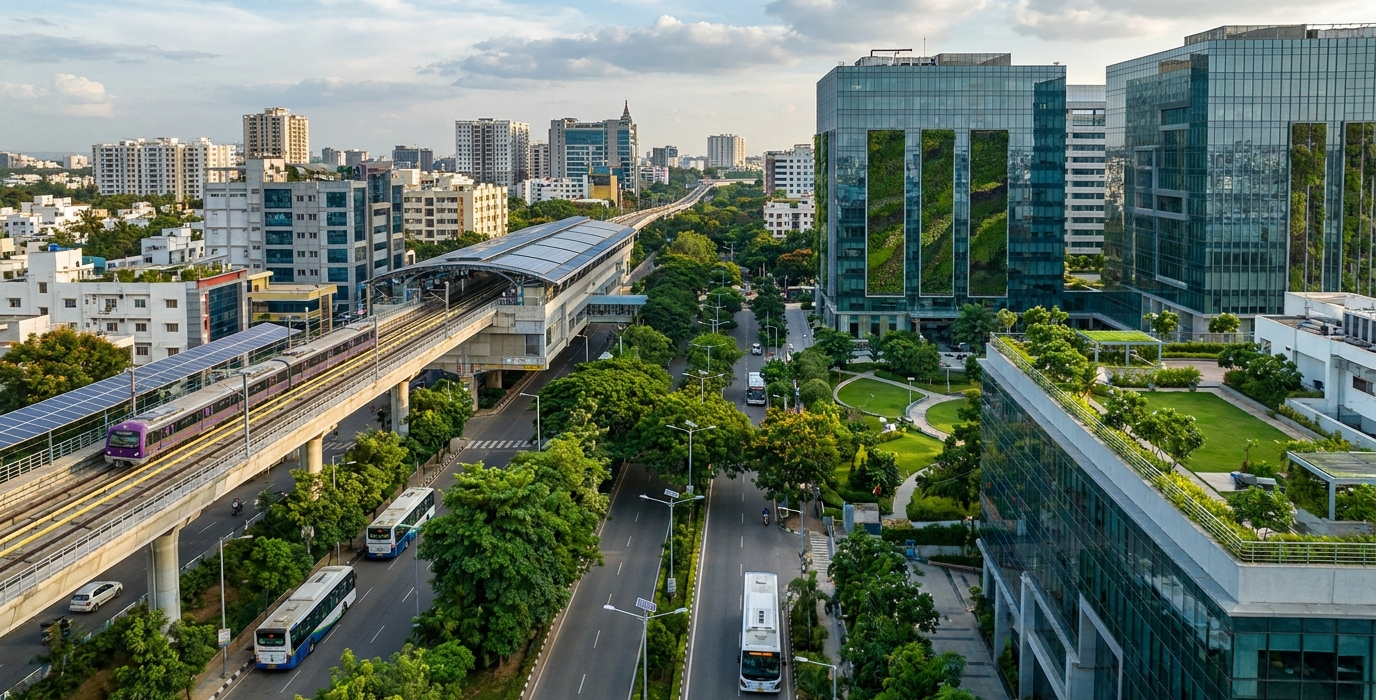
Key Takeaways
- Bengaluru is aggressively deploying smart city technologies to tackle its burgeoning environmental challenges.
- IoT sensors are revolutionising waste management, enabling real-time tracking and optimising collection routes.
- Smart grids and renewable energy integration are key to powering Bengaluru’s sustainable growth.
- Water conservation efforts are being amplified through smart metering and leak detection systems.
- Urban green spaces are getting a tech-driven boost, with smart irrigation and biodiversity monitoring.
The Pulse of Progress: Bengaluru’s Smart City Blueprint
Bengaluru, India’s vibrant tech hub, is facing a defining moment. As its population swells and its economic engine roars, the city grapples with unprecedented environmental pressures. Yet, amidst the concrete and ceaseless hum of innovation, a deliberate and ambitious transformation is underway. This isn’t just about adding more gadgets; it’s about weaving a sophisticated digital fabric to mend and enhance the city’s ecological health. By 2026, Bengaluru is poised to become a living laboratory for urban sustainability, demonstrating how cutting-edge technology can pave the way for a greener, more liveable future.
The push is spearheaded by initiatives like the Smart Cities Mission, which provides a framework for integrating technology into urban infrastructure. This is more than just a government directive; it’s a call to action for citizens and industries alike. We’re seeing a dynamic interplay between policy, private sector innovation, and community engagement. The goal is to move beyond reactive problem-solving and embrace a proactive, data-driven approach to environmental stewardship. This article delves into the specific technologies taking root and how they are reshaping Bengaluru’s relationship with its environment.
Waste Not, Want Not: IoT Revolutionises Garbage Management
One of the most visible challenges in any rapidly growing metropolis is waste management. Bengaluru, with its millions of residents, generates mountains of refuse daily. Traditionally, this process has been inefficient, often relying on fixed schedules and manual oversight. However, the advent of the Internet of Things (IoT) is fundamentally altering this landscape. Hundreds, soon to be thousands, of smart sensors are being deployed in waste bins across the city. These sensors are equipped to measure fill levels, temperature, and even detect the presence of hazardous materials.
This real-time data is fed into a central command centre. Here, sophisticated algorithms analyse the information to optimise collection routes. Instead of trucks driving to bins that are only half-full, they are dispatched precisely when and where they are needed. This drastically reduces fuel consumption, cutting down on emissions and operational costs. Furthermore, it prevents overflowing bins, a common sight in many urban areas, thereby improving public health and aesthetics. A surprising fact: some of these smart bins are even equipped with solar-powered compactors, further reducing their environmental footprint and the frequency of collection required.
Powering the Future: Smart Grids and Renewable Energy Synergy
Bengaluru’s insatiable demand for energy is a critical component of its growth, but also a significant environmental concern. The city is making substantial strides in modernising its power infrastructure with smart grid technologies. These grids go beyond simple electricity distribution; they are intelligent networks that can monitor, control, and respond to changes in energy supply and demand in real-time. This allows for better integration of renewable energy sources, which are inherently variable.
Think of it as a dynamic balancing act. When solar panels on rooftops generate excess power, the smart grid can automatically redirect it to areas of high demand or store it in batteries. Conversely, during periods of low generation, it can seamlessly draw power from conventional sources or other grid-connected renewable farms. This flexibility is crucial for reducing reliance on fossil fuels. By 2026, you’ll see more residential and commercial buildings actively participating in this energy ecosystem, becoming ‘prosumers’ – both consumers and producers of electricity. The city is also investing heavily in large-scale solar parks on its outskirts, ensuring a cleaner energy mix for its booming economy.
Water Wisdom: Conserving a Precious Resource with Smart Tech
Water scarcity is a looming threat for many Indian cities, and Bengaluru is no exception. The city’s reliance on groundwater and the Cauvery River water supply system means that every drop counts. Smart technology is now playing a pivotal role in ensuring that this vital resource is used judiciously. A key development is the widespread adoption of smart water meters in both residential and industrial areas. These meters transmit consumption data remotely, eliminating the need for manual readings and reducing the chances of human error.
Beyond just measuring usage, advanced leak detection systems are being deployed across the vast municipal water network. Using acoustic sensors and pressure monitors, these systems can pinpoint leaks that might otherwise go unnoticed for weeks or months, leading to significant water loss. This data allows the Bangalore Water Supply and Sewerage Board (BWSSB) to respond much more rapidly to repair faults. Imagine a proactive alert sent directly to a maintenance crew the moment a significant leak is detected, rather than waiting for a citizen complaint. This integrated approach is crucial for building water resilience in the face of changing rainfall patterns and increasing demand.
Greening the Urban Canopy: Smart Parks and Biodiversity
Bengaluru is famously known as the ‘Garden City’, but maintaining its lush green cover amidst rapid urbanisation is a constant battle. Smart technologies are now being employed to revitalise and better manage these essential urban oases. Smart irrigation systems are a prime example. Instead of watering parks on a fixed schedule, these systems use soil moisture sensors and local weather data to determine exactly when and how much water is needed. This prevents overwatering, conserves water, and ensures healthier plant growth.
Beyond irrigation, we’re seeing the emergence of smart benches equipped with public Wi-Fi and charging points, often powered by small solar panels. These are designed to encourage people to spend more time outdoors. More critically, technological solutions are being explored for biodiversity monitoring. For instance, acoustic sensors can be deployed to identify bird species by their calls, providing valuable data on urban wildlife populations without intrusive human observation. This helps urban planners understand the ecological health of their green spaces and make informed decisions about conservation efforts. A surprising fact: some of these smart parks are also incorporating sensors to monitor air quality, providing citizens with real-time data about their immediate environment.
The Connected Citizen: Data for a Sustainable Lifestyle
Ultimately, the success of Bengaluru’s green transformation hinges on the active participation of its citizens. Smart city initiatives are increasingly focused on empowering individuals with information and tools to make more sustainable choices. Mobile applications are being developed that provide real-time data on air quality, traffic congestion, and public transport availability. These apps can suggest eco-friendly routes or encourage the use of public transport by highlighting its efficiency.
For instance, a resident planning their commute can check an app to see the current air quality index in different parts of the city and choose a route that minimises exposure to pollutants. Similarly, smart parking solutions, integrated with mobile apps, can guide drivers directly to available spots, reducing the time spent circling and consequently, fuel consumption and emissions. The goal is to make sustainable choices convenient and intuitive. By providing accessible data and user-friendly interfaces, Bengaluru aims to foster a culture of environmental responsibility that extends from the municipal corporation to every household. This interconnectedness is key to achieving long-term ecological balance.
Frequently Asked Questions
What is the primary goal of Bengaluru’s smart city initiatives regarding the environment?
The primary goal is to leverage technology to address pressing environmental challenges like waste management, water scarcity, energy consumption, and pollution, making the city more sustainable and liveable.
How are smart grids helping Bengaluru become greener?
Smart grids enable better integration of renewable energy sources like solar power, optimise energy distribution, reduce transmission losses, and improve overall grid efficiency, leading to a cleaner energy mix.
Are citizens actively involved in Bengaluru’s green smart city efforts?
Yes, initiatives aim to empower citizens with data through mobile apps for making sustainable choices, encourage public transport use, and promote responsible resource consumption, fostering community engagement.
What role do sensors play in managing Bengaluru’s waste?
IoT sensors in waste bins provide real-time fill-level data, allowing for optimised collection routes that reduce fuel consumption, emissions, and prevent overflowing bins, thus improving sanitation and public health.