Key Takeaways
- AI tools are no longer futuristic concepts but practical assistants for Indian scriptwriters, streamlining idea generation and character development.
- Platforms like PlotBot and ScriptSage are enabling faster iteration of scenes and dialogues, allowing writers to explore more creative avenues.
- While AI offers significant advantages, the human element of emotional depth and cultural nuance remains paramount, with AI acting as a co-pilot, not a replacement.
- The integration of AI is set to democratize scriptwriting, potentially lowering barriers to entry for new talent and diversifying storytelling.
The Dawn of the Algorithmic Auteur: AI in Indian Scriptwriting
The flickering lights of Mumbai’s studios are no longer just illuminated by the glow of projectors and the spark of human creativity. A new kind of light, digital and precise, is beginning to shape the very narratives that captivate millions across India and the globe. Artificial intelligence, once a whisper in the corridors of technology, is now a tangible force in Bollywood, quietly revolutionizing the art of scriptwriting. For seasoned veterans and aspiring storytellers alike, AI is emerging not as a threat, but as a powerful co-pilot, ready to navigate the complex terrain of plot, character, and dialogue.
We’re seeing a paradigm shift from manual brainstorming to intelligent assistance. These AI tools are designed to understand narrative structures, character arcs, and even the subtle nuances of human emotion, offering suggestions that can spark inspiration or refine existing ideas. It’s about augmenting, not replacing, the storyteller’s vision. This technology promises to accelerate the often arduous process of script development, allowing writers to focus on the core creative elements that make a story resonate deeply with audiences.
Unlocking Creative Potential: AI as a Collaborative Partner
Imagine this: you’re staring at a blank page, a germ of an idea for a historical drama set against the backdrop of the Maratha empire, but you’re struggling to craft compelling dialogues that feel authentic to the 17th century. This is where AI scriptwriting assistants step in, transforming your creative block into a fertile ground for exploration. Platforms like ‘ScriptSage’ or ‘NarrativeCraft’ can analyze vast datasets of historical texts, cinematic dialogues, and character archetypes to generate contextually relevant lines, suggest plot twists, or even flesh out character backstories.
These AI tools are becoming increasingly sophisticated, capable of understanding and replicating various writing styles and genres. You can feed them your initial premise, and they can return multiple story outlines, character profiles with detailed motivations, or even draft entire scenes based on your specifications. This doesn’t mean surrendering creative control; rather, it’s about having an incredibly efficient brainstorming partner who can offer suggestions you might not have considered. It’s like having a team of researchers and junior writers at your fingertips, tirelessly working to refine your vision.
One surprising fact is that some AI models are now being trained on regional Indian languages and dialects to ensure that the generated content respects linguistic diversity and cultural authenticity, moving beyond generic Hindi or English scripts. This focus on regional specificity is crucial for Bollywood’s vast and varied audience.
From Blank Page to Bestseller: Streamlining the Writing Process
The sheer volume of content demanded by the streaming era means that efficiency is paramount. AI can significantly reduce the time spent on tedious tasks like formatting, generating variations of a scene, or even checking for continuity errors. This allows writers to dedicate more energy to crafting compelling narratives and developing emotionally resonant characters. For a writer in a city like Chennai, working on a Tamil film, this could mean exploring different narrative threads for a romantic comedy much faster than before.
The ability to quickly generate multiple versions of a scene is another game-changer. A writer can ask the AI to rewrite a tense confrontation from a different character’s perspective or to inject more humor into a comedic exchange. This iterative process, once time-consuming, can now happen in minutes, empowering writers to experiment and perfect their craft with unprecedented speed.
Navigating the Nuances: The Human Touch in an AI World
While AI can generate technically proficient scripts, the heart and soul of a story – its emotional depth, cultural resonance, and authentic human experience – still rely heavily on the writer. AI models are trained on existing data, which means they can sometimes fall into predictable patterns or lack the genuine spark of lived experience. The subtle art of conveying unspoken emotions, the cultural subtext that defines an Indian family drama, or the razor-sharp wit that defines a particular character’s voice, these are still the domain of human intuition and empathy.
Consider the complexity of portraying a family dynamic in a Bengali household, where unspoken gestures and familial obligations often carry more weight than explicit dialogue. An AI can suggest dialogue, but it’s the human writer who understands the cultural significance of a mother’s worried glance or a father’s silent pride. This is where the collaboration becomes truly powerful. The AI provides the structure and suggestions, while the human writer infuses it with the emotional intelligence and cultural understanding that makes a story truly connect with its audience.
This isn’t about AI taking over; it’s about AI becoming an indispensable tool. Think of it like a chef using advanced kitchen equipment. The equipment aids in precise cooking, but the chef’s palate, creativity, and understanding of flavour combinations are what create a truly memorable dish. Similarly, the writer’s lived experience, emotional intelligence, and unique perspective are what elevate an AI-assisted script into compelling cinema.
The ‘Why’ Behind the Words: Emotion and Empathy
The most effective scripts are those that tap into universal human emotions. While AI can identify patterns in emotional expression from data, it doesn’t *feel* those emotions. A writer’s ability to draw from their own experiences, observations, and empathy is what imbues characters with a sense of realness and makes audiences care. The subtle tremor in a lover’s voice, the flicker of doubt in a villain’s eyes, the quiet strength of a determined protagonist – these are born from human understanding.
“AI can provide the scaffolding, the bricks and mortar of a story, but it is the human writer who imbues the narrative with its soul and makes it breathe.”
This highlights the essential truth: AI is a powerful amplifier of human creativity. It can help explore narrative possibilities at an unprecedented scale, but it cannot replicate the lived experience and emotional depth that a human writer brings to the table. The future of scriptwriting lies in this harmonious fusion, where technology enhances the writer’s capabilities without diminishing their essential role.
Democratizing Storytelling: AI and the Next Generation of Writers
One of the most exciting prospects of AI integration in scriptwriting is its potential to democratize the industry. Historically, breaking into the film industry, especially in a competitive hub like Mumbai, has required significant networking, access to resources, and often, a lengthy apprenticeship. AI tools can level the playing field by providing aspiring writers with sophisticated assistance that was once only accessible to established professionals.
Imagine a young writer from a small town in Rajasthan with a brilliant idea for a Rajasthani folk tale-inspired film. Previously, they might have lacked the technical expertise or industry connections to develop their script effectively. Now, with accessible AI platforms, they can refine their plot, develop nuanced characters, and generate polished dialogue, significantly improving their chances of getting their story heard. This opens doors for diverse voices and perspectives that might have otherwise remained untapped.
Furthermore, AI can assist in the translation and adaptation of stories across different languages and cultures. This could lead to a surge in cross-cultural storytelling, allowing Indian narratives to reach wider international audiences and vice-versa, with greater ease and authenticity. The ability to quickly generate script variations for different regional markets within India is also a significant advantage, fostering a more inclusive cinematic landscape.
Bridging the Gap: Skills for the AI-Augmented Writer
This doesn’t mean writers will no longer need traditional skills. Instead, the skillset will evolve. Future scriptwriters will need to be adept at prompt engineering – understanding how to effectively communicate with AI to get the desired output. They will also need strong critical thinking and editing skills to discern the best AI-generated suggestions and weave them seamlessly into their original vision. The ability to understand narrative theory and character psychology will become even more critical, as these are the foundational elements that guide the AI and are ultimately interpreted and refined by the human writer.
The sheer accessibility of these tools is a surprising factor. What was once the exclusive domain of expensive software and specialized consultants is now available through user-friendly web interfaces, often with free or affordable subscription models, making it a viable option for independent filmmakers and first-time writers.
The Practical Application: Tools and Platforms in Use
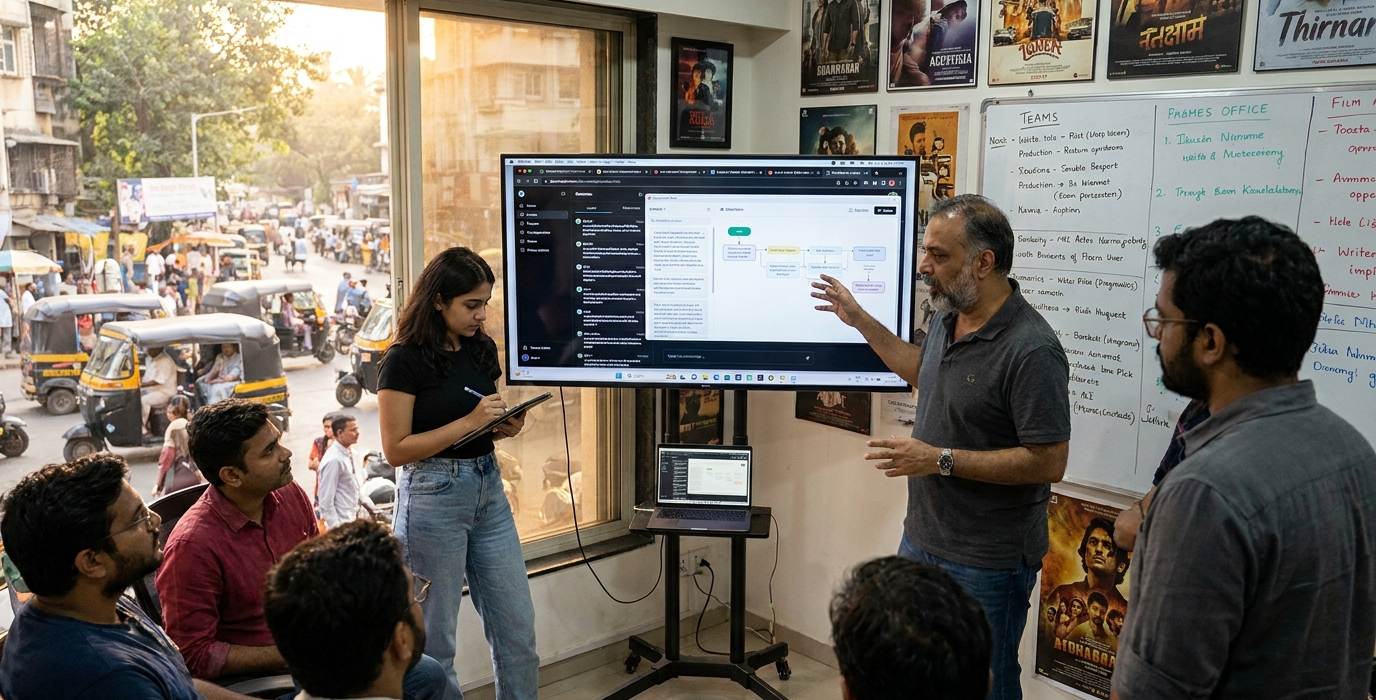
The landscape of AI scriptwriting tools is rapidly expanding, offering a range of functionalities for writers at every stage of the creative process. These platforms are not hypothetical; they are actively being used by writers and production houses globally, with increasing adoption in India. Think of tools that can help you generate loglines, develop character profiles, outline plot points, and even write dialogue based on specific character traits and scene objectives.
For example, ‘PlotBot’ might be your go-to for brainstorming multiple plot variations for a thriller, offering suggestions for red herrings, plot twists, and escalating tension. ‘ScriptSage’ could then be employed to flesh out the character dialogues, ensuring they align with the established personalities and the overall tone of the narrative. These tools can analyze existing scripts to identify common narrative tropes or suggest ways to subvert them, adding a layer of meta-analysis to the writing process.
One crucial aspect is the AI’s ability to analyze audience engagement data (anonymized, of course) to suggest elements that might resonate more strongly with specific demographics. This allows for data-informed creative decisions, helping writers tailor their stories without sacrificing artistic integrity.
Real-World Examples: From Concept to Screen
While specific studio adoption details are often confidential, anecdotal evidence from writing workshops and industry panels suggests that AI is being used for early-stage concept development and draft refinement. A writer might use AI to generate a dozen different opening scenes for a romantic comedy, then pick the strongest one and further develop it. Another might use AI to explore alternative endings for a suspense film, helping them to pinpoint the most impactful conclusion.
The integration is subtle but profound. Instead of spending hours researching historical details for a period piece, an AI can provide accurate information and suggest dialogue that reflects the era. For a science fiction epic, AI can help generate complex technological concepts or alien languages, saving writers immense time and effort. The surprising specificity here is that some AI tools can even generate scene descriptions that include camera angles and mood lighting suggestions, giving directors a pre-visualized starting point.
The Future of Storytelling: Synergy Between Human and Machine
The future of Indian cinema, and indeed global cinema, is poised for an exciting synergy between human creativity and artificial intelligence. We are not looking at a scenario where AI replaces writers, but rather one where writers are empowered by AI to reach new creative heights. The stories that will captivate us in the coming years will likely be born from this collaborative spirit.
AI’s ability to process vast amounts of data allows it to identify trends, analyze narrative structures, and even predict audience reception with a degree of accuracy previously unimaginable. This data-driven insight can help writers make more informed decisions about their narratives, ensuring their stories are not only compelling but also commercially viable. It’s about enhancing the storyteller’s toolkit, not diminishing their role.
The rapid advancements in AI mean that these tools will become even more intuitive and sophisticated. We can expect AI to play a significant role in character consistency checks, dialogue pacing optimization, and even identifying potential plot holes that might have been missed by the human eye. This will lead to more polished, cohesive, and engaging cinematic experiences for audiences worldwide.
Ethical Considerations and Evolving Narratives
As we embrace these powerful tools, it’s crucial to also consider the ethical implications. Questions around authorship, originality, and the potential for bias in AI-generated content need careful consideration. Transparency in how AI is used in the creative process will be key to maintaining trust with audiences. The industry needs to establish clear guidelines and best practices to ensure that AI serves as a tool for creativity and not a substitute for it.
The evolution of storytelling will undoubtedly be shaped by this technological leap. The most successful writers will be those who embrace AI as a powerful collaborator, leveraging its capabilities to amplify their own unique vision and tell stories that are more imaginative, more resonant, and more impactful than ever before. This fusion promises a golden age for narrative creation, where the magic of human storytelling is augmented by the precision and power of artificial intelligence.
Frequently Asked Questions
Is AI going to replace scriptwriters in Bollywood?
It’s highly unlikely that AI will entirely replace scriptwriters. Instead, AI is emerging as a powerful tool to assist and augment the creative process. It can help with brainstorming, generating initial drafts, and refining dialogue, but the human element of emotional depth, cultural nuance, and unique storytelling vision remains indispensable.
What are some of the benefits of using AI for scriptwriting?
AI can significantly speed up the writing process, help overcome writer’s block by suggesting ideas, improve narrative structure, and assist in developing characters and dialogue. It also has the potential to democratize scriptwriting by making sophisticated tools more accessible to aspiring writers.
Can AI generate scripts that are culturally relevant to India?
Yes, AI models are increasingly being trained on diverse datasets, including regional Indian languages and cultural contexts. While human oversight is crucial for ensuring true cultural authenticity and avoiding stereotypes, AI can be a valuable tool for developing scripts that resonate with specific Indian audiences, moving beyond generic storytelling.
What skills will scriptwriters need in the age of AI?
Future scriptwriters will need strong critical thinking and editing skills to effectively use AI suggestions. They will also need to develop skills in prompt engineering – learning how to best communicate with AI – and maintain a deep understanding of narrative theory and character psychology to guide the AI and infuse the story with human emotion.