Key Takeaways
- AI tutors are rapidly evolving beyond basic chatbots, offering sophisticated, personalized learning experiences for students across India.
- These advanced AI tutors can adapt to individual learning styles, identify knowledge gaps, and provide real-time feedback, mimicking a human tutor’s approach.
- Key players are integrating features like natural language processing for deeper comprehension, adaptive quizzing, and even emotional intelligence to foster engagement.
- While accessibility and affordability remain crucial, the 2026 landscape shows a strong push towards making these powerful AI tools a standard part of the educational toolkit.
The Dawn of the AI-Powered Learning Companion
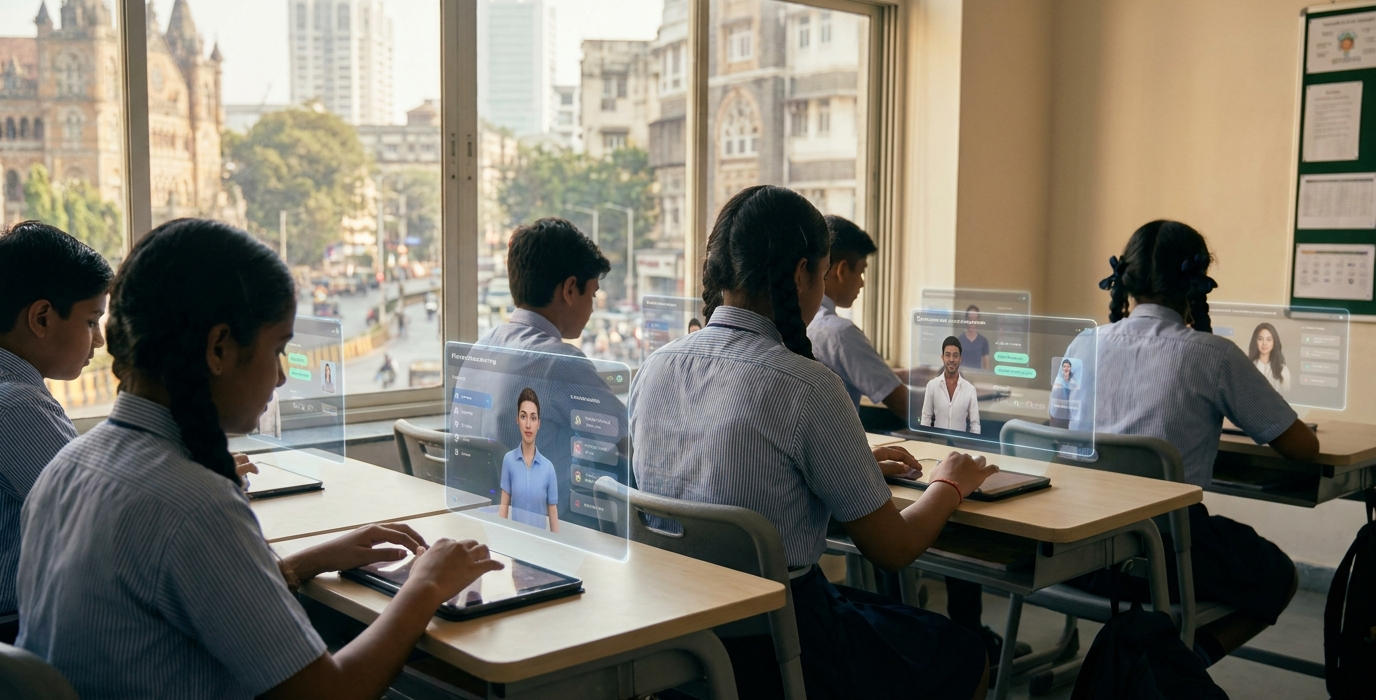
The hum of innovation in India’s edtech sector is louder than ever, and 2026 marks a significant turning point. We’re witnessing the mainstreaming of AI tutors, moving far beyond the rudimentary chatbots of yesteryear. These aren’t just question-and-answer machines; they are sophisticated learning companions designed to understand and adapt to each student’s unique journey. Imagine a tutor that never tires, always remembers your specific struggles, and can explain complex concepts in multiple ways until you grasp them. This is the reality that AI tutors are bringing to classrooms and homes across the nation, from bustling Mumbai to serene Shillong.
The core promise of these AI tutors lies in hyper-personalization. Traditional education often follows a one-size-fits-all model. But AI is shattering that mould by analysing your learning pace, identifying precisely where you falter, and tailoring content accordingly. This means a student struggling with quadratic equations in Delhi might receive different practice problems and explanations than another student facing the same challenge in Chennai, but with a different underlying misconception. This granular approach ensures no student is left behind, and high-achievers are continually challenged. The speed at which these AI systems can process data and adapt is truly remarkable, offering a level of individual attention previously unimaginable for most.
Beyond Repetition: Understanding Nuance
What sets the 2026 crop of AI tutors apart is their enhanced ability to understand nuance. They are moving beyond simple keyword recognition to grasp the context and intent behind a student’s query. This means you can ask questions in a more natural, conversational way, and the AI will understand your underlying confusion, not just the words you used. For instance, if you’re studying the Mughal Empire and ask, “But why did Aurangzeb do that thing with the temples?” an advanced AI wouldn’t just pull up facts about temple policies. It would understand you’re seeking the motivations and the historical context behind his actions, offering a more insightful, essay-style explanation. This deep understanding fosters critical thinking, a skill paramount in today’s dynamic world.
Unlocking Student Potential with Adaptive Learning
The true power of these AI tutors is their adaptive learning capabilities. They don’t just present information; they actively guide students through their learning path. This involves sophisticated algorithms that analyse performance on quizzes, homework, and even in-class participation (where integrated). If an AI detects a student consistently making errors on a particular type of physics problem, it won’t just keep presenting more of the same. It will identify the root cause – perhaps a misunderstanding of Newton’s Third Law – and provide targeted explanations, supplementary materials, and tailored practice exercises to address that specific gap. This intelligent intervention is crucial for building a strong foundational understanding, preventing small issues from snowballing into significant academic hurdles.
Real-Time Feedback, Real Progress
One of the most significant advantages is the provision of instantaneous, actionable feedback. Gone are the days of waiting for a teacher to grade assignments, by which time the learning moment might have passed. An AI tutor can evaluate an answer on the spot, highlighting errors, explaining why it’s incorrect, and suggesting ways to improve. This immediate feedback loop is incredibly effective for reinforcing correct concepts and correcting misconceptions before they become ingrained. For students preparing for competitive exams like the JEE or NEET, this real-time analysis is a game-changer, allowing for continuous refinement of their strategies and knowledge base. This constant, guided practice accelerates learning and builds confidence.
The Evolving Landscape: Key Players and Innovations
The edtech market in India is buzzing with activity, and several major players are leading the charge in developing sophisticated AI tutors for 2026. Companies like BYJU’S, Unacademy, and Vedantu are heavily investing in AI research and development, aiming to integrate these advanced features into their existing platforms. Beyond these giants, a wave of promising startups is emerging, focusing on niche areas like language learning or STEM subjects. For example, a startup based in Bengaluru might be developing an AI tutor specifically for advanced Kannada literature, a testament to the growing specialization. These innovations are not just about replicating human tutors; they’re about creating entirely new paradigms for learning.
One surprising innovation we’re seeing is the incorporation of natural language generation (NLG). This allows AI tutors to not only understand your questions but also to generate coherent, human-like explanations and summaries. This means the AI can explain a historical event, a mathematical theorem, or a complex scientific process in a way that feels genuinely engaging and easy to follow. Furthermore, some platforms are experimenting with emotional intelligence (EI) in their AI. While still in its nascent stages, the goal is to detect a student’s frustration or disengagement and adjust the teaching style accordingly, offering encouragement or a change of pace. This empathetic approach aims to create a more supportive and motivating learning environment.
AI Tutors in Action: Case Studies
Consider the experience of a student in a remote village in Rajasthan preparing for their Class 10 board exams. Access to quality human tutors might be limited. With an AI tutor, this student can receive personalized lessons on trigonometry, get instant feedback on practice problems, and access explanations tailored to their specific learning style. Similarly, a student in a metro city struggling with advanced physics concepts for engineering entrance exams can benefit from an AI that identifies their conceptual gaps in quantum mechanics and provides targeted modules. These AI tutors are democratizing access to high-quality education, bridging geographical and socio-economic divides. They are becoming essential tools for equitable learning.
Integrating AI Tutors into Your Child’s Education
As parents and educators, you’re likely wondering how to best leverage these emerging AI tutors. The first step is to identify your learning goals. Are you looking to supplement classroom learning, prepare for specific exams, or explore a new subject? Once you have a clear objective, research platforms that align with those needs. Look for AI tutors that offer adaptive learning paths, detailed progress reports, and robust feedback mechanisms. Many platforms offer free trials, allowing you to test their functionality before committing. Don’t shy away from exploring different options; the AI tutor that works best for one student might not be ideal for another.
It’s also crucial to remember that AI tutors are tools to enhance, not replace, human interaction. They should complement the guidance of teachers and parents. Encourage your child to use the AI tutor as a resource for clarification, practice, and deeper exploration. Discuss their learning experiences with them, asking what they find helpful and where they encounter challenges. This collaborative approach ensures that the AI is being used effectively and that your child is developing a well-rounded understanding of the subject matter. We must foster a mindset where AI is seen as a powerful assistant in the learning process.
A Surprising Benefit: Reduced Learning Anxiety
One of the less-discussed but incredibly valuable benefits of AI tutors is their potential to reduce learning anxiety. Many students feel self-conscious asking questions repeatedly in a classroom setting for fear of judgment. An AI tutor provides a safe, non-judgmental space to ask anything, no matter how basic it might seem. This anonymity can be incredibly liberating, encouraging students to explore their doubts without hesitation. This fosters a more relaxed and confident approach to learning, allowing students to focus on understanding rather than on external pressures. It’s a subtle but powerful shift in the learning dynamic.
Addressing Concerns: Accessibility, Ethics, and the Future
While the excitement around AI tutors is palpable, it’s vital to address the concerns that naturally arise. Accessibility and affordability remain key challenges. While many platforms are striving for cost-effectiveness, ensuring widespread access, especially in rural and underserved areas, requires continued effort and innovation. Governments and private organizations must collaborate to bridge this digital divide. We need policies that promote equitable distribution of these advanced educational resources. The potential for AI to exacerbate existing inequalities is real, and proactive measures are essential to prevent this.
Another critical area of discussion is data privacy and ethical AI development. As AI tutors collect vast amounts of student data to personalize learning, robust safeguards are paramount. Parents need assurance that their children’s data is secure and used responsibly. Transparency in how algorithms work and how data is handled is crucial for building trust. We must ensure that AI systems are free from bias and promote inclusive learning environments for all students. The ethical framework governing AI in education needs to evolve alongside the technology itself.
The ‘Digital Divide’ and AI Solutions
The persistent ‘digital divide’ in India means that not every student has consistent internet access or compatible devices. To counter this, innovative solutions are emerging. Offline functionality for AI tutor modules is becoming a priority for many developers. Furthermore, initiatives by NGOs and government bodies to provide subsidized tablets and internet access in schools are crucial. We’re also seeing the development of AI tutors that can run on low-bandwidth connections, making them accessible even in areas with less robust infrastructure. This focus on inclusivity is vital for realizing the full potential of AI in education for every Indian child.
The Human Element: Teacher and AI Collaboration
The rise of AI tutors does not signal the obsolescence of human teachers. Instead, it heralds a new era of teacher-AI collaboration. AI tutors can handle repetitive tasks, provide personalized practice, and offer instant feedback, freeing up teachers to focus on higher-order skills. Teachers can dedicate more time to fostering critical thinking, creativity, emotional development, and complex problem-solving. They can use the data provided by AI tutors to gain deeper insights into their students’ learning needs and tailor their classroom instruction accordingly. This synergy allows educators to be more effective and impactful than ever before.
Imagine a teacher in a Kendriya Vidyalaya reviewing an AI-generated report that flags a common misconception among their students regarding chemical bonding. Armed with this insight, the teacher can then design an engaging classroom activity to address this specific challenge, perhaps using interactive models or group discussions. The AI provides the diagnostic power, and the teacher provides the human touch, pedagogical expertise, and emotional support. This blended approach represents the future of education, where technology amplifies human capability. It’s about augmenting, not replacing, the invaluable role of educators.
“AI tutors are not just about teaching facts; they are about cultivating lifelong learners by making education deeply personal, accessible, and engaging for every student.”
A Surprising Fact: AI Tutors and Language Preservation
Here’s a surprising fact: advanced AI tutors are also playing a role in language preservation. In regions with diverse linguistic landscapes, AI can be developed to teach and reinforce local dialects and regional languages, which are often under pressure from dominant global languages. For example, an AI tutor could be designed to help students in West Bengal learn and practice Bengali literature with interactive exercises and personalized feedback, ensuring the rich cultural heritage associated with these languages is passed down. This goes beyond academic subjects to preserving cultural identity.
Looking Ahead: The Future of AI in Education
The trajectory of AI tutors in 2026 points towards a future where personalized, adaptive learning is the norm, not the exception. We can expect even more sophisticated AI capabilities, including AI-powered virtual labs that allow students to conduct experiments safely and cost-effectively, and AI career counsellors that can analyze student strengths and interests to suggest potential career paths. The integration of AI into educational assessments will also become more profound, moving beyond rote memorization to evaluating higher-order thinking skills. The classroom of the future will likely be a dynamic environment where students learn from both human educators and intelligent digital companions.
The goal is to create an educational ecosystem that is holistic, inclusive, and highly effective. AI tutors are a significant step in that direction. By embracing these technologies responsibly and thoughtfully, we can unlock unprecedented opportunities for students across India and the world. The continuous evolution of AI promises to make learning more efficient, more enjoyable, and ultimately, more empowering for generations to come. We are on the cusp of a transformative era in education, driven by intelligent machines working in concert with human ingenuity.
Frequently Asked Questions
What makes AI tutors different from traditional online learning platforms?
AI tutors offer hyper-personalized learning paths that adapt in real-time to your individual pace and understanding. Unlike static online courses, they actively identify knowledge gaps and provide tailored feedback and explanations, much like a human tutor would.
Are AI tutors available for all subjects and age groups?
The range of subjects and age groups covered by AI tutors is rapidly expanding. While core subjects like Math, Science, and English are widely available for school-level students, specialized AI tutors for subjects like coding, music, and even advanced university courses are becoming more common in 2026.
How can I ensure the AI tutor is safe and effective for my child?
Look for platforms that are transparent about their data privacy policies and ethical AI practices. Reading reviews, checking for certifications, and utilizing free trial periods can help you assess the quality and suitability of an AI tutor. Prioritize those that offer detailed progress reports and allow for parental oversight.
Will AI tutors replace teachers in the future?
No, AI tutors are designed to augment, not replace, human teachers. They handle personalized practice and feedback, freeing teachers to focus on fostering critical thinking, creativity, and emotional development. The future of education lies in the collaboration between teachers and AI tools.