Key Takeaways
- Ladakh is rapidly emerging as a premier digital nomad destination, blending stunning natural beauty with developing infrastructure for remote work.
- Beyond Leh, smaller towns like Kargil and Nubra Valley are offering unique, off-the-beaten-path experiences for those seeking solitude and adventure.
- Essential considerations for a Ladakh digital nomad trip include reliable internet, accommodation options, acclimatisation to altitude, and respecting local culture and environment.
- The region’s growing appeal is driven by its affordability, safety, and the increasing availability of co-working spaces and tailored packages for remote workers.
Embracing the Sky: Ladakh’s Ascent as a Digital Nomad Haven
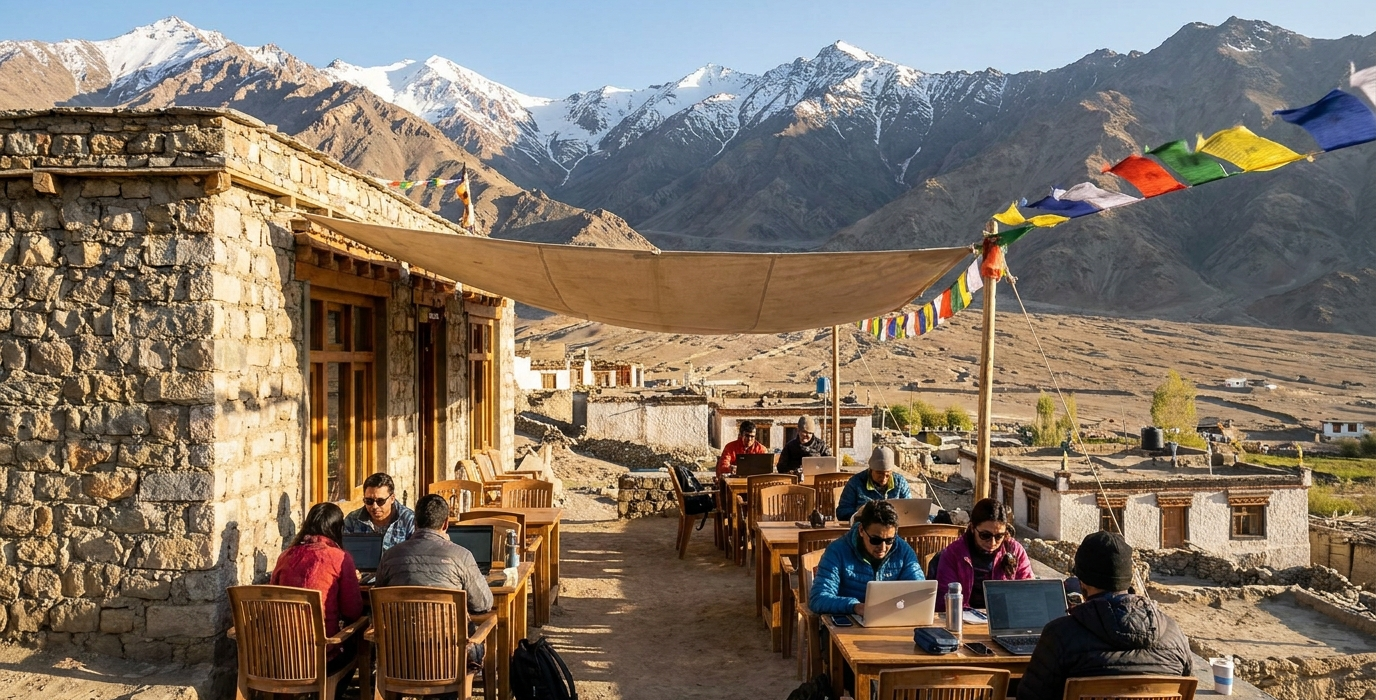
Imagine your office view being the majestic peaks of the Himalayas, the crisp mountain air fueling your productivity. This isn’t a far-fetched dream anymore; Ladakh, India’s northernmost union territory, is swiftly transforming into a magnet for digital nomads. For years, its breathtaking landscapes of stark deserts, azure lakes, and ancient monasteries have drawn trekkers and adventurers. Now, a new wave is arriving – remote workers seeking inspiration and a profound connection with nature.
The allure is undeniable. Ladakh offers a unique blend of serenity and adventure, a far cry from the bustling metropolises many remote professionals are accustomed to. As reliable internet connectivity slowly but surely expands beyond the main towns, and guesthouses begin to cater to longer stays with dedicated workspaces, the region is setting the stage for a sustainable digital nomad ecosystem. This shift is not just about Wi-Fi; it’s about embracing a lifestyle that prioritises well-being, mindful work, and an unparalleled connection with one of the world’s most awe-inspiring natural environments.
Leh: The Gateway to Your Himalayan Office
Leh, the capital of Ladakh, naturally serves as the primary hub for digital nomads. This vibrant town, perched at an altitude of over 11,000 feet, is remarkably well-equipped to handle the needs of remote workers. You’ll find a growing number of cafes offering decent Wi-Fi, some even boasting dedicated co-working corners. The infrastructure here is the most developed in the region, making it an accessible entry point for those new to high-altitude living.
Accommodation options in Leh range from budget-friendly guesthouses to more comfortable hotels, many of which are adapting to the needs of longer-stay visitors. Several places now offer packages that include workspace facilities, and some are even establishing small co-working spaces. The town’s proximity to essential services, including medical facilities and markets, provides a sense of security. Plus, the local culture is welcoming, and the sheer beauty of the surrounding Stok Kangri range and the Leh Palace offers constant visual respite.
Navigating Leh’s Connectivity and Comfort
While connectivity is improving, it’s crucial to manage expectations. Internet speeds can be variable, especially during peak tourist seasons or inclement weather. It’s wise to invest in a local SIM card from a provider with better coverage in the region, such as Airtel or Jio, and consider carrying a portable Wi-Fi hotspot as a backup. Many cafes and accommodations offer Wi-Fi, but it’s always best to confirm speeds and reliability before committing to a long stay.
The altitude in Leh is no joke. Acclimatisation is paramount for your health and productivity. Plan to spend at least two to three days resting and avoiding strenuous activity upon arrival. Stay hydrated with water and avoid alcohol. This initial period of adjustment will significantly enhance your comfort and ability to focus on your work, allowing you to truly appreciate the serene environment.
Beyond Leh: Kargil’s Quiet Charm and Connectivity
For those seeking a more tranquil experience, Kargil presents a compelling alternative. Located west of Leh, Kargil is the second-largest town in Ladakh and offers a distinct cultural flavour, with a stronger Islamic influence. While historically known for its strategic importance, Kargil is slowly opening up to the concept of remote work tourism, driven by its stunning natural beauty and a more laid-back pace of life.
The infrastructure in Kargil is less developed than in Leh, but progress is being made. You’ll find a growing number of guesthouses and homestays that are increasingly accommodating to remote workers, some offering basic workspace setups. The primary advantage of Kargil is its unspoiled beauty and the opportunity to connect with a less commercialised side of Ladakh. The Suru Valley and the path to Mulbekh offer incredible scenery and a sense of profound peace, ideal for focused work away from distractions.
Kargil’s Unique Appeal for the Intrepid Nomad
Internet connectivity in Kargil can be more challenging than in Leh, but it’s improving. Similar to Leh, securing a reliable local SIM card is your best bet. Some of the newer guesthouses are investing in better internet infrastructure, and there’s a noticeable effort to cater to the burgeoning remote worker demographic. When booking accommodation, specifically inquire about Wi-Fi availability and speed.
The true magic of Kargil lies in its accessibility to breathtaking natural wonders. The drive from Kargil towards Padum in Zanskar is spectacular, and the town itself serves as a gateway to historical sites like the Buddha statue at Mulbekh. For the digital nomad who values solitude and a deep immersion in culture and nature, Kargil offers an unparalleled opportunity to disconnect from the noise and reconnect with yourself, all while staying productive.
Nubra Valley: Adventure Meets Remote Work
The Nubra Valley, often referred to as the “valley of flowers,” is another gem in Ladakh’s crown, renowned for its sand dunes, double-humped Bactrian camels, and the Shyok River. While traditionally a tourist hotspot, its increasing accessibility and the growing desire for unique experiences are paving the way for its emergence as a niche digital nomad destination.
Imagine working from a comfortable homestay with panoramic views of the valley, stepping out for a camel ride at sunset, or exploring ancient monasteries like Diskit. This is the reality for digital nomads choosing Nubra. While connectivity can be a significant hurdle here compared to Leh or Kargil, a dedicated effort by some homestays and small lodges to provide stable internet is emerging. This is for the adventurous nomad who prioritises an extraordinary environment over guaranteed high-speed internet.
Embracing the Serenity of Nubra
Connectivity in Nubra Valley is the most variable of the locations discussed. Major tourist areas like Hunder and Diskit have some connectivity, but it’s often slow and unreliable. Your best strategy is to pre-book accommodation that explicitly states they cater to digital nomads and offer reliable Wi-Fi. Many guesthouses are upgrading their facilities, especially in response to demand from longer-stay visitors. Always confirm with them directly about the internet situation before you book.
The sheer beauty and unique activities in Nubra Valley make it an attractive, albeit challenging, option. The opportunity to witness the dramatic landscape shift from barren mountains to lush river valleys, all while maintaining some level of remote work capability, is incredibly appealing. It’s a place for those who can adapt and find inspiration in a truly wild and beautiful setting. Remember to pack accordingly, as evenings can get quite cold, even in summer.
Practicalities: Making Your Ladakh Digital Nomad Trip a Success
Embarking on a digital nomad journey to Ladakh requires meticulous planning. Beyond the allure of the mountains, you need to address the practicalities of remote work and high-altitude living. Your primary concern should be reliable internet access, followed closely by suitable accommodation and health considerations. Don’t underestimate the impact of altitude on your body and mind; it affects everyone differently.
Choosing the right time to visit is also crucial. The summer months (June to September) offer the best weather and accessibility, with most roads open. However, this is also peak tourist season, meaning higher prices and more crowds. The shoulder seasons (May and October) can offer a quieter experience with pleasant weather, but some services might be reduced, and the risk of early snowfall increases. Winter in Ladakh (November to March) is extremely challenging due to heavy snowfall and extreme cold, with most areas becoming inaccessible.
Essential Gear and Pre-Trip Preparations
When packing, think layers. Temperatures can fluctuate dramatically throughout the day and night. Essential items include thermal wear, a good quality down jacket, waterproof outer layers, sturdy hiking boots, sunscreen with a high SPF, sunglasses, and a wide-brimmed hat. For your work setup, ensure you have a reliable laptop, a portable charger or power bank, and any necessary adapters.
It is highly recommended to get a medical check-up before your trip and consult your doctor about altitude sickness medication, such as Diamox. Carry a comprehensive first-aid kit, including medication for common ailments like headaches, stomach issues, and allergies. Inform your travel insurance provider that you will be travelling to Ladakh and ensure your policy covers high-altitude trekking and potential medical emergencies. Familiarising yourself with basic Ladakhi phrases can also greatly enhance your interactions with locals.
The Evolving Infrastructure: What to Expect in 2026 and Beyond
Ladakh’s digital nomad scene is not static; it’s a dynamic and evolving landscape. As of August 2026, we’re seeing a concerted effort from both local entrepreneurs and government bodies to enhance infrastructure for remote workers. This includes the development of more co-working spaces, improvements in internet speeds, and the introduction of tailored packages for digital nomads seeking longer stays.
Several initiatives are underway to promote Ladakh as a sustainable remote work destination. This includes training local guesthouse owners to provide better amenities for remote workers and exploring renewable energy solutions to ensure consistent power supply, which is crucial for maintaining internet connectivity. The aim is to attract a responsible type of tourism that contributes positively to the local economy and respects the fragile Himalayan environment.
Future Trends and Opportunities
Looking ahead, expect to see a diversification of digital nomad hubs beyond Leh. Towns like Kargil and even more remote villages are being identified as potential locations for niche retreats focused on wellness, adventure, or specific professional development. This decentralisation could offer even more unique and immersive experiences for remote workers seeking to escape the ordinary.
The growing popularity of Ladakh among digital nomads is also fostering innovation in local businesses. We’re starting to see cafes offering dedicated work zones with charging points and faster Wi-Fi, and tour operators designing packages that combine work stints with guided excursions. This proactive approach by the local community is instrumental in making Ladakh a truly viable and attractive long-term destination for remote professionals. One surprising development we’ve observed is the increasing number of drone operators and photographers choosing Ladakh for its unparalleled visual appeal, leading to a demand for faster upload speeds in specific areas.
Comparing Options: Ladakh’s Digital Nomad Hubs
Choosing the right base in Ladakh depends on your priorities. Leh offers the most convenience and reliable infrastructure, making it ideal for first-timers or those who need guaranteed connectivity. Kargil provides a more authentic and peaceful experience, with improving, though less robust, infrastructure. Nubra Valley is for the truly adventurous nomad, offering unparalleled natural beauty at the cost of more significant connectivity challenges.
When considering your stay, it’s essential to look at what each location offers in terms of workspace, internet reliability, and proximity to amenities. Below is a comparative table to help you make an informed decision.
| Feature | Leh | Kargil | Nubra Valley |
|---|---|---|---|
| Internet Reliability | Good to Very Good (improving) | Moderate (improving) | Variable (challenging) |
| Co-working Spaces | Emerging to Available | Limited, primarily in guesthouses | Rare, often in dedicated homestays |
| Accommodation Options | Wide range (budget to luxury) | Good range (guesthouses, homestays) | Primarily guesthouses and homestays |
| Altitude | High (11,000+ ft) | High (8,000+ ft) | Moderate to High (varied) |
| Proximity to Amenities | Excellent | Good | Limited |
| Cultural Experience | Vibrant, accessible | Authentic, serene | Unique, adventurous |
| Overall Digital Nomad Suitability | High | Medium-High | Medium (for the adventurous) |
“Ladakh is more than just a destination; it’s an invitation to redefine your work-life balance. The silence here isn’t empty; it’s full of potential, waiting for you to tap into it.”
Frequently Asked Questions
What is the best time of year to visit Ladakh as a digital nomad?
The summer months, from June to September, offer the most favourable weather and accessibility for digital nomads. During this period, roads are generally clear, and most services are operational. However, be prepared for peak tourist season. Shoulder months like May and October can offer a quieter experience, but weather can be more unpredictable.
How can I ensure reliable internet access in Ladakh?
The most reliable way is to invest in a local SIM card from providers like Airtel or Jio, which generally offer better coverage. Always confirm internet speeds and reliability directly with your accommodation or co-working space before booking. Carrying a portable Wi-Fi hotspot can also serve as a useful backup.
What are the main health concerns for digital nomads in Ladakh?
The primary health concern is altitude sickness. It’s crucial to acclimatise properly by resting for the first 2-3 days upon arrival and staying hydrated. Consult your doctor about preventative medication like Diamox. Also, be prepared for fluctuating temperatures by packing appropriate clothing layers.
Are there co-working spaces available in Ladakh?
Yes, co-working spaces are emerging, particularly in Leh, with a few dedicated facilities and many cafes offering work-friendly zones. While Kargil and Nubra Valley have fewer formal co-working spaces, many guesthouses and homestays are adapting to provide workspace facilities for longer-stay guests. It’s advisable to research and confirm availability in your chosen location.
How can I respect the local Ladakhi culture and environment?
Be mindful of local customs and traditions. Dress modestly, especially when visiting monasteries. Always ask for permission before taking photographs of people. Minimise your environmental impact by avoiding single-use plastics, properly disposing of waste, and respecting the natural landscape. Engaging with locals respectfully and supporting local businesses will greatly enhance your experience.