Key Takeaways
- Indian AI startups are driving significant transformations across sectors like healthcare, agriculture, and finance, leveraging advanced technologies to solve local challenges.
- The pace of innovation is accelerating, with a growing focus on explainable AI and ethical considerations, ensuring trust and widespread adoption.
- Government initiatives and a burgeoning venture capital landscape are fuelling this growth, creating a fertile ground for new AI-powered solutions.
- Expect AI to become even more integrated into daily life, from hyper-personalised learning experiences to sophisticated climate resilience tools in the coming years.
The AI Tsunami: Indian Startups Riding the Wave of Innovation
The year 2026 marks a pivotal moment for India’s technological landscape, with Artificial Intelligence not just a buzzword but a tangible force reshaping industries from the ground up. Indian startups, once often seen as followers, are now at the forefront of AI innovation, developing solutions that are not only globally competitive but also uniquely tailored to the subcontinent’s diverse needs. We’re witnessing a surge of creativity and entrepreneurial spirit, where complex problems are being tackled with elegant AI-driven answers.
From the bustling tech hubs of Bengaluru and Hyderabad to emerging innovation centres in Tier-2 and Tier-3 cities, a new generation of founders is leveraging machine learning, natural language processing, and computer vision to create a profound impact. This isn’t just about incremental improvements; it’s about rethinking fundamental processes and unlocking efficiencies that were previously unimaginable. The narrative has shifted from simply adopting AI to actively creating and leading in its application.
We’re seeing a remarkable convergence of talent, capital, and supportive policies that are creating a fertile ecosystem for these AI pioneers. This proactive approach is crucial for a nation as dynamic and vast as India, where tailored solutions are often far more effective than one-size-fits-all approaches. The AI tsunami is here, and Indian startups are not just riding its crest; they are guiding its direction.
Healthcare’s Digital Diagnosis: AI for Accessible Wellness
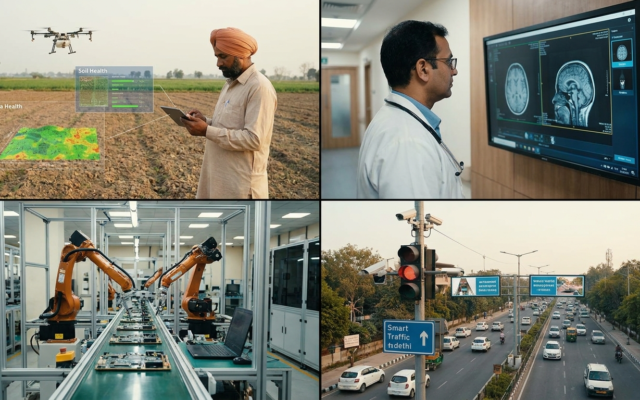
The healthcare sector, particularly in India, has long grappled with challenges of accessibility, affordability, and specialist shortages. This is precisely where AI startups are making their most profound mark in 2026. Solutions are emerging that promise to democratise healthcare, bringing expert-level diagnostics and personalised treatment plans to remote villages and crowded urban centres alike. Imagine a farmer in rural Rajasthan receiving an AI-powered analysis of their retinal scan, detecting early signs of diabetic retinopathy, all through a mobile app.
Companies are developing sophisticated AI algorithms capable of analysing medical images – X-rays, MRIs, CT scans – with a speed and accuracy that often rivals, and sometimes surpasses, human radiologists. This not only speeds up diagnosis but also helps alleviate the pressure on overworked medical professionals. Furthermore, AI-driven chatbots are providing initial consultations, triaging patients, and offering reliable health information, thereby reducing the burden on primary healthcare facilities.
A surprising fact is the rapid adoption of AI in predictive analytics for disease outbreaks. Startups are now feeding vast datasets of climate patterns, population movement, and historical health records into AI models to forecast potential epidemics. This proactive approach, exemplified by projects in regions like Kerala, allows public health officials to deploy resources more effectively, a capability that was science fiction just a few years ago. This isn’t just about treating illness; it’s about preventing it on a massive scale.
Greening the Fields: AI’s Role in Sustainable Agriculture
Agriculture, the backbone of the Indian economy, is undergoing a quiet revolution powered by AI. With the increasing pressures of climate change, shrinking arable land, and the need for greater food security, AI startups are providing farmers with tools to optimise their yields, conserve resources, and adapt to unpredictable weather patterns. The days of relying solely on traditional wisdom are giving way to data-driven precision farming, making agriculture more efficient and sustainable.
We’re seeing AI-powered platforms that analyse soil health, crop diseases, and weather forecasts to provide farmers with hyper-localised recommendations. This includes advice on the optimal time for sowing, irrigation schedules, and fertiliser application, thereby reducing wastage and increasing crop productivity. Computer vision, deployed through drones and ground sensors, can identify pest infestations or nutrient deficiencies at their nascent stages, allowing for targeted interventions rather than blanket applications of pesticides or fertilisers.
One fascinating development is the use of AI in water management. In water-stressed regions like Maharashtra and Gujarat, startups are integrating AI with IoT sensors to monitor soil moisture levels and predict water requirements with unprecedented accuracy. This allows for micro-irrigation techniques that use up to 40% less water. A truly surprising insight comes from the integration of AI with satellite imagery to predict crop quality and potential market prices, empowering farmers to make more informed decisions about selling their produce, thereby cutting out middlemen and improving their livelihoods. This data-driven approach is crucial for ensuring the long-term viability of Indian agriculture.
Fintech’s Intelligent Future: AI for Financial Inclusion and Security
The financial technology (fintech) sector in India has always been a hotbed of innovation, and AI is now accelerating this transformation in 2026. Startups are leveraging AI to bridge the gap in financial inclusion, providing access to credit, insurance, and investment opportunities for millions who were previously underserved. This is about more than just digital payments; it’s about building a more equitable financial ecosystem.
AI-powered credit scoring models are a game-changer. By analysing alternative data sources – such as mobile phone usage, utility bill payments, and even social media activity (with user consent, of course) – startups are creating credit profiles for individuals and small businesses lacking traditional banking histories. This opens up avenues for loans that were previously inaccessible, fuelling entrepreneurship and economic growth across the country. Furthermore, AI-driven fraud detection systems are becoming increasingly sophisticated, protecting both consumers and financial institutions from evolving cyber threats.
Consider the rise of AI-powered robo-advisors. These platforms offer personalised investment advice and portfolio management at a fraction of the cost of traditional financial advisors. This makes wealth creation more accessible to a wider segment of the population. A particularly insightful application is in micro-insurance. AI is being used to design and deliver highly customised and affordable insurance products for gig economy workers and small farmers, protecting them against unforeseen events. The sheer speed at which these AI models can process risk and personalise offerings is unprecedented, marking a significant leap in financial services.
The AI-Powered Classroom: Personalised Learning for Every Student
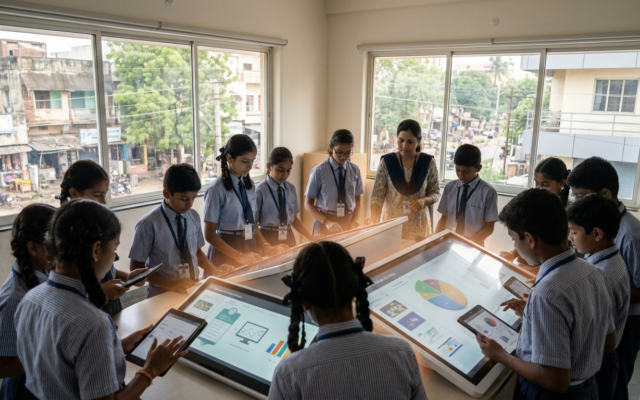
Education is another sector ripe for AI-driven disruption, and Indian startups are leading the charge in creating more effective, engaging, and personalised learning experiences. The traditional one-size-fits-all model often fails to cater to individual learning paces and styles. AI is now making it possible to adapt educational content and delivery to the unique needs of each student, whether they are in a bustling metropolis like Mumbai or a remote village in the Himalayas.
We are seeing AI-powered adaptive learning platforms that dynamically adjust the difficulty and type of questions presented to a student based on their performance. If a student struggles with a particular concept, the AI can provide additional explanations, practice problems, or even suggest alternative learning resources. Conversely, if a student quickly masters a topic, the AI can present more advanced material, ensuring they remain challenged and engaged. This personalised approach can significantly improve learning outcomes and boost student confidence.
AI is also transforming the assessment process. Startups are developing AI tools that can automate the grading of essays and assignments, providing instant, constructive feedback to students. This frees up valuable teacher time, allowing them to focus on more impactful activities like one-on-one mentoring and lesson planning. A truly surprising development is the use of AI to identify learning disabilities or at-risk students at an early stage. By analysing patterns in a student’s engagement and performance data, AI systems can flag potential issues, enabling timely intervention and support. This proactive approach is vital for ensuring that no child is left behind in their educational journey.
Manufacturing’s Smart Evolution: AI for Efficiency and Quality
The manufacturing sector, a critical engine for India’s economic growth, is embracing AI to enhance efficiency, improve quality, and drive down costs. From the traditional small-scale workshops to large-scale industrial plants, AI-powered solutions are optimising every stage of the production process. This isn’t about replacing human workers wholesale, but rather augmenting their capabilities and creating safer, more productive work environments.
Predictive maintenance is a prime example of AI’s impact. By analysing sensor data from machinery, AI algorithms can predict potential equipment failures before they occur. This allows manufacturers to schedule maintenance proactively, avoiding costly downtime and production delays. We’re also seeing AI-driven quality control systems that use computer vision to inspect products on the assembly line with incredible speed and precision. These systems can identify even minute defects that might be missed by the human eye, ensuring higher product quality and customer satisfaction.
Furthermore, AI is optimising supply chain management. Startups are developing AI platforms that can forecast demand, manage inventory, and optimise logistics, ensuring that raw materials are available when needed and finished goods reach customers efficiently. This not only reduces costs but also enhances the resilience of supply chains. A particularly noteworthy, and somewhat surprising, application is in the design phase. AI algorithms are now being used to generate novel product designs based on specified parameters, accelerating innovation and helping Indian manufacturers create globally competitive products with greater speed and efficiency. The integration of AI is making Indian manufacturing smarter, more agile, and more sustainable.
“Indian AI startups are not just building technology; they are building solutions deeply rooted in solving local challenges, making them globally relevant and uniquely impactful.”
Frequently Asked Questions
What are the biggest sectors benefiting from AI startups in India in 2026?
The most significant sectors experiencing transformation are healthcare, agriculture, fintech, education, and manufacturing. These industries are seeing AI-driven solutions that enhance accessibility, efficiency, and sustainability.
How are AI startups addressing the issue of data privacy and ethical concerns?
Many reputable AI startups are adopting principles of explainable AI (XAI) and robust data governance frameworks. They focus on transparency in how AI models make decisions and ensure user consent is paramount when using personal data.
What is the role of government initiatives in supporting Indian AI startups?
Government policies, such as the National AI Strategy and various funding schemes, play a crucial role by providing grants, tax incentives, and fostering research and development. Initiatives like Digital India also create a supportive digital infrastructure.
Can AI truly make healthcare more accessible in remote Indian regions?
Yes, AI-powered telemedicine platforms, remote diagnostic tools, and AI-driven health advisories are significantly improving healthcare accessibility in remote areas. They help bridge the gap caused by a shortage of medical professionals.
What are the future trends we can expect from Indian AI startups?
We anticipate further advancements in areas like generative AI for content creation, AI for climate resilience, hyper-personalisation across all sectors, and increased integration of AI with the metaverse for immersive experiences and training.