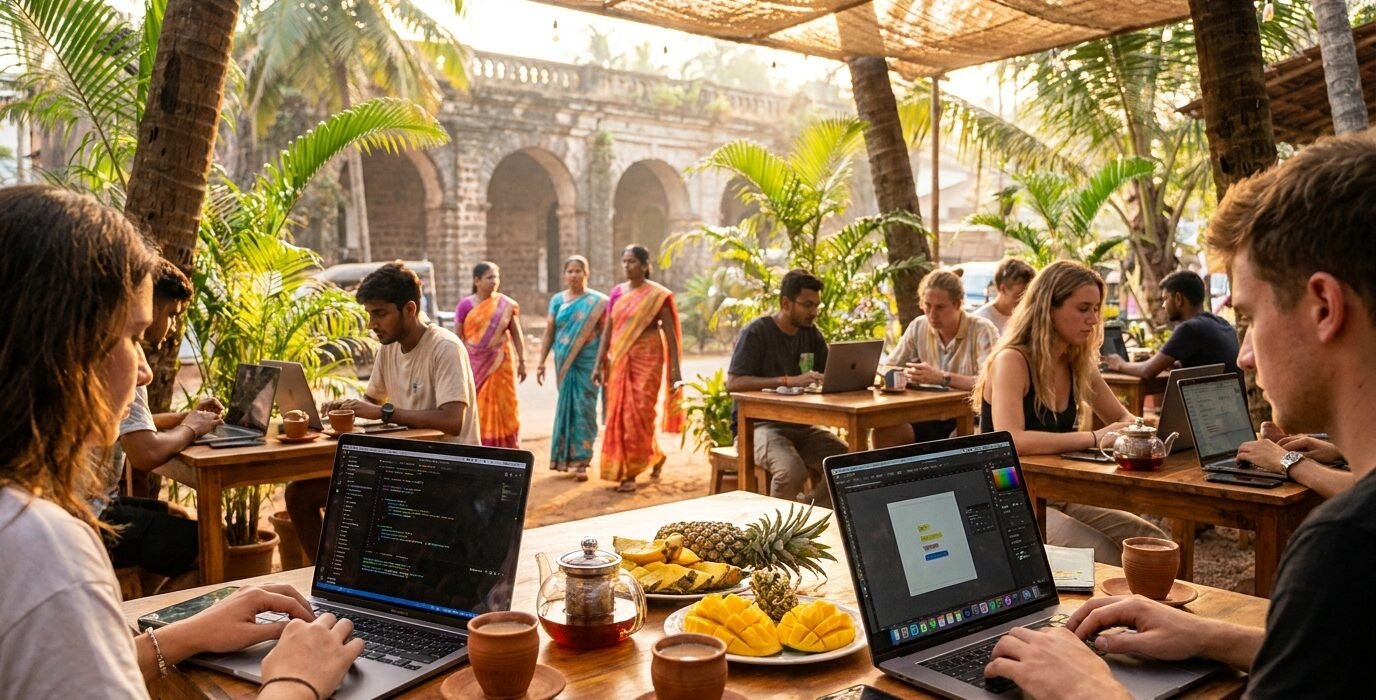
The hum of Singapore’s MRT, a familiar soundtrack to daily life, often masks a growing restlessness. Many in the Lion City feel the pull. The lure of working from somewhere else is strong. Somewhere with a different rhythm. Somewhere with a richer history. India’s new digital nomad visa program throws a tantalizing spotlight on this burgeoning trend. It presents both a golden opportunity and a complex puzzle for Singaporean remote workers eager to explore the subcontinent.
Key Takeaways:
- India’s new visa aims to attract skilled remote workers. It offers a legal pathway to live and work from the country for up to a year.
- This program could provide significant cost-of-living advantages for Singaporeans. Daily expenses in many Indian cities are a fraction of those in Singapore.
- Navigating cultural nuances, infrastructure challenges, and the visa application process will be crucial for a smooth transition.
- The long-term economic and social impact of digital nomads on India, and their integration into local communities, remains to be seen.
- Singaporean remote workers need to carefully assess their financial, logistical, and personal needs before embarking on such a move.
The Allure of the Subcontinent: Why India Beckons Remote Workers
Imagine this: you’re sipping steaming chai. The rooftop in Goa offers a view of the Arabian Sea. Your laptop is open. Deadlines are met. Or perhaps you’re in a cozy cafe. The crisp mountain air of McLeod Ganj invigorates you as you code. This isn’t just a fantasy. It’s the reality India’s new digital nomad visa program is designed to foster. India is actively rolling out the welcome mat. It’s for skilled professionals looking to work remotely from its diverse landscapes.
This initiative aims to boost tourism. It seeks to bring in foreign exchange. It could fundamentally alter how individuals from countries like Singapore view their work-life balance. Geographical constraints might soon matter less.
The implications for Singaporeans are particularly striking. The sheer difference in cost of living presents an immediate, undeniable draw. A typical lunch at Maxwell Food Centre might cost S$8. A comparable, delicious meal in many Indian cities could be less than S$3. Rent is vastly different too. The S$2,000-plus monthly rent for a modest HDB flat in Singapore can often secure a far more spacious and comfortable living arrangement in India. This is true even in prime urban areas.
This economic liberation could allow many to save more. They might invest more. Or they could simply enjoy a higher quality of life. This comes without the financial pressures of living in a global financial centre like Singapore. The visa itself allows for a year-long stay. This offers a substantial window to truly immerse oneself in a new culture. It’s far beyond the fleeting experience of a short holiday. It’s a chance to understand the intricate layers of Indian society. From the ancient traditions of Varanasi to the modern pulse of Bangalore.
[Related: Exploring India’s burgeoning tech hubs and their potential for remote work]
Navigating the Visa Maze: Practicalities for Singaporean Applicants
Embarking on an international remote work journey requires meticulous planning. India’s digital nomad visa is no exception. The concept is exciting. But the practicalities of application and compliance are paramount. Any Singaporean considering this path must be prepared.
The visa typically requires applicants to demonstrate a stable income. This must come from a foreign employer or self-employment. Minimum income thresholds ensure they won’t be a burden on the Indian economy. Proof of health insurance valid in India is also standard. A clean criminal record is necessary.
The application process is managed through Indian consulates or online portals. It can sometimes be complex. Requirements and processing times vary. This depends on applicant nationality and the specific mission handling the application.
One of the most crucial aspects for a Singaporean applicant will be understanding the tax implications. While working remotely from India, you may still be liable for taxes in Singapore. This depends on your residency status and length of stay. Simultaneously, India has its own tax laws for foreign residents. Consulting with tax professionals in both countries is not just advisable; it’s essential. This avoids potential penalties and double taxation.
Furthermore, understanding the nuances of the visa’s validity and renewal process is key. While it allows for a year-long stay, knowing the exact procedures for extension, if permitted, or re-application after departure, will prevent unexpected overstay issues. For instance, a Singaporean professional named Priya, who works in digital marketing, recently shared her experience. “I spent weeks researching the exact documentation needed,” she said. “It wasn’t just about filling out forms; it was about proving my remote work status convincingly. This meant gathering detailed contracts and client testimonials. The initial confusion was immense, but the prospect of working from a beach in Pondicherry kept me motivated.” Her anecdote highlights the need for patience and thorough preparation.
Beyond the Tourist Trail: Cultural Immersion and Daily Life
The appeal of India for digital nomads extends far beyond its visa policies. It lies in the profound cultural immersion it offers. For Singaporeans, accustomed to a highly structured environment, India presents a kaleidoscope of experiences. It’s a multicultural yet distinctly homogenous environment. From the vibrant street life of Delhi, with its cacophony of sounds and smells, to the serene backwaters of Kerala, the subcontinent offers a sensory feast unlike any other.
Imagine navigating the bustling markets of Chandni Chowk. Haggling for spices and textiles. Or attending a traditional Kathakali dance performance in Kochi. Feel the pulse of ancient art forms. These experiences are not just enriching. They offer a stark contrast to the often-predictable routines of urban Singapore.
However, embracing this cultural shift requires an open mind. A willingness to adapt is crucial. Infrastructure, while rapidly improving in major cities like Bengaluru and Hyderabad, can still present challenges. This is especially true in more remote locations. Reliable high-speed internet, a non-negotiable for most digital nomads, might not always be as ubiquitous as in Singapore. Power outages, though less common in major urban centres, can still occur.
Learning basic Hindi or regional languages, while not strictly necessary, can significantly enhance interactions. It can build deeper connections with locals. Understanding social etiquette is also vital. This includes respecting elders and the nuances of personal space. For instance, an expatriate living in Mumbai, Mark, a graphic designer from Singapore, noted, “At first, the sheer volume of people and the directness of interactions felt overwhelming. But once I learned to go with the flow, to see the energy rather than the chaos, it became incredibly rewarding. Sharing a meal with a local family in Rajasthan, understanding their customs – those are the moments that make the visa worthwhile.” This adaptation is key to truly experiencing India, not just visiting it.
Economic Ripples: Opportunities and Challenges for India
India’s strategic move to attract digital nomads is not just about facilitating individual travel. It’s a calculated economic play. The influx of these skilled professionals is expected to inject foreign currency into the economy. This happens not only through visa fees and direct spending on accommodation, food, and local services. It also comes through potential investment and knowledge transfer.
Cities like Pune and Jaipur are already emerging as popular remote work destinations. They could see a significant boost in their local economies. Small businesses stand to benefit directly. This includes cafes catering to remote workers with Wi-Fi and guesthouses offering longer-term stays. This could create new employment opportunities for locals. This would be in the service sector and hospitality industry.
However, this influx also presents potential challenges. One significant concern is the impact on local housing markets. As digital nomads, often with higher spending power than the average local, seek accommodation, rental prices could rise. This could potentially make it harder for local residents to afford housing.
There’s also the question of sustainability and fair competition. Will foreign-owned co-working spaces or serviced apartments dominate the market? Will they push out local entrepreneurs? Furthermore, the long-term integration of digital nomads into Indian society needs careful consideration. Ensuring these individuals contribute meaningfully beyond their economic spending is crucial. This could involve skill-sharing initiatives or community engagement. This will foster genuine cultural exchange and prevent isolated expat bubbles.
A surprising statistic revealed by a recent study from the Indian Institute of Management, Ahmedabad, indicated that while digital nomad tourism is projected to grow, the infrastructure in many tier-2 and tier-3 cities still lags significantly behind the needs of a sustained remote worker population. This highlights a critical area for development.
The Singaporean Advantage: What Makes Them Prime Candidates?
Singapore, with its highly educated workforce, strong digital infrastructure, and a populace accustomed to international travel and diverse cultures, is naturally positioned to be a significant beneficiary of India’s digital nomad visa program. Singaporeans generally possess strong English language skills. This is a vital asset when navigating a country where English is widely spoken in business and urban circles, though not universally.
The nation’s robust educational system has cultivated a generation of professionals skilled in fields like technology, finance, and creative industries. These are precisely the types of roles that lend themselves well to remote work.
Moreover, Singapore’s forward-thinking approach to technology and remote work infrastructure, accelerated by the pandemic, means many Singaporeans are already equipped with the tools and mindset necessary for successful remote employment. Their familiarity with global standards in communication and collaboration software, coupled with a generally disciplined work ethic, makes them attractive candidates for overseas employers. These employers look to tap into the digital nomad talent pool.
A senior executive at a Singapore-based tech firm, who preferred to remain anonymous, commented, “We’ve seen an increasing number of our employees express interest in exploring remote work opportunities, particularly in regions offering a lower cost of living and a richer cultural experience. India, with its growing digital ecosystem and now a dedicated visa, is definitely on our radar for potential talent sourcing.” This indicates a growing corporate awareness and potential for a symbiotic relationship between Singaporean talent and Indian opportunities.
A New Chapter: What Lies Ahead for Remote Work and India
The introduction of digital nomad visas by India marks a significant step. It’s in its evolving approach to global talent and tourism. It signals a recognition of the changing nature of work in the 21st century. It’s a proactive effort to leverage this shift for economic and cultural gain.
For Singaporeans, this program opens a compelling avenue. They can experience the subcontinent in a way that transcends typical tourism. It allows for deeper engagement and a more sustainable presence. It’s an opportunity to gain new perspectives. They can develop new skills. They can foster a unique blend of professional productivity and personal enrichment.
The success of this initiative will undoubtedly depend on continued improvements in infrastructure. A streamlined visa process is also key. A conscious effort by both the Indian government and the incoming digital nomads is vital. This effort should foster mutual understanding and respect. The long-term impact could be transformative. It could lead to a more interconnected and dynamic relationship between India and countries like Singapore.
It’s not just about working from a different location. It’s about forging new connections. It’s about understanding diverse ways of life. It’s about contributing to a global community. As the digital world continues to shrink distances, such programs are likely to become increasingly prevalent. They will redefine what it means to work, live, and connect across borders. The journey of a digital nomad to India is more than just a change of scenery. It’s an invitation to be part of a grand, unfolding narrative.
#