Key Takeaways
- India’s electric vehicle sales have seen unprecedented growth in 2026, driven by policy support, expanding charging infrastructure, and a wider range of affordable models.
- Two-wheeler EVs continue to dominate the market share, but the four-wheeler segment is rapidly catching up, with significant new launches expected.
- Key cities like Delhi, Bengaluru, and Pune are leading the charge, boasting higher EV adoption rates due to localized incentives and better charging networks.
- While challenges like range anxiety and initial cost persist, the overall trajectory indicates a sustained boom and a significant shift in India’s automotive landscape.
The Unstoppable Surge: India’s EV Market in 2026
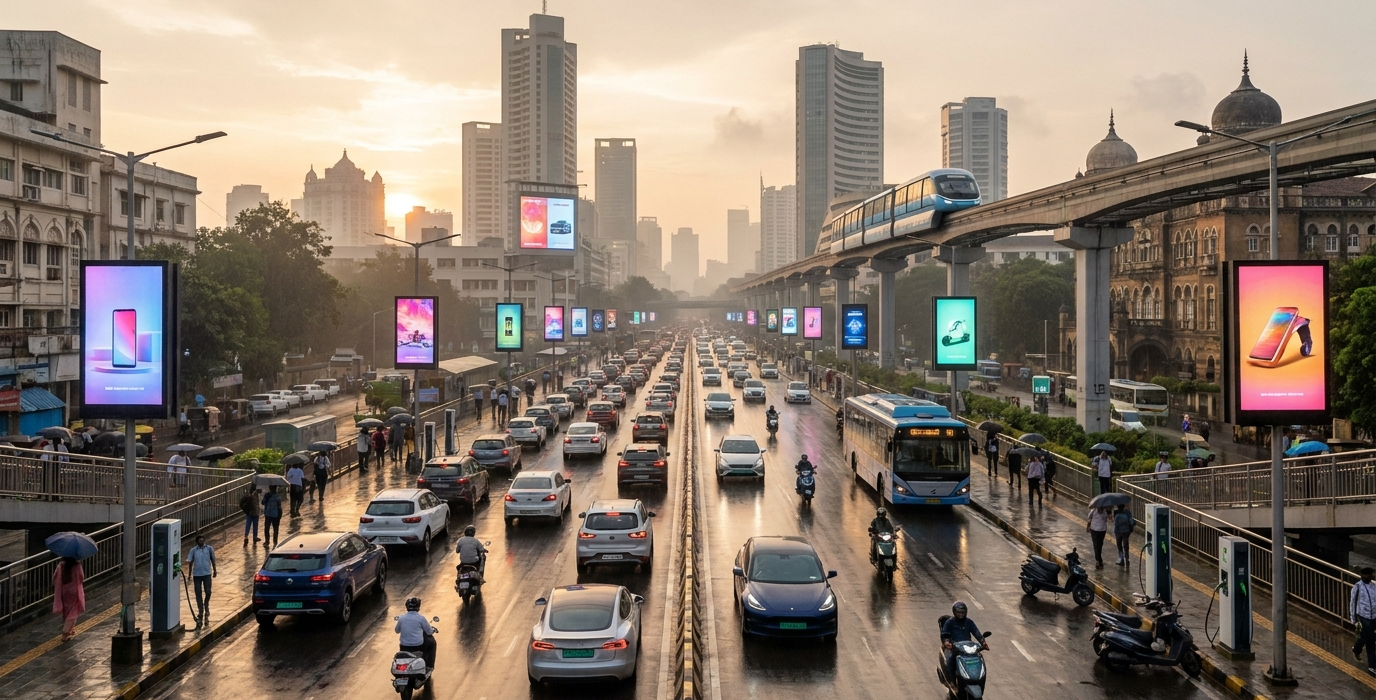
The roar of internal combustion engines is slowly, but surely, being replaced by the quiet hum of electric motors across India. In 2026, the nation’s electric vehicle (EV) market isn’t just growing; it’s experiencing an explosion. We’re witnessing a paradigm shift, a testament to years of policy nudges, technological advancements, and a growing consumer consciousness. This isn’t a fleeting trend; it’s the dawn of a new era in Indian mobility.
For years, EVs in India were a niche product, confined to early adopters and environmentally conscious urbanites. Today, that narrative has dramatically changed. Sales figures for the first half of 2026 have surpassed all previous annual records, signaling a powerful momentum that shows no signs of slowing down. From bustling metropolises to emerging towns, electric two-wheelers and increasingly, four-wheelers, are becoming a common sight. This widespread adoption is a direct result of a maturing ecosystem that addresses many of the initial hesitations consumers once had.
The sheer volume of new models hitting the market is staggering. Manufacturers, both established giants and agile startups, are vying for a piece of this rapidly expanding pie. This competition is translating into more choices for consumers, with vehicles catering to diverse needs and budgets. We’re seeing everything from sleek electric scooters perfect for navigating crowded city streets to robust electric SUVs designed for longer hauls. The market is no longer just about saving the planet; it’s about smart, efficient, and increasingly affordable personal transportation.
Fueling the Future: Policy and Infrastructure as Catalysts
The Indian government’s commitment to electrification, particularly through initiatives like the Faster Adoption and Manufacturing of Electric Vehicles (FAME) scheme, has been a cornerstone of this EV boom. While FAME II has been instrumental, the ongoing policy discussions for FAME III in 2026 are already hinting at further incentives and a more robust framework for the industry’s continued growth. These policies have not only offered direct subsidies to consumers, making EVs more accessible, but have also incentivized manufacturers to invest heavily in local production and R&D.
Beyond subsidies, the crucial element of charging infrastructure is finally catching up. While still a work in progress, the number of public charging stations across major cities and highways has seen a significant uptick. Initiatives like setting up charging hubs at petrol stations, shopping malls, and residential complexes are making range anxiety a less formidable barrier. We’re seeing dedicated charging corridors emerge on key inter-city routes, enabling longer journeys with greater confidence. The private sector is also playing a vital role, with companies investing in smart charging solutions and battery swapping technologies, particularly for the dominant two-wheeler segment.
Interestingly, several state governments have also introduced their own, often more aggressive, EV policies. Delhi’s policy, for instance, has been a trailblazer, offering substantial road tax exemptions and registration fee waivers, alongside a focus on a dense charging network. Similarly, states like Maharashtra and Karnataka are actively promoting EV manufacturing and deployment. This multi-pronged approach, combining central and state government support with private sector innovation, creates a fertile ground for EV adoption, making it a truly national phenomenon.
The ‘Surprising’ Data Point: Battery Swapping’s Quiet Dominance
While fast charging is often highlighted, a less discussed yet incredibly impactful development in 2026 is the quiet dominance of battery swapping technology, especially in the electric scooter and motorcycle segment. Companies like Sun Mobility and Bounce have rapidly expanded their networks, particularly in Tier-2 and Tier-3 cities. For riders who rely on their two-wheelers for daily commutes and deliveries, the ability to swap a depleted battery for a fully charged one in under a minute, akin to refuelling a petrol bike, has removed a significant hurdle. This technology is proving to be a game-changer, making EV ownership practical and highly convenient for a vast majority of potential buyers.
The Two-Wheeler Takeover and the Rise of Four-Wheelers
The electric two-wheeler segment continues to be the undisputed leader in India’s EV revolution. Scooters and motorcycles now account for over 70% of all EV sales in 2026. This is largely due to their lower upfront cost compared to cars, suitability for Indian road conditions and traffic, and the aforementioned battery-swapping solutions. Brands like Ola Electric, Ather Energy, and TVS Motor have cemented their positions with compelling products that offer good range, modern features, and attractive designs. The sheer convenience of charging at home or swapping batteries has made them a preferred choice for daily commuting.
However, the four-wheeler segment is no longer playing catch-up; it’s in a full sprint. The launch of more affordable electric cars, coupled with increased charging availability, has spurred significant interest. We’re seeing traditional automakers like Tata Motors and Mahindra & Mahindra expand their EV portfolios, while new entrants are also making waves. The introduction of models like the Tata Tiago EV and Nexon EV has already proven the market’s appetite, and upcoming launches from Maruti Suzuki and Hyundai are anticipated to further accelerate this trend. The average price point for electric cars is gradually coming down, making them a more viable option for a wider demographic.
The commercial vehicle segment is also witnessing a notable shift. Electric buses are becoming increasingly common in public transportation fleets across major cities, driven by government mandates and operational cost savings. Electric trucks and delivery vans are also gaining traction, especially for last-mile logistics, where their lower running costs and reduced emissions offer a competitive edge. This diversification across segments underscores the broad impact of electrification on India’s entire automotive ecosystem.
Price Wars and Feature Battles: What’s Driving Consumer Choice?
The battle for market share in the EV space is intense, and it’s being fought on multiple fronts. While government subsidies provide a baseline affordability, manufacturers are actively engaging in price competition, particularly in the popular two-wheeler segment. Beyond just price, however, consumers are increasingly looking at features. Connectivity options, advanced safety systems, regenerative braking efficiency, and battery warranty are becoming key differentiators. The promise of lower running costs, coupled with environmental benefits, forms the core appeal, but it’s the enhanced user experience and long-term value proposition that are solidifying consumer loyalty.
Navigating the Charging Landscape: From City Hubs to Highway Corridors
The expansion of charging infrastructure remains a critical focus for 2026. While urban areas are seeing a denser network of public chargers, the challenge of inter-state travel is being addressed with the development of highway charging corridors. Companies are collaborating to establish fast-charging stations at regular intervals along major national highways, connecting key cities like Delhi-Chandigarh, Mumbai-Pune, and Bengaluru-Chennai. This is vital for encouraging longer-distance EV travel and assuaging range anxiety for those considering EVs for more than just city commutes.
The quality and reliability of charging points are also paramount. We’re seeing a push towards standardized charging connectors, predominantly CCS2 for passenger vehicles, ensuring interoperability. The integration of smart charging solutions, allowing users to book charging slots and monitor charging progress via mobile apps, is becoming a standard feature. Furthermore, the push for renewable energy sources to power these charging stations is gaining momentum, reinforcing the ‘green’ credentials of EVs. Solar-powered charging stations are becoming more prevalent, especially in sun-rich states.
However, challenges persist. The pace of deployment in rural and semi-urban areas needs acceleration. Grid capacity in certain regions can also be a bottleneck, requiring upgrades to accommodate the increased demand from EV charging. Public-private partnerships are crucial here, bringing together government vision with the operational expertise and investment capacity of private players to ensure a robust and equitable charging network across the length and breadth of India.
The Surprising Fact: Bengaluru’s EV Charging Density
While Delhi often grabs headlines for its EV policies, Bengaluru has quietly emerged as a leader in terms of the density of public charging points per capita in 2026. The city’s tech-savvy population and proactive state government have fostered an environment where charging stations are not only more numerous but also better integrated into urban planning. This high concentration makes charging more accessible and convenient for its residents, contributing significantly to the city’s impressive EV adoption rates, often surpassing national averages for urban centres.
The Road Ahead: Challenges and Opportunities in 2026
Despite the exhilarating growth, the Indian EV market in 2026 is not without its hurdles. The initial purchase price of EVs, though declining, remains higher than their internal combustion engine counterparts for many segments. Battery costs are a significant factor, and while localization and technological advancements are bringing them down, they still represent a substantial portion of the vehicle’s cost. Addressing this requires continued government support, innovation in battery technology, and economies of scale in manufacturing.
Another persistent challenge is consumer education and awareness. While adoption is high, many potential buyers still harbor misconceptions about EV performance, maintenance, and resale value. Comprehensive awareness campaigns, transparent information dissemination, and positive word-of-mouth from satisfied owners are crucial to building trust and overcoming lingering skepticism. The long-term reliability and service network for EVs also need continuous strengthening to assure buyers of hassle-free ownership.
However, the opportunities far outweigh the challenges. The Indian government’s ambitious target of 30% EV sales by 2030 is looking increasingly attainable. The growth of the EV ecosystem is creating new jobs in manufacturing, servicing, charging infrastructure, and software development. India’s position as a global hub for EV manufacturing is also strengthening, attracting foreign investment and fostering technological self-reliance. The transition to EVs is not just an environmental imperative; it’s a significant economic opportunity for the nation.
“The shift to electric mobility in India is no longer a question of ‘if,’ but ‘how fast.’ In 2026, we are witnessing the unstoppable momentum of a market that is not only embracing sustainability but also redefining personal transportation with innovation and affordability.”
The Growing Ecosystem: Battery Manufacturing and Localisation
A critical factor underpinning the EV surge in 2026 is the accelerated focus on localizing battery manufacturing. While India has historically relied heavily on imports for battery cells, significant investments are now being channeled into establishing domestic Gigafactories. Companies like Reliance Industries and the Ola Group are making substantial commitments to build large-scale battery production facilities within India. This localization is crucial for reducing the cost of EVs, ensuring supply chain security, and boosting the ‘Make in India’ initiative.
Furthermore, there’s a growing emphasis on developing the entire battery ecosystem, including research and development into advanced battery chemistries and recycling technologies. The responsible sourcing of raw materials and the establishment of efficient battery recycling processes are becoming increasingly important as the number of EVs on the road grows. Initiatives are underway to create a circular economy for batteries, minimizing environmental impact and recovering valuable materials. This comprehensive approach to battery production and management is vital for the long-term sustainability of India’s EV ambitions.
The localization of other EV components, such as electric motors, power electronics, and charging equipment, is also progressing rapidly. This not only reduces dependence on imports but also fosters a more robust and competitive domestic manufacturing base. The government’s Production Linked Incentive (PLI) schemes are playing a significant role in encouraging these investments, making India an attractive destination for global EV component manufacturers looking to set up operations.
Consumer Insights: What’s Driving the 2026 EV Buyer?
The profile of the Indian EV buyer in 2026 is becoming increasingly diverse. While early adopters were primarily driven by environmental concerns and a desire for cutting-edge technology, today’s buyer is more pragmatic. The allure of significantly lower running costs compared to petrol or diesel vehicles is a primary motivator, especially with fluctuating fuel prices. For many, the daily commute savings are quantifiable and compelling, making the total cost of ownership a key decision factor.
Range anxiety, while still present, is diminishing. The increasing availability of charging stations and the growing battery capacity of new models mean that most daily commutes are well within the vehicle’s range. Consumers are also becoming more informed about charging etiquette and the best times to charge to leverage off-peak electricity tariffs, further enhancing cost savings. The convenience of home charging, especially for two-wheeler owners, is a major convenience factor, eliminating the need for frequent trips to fuel stations.
Moreover, the evolving design and feature set of EVs are appealing to a broader audience. Modern EVs offer advanced infotainment systems, connectivity features, and enhanced safety protocols that are on par with, or even exceed, traditional vehicles. The quiet and smooth driving experience, coupled with instant torque, is also a delightful surprise for many first-time EV drivers. The perception of EVs as premium, technologically advanced, and forward-thinking vehicles is gaining significant ground.
Frequently Asked Questions
What is the current status of EV adoption in India as of August 2026?
EV adoption in India is experiencing an unprecedented surge in 2026, with sales figures breaking all previous records. The market is dominated by electric two-wheelers, but the four-wheeler segment is rapidly gaining momentum. Policy support, expanding charging infrastructure, and a wider variety of models are key drivers of this boom.
Are electric cars still significantly more expensive than petrol cars in India in 2026?
While the initial purchase price of electric cars is generally higher than comparable petrol or diesel models, the gap is narrowing. Government incentives, falling battery costs, and increasing competition are making EVs more accessible. Furthermore, the significantly lower running costs often lead to a lower total cost of ownership over the vehicle’s lifetime.
How is the charging infrastructure developing in India in 2026?
Charging infrastructure is expanding rapidly, particularly in major cities and along key highway corridors. Public charging stations are being set up in malls, residential complexes, and petrol stations. The focus is on increasing both the number and reliability of chargers, with a growing emphasis on fast-charging capabilities and integration with renewable energy sources.
What are the main challenges still facing the Indian EV market in 2026?
Key challenges include the initial purchase cost, especially for four-wheelers, and the need for further expansion of charging infrastructure in rural and semi-urban areas. Consumer education and overcoming residual range anxiety are also ongoing priorities. Strengthening the after-sales service network for EVs is also crucial.