Key Takeaways
- Indian EdTech is pivoting from mass-market access to specialized, high-value learning experiences in 2026.
- AI-powered personalized learning platforms are set to dominate, offering bespoke tutoring and career pathing.
- The focus is shifting towards upskilling and reskilling for the future of work, particularly in tech and green jobs.
- Hybrid learning models, blending online flexibility with in-person mentorship, are gaining significant traction.
The Shifting Sands of Indian EdTech: Beyond the Pandemic Boom
The initial exuberance of the pandemic-fueled EdTech boom of the early 2020s has undeniably cooled. However, what we’re witnessing in 2026 is not a decline, but a profound evolution. The market has matured, and the companies poised to become the next Indian unicorns are those that have adapted to a more discerning learner and a rapidly changing job market. Gone are the days of simply digitizing textbooks; the frontier now lies in creating deeply personalized, outcome-driven learning journeys that integrate seamlessly with career aspirations.
This pivot is crucial for survival and growth. Investors are no longer backing platforms solely on user numbers; they’re scrutinizing engagement, completion rates, and, most importantly, the tangible results students achieve. We’re seeing a significant move away from broad-stroke offerings towards niche specializations. This means focusing on specific age groups, particular academic subjects, or, increasingly, vocational and professional skill development. The narrative has shifted from “access for all” to “excellence for specific goals.”
The companies that will thrive are those that understand this nuanced demand. They are building sophisticated platforms that leverage data analytics and artificial intelligence to understand individual learning styles, identify knowledge gaps, and tailor content accordingly. This isn’t just about adaptive quizzes; it’s about creating a truly bespoke educational experience that adapts in real-time. This personalized approach is the bedrock upon which the next wave of EdTech giants will be built.
AI-Powered Personalization: The New Frontier of Learning
Artificial intelligence is no longer a buzzword in Indian EdTech; it’s the engine driving personalization. Platforms are developing advanced AI tutors that can explain complex concepts in multiple ways, provide instant feedback, and even simulate real-world scenarios for practical learning. Imagine a student struggling with quantum mechanics in Chennai receiving an explanation tailored to their specific misunderstandings, perhaps drawing analogies from the city’s vibrant engineering landscape.
These AI systems are not just about academic assistance. They are increasingly being used for sophisticated career pathing. By analyzing a student’s academic performance, interests, and the current job market trends in cities like Pune or Bengaluru, these platforms can suggest relevant courses, skills to acquire, and even potential career trajectories. This proactive guidance is a significant departure from traditional career counseling, offering data-driven insights that were previously inaccessible to many.
One surprising fact is the emergence of AI chatbots trained on the pedagogical approaches of legendary Indian educators. These bots aren’t just repositories of information; they aim to replicate the patient, intuitive teaching styles that have shaped generations. This blend of cutting-edge technology with time-tested teaching philosophies is proving remarkably effective. For instance, an AI tutor might adopt the Socratic method, guiding a student in Hyderabad through a problem by asking probing questions rather than directly providing the answer.
Upskilling and Reskilling: Bridging the Future of Work Gap
The Indian economy is in constant flux, with new industries emerging and old ones transforming at an unprecedented pace. EdTech platforms are recognizing their critical role in ensuring the workforce remains relevant and competitive. The focus has decisively shifted towards upskilling and reskilling, particularly in areas experiencing rapid growth, such as artificial intelligence, machine learning, cybersecurity, and sustainable technologies.
Companies like upGrad, Great Learning, and Simplilearn are leading this charge, forging partnerships with universities and industry leaders to offer specialized certification programs. These are not just about acquiring new skills; they are about demonstrating proficiency to potential employers. Many of these programs are designed with direct input from industry experts in tech hubs like Gurugram, ensuring the curriculum aligns with immediate job market demands.
A particularly interesting development is the rise of “green skills” training. As India pushes towards renewable energy and sustainable practices, there’s a growing demand for professionals skilled in solar panel installation, wind turbine maintenance, and sustainable agriculture technology. EdTech players are stepping in to fill this gap, offering courses that equip individuals with the knowledge and practical skills needed for these burgeoning sectors. This foresight positions them as vital partners in India’s sustainable development goals.
The Rise of Hybrid Learning: Best of Both Worlds
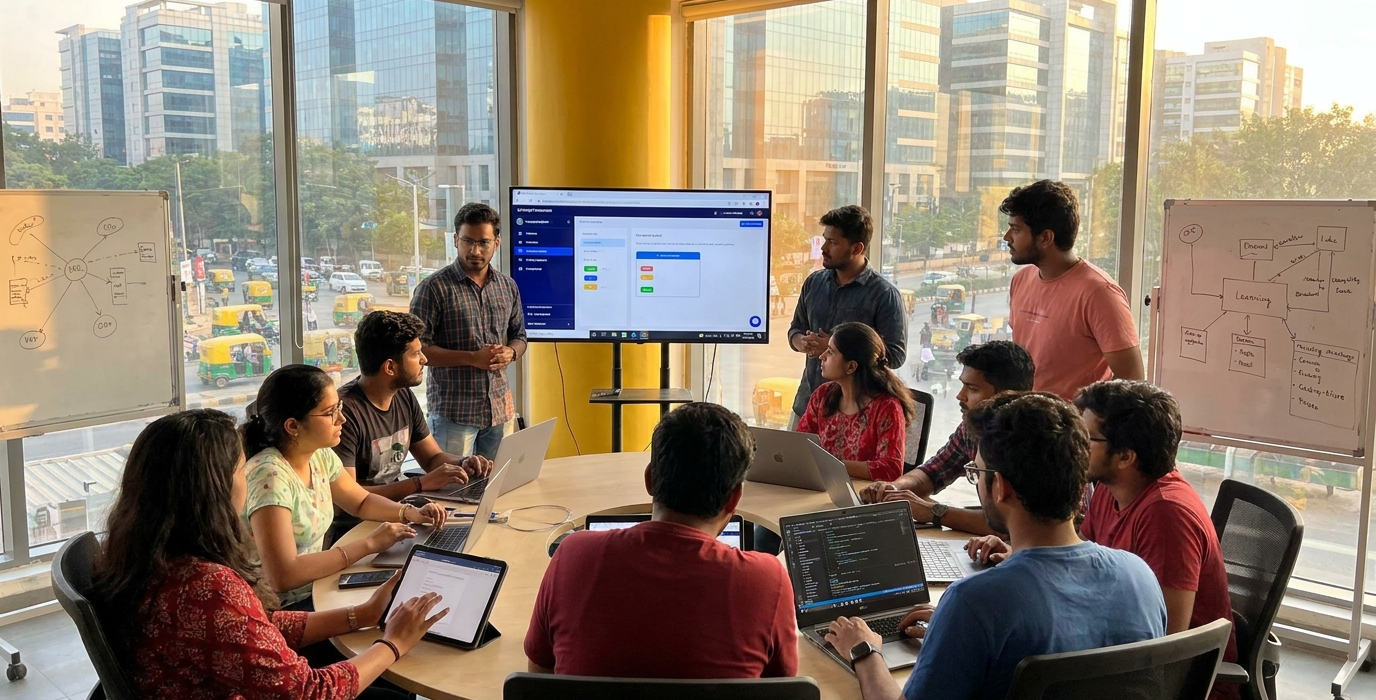
While online learning offers unparalleled flexibility, the value of human interaction and mentorship remains undeniable. In 2026, the most successful EdTech models are embracing a hybrid approach. These platforms blend the convenience of online content delivery with the tangible benefits of in-person workshops, bootcamps, and one-on-one mentorship sessions.
This model is particularly effective for vocational training and skill development where practical application is key. For example, a student learning advanced coding in a Tier-2 city like Coimbatore might attend online lectures but then participate in weekend hackathons or project-based learning sessions facilitated by industry professionals in a local co-working space. This ensures they gain theoretical knowledge and practical, hands-on experience.
The hybrid model also addresses the need for community and peer learning, which can sometimes be lacking in purely online environments. Dedicated physical hubs or co-learning spaces, often set up in partnership with educational institutions or corporate offices, are becoming common. Here, students can collaborate on projects, network with peers and mentors, and receive direct, personalized guidance. This integration of the digital and physical realms creates a richer, more holistic learning experience that caters to diverse learning preferences.
Data-Driven Pathways: From Learner to Employed
The true measure of EdTech success in 2026 is no longer just enrollment numbers or course completion rates. It’s about demonstrable career outcomes. Leading EdTech companies are now deeply invested in data analytics to track the journey of their learners, from initial enrollment to securing employment or advancing in their careers.
This involves sophisticated tracking of student progress, identifying areas where learners excel and where they need additional support. More importantly, it means meticulously documenting placement rates, salary increments, and career progression of their alumni. This data is not just for internal improvement; it’s a powerful marketing tool and a testament to the value proposition of these platforms.
Companies are building dedicated career services teams that work closely with employers across various sectors. They understand the specific skill requirements of industries in regions like the National Capital Region (NCR) and proactively connect their graduates with relevant job opportunities. This proactive approach to career placement is what sets the emerging giants apart. A surprising insight here is that some platforms are now offering “income-share agreements,” where students pay a percentage of their post-graduation salary, directly aligning the EdTech provider’s success with the learner’s career outcome.
The Global Indian EdTech Footprint: Beyond Borders
While the Indian market remains a primary focus, the most ambitious EdTech companies are increasingly looking beyond domestic borders. The quality of education and the innovative delivery models developed in India are gaining international recognition, opening up new markets and revenue streams.
Platforms are adapting their content and delivery mechanisms to cater to diverse global audiences. This includes localization of language, cultural relevance of examples, and adherence to international accreditation standards. The goal is to offer Indian-developed EdTech solutions that are competitive on a global scale, serving learners in Southeast Asia, Africa, and even parts of Europe and North America.
This global expansion is not without its challenges, including navigating different regulatory landscapes and understanding varied educational systems. However, the demand for affordable, high-quality online education is a global phenomenon. Indian EdTech companies, with their proven ability to innovate and scale rapidly, are well-positioned to capitalize on this demand. Their success internationally will not only benefit the companies themselves but also further elevate India’s standing as a leader in digital education innovation.
Frequently Asked Questions
What are the most in-demand skills for Indian EdTech graduates in 2026?
The most sought-after skills include advanced AI and machine learning, cloud computing, cybersecurity, data science, and specialized roles in sustainable technologies and renewable energy management. Soft skills like critical thinking, problem-solving, and effective communication are also highly valued.
How is AI changing the way students learn in India?
AI is enabling highly personalized learning experiences through AI tutors that adapt to individual pace and style, provide instant feedback, and offer tailored career pathing. It also powers adaptive assessments and can even simulate real-world scenarios for practical training.
Are EdTech platforms still focusing on K-12 education?
While K-12 remains a segment, the major growth and innovation in 2026 are in higher education and professional development. The focus is shifting towards upskilling and reskilling for the workforce, with specialized courses and certifications gaining prominence.
What is the significance of hybrid learning models in Indian EdTech?
Hybrid models combine the flexibility of online learning with the benefits of in-person interaction, mentorship, and practical application. This approach is proving highly effective for vocational training, skill development, and fostering a sense of community among learners.
Can I expect job placement assistance from EdTech platforms?
Yes, many leading EdTech platforms now offer robust career services, including resume building, interview preparation, and direct connections with employers. Some even offer income-share agreements, aligning their success with your career outcomes.