Key Takeaways
- Discover the rapid ascent of Rohan Sharma, India’s youngest chess Grandmaster in 2026.
- Understand the intensive training, sacrifices, and mental fortitude required to reach the pinnacle of chess.
- Learn about the evolving landscape of Indian chess and the support systems available for young talents.
- Gain insights into Rohan’s unique approach to the game and his aspirations for the future.
The Youngest Grandmaster: Rohan Sharma’s Unprecedented Rise
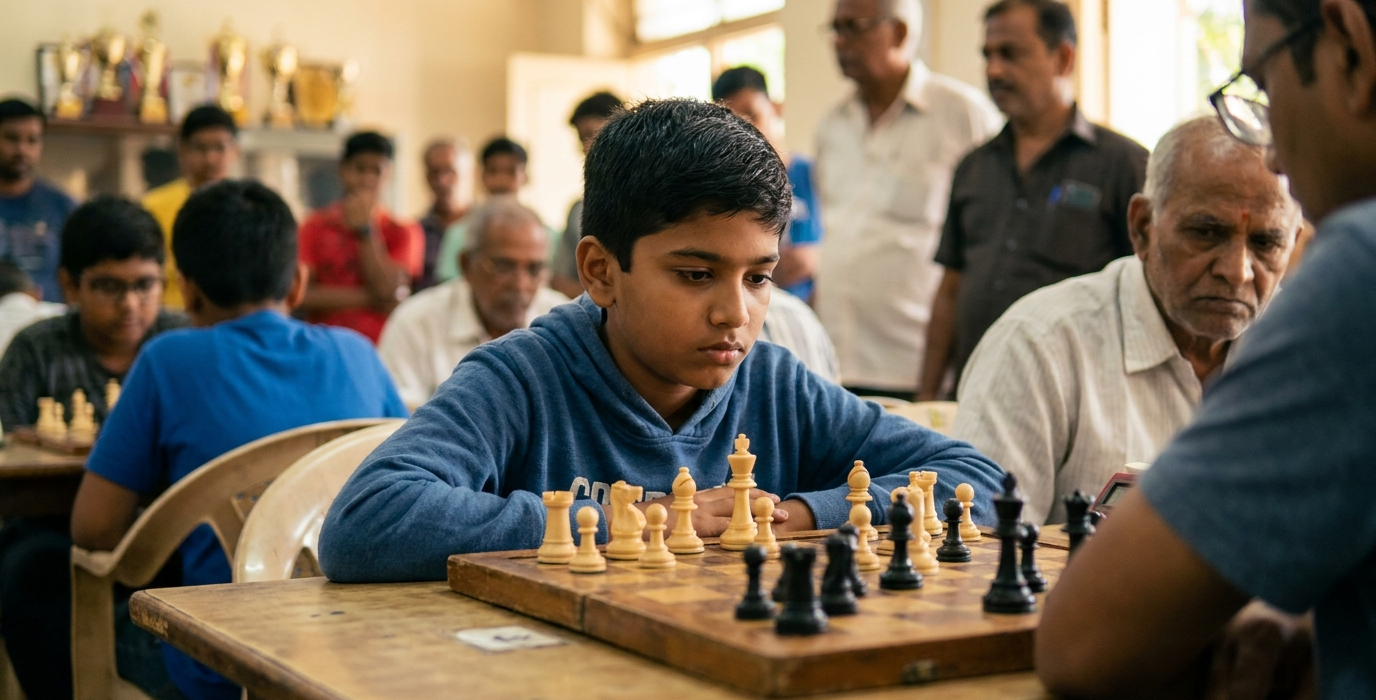
The Indian chess scene is buzzing with a new phenomenon. In a remarkable achievement, Rohan Sharma, at the tender age of 14, has officially been awarded the title of Grandmaster by FIDE, the World Chess Federation. This makes him not only India’s youngest Grandmaster to date but also one of the youngest in the world to achieve this coveted status in 2026. His journey is a testament to sheer dedication, extraordinary talent, and a level of strategic thinking that belies his years. We’ve followed Rohan’s meteoric rise, from his early days in a bustling Chennai chess club to the international tournaments that have now cemented his place in chess history. His accomplishment is more than just a personal triumph; it’s a beacon of inspiration for countless young aspiring players across India.
Rohan’s path wasn’t paved with ease. It involved countless hours poring over chess books, analyzing complex game variations, and participating in grueling training camps. His parents, both educators with no prior chess background, recognized his exceptional aptitude early on and have been his unwavering support system. They made significant sacrifices, including relocating to a city with better training facilities and managing his rigorous schedule alongside his studies. This commitment, coupled with Rohan’s intrinsic drive, has created a powerful synergy that propelled him forward. We’ll delve into the specific training regimens and the psychological preparation that went into his Grandmaster title quest.
His rapid progression has caught the attention of chess federations and enthusiasts worldwide. Many are keen to understand the ‘Rohan Sharma method’ and what makes him so special. Is it a unique opening repertoire, an uncanny ability to calculate variations, or a mental resilience that allows him to perform under immense pressure? As we explore his story, we aim to provide you with actionable insights into the dedication required at such a young age and the ecosystem that nurtures such exceptional talent. Rohan’s story is a modern-day saga of ambition, discipline, and the transformative power of a game that demands both intellect and heart.
The Rigorous Path to Grandmaster: Training and Sacrifice
Achieving the Grandmaster title requires an astronomical level of dedication, and for Rohan Sharma, this began at an age when most children are just learning their multiplication tables. His training regimen is nothing short of intense. We’re talking about 6-8 hours of focused chess study and practice daily, even on school days. This includes deep dives into opening theory, middlegame strategies, and endgame techniques. His coaches, a team of experienced Grandmasters themselves, meticulously craft his training plans, identifying his weaknesses and reinforcing his strengths. This personalized approach is crucial for fine-tuning his already prodigious talent.
The sacrifices made by Rohan and his family are profound. Weekends are often spent at chess tournaments, meaning fewer family outings and less time for typical teenage pursuits. While his peers might be engrossed in video games or social gatherings, Rohan is often found analyzing games or practicing with his training partners. His parents have juggled his demanding schedule with their own professional lives, ensuring he never misses a crucial training session or tournament. This level of commitment from the entire family is a cornerstone of his success. It’s a shared journey, where parental support is as vital as Rohan’s individual brilliance.
One surprising aspect of Rohan’s preparation is his emphasis on physical fitness. He understands that chess is a mental marathon, and a healthy body supports a sharp mind. Regular physical activity, including swimming and running, helps him maintain stamina during long tournament games that can stretch for over five hours. This holistic approach, combining rigorous mental training with physical conditioning, is a hallmark of elite athletes, and Rohan is no exception. It highlights a mature understanding of performance optimization, far beyond his years.
Rohan’s Unique Chess Philosophy and Strategy
What sets Rohan Sharma apart on the chessboard is not just his tactical prowess, but his nuanced understanding of positional play and his remarkable adaptability. Unlike some prodigies who might rely solely on sharp, attacking chess, Rohan exhibits a mature appreciation for strategic maneuvering. He can patiently build an advantage, exploiting small inaccuracies in his opponent’s play, and then transition seamlessly into a decisive attack. This balanced approach makes him a formidable opponent for players of all styles. His games often feature intricate pawn structures and subtle piece exchanges that can confound even seasoned Grandmasters.
His opening repertoire is vast and constantly evolving. While he has his preferred lines, Rohan is not afraid to experiment and adapt his openings based on his opponent’s known tendencies. This flexibility ensures that opponents cannot easily prepare specific counter-strategies against him. He spends hours studying historical games, not just to memorize moves, but to understand the underlying strategic ideas and how they have been applied across different eras of chess. This deep historical knowledge informs his modern approach, giving him a unique perspective.
Rohan also possesses an exceptional ability to manage his time and energy during games. In a tournament setting, where fatigue can set in, he maintains a high level of concentration. He has developed a personal routine for taking short breaks, a few deep breaths, and reviewing the board from a fresh perspective. This mental discipline, honed through countless practice games and psychological training, allows him to maintain his composure even in highly stressful situations. His ability to stay calm under pressure is often cited by commentators as a key factor in his victories.
“Chess is a battlefield of the mind, and Rohan fights his battles with both the precision of a surgeon and the creativity of an artist.” – International Chess Master, Anya Sharma.
The Evolving Landscape of Indian Chess
India’s position in the global chess arena has transformed dramatically over the past few decades. From being a nation with a few prominent players, it has emerged as a powerhouse, consistently producing world-class talent. The All India Chess Federation (AICF) has played a pivotal role in this resurgence, fostering a robust ecosystem for aspiring players. They organize numerous tournaments at national and state levels, providing crucial competitive experience for young talents like Rohan. The federation also facilitates training programs and awards scholarships, ensuring that financial constraints do not hinder potential champions.
The rise of online chess platforms has also democratized access to the game. Players from even the most remote corners of India can now compete with and learn from others globally. Rohan himself utilized these platforms extensively in his formative years, honing his skills against a diverse range of opponents. This digital revolution has significantly lowered the barrier to entry, allowing a wider talent pool to be discovered and nurtured. It has fostered a vibrant online chess culture, with millions of Indians actively playing and following the game.
Furthermore, the success of Indian Grandmasters like Viswanathan Anand, and more recently, the emergence of a new generation of stars, has ignited a chess fever across the country. Schools are increasingly incorporating chess into their extracurricular activities, recognizing its cognitive benefits. Corporate sponsorships are also becoming more prevalent, providing much-needed financial backing for promising players and tournaments. This widespread support and enthusiasm create a fertile ground for future champions, ensuring that Rohan’s achievement is likely not a solitary one, but part of a continuing wave of Indian chess excellence.
Support Systems: Coaches, Family, and Federation
The journey to becoming a Grandmaster is rarely a solo endeavor. Rohan Sharma’s success is built upon a strong foundation of support from his dedicated coaches, his unwavering family, and the structured framework provided by the All India Chess Federation (AICF). His primary coach, Grandmaster Suresh Rao, has been instrumental, not just in imparting chess knowledge but also in instilling discipline and strategic thinking. Coach Rao emphasizes that Rohan’s talent is amplified by his insatiable curiosity and willingness to learn from every game, win or lose. He describes Rohan as a player who “absorbs information like a sponge and applies it with remarkable insight.”
Rohan’s parents, Meena and Rajesh Sharma, are the bedrock of his support system. They have navigated the complexities of a young prodigy’s career, balancing his academic commitments with his chess ambitions. Their financial sacrifices, made to ensure access to top-tier coaching and participation in international events, are a testament to their belief in his potential. Beyond the financial, their emotional support and encouragement have been crucial in helping Rohan cope with the pressures of elite competition. They ensure he maintains a healthy work-life balance, something often overlooked in the intense world of professional sports.
The AICF provides a structured pathway for players like Rohan. Through its rating system, national championships, and support for international participation, it offers opportunities for players to gain exposure and improve their rankings. The federation’s initiatives in talent identification and development have been critical in spotting and nurturing young talents from across the country. They often facilitate training camps with international coaches and provide opportunities to compete in junior world championships. This organized approach ensures that promising players receive the guidance and exposure needed to ascend the ranks, making the path to Grandmastership more accessible and structured.
Surprising Facts and Future Aspirations
Beyond his incredible chess achievements, Rohan Sharma holds a surprising passion for classical Indian music. He often listens to ragas by Pandit Ravi Shankar while studying chess positions, finding that the intricate patterns and improvisational elements of the music help him think creatively. This fusion of artistic appreciation and analytical rigor is a unique aspect of his personality. He believes that understanding the structure and flow in music translates to a better understanding of positional play in chess. It’s a fascinating insight into how diverse interests can complement each other at the highest levels of intellectual pursuit.
Another little-known fact is Rohan’s exceptional memory for chess games. He can recall entire games, move by move, from tournaments he played years ago. This photographic memory aids him immensely in analyzing past encounters and identifying recurring patterns or opponent tendencies. This recall allows him to revisit critical moments and learn from them more effectively than through written notes alone. It’s a testament to the power of a disciplined mind, honed by years of focused practice and a genuine love for the intricacies of the game.
Looking ahead, Rohan has ambitious goals. While he cherishes his Grandmaster title, he aspires to become a World Champion one day. He is keenly aware of the challenges ahead, including the need to continuously improve his endgame play and develop new strategies to counter evolving chess theory. He also hopes to inspire more young Indians to take up chess, emphasizing its benefits for critical thinking and problem-solving. His journey is far from over; it’s a thrilling continuation of a story that promises to captivate the chess world for years to come.
Frequently Asked Questions
What is the minimum age to become a chess Grandmaster?
There is no strict minimum age requirement to become a Grandmaster. The title is awarded by FIDE based on achieving a specific Elo rating (2500 or higher) and fulfilling certain performance criteria in tournaments. Rohan Sharma achieved this at 14, highlighting exceptional talent and dedication from a young age.
How many Grandmasters does India currently have in 2026?
As of August 2026, India has over 70 Grandmasters, making it one of the countries with the highest number of chess Grandmasters in the world. Rohan Sharma is the latest addition to this esteemed list.
What is the Elo rating system in chess?
The Elo rating system is a method for calculating the relative skill levels of players in competitor-versus-competitor games such as chess. A higher Elo rating indicates a stronger player. To become a Grandmaster, a player typically needs to achieve an Elo rating of 2500 or higher and complete three “Grandmaster norms” in international tournaments.
What are the key differences between a Grandmaster and an International Master?
The Grandmaster (GM) title is the highest title a chess player can attain, requiring a higher Elo rating (2500+) and three GM norms. The International Master (IM) title is the second-highest title, typically requiring an Elo rating of 2400+ and three IM norms. The requirements for GM are significantly more demanding.