Key Takeaways
- The opening of Mumbai’s Coastal Road in 2026 has significantly reduced travel times, particularly for residents in the western suburbs.
- Beyond commute improvements, the project is fostering economic growth through enhanced connectivity and new commercial opportunities along its route.
- The new infrastructure has also introduced innovative public spaces and recreational areas, aiming to improve the quality of life for Mumbaikars.
- Environmental considerations and future expansion plans are central to the Coastal Road’s long-term viability and impact.
Navigating the Future: Mumbai’s Coastal Road Arrives
The hum of traffic has a new rhythm in Mumbai. Since its phased opening through early 2026, the city’s ambitious Coastal Road project has begun to reshape not just the physical landscape, but the very pulse of daily life for millions. This isn’t just another flyover or underpass; it’s a monumental undertaking designed to untangle the Gordian Knot of Mumbai’s legendary traffic congestion, offering a breath of fresh air – quite literally – to those traversing its western coastline.
For years, the dream of a seamless sea-facing corridor connecting the northern and southern extremities of the city remained a tantalizing prospect. Now, that dream is a reality, with segments of the Coastal Road breathing life into previously choked arteries. We’re talking about slashing commute times from hours to mere minutes, opening up new possibilities for work, leisure, and family time. This transformative infrastructure promises to be more than just a transit route; it’s a catalyst for economic revitalisation and an elevation of urban living standards.
Easing the Daily Grind: Commute Time Revolution
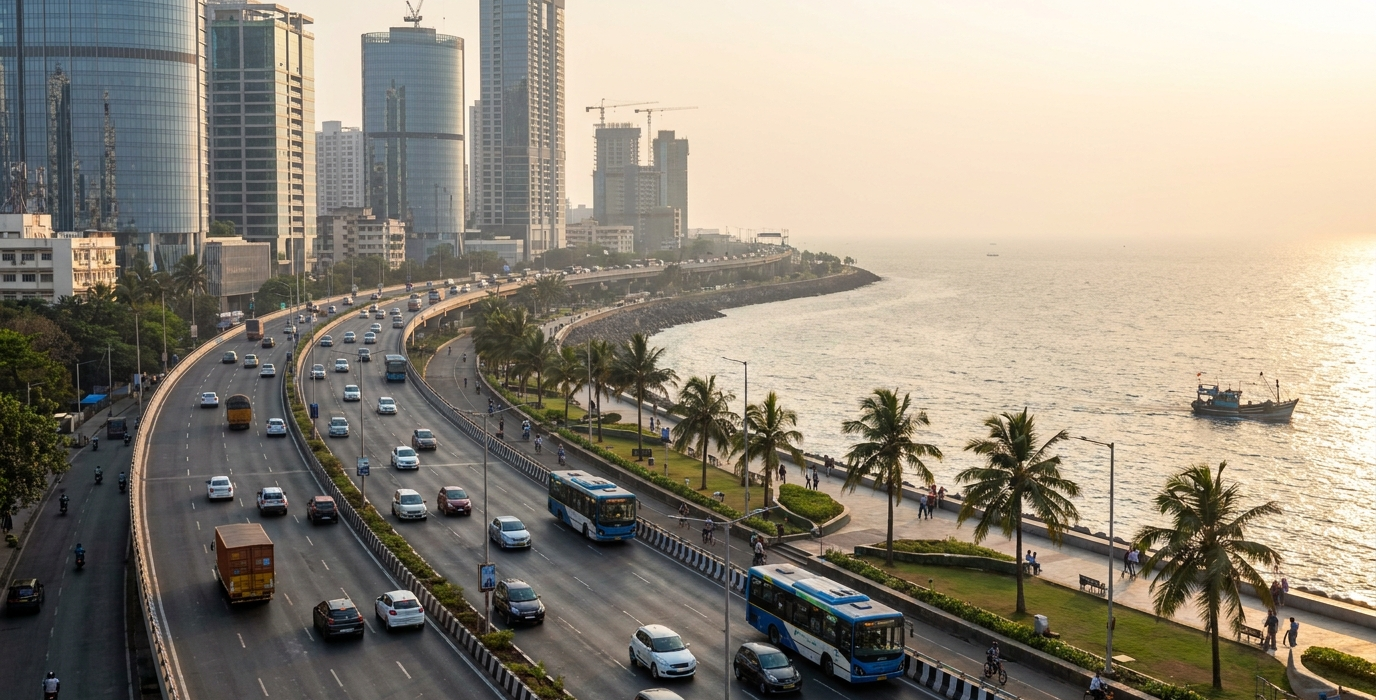
The most immediate and palpable impact of the Coastal Road is the dramatic reduction in travel time. For residents of western suburbs like Andheri, Juhu, and Bandra, the journey south to Nariman Point or Worli, once a grueling ordeal often lasting 90 minutes or more, can now be completed in under 40 minutes. This is achieved through a combination of elevated sections, tunnels, and open sea-facing carriageways, designed to bypass congested city streets entirely.
The phased opening, which saw the first stretch become operational in early 2026, has already provided significant relief. Imagine reclaiming two hours of your day, every day. That’s time you can now spend with your family, pursue a hobby, or simply relax. The difference is profound, not just in terms of efficiency but in the overall stress levels of daily commuters. This improved connectivity is also making previously less accessible areas more viable for residential living, potentially redistributing population density and easing pressure on existing neighbourhoods.
The Technology Behind the Flow
Advanced traffic management systems are the invisible guardians of the Coastal Road’s smooth operation. Real-time monitoring, intelligent signal coordination, and dynamic lane management ensure optimal traffic flow, adapting to changing conditions. This sophisticated approach minimizes bottlenecks and enhances safety, a crucial factor for such a high-volume thoroughfare. The integration of smart city technology is a hallmark of this project, setting a new benchmark for urban infrastructure in India.
Surprising Fact: A First for India
Did you know that the Coastal Road features India’s first offshore interchange? This engineering marvel, located near Bandra, allows vehicles to seamlessly transition between the Coastal Road and the Bandra-Worli Sea Link without encountering any traffic signals. It’s a testament to the innovative spirit driving the project and a key contributor to its impressive speed improvements. This interchange alone significantly streamlines the flow of traffic between the northern and southern parts of the city.
Economic Ripples: Beyond the Commute
The economic dividends of the Coastal Road extend far beyond easing the daily commute. Enhanced connectivity is a powerful engine for growth, attracting businesses and stimulating commercial activity. Areas along the route, once considered peripheral, are now prime real estate, poised for development and investment. This improved accessibility makes it easier for goods to move and for people to access job centres, boosting productivity and creating new employment opportunities.
We are already seeing an uptick in commercial interest in areas like Worli, Prabhadevi, and even further north towards Bandra. New retail spaces, offices, and hospitality ventures are being planned or are already under construction, capitalizing on the increased footfall and accessibility. This economic regeneration is not confined to business districts; it’s creating a ripple effect that benefits local economies, from small vendors to service providers. The Coastal Road is, in essence, an investment in Mumbai’s future economic vitality.
New Opportunities Emerge
The development has spurred a wave of new businesses, from cafes and restaurants catering to commuters to co-working spaces and service providers looking to tap into the revitalized urban landscape. This creates a virtuous cycle: better infrastructure attracts businesses, which in turn create jobs and further enhance the area’s appeal. For entrepreneurs and investors, the Coastal Road represents a tangible opportunity for growth and expansion within India’s financial capital.
Surprising Fact: Submerged Car Parks
As part of the project’s innovative design, several sections of the Coastal Road incorporate submerged car parks. These multi-level parking facilities are built below sea level, cleverly integrated into the infrastructure to maximize space and provide much-needed parking solutions in a densely populated city. This foresight addresses a critical urban challenge while maintaining the aesthetic appeal of the coastal stretch. It’s a clever solution to a perennial Mumbai problem.
Public Spaces Reimagined: Parks, Promenades, and Playgrounds
The Coastal Road is not solely about vehicular movement; it’s also about reclaiming and enhancing public spaces for Mumbaikars. The project has incorporated vast green belts, pedestrian walkways, and dedicated cycling tracks, transforming the coastline into a vibrant recreational hub. These new amenities offer residents much-needed breathing room and opportunities for outdoor activities, contributing to a healthier and more engaged urban lifestyle.
Imagine strolling along a beautifully landscaped promenade with the Arabian Sea as your backdrop, or children playing in a safe, dedicated park area. These are the experiences the Coastal Road is designed to foster. The inclusion of open spaces addresses a critical need in a city often characterized by its concrete jungles. These areas are becoming popular gathering spots, fostering a sense of community and providing residents with accessible avenues for leisure and exercise.
Green Lungs for the City
Extensive landscaping and the creation of new green lungs are integral to the Coastal Road’s design. These areas are not just aesthetically pleasing; they contribute to environmental well-being by improving air quality and reducing the urban heat island effect. The commitment to incorporating nature into this massive infrastructure project is a positive step towards sustainable urban development.
Community Engagement Zones
Beyond passive enjoyment, the Coastal Road features designated zones for community events, street performers, and local markets. This intentional design fosters a dynamic and interactive public realm, encouraging social interaction and celebrating Mumbai’s diverse cultural fabric. These spaces are already becoming hotspots for weekend activities and cultural gatherings.
Environmental Considerations: Balancing Progress and Planet
Any project of this magnitude inevitably raises environmental questions, and the Coastal Road is no exception. Significant efforts have been made to mitigate the ecological impact, including the extensive use of reclaimed land and the implementation of advanced waste management and pollution control measures. The project team has worked to address concerns regarding marine ecosystems and coastal erosion, incorporating studies and mitigation strategies.
The construction process itself involved meticulous planning to minimize disruption to marine life and the coastal environment. From advanced dredging techniques to the careful selection of construction materials, sustainability has been a key consideration. We are seeing ongoing monitoring of water quality and the marine environment to ensure the long-term health of the Arabian Sea coastline. The goal is to ensure that the benefits of enhanced connectivity do not come at an unacceptable environmental cost.
Marine Life Mitigation
Specific measures have been put in place to protect marine biodiversity. These include carefully designed artificial reefs to support local ecosystems and restrictions on certain construction activities during sensitive breeding seasons for marine species. Continuous monitoring ensures that these interventions are effective and that the marine environment remains healthy.
Waste Management and Recycling
The project has prioritized responsible waste management, with a significant portion of construction debris being recycled. This not only reduces the environmental footprint but also conserves resources. The principles of a circular economy are being applied to minimize waste generation throughout the project’s lifecycle.
Future Horizons: Expansion and Integration
The Coastal Road, as it stands in 2026, is not a finished product but a dynamic, evolving artery of Mumbai. Plans are already in motion for further phases of expansion and integration with other transportation networks. The vision is to create a comprehensive, multi-modal transportation system that seamlessly connects the city’s various districts and beyond.
Future phases are expected to extend the road further north, linking it to existing highways and arterial roads, thereby enhancing connectivity to the Mumbai Metropolitan Region (MMR). This ongoing development signifies a long-term commitment to addressing Mumbai’s growing transportation needs. The integration with the proposed Navi Mumbai airport and other mass transit systems is a crucial part of this grander vision, aiming to make Mumbai a truly connected metropolis.
Connecting the MMR
The next logical step involves extending the Coastal Road’s reach to encompass the broader Mumbai Metropolitan Region. This expansion will unlock new economic corridors and provide much-needed relief to satellite towns that have experienced significant population growth. Better connectivity to the MMR is essential for balanced regional development.
Integration with Public Transport
Crucially, the Coastal Road’s future lies in its seamless integration with public transport. The plan includes developing new bus routes, enhancing feeder services, and potentially creating dedicated lanes for public buses to ensure that the road serves all Mumbaikars, not just private vehicle owners. This holistic approach is key to achieving true mobility transformation.
Frequently Asked Questions
When was the Mumbai Coastal Road fully operational?
While segments of the Coastal Road began opening in early 2026, the full operational status across all planned phases is expected to be achieved by late 2027, with continuous enhancements and integrations ongoing.
What is the impact of the Coastal Road on property values?
Properties along and near the Coastal Road have already seen a significant increase in demand and value due to improved accessibility and the development of new amenities. This trend is expected to continue as the project matures.
Are there toll charges on the Coastal Road?
Initially, the Coastal Road sections opened in 2026 are free for commuters. However, discussions are ongoing regarding the implementation of a toll system in later phases to help recoup operational and maintenance costs.
What are the environmental safeguards in place for the Coastal Road?
The project includes measures such as artificial reefs for marine life, advanced waste management, green belts for carbon sequestration, and continuous monitoring of water and air quality to minimize its ecological footprint.
How does the Coastal Road improve connectivity to South Mumbai?
The Coastal Road drastically reduces travel time from the western suburbs to South Mumbai, bypassing congested city roads and providing a direct, high-speed link, significantly easing the daily commute for thousands.