Key Takeaways
- Discover speedy, healthy vegetarian lunch recipes designed for your busy schedule.
- Learn how to transform common Indian staples into delicious and nutritious meals.
- Find inspiration for lunches that can be prepped ahead, saving you precious time.
- Explore creative ways to pack flavour and nutrients without relying on complex ingredients.
The Midday Meal: More Than Just Fuel
The lunch hour, especially on a busy workday, is often a hurried affair. For many of us across India and beyond, it’s a precious window to refuel, recharge, and perhaps even catch a breath. Yet, the pressure to eat quickly can sometimes lead to less-than-ideal choices, leaving us feeling sluggish or unsatisfied. We’re here to change that narrative. This guide offers a collection of vibrant, healthy vegetarian lunch ideas that are as delicious as they are nourishing. Forget the lengthy cooking times and complicated steps. Our focus is on simplicity, speed, and sustained energy, using ingredients readily available in kitchens everywhere. We’ll show you how to craft satisfying meals that support your well-being, from the bustling streets of Delhi to the serene backwaters of Kerala.
Think of your lunch as an investment in your afternoon’s productivity and your long-term health. It doesn’t need to be elaborate. With a little planning and smart ingredient choices, you can create lunches that are both a treat for your taste buds and a boon for your body. We’ll delve into recipes that are quick to assemble, perfect for packing, and adaptable to your personal preferences. Whether you’re a seasoned home cook or just starting, these ideas are designed to be accessible and enjoyable. Let’s redefine your midday meal, making it a highlight of your day, not just a routine.
The Power of the Overnight Soak & Prep
One of the most effective strategies for a speedy, healthy lunch is the art of overnight soaking and prepping. This technique dramatically cuts down on morning rush time and allows ingredients to become more digestible and nutritious. Think beyond just dal and rice. Consider soaking a variety of grains and legumes the night before. For instance, soaking moong dal for a simple dal chilla or chana for a hearty salad can be a game-changer.
You can also prepare a base for several meals simultaneously. Roast a batch of vegetables like sweet potatoes, carrots, and bell peppers on a Sunday evening. Store them in an airtight container in the refrigerator. These roasted veggies can then be added to salads, wraps, or even a quick pulao throughout the week. Similarly, boil a few eggs or cook a portion of quinoa to have on hand. These versatile components act as building blocks for diverse and quick lunches.
Don’t underestimate the power of pre-chopped aromatics. Finely chop onions, garlic, and ginger and store them in separate small containers in the fridge. This simple step saves significant time when you’re sautéing for a quick sabzi or flavouring a rice dish. For a refreshing twist, prepare a large batch of a simple salad dressing like a lemon-tahini or a yogurt-based herb dressing. This ensures your salads are never bland and always enticing.
This proactive approach transforms daunting lunch prep into an effortless assembly process. By dedicating just a small amount of time a day or two in advance, you unlock a world of quick, healthy, and delicious vegetarian lunches. It’s about working smarter, not harder, to nourish yourself well.
Speedy Samosa-Inspired Wraps: A Modern Twist
Who doesn’t love a samosa? That delightful crisp pastry filled with spiced potatoes and peas is a beloved Indian snack. Reimagining this classic flavour profile into a healthy lunch wrap offers a fantastic, time-saving alternative. This recipe takes the essence of a samosa and makes it portable and light.
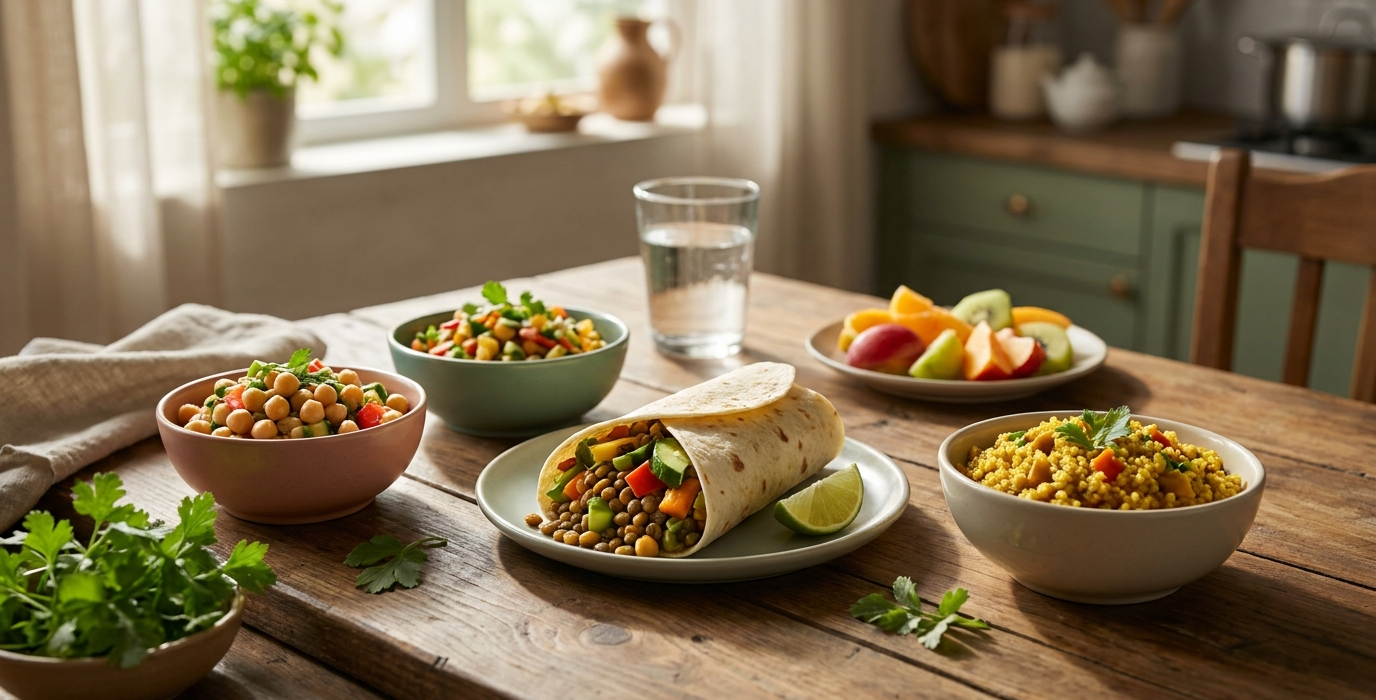
We’ll start with a quick filling. Instead of deep-frying potatoes, we’ll opt for boiled and mashed potatoes seasoned with the classic samosa spices: cumin seeds, coriander powder, turmeric, red chilli powder, and a pinch of garam masala. Add some finely chopped peas for texture and sweetness. To boost the protein and fibre content, we can also incorporate cooked chana (chickpeas).
For the wrap, use whole wheat rotis or parathas. You can even use store-bought whole wheat tortillas if you’re in a real rush. Spread a thin layer of tamarind chutney or mint-coriander chutney on the roti. Then, place a generous portion of your spiced potato and pea filling. Add some chopped fresh coriander and a squeeze of lime juice for extra zest.
Roll it up tightly, and you have a delicious, satisfying, and healthy samosa-inspired wrap. This is perfect for packing as it holds its shape well and can be eaten cold or at room temperature. For an added crunch, you could even add a few crushed roasted peanuts. This offers a delightful texture contrast to the soft filling.
This wrap is not only quick to assemble, especially if your potatoes are pre-boiled, but it’s also a more balanced meal than its fried counterpart. It provides complex carbohydrates from the roti and potatoes, protein and fibre from the peas and chana, and essential vitamins from the herbs and lime. It’s a taste of home, adapted for the modern, on-the-go lifestyle.
The One-Pot Wonder: Vegetable Pulao Perfection
When time is truly of the essence, the one-pot meal reigns supreme. Vegetable pulao is a perfect example of this culinary magic. It’s a complete meal in itself, packed with flavour, nutrients, and minimal cleanup. We’re talking about a fragrant rice dish brimming with colourful vegetables, all cooked together in a single pot.
The beauty of vegetable pulao lies in its versatility. You can use whatever seasonal vegetables you have available. Think carrots, peas, beans, cauliflower, potatoes, and even some paneer cubes for an extra protein punch. Start by sautéing whole spices like bay leaves, cardamom pods, cloves, and cinnamon sticks in a little ghee or oil. This infuses the rice with an aromatic base.
Next, add finely chopped onions and ginger-garlic paste, and sauté until fragrant. Then, toss in your chosen vegetables and cook for a few minutes. Now comes the star: basmati rice. Rinse it well until the water runs clear. Add the rinsed rice to the pot along with the appropriate amount of water or vegetable broth. A common ratio is 1:1.5 or 1:2, depending on the rice.
Season with salt, turmeric, and a pinch of garam masala. You can also add a squeeze of lemon juice at the end for brightness. Cover the pot and let it simmer on low heat until the rice is cooked and the water is absorbed. The result is a fluffy, flavourful, and incredibly satisfying pulao.
For an even quicker version, you can use pre-cut frozen vegetables. If you have a pressure cooker, this entire process can be completed in under 20 minutes. This dish is wonderful served with a side of plain yogurt or raita, which adds a cooling contrast. It’s a complete, balanced meal that requires very little active cooking time, making it an ideal weekday lunch solution.
Lentil Powerhouse: Speedy Dal Khichdi Variations
Dal khichdi is the ultimate comfort food in Indian households. It’s a simple, wholesome dish made from rice and lentils, known for its digestibility and nourishing properties. We can elevate this humble dish into a quick and incredibly nutritious vegetarian lunch with a few smart variations. The base remains the same: rice and dal, cooked together until soft and mushy.
The key to speed is pre-soaking your lentils. While some dals like masoor (red lentils) cook very quickly, others benefit from a short soak. For variations, consider using a mix of lentils like toor dal and moong dal for a balanced flavour and texture. The addition of vegetables transforms khichdi into a complete meal. Finely chopped carrots, peas, spinach, or even bottle gourd (lauki) can be added during the cooking process.
For a flavour boost, don’t just boil. Temper the khichdi with mustard seeds, cumin seeds, hing (asafoetida), and curry leaves sautéed in ghee. This simple step adds an explosion of aroma and taste. You can also add a pinch of turmeric and chilli powder to the tempering.
A truly delicious and protein-packed variation is “Moong Dal Cheela Khichdi”. Instead of plain rice, you cook the dal with finely ground moong dal batter (made from soaked and ground moong dal, spiced, and seasoned). This results in a creamier, richer khichdi with a delightful chewiness.
Another quick idea is to prepare a “vegetable curry” base separately. Sauté onions, tomatoes, and spices, then add it to the cooked rice and dal along with some chopped vegetables. This shortcut makes your khichdi taste like a complex curry without the fuss. Serve it with a dollop of ghee and some plain yogurt for a complete, satisfying, and incredibly healthy vegetarian lunch.
The Super Salads of Himachal Pradesh: Beyond Greens
When we think of salads, we often picture leafy greens. However, the culinary traditions of regions like Himachal Pradesh offer a different perspective, showcasing hearty, flavourful salads that are substantial enough for a full meal. These “super salads” often incorporate grains, legumes, and robust vegetables, making them incredibly filling and nutritious.
One such inspiration comes from the Himachali cuisine, which often uses ingredients like rajma (kidney beans), chana (chickpeas), and local grains. A fantastic lunch salad can be built around cooked rajma or chana. Toss them with chopped tomatoes, cucumbers, onions, and fresh coriander. For a unique Himachali touch, add some grated radish and a sprinkle of roasted cumin powder.
To make it a complete meal, incorporate a cooked grain. Quinoa is an excellent choice for its protein content and quick cooking time. Alternatively, cooked brown rice or even broken wheat (dalia) can be used. Mix these grains with your bean and vegetable base.
The dressing is crucial for flavour. Instead of a heavy mayonnaise-based dressing, opt for a light and zesty vinaigrette. A simple mix of lemon juice, olive oil, mustard paste, and a touch of honey or maple syrup works wonders. You can also add a spoonful of yogurt for a creamy, tangy flavour.
For an extra nutritional boost, consider adding roasted nuts and seeds like almonds, walnuts, or pumpkin seeds. These provide healthy fats and a satisfying crunch. This type of salad is incredibly adaptable. You can add other vegetables like bell peppers, corn, or even some lightly steamed broccoli. It’s a vibrant, flavourful, and incredibly healthy option that will keep you full and energised throughout the afternoon. It’s a testament to how salads can be both exciting and substantial.
Frequently Asked Questions
What are the quickest vegetarian lunch options?
The quickest options often involve minimal cooking. Think pre-made wraps filled with hummus and vegetables, chickpea or lentil salads that require only assembly, or leftovers from dinner. Vegetable sandwiches on whole wheat bread are also very fast.
Can I prepare vegetarian lunches ahead of time?
Absolutely. Many vegetarian lunches benefit from advance preparation. Overnight soaked grains and legumes, pre-chopped vegetables, cooked grains like quinoa or rice, and batch-cooked curries or stews can all be made ahead and assembled quickly for lunch.
How can I make my vegetarian lunches more filling?
To make your lunches more filling, focus on protein and fibre. Include sources like lentils, beans (rajma, chana), tofu, paneer, nuts, and seeds. Whole grains like brown rice, quinoa, and whole wheat rotis also contribute to satiety.
Are there any specific Indian vegetarian lunch ideas that are healthy and quick?
Yes, several. Vegetable pulao made in a single pot, dal khichdi with added vegetables, spiced chickpea or lentil salads, and whole wheat wraps filled with spiced potato or paneer are excellent choices.