Walking through the cobblestone streets of Lucerne, the crisp alpine air seems to carry a sense of calm. It’s not just the breathtaking scenery or the meticulous orderliness; there’s a palpable undercurrent of well-being woven into the fabric of Swiss life. We often associate mental health with overcoming challenges, seeking therapy, or managing conditions. But what if the real secret lies not just in recovery, but in a proactive, integrated approach to mental wellness that’s as natural as breathing the mountain air? Switzerland, a nation known for its precision and high quality of life, offers a compelling case study in how a society can cultivate mental resilience and peace not as an afterthought, but as a fundamental aspect of daily existence.
Key Takeaways:
- Switzerland prioritizes preventative mental wellness, integrating it into daily life.
- Strong community bonds and social support are crucial pillars of Swiss well-being.
- Nature plays a significant, often underestimated, role in mental health.
- Education systems actively promote emotional literacy and coping skills from a young age.
- Work-life balance is not just a buzzword but a cultural expectation in Switzerland.
- The Swiss embrace mindfulness and slow living as core components of their mental health strategy.
The Foundation of Daily Calm: Nature’s Embrace
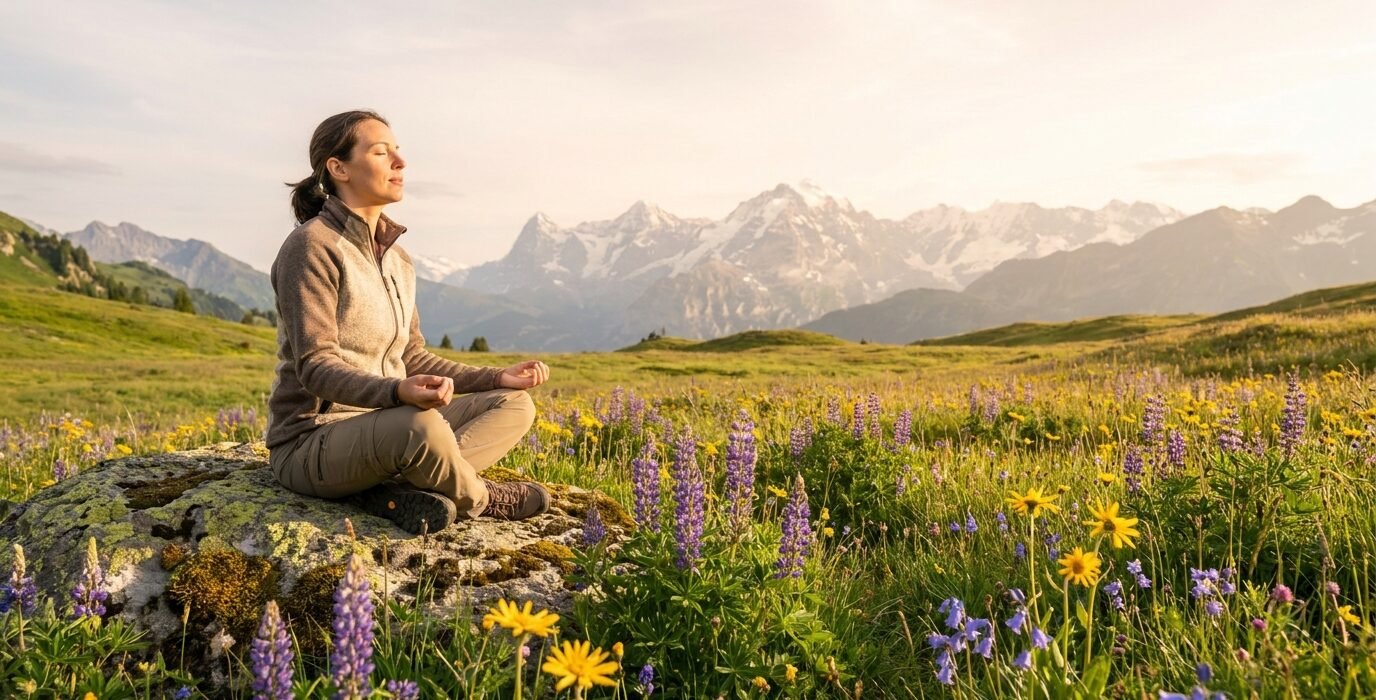
Imagine waking up to the gentle sound of cowbells echoing from distant pastures, sunlight streaming through your window, and the promise of a hike through emerald valleys. This isn’t a postcard fantasy for many in Switzerland; it’s a tangible reality that deeply influences their mental landscape. The Swiss have an almost innate understanding of nature’s restorative power. From the imposing Alps to the serene shores of Lake Geneva, access to the natural world is not a luxury but a right. Its integration into daily life is a cornerstone of their approach to mental wellness.
Studies have consistently shown that spending time in nature can reduce stress hormones, lower blood pressure, and improve mood. For the Swiss, this isn’t just a scientific fact; it’s a lived experience. Consider the concept of “Waldbaden” or forest bathing, which has gained global traction but has long been a natural practice in Switzerland. A leisurely stroll through the Black Forest, or a weekend spent by the Rhine River, isn’t just recreation; it’s a deliberate act of mental rejuvenation.
Dr. Anya Sharma, a Swiss-born psychologist who now practices in Zurich, often shares how her childhood memories are intrinsically linked to the outdoors. “We didn’t have ‘mental health days’ as kids,” she recalls. “We had days spent exploring the woods behind our house, learning to identify plants, and simply being present. This wasn’t therapy; it was life.” This connection to the environment teaches us patience, resilience, and a sense of belonging. It provides a grounding effect that is incredibly powerful.
Even in cities like Bern, you’re never far from a park, a river, or a green space. This accessibility is key. It’s about making nature an effortless part of your routine, not a special event. This deep-seated connection means that when life’s pressures mount, many Swiss individuals instinctively turn to the outdoors for solace and clarity. The simple act of walking amidst trees or sitting by a lake can shift perspective and calm a racing mind. It’s a silent, ever-present form of self-care, readily available to everyone, regardless of their circumstances.
The statistics paint a compelling picture of this preference. A 2021 survey by the Swiss Federal Statistical Office revealed that 70% of the population reported engaging in outdoor activities at least once a week. This wasn’t limited to strenuous hikes; it included simple walks, cycling, or picnicking. This widespread engagement signifies that nature isn’t just a backdrop but an active participant in maintaining mental equilibrium.
The Swiss have, perhaps unconsciously, built a society where nature serves as a constant buffer against the stresses of modern life. This ingrained habit of seeking out green spaces, whether for a quick lunch break or an extended weekend escape, creates a cumulative effect on mental resilience. It’s a preventative measure that doesn’t feel like a chore, but a natural inclination. The presence of so many accessible natural environments, from the Jura mountains to the Swiss Plateau, ensures this practice is sustainable and widespread.
Community Threads: The Strength of Social Fabric
Beyond the majestic landscapes, the true strength of Swiss mental wellness lies in its intricate social fabric. While often perceived as reserved, Swiss society places a high value on community and mutual support, which acts as a powerful, often understated, buffer against mental distress. This isn’t about loud, boisterous gatherings; it’s about the quiet strength of knowing you’re part of something larger than yourself.
Think of the local sports clubs, the neighborhood associations, or the community gardens that dot almost every town and village, from Lausanne to St. Gallen. These aren’t just leisure activities; they are vital hubs for social connection and emotional support. When someone in Switzerland faces personal challenges, the initial response is often from their immediate network – friends, family, and neighbors. This embedded support system can intercept potential mental health crises before they escalate.
Consider the role of “Vereine” (associations or clubs) in Switzerland. These range from hiking clubs and choir groups to historical societies and volunteer organizations. They provide a sense of belonging, shared purpose, and regular social interaction. For an individual like Markus Müller, a retired teacher in Basel, his involvement in the local chess club has been invaluable. “It’s more than just playing chess,” he explains. “It’s about the camaraderie, the shared ritual of meeting every Tuesday evening. We talk about everything – the weather, our families, current events. There’s a genuine care and interest in each other’s well-being.”
“When my wife passed away last year, these men were my lifeline. They didn’t try to fix me; they just sat with me, shared stories, and reminded me I wasn’t alone.” This anecdote highlights the profound impact of consistent, low-pressure social engagement. It fosters a sense of security and reduces feelings of isolation, which are significant risk factors for mental health issues.
The emphasis on shared responsibility extends even to workplace culture, where many companies actively promote team-building activities and encourage open communication. While the efficiency of Swiss businesses is legendary, there’s also a growing awareness that employee well-being directly impacts productivity and overall success. This is not merely a HR initiative; it’s a cultural shift.
The high levels of trust within Swiss society, often attributed to its stable political and economic environment, also contribute to stronger community bonds. People feel more secure in reaching out for help or offering support when they believe their intentions will be met with sincerity and respect. This collective resilience is a powerful asset, ensuring that individuals don’t have to navigate life’s difficulties in isolation. The statistical data supports this: a 2022 report by the Swiss Federal Office of Public Health indicated that individuals with strong social networks reported significantly lower levels of anxiety and depression compared to those with limited connections.
Education as Prevention: Cultivating Emotional Literacy Early
Switzerland’s commitment to mental wellness extends far beyond adult life; it’s deeply embedded in its educational philosophy. From kindergarten to university, there’s a deliberate effort to equip young people with the tools to understand and manage their emotions, build resilience, and foster positive relationships. This proactive approach treats emotional literacy not as an elective, but as a fundamental skill, akin to reading or arithmetic.
Think about the curriculum in a primary school in Geneva, where children might learn about different emotions through role-playing, storytelling, and creative arts. They are taught to identify feelings in themselves and others, to express them healthily, and to develop empathy. This early intervention is crucial in preventing more serious mental health challenges later in life.
Professor Eva Steiner, a leading child psychologist at the University of Bern, emphasizes the long-term benefits of this educational model. “We’re not just teaching children to pass exams,” she states. “We’re teaching them how to be well-adjusted human beings. By integrating social-emotional learning (SEL) into the core curriculum, we’re providing a foundation for lifelong mental health.” Children learn conflict resolution skills, how to manage stress, and how to build healthy friendships. These are not ‘soft skills’; they are essential life skills.
When a child learns to articulate their feelings of frustration or sadness in a constructive way, they are less likely to resort to aggression or withdrawal, which can be precursors to anxiety and depression. This approach acknowledges that mental health is not solely about treating illness but about cultivating positive mental states from the earliest stages of development.
The Swiss approach often involves a collaborative effort between schools, parents, and healthcare professionals. When a teacher notices a child struggling, there are established channels for communication and support, ensuring that potential issues are addressed promptly. This integrated system means that mental health is discussed openly and without stigma within the school environment. Furthermore, many Swiss universities are increasingly offering mental health awareness workshops, mindfulness sessions, and accessible counseling services to students, recognizing the unique pressures of higher education.
This commitment to continuous learning and support, from childhood through adulthood, creates a society where mental well-being is a shared responsibility and a lifelong pursuit. The data from the Swiss Federal Institute for Vocational Education and Training shows a correlation between participation in SEL programs and reduced instances of bullying and improved academic performance, underscoring the practical benefits of this educational focus.
The Unseen Power of “Geniessen”: Embracing Slow Living
In a world that often glorifies relentless productivity, the Swiss approach to mental wellness includes a deeply ingrained appreciation for moments of pause and enjoyment – the art of “geniessen,” which translates roughly to savoring or enjoying. This isn’t about idleness; it’s a conscious decision to embrace life’s pleasures, big and small, and to resist the constant urge to be busy. It’s about finding contentment in the present moment, whether that’s enjoying a perfectly brewed coffee at a café in Zurich, appreciating the intricate details of a handcrafted watch, or simply watching the sunset over the Alps. This cultural emphasis on savoring experiences acts as a powerful antidote to the chronic stress and burnout that plague many modern societies.
Dr. Hans Gruber, a sociologist who has studied Swiss lifestyle patterns, explains this phenomenon. “The Swiss have a remarkable ability to compartmentalize,” he observes. “When it’s time to work, they are incredibly focused and efficient. But when the workday is done, they transition. There’s a strong cultural understanding that rest and enjoyment are not just deserved, but necessary for sustained well-being and productivity.” This isn’t about being lazy; it’s about understanding that true fulfillment comes from a balance of effort and enjoyment. It’s about appreciating the journey, not just the destination.
This perspective is reflected in the Swiss work culture itself, which often prioritizes a healthy work-life balance, with reasonable working hours and ample vacation time. This deliberate pacing allows individuals to recharge, pursue hobbies, and spend quality time with loved ones, all of which are crucial for mental health.
The practice of “geniessen” also manifests in how the Swiss approach their food and social interactions. Meals are often seen as an opportunity to connect and appreciate good company, rather than a rushed refuel. Even a simple picnic by a lake becomes an event, a moment to be savored. This mindful engagement with daily activities helps to ground individuals and reduce the mental clutter that can lead to anxiety. It’s a subtle but profound shift in perspective, moving away from a constant pursuit of more towards an appreciation of what is. This inherent value placed on enjoyment and leisure time is perhaps one of the most surprising aspects of Swiss mental wellness for outsiders. It challenges the notion that constant striving is the only path to success and happiness. Instead, it suggests that true well-being is found in the deliberate cultivation of moments of peace and pleasure. A study published in the Swiss Journal of Psychology noted that individuals who actively practiced savoring daily experiences reported higher levels of life satisfaction and lower stress levels, even when facing significant life challenges. This highlights the potent, often overlooked, power of mindful enjoyment.
Counter-Intuitive Calm: The Power of Quiet Persistence
One of the most counter-intuitive aspects of the Swiss approach to mental wellness is their embrace of quiet persistence and a certain stoicism, often mistaken for emotional detachment. Instead of outward emotional displays, there’s a cultural emphasis on quiet strength, problem-solving, and a gradual, steady approach to overcoming challenges. This isn’t about suppressing emotions, but about channeling them into constructive action and finding inner resilience. This differs greatly from cultures that encourage immediate emotional expression. For the Swiss, mental fortitude is often built through consistent effort and a belief in one’s own capacity to manage difficulties without excessive fuss.
Consider the concept of “Sachlichkeit,” which means objectivity or matter-of-factness. In tense situations or personal crises, the Swiss often default to a calm, analytical approach. This doesn’t mean they don’t feel deeply; rather, they prioritize finding practical solutions and maintaining composure. This characteristic was particularly evident in the aftermath of the 2017 floods in Ticino, where communities, despite significant damage, quickly organized relief efforts with remarkable efficiency and minimal public outcry. The focus was on rebuilding and supporting each other, rather than dwelling on the misfortune. This pragmatic mindset, honed over centuries of navigating challenging alpine environments and maintaining neutrality, fosters a sense of control and agency, which are vital for mental well-being.
Another surprising element is their relationship with routine and order. While often seen as rigid, the Swiss embrace of routine provides a sense of predictability and stability, which can be incredibly calming in an unpredictable world. This isn’t about living a monotonous life, but about creating a reliable framework that allows for spontaneity and creativity within its boundaries. For example, the punctuality and reliability of Swiss public transportation aren’t just about convenience; they contribute to a sense of order and reduce daily stressors. This quiet persistence, this ability to tackle problems with steady resolve, and the comfort found in well-established routines, forms a unique bedrock of mental resilience. It’s a testament to the idea that emotional well-being can be cultivated not just through active intervention, but through a steadfast, internal fortitude and a structured approach to life. The fact that Switzerland consistently ranks high in global happiness reports, despite its often reserved demeanor, suggests that this quiet strength is indeed a potent, and perhaps underappreciated, contributor to overall well-being.
Beyond the Horizon: Integrating Mental Wellness into the Future
As we look towards the future, Switzerland’s holistic approach to mental wellness offers valuable lessons for the rest of the world. It’s a model that doesn’t solely rely on clinical interventions but actively cultivates an environment where mental well-being is nurtured from birth through a combination of nature, community, education, and a mindful approach to daily life. The integration of these elements creates a robust system of preventative care, where individuals are better equipped to navigate life’s inevitable challenges. The commitment to “geniessen” and quiet persistence, alongside the emphasis on community and nature, presents a compelling vision for a more balanced and resilient society.
The ongoing evolution of this approach is evident in initiatives like the “Gesundheitsförderung Schweiz” (Health Promotion Switzerland) foundation, which actively funds and promotes programs that enhance mental health across various sectors of society. This includes campaigns to reduce the stigma surrounding mental illness, support for mental health first aid training, and research into effective community-based interventions. The forward-thinking nature of this strategy lies in its adaptability and its recognition that mental wellness is not a static achievement but a continuous journey. As societal pressures evolve, so too must the strategies for maintaining mental equilibrium. Switzerland’s consistent focus on building these foundational elements ensures that its population is well-prepared.
The future of mental wellness in Switzerland, much like its present, is likely to be characterized by a commitment to holistic care, innovation, and a deep understanding of the interconnectedness of individual well-being and societal health. It’s a reminder that true well-being isn’t just the absence of illness, but the active cultivation of a rich, fulfilling, and resilient life. The nation’s success in this area isn’t a matter of chance; it’s a deliberate, integrated strategy that prioritizes people and their mental health at every level. This enduring commitment, woven into the very fabric of Swiss life, offers a powerful blueprint for building a healthier, happier world for all.