Key Takeaways
- Remote and hybrid work models are permanently reshaping India’s office landscape, with 70% of companies offering flexible arrangements in 2026.
- Employee well-being, not just productivity, is now a primary driver for office design and company policies, leading to increased investment in mental health support and ergonomic workspaces.
- The traditional office is evolving into a hub for collaboration and culture, rather than a place for solo, task-based work, with a focus on experience and community.
- Tech adoption for seamless hybrid integration, from advanced video conferencing to AI-powered scheduling, is crucial for businesses to thrive in this new era.
The Shifting Sands: India’s Evolving Workplace in 2026
The hum of conversation is different now. It’s a blend of in-person chatter and the subtle undertones of video calls bridging distances. In 2026, India’s corporate world has irrevocably shifted. The pandemic-induced experiment with remote work has cemented itself as a fundamental aspect of the modern Indian workplace, forcing a re-evaluation of what an “office” truly means. We’re no longer talking about a temporary measure; we’re discussing a permanent evolution.
This transformation isn’t uniform, of course. From the bustling IT corridors of Bengaluru to the financial centres of Mumbai and the burgeoning startup ecosystems in cities like Pune, companies are grappling with how to best integrate flexibility while fostering a strong organisational culture. The debate has moved beyond *if* remote work is viable to *how* to make it optimally effective and humane. For many of us, the commute that once defined our workday is now a choice, a deliberate act to connect, collaborate, or simply change our scenery. The traditional 9-to-5, five days a week in a physical office is rapidly becoming a relic of the past for a significant portion of the Indian workforce.
The Hybrid Imperative
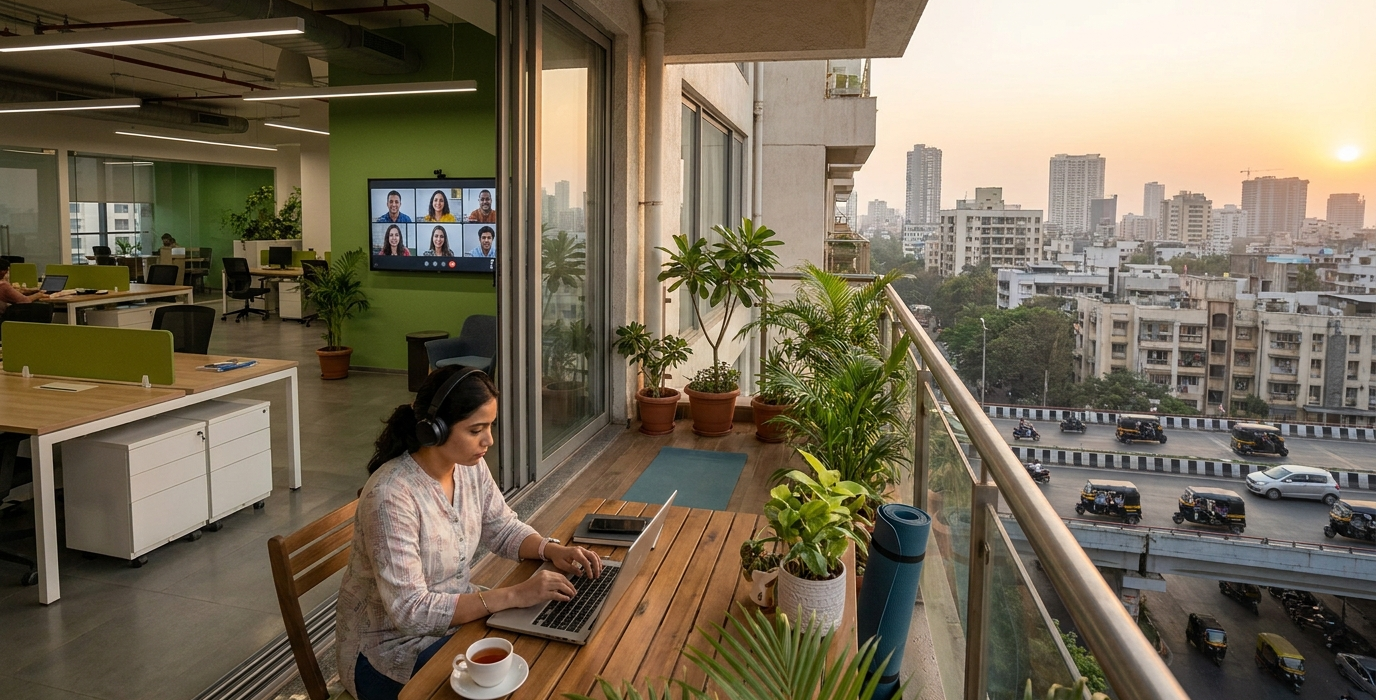
The data is clear: hybrid models are no longer a niche offering but the dominant force. Around 70% of Indian companies now offer some form of flexible work arrangement, a significant leap from pre-2020 figures. This isn’t just about allowing employees to work from home; it’s a sophisticated balancing act. Companies are experimenting with various hybrid structures, from two days in the office to fully flexible models where employees choose their presence. The goal is to capture the best of both worlds: the focused productivity and reduced distractions of remote work, coupled with the invaluable human connection and spontaneous collaboration that physical spaces facilitate. This shift has necessitated a significant overhaul in how we think about our office infrastructure and our daily routines.
Redefining the Office: From Cubicle Farms to Collaboration Hubs
Forget the rows of identical cubicles. The modern Indian office in 2026 is a dynamic space, designed not for individual task completion but for connection and creation. Companies are investing heavily in transforming their physical footprints into vibrant hubs that attract employees back for specific reasons. Think spacious collaboration zones equipped with cutting-edge audio-visual technology, comfortable breakout areas that encourage informal discussions, and dedicated “focus pods” for deep work when needed. The emphasis has shifted from maximising desk space to maximising human interaction and innovation.
This evolution is deeply rooted in understanding that while tasks can often be done remotely, culture, mentorship, and serendipitous idea generation thrive in shared physical environments. The office is becoming the heart of the organisation’s culture, a place to build relationships, onboard new talent effectively, and reinforce company values. We are seeing a deliberate move away from the office as a mandatory daily destination to a place that offers unique value, a place employees *want* to come to. This intentional design is crucial for fostering a sense of belonging in an increasingly distributed workforce.
The Tech Backbone of Flexibility
Seamless hybrid work is impossible without robust technological infrastructure. Companies are doubling down on investments in advanced video conferencing solutions that offer crystal-clear audio and video, ensuring remote participants feel as present as those in the room. AI-powered tools are becoming indispensable for managing hybrid schedules, optimising meeting room bookings, and even analysing employee engagement patterns to identify potential disconnects. The goal is to create an equitable experience for all employees, regardless of their physical location.
We’re also seeing the rise of “smart office” technologies that adapt to user needs. Think sensors that adjust lighting and temperature based on occupancy, or digital whiteboards that allow for real-time collaboration across different locations. This isn’t just about fancy gadgets; it’s about creating an environment where technology fades into the background, enabling effortless interaction and productivity for everyone. The successful integration of these technologies is paramount for any organisation aiming to master the hybrid model.
Prioritising Well-being: A Strategic Investment, Not an Expense
In the post-2025 landscape, employee well-being has moved from a peripheral HR concern to a core strategic imperative. Companies are recognising that a healthy, happy workforce is a productive and loyal one. This translates into tangible changes in how businesses operate and design their workspaces. We’re seeing a significant increase in investment in mental health support, including readily accessible counselling services, mindfulness programs, and flexible leave policies that encourage employees to take time off when they need it.
The physical office design itself reflects this new focus. Ergonomic furniture is now standard, with adjustable desks and supportive chairs becoming commonplace. Breakout spaces are designed for relaxation and rejuvenation, offering quiet zones for meditation or informal social interaction. Companies are also actively promoting healthy lifestyle choices, with many offering subsidies for gym memberships or incorporating wellness challenges into their corporate culture. This holistic approach to well-being is not just about ticking boxes; it’s about creating an environment where employees can truly thrive.
The Surprising Role of Biophilia
One unexpected but increasingly adopted trend is the integration of biophilic design principles. This involves incorporating natural elements into the office environment, such as indoor plants, natural light, and views of greenery. Studies have shown that this connection to nature can significantly reduce stress, improve cognitive function, and boost overall mood. Many new office spaces in cities like Kochi and Pune now feature lush vertical gardens and ample natural light, a far cry from the sterile, artificial environments of the past. It’s a testament to how deeply we’re rethinking the impact of our surroundings on our mental and physical health.
The Future of Talent Acquisition and Retention
The flexibility offered by hybrid and remote work models has become a critical factor in attracting and retaining top talent in India. In 2026, candidates are no longer just looking at salary and job title; they are evaluating companies based on their commitment to work-life balance and employee well-being. Businesses that offer genuine flexibility, robust support systems, and a positive work culture are at a distinct advantage in the competitive talent market. This has forced many organisations, even those initially hesitant about remote work, to adapt their policies to remain attractive employers.
Retention is equally influenced by these new work paradigms. Employees who feel trusted, supported, and empowered to manage their own schedules are more likely to remain loyal to their organisations. Companies are actively seeking ways to foster a strong sense of community and belonging, even among remote team members. This includes virtual social events, regular check-ins from managers, and opportunities for professional development that are accessible to everyone, regardless of their location. The ability to cultivate a thriving culture is now inextricably linked to the success of flexible work arrangements.
The “Work-From-Anywhere” Advantage
Beyond just remote work from home, some progressive companies are embracing a “work-from-anywhere” philosophy. This allows employees to work from different cities or even countries for extended periods, provided they meet certain criteria and their roles allow for it. While this is still a niche offering, it’s becoming a significant draw for highly skilled individuals seeking greater autonomy and the ability to combine work with personal travel or family commitments. This opens up a global talent pool for Indian companies and offers unparalleled freedom for their employees.
Navigating the Challenges: Culture, Connection, and Collaboration
While the benefits of hybrid and remote work are substantial, they are not without their challenges. Maintaining a cohesive organisational culture and ensuring strong team connections requires deliberate effort. Spontaneous water cooler conversations, which often spark innovation, are less frequent. Onboarding new employees effectively and ensuring they feel integrated into the team demands more structured approaches. Managers need new skills to lead distributed teams, focusing on outcomes rather than mere presence.
Companies are actively developing strategies to mitigate these challenges. This includes increased investment in team-building activities, both virtual and in-person. Regular “all-hands” meetings, town halls, and informal virtual coffee breaks are being used to foster a sense of connection. Furthermore, managers are receiving extensive training in communication, empathy, and performance management for remote and hybrid teams. The key is to be intentional about building culture and fostering connection, rather than assuming it will happen organically.
“The office of 2026 is no longer just a place to work; it’s a destination for connection, collaboration, and culture. Companies that understand this will thrive.”
The Surprising Productivity Paradox
Interestingly, many organisations are reporting a paradox: while overall office attendance might be lower, individual and team productivity often remains stable or even increases. This is attributed to several factors, including reduced commute times leading to more focused work hours, fewer workplace distractions, and employees having greater control over their work environments. However, this requires a fundamental shift in management style, moving from oversight to trust and outcome-based performance evaluation. It’s a paradigm shift that many Indian businesses are still navigating.
The Long-Term Outlook: A Blended Reality
Looking ahead, the blended reality of work—a mix of remote, hybrid, and in-office arrangements—is here to stay. The companies that will excel in 2026 and beyond are those that embrace this evolution with agility and a deep understanding of their employees’ needs. This means continuous evaluation of work models, flexible adaptation to new technologies, and a steadfast commitment to fostering a supportive and inclusive work environment. The physical office will continue to play a vital role, but its purpose will be redefined as a hub for human connection and collective endeavour.
The shift is not merely about technology or real estate; it’s about a fundamental re-imagining of the employer-employee relationship. It’s about trust, autonomy, and the creation of workplaces that cater to the diverse needs of a modern workforce. As India continues its trajectory as a global economic powerhouse, its approach to work will be a key differentiator. We are witnessing the dawn of a more human-centric, flexible, and ultimately, more effective future of work, a future that many of us are already living.
Frequently Asked Questions
What is the dominant work model in India in 2026?
The dominant work model in India in 2026 is the hybrid model, with a significant majority of companies offering flexible arrangements combining remote and in-office work. Fully remote or fully in-office models are less common for established organisations.
How has the physical office space changed?
Physical office spaces are transforming from places of individual task completion to collaboration hubs. They now feature more open spaces, meeting rooms with advanced technology, breakout areas, and amenities focused on employee well-being and social interaction.
What are the key challenges of hybrid work for Indian companies?
Key challenges include maintaining organisational culture, ensuring strong team connections, effective onboarding of new employees, and equipping managers with the skills to lead distributed teams. Addressing these requires intentional strategies and robust communication.
Is employee well-being a major focus for Indian businesses in 2026?
Yes, employee well-being is a critical strategic focus. Companies are investing in mental health support, ergonomic workspaces, and promoting healthy lifestyles as essential components for productivity and talent retention.