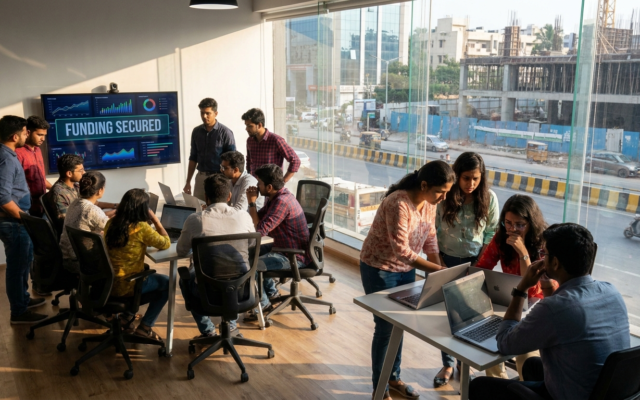
As India’s digital economy accelerates toward a projected $1 trillion valuation by 2027, the barrier to entry for entrepreneurs has never been lower. Whether you are operating from a garage in Bengaluru or a storefront in Ahmedabad, the right low-investment idea can yield sustainable returns in today’s evolving market.
Key Takeaways
- Low-investment businesses in 2026 focus on digital-first service models and hyper-local delivery systems.
- Market trends favor the integration of AI-driven customer service tools to reduce overhead costs for small setups.
- Success in the Indian market requires balancing digital reach with localized community trust and offline presence.
- Government support through the Startup India initiative provides tax benefits and simplified compliance for new ventures.
1. Hyper-Local Cloud Kitchens and Specialized Food Delivery
The appetite for regional, home-cooked food in urban hubs like Pune and Hyderabad is insatiable. While traditional restaurants face high rental costs, a cloud kitchen allows you to start with minimal overhead by leveraging your existing kitchen setup. You can focus on niche demographics, such as diabetic-friendly meal plans or authentic regional cuisines that are hard to find in standard food apps.
To succeed, you must focus on hygiene standards and certifications. Registering your enterprise with the Food Safety and Standards Authority of India is not just a legal requirement but a powerful marketing tool that builds consumer trust. In 2026, the trend is moving toward subscription-based meal delivery. By locking in monthly commitments from busy professionals, you stabilize your cash flow and reduce food wastage, which is the biggest hidden cost in the culinary industry.
2. Specialized Skill-Based EdTech Coaching
India’s massive youth population is constantly seeking to upskill, yet general courses are losing their appeal to hyper-specialized training. If you possess expertise in high-demand fields like prompt engineering, sustainable architecture, or vernacular digital marketing, you can build a profitable coaching business. Platforms like Zoom or Google Meet allow you to conduct live sessions without the need for physical infrastructure.
Surprising Fact: Did you know that the online tutoring market in India is expected to grow at a CAGR of nearly 15% through 2030? This demand is largely driven by tier-2 and tier-3 cities where students are seeking global-standard training without the need to relocate to metro cities. You do not need a fancy website to start; a professional LinkedIn profile and a well-curated WhatsApp Business catalog are often enough to capture your first ten clients.
3. Sustainable Eco-Friendly Packaging and Retail
With the government enforcing stricter plastic bans, businesses are desperate for viable, cost-effective packaging alternatives. Starting a venture that supplies compostable cutlery, paper-based packaging, or upcycled gift boxes provides a B2B service that is inherently scalable. You are solving a regulatory pain point for thousands of small businesses that currently struggle to find reliable, green suppliers.
Building this business requires sourcing raw materials locally to keep costs low. Partner with agricultural cooperatives that produce waste materials like paddy straw or sugarcane bagasse. By positioning your brand as an “environmentally conscious partner,” you gain a competitive edge over cheaper, non-compliant suppliers who face legal risks. Efficiency in supply chain management is your primary product here.
4. Digital Transformation Consulting for Kirana Stores
India has millions of traditional Kirana stores that remain disconnected from the digital economy. You can act as a bridge by helping these shop owners set up inventory management software, digital payment gateways, or simple WhatsApp-based order-taking systems. This is not just a service; it is a vital modernization effort that helps small retailers survive the encroachment of big-box e-commerce.
You do not need to be a software engineer to offer this service. Most shop owners need someone to explain the technology in simple, local language and handle the initial setup. Once you prove that a digital payment system increases their daily sales, you will find it easy to upsell additional services like cloud-based accounting or automated reordering systems.
5. Professional Home Maintenance and Deep Cleaning Services
Modern Indian households in gated communities are increasingly willing to pay for professional, reliable home maintenance services. Unlike the unorganized sector, where reliability and background checks are non-existent, a business that promises verified staff and transparent pricing can command a premium. This is a labor-intensive but high-margin business that thrives on word-of-mouth referrals.
Surprising Fact: The home services industry in India has seen a massive shift toward “subscription-based maintenance,” where households pay a flat monthly fee for recurring tasks like deep cleaning, pest control, and electrical safety checks. By standardizing your service protocols and investing in high-quality equipment, you create a brand that homeowners trust to have access to their personal space.
6. Comparison of Startup Investment Needs
When deciding which path to take, it is helpful to visualize the resource intensity of different models. Below is a comparative look at the initial requirements for the top business ideas discussed.
| Business Idea | Investment Level | Primary Asset | Growth Potential |
|---|---|---|---|
| Cloud Kitchen | Medium | Culinary Skills | High |
| EdTech Coaching | Low | Domain Expertise | Very High |
| Eco-Packaging | Medium | Supply Chain | High |
| Digital Consulting | Low | Communication | Medium |
| Home Maintenance | Low | Labor Management | High |
The most successful small businesses in India today do not just sell a product; they sell a solution to a specific, painful friction point in the customer’s daily life.
Frequently Asked Questions
What is the minimum legal requirement to start a small business in India?
You generally need to register your business as a Sole Proprietorship or an LLP to handle taxes. Visit the Ministry of Corporate Affairs portal to understand the different business structures and choose the one that offers the best tax and liability protection for your specific needs.
How do I secure funding for a low-investment business?
While “low-investment” implies you can start with savings, you may eventually need capital for scaling. Explore government schemes like the Pradhan Mantri Mudra Yojana, which provides loans to non-corporate, non-farm small/micro enterprises. Always maintain clear, separate bank accounts for your business to simplify future credit applications.
Should I focus on social media marketing or local networking?
The most effective strategy is a hybrid approach. Use social media to build authority and showcase your work, but rely on local networking and community groups to drive initial sales. In India, trust is often built through local reputation, so do not underestimate the power of a satisfied neighbor or a local business association recommendation.