Key Takeaways
- India’s 5G network is rapidly expanding, moving beyond major metros to Tier 2 and Tier 3 cities, bringing enhanced connectivity and new service possibilities.
- The rollout is fueling innovation in sectors like healthcare, education, agriculture, and manufacturing, creating tangible benefits for businesses and consumers alike.
- While challenges like spectrum availability and infrastructure investment persist, the trajectory of 5G adoption in India points towards a more digitally empowered future.
- Consumers can expect not just faster mobile speeds, but also a richer experience with augmented reality, virtual reality, and the Internet of Things (IoT).
5G’s Rapid Ascent: Beyond the Metros
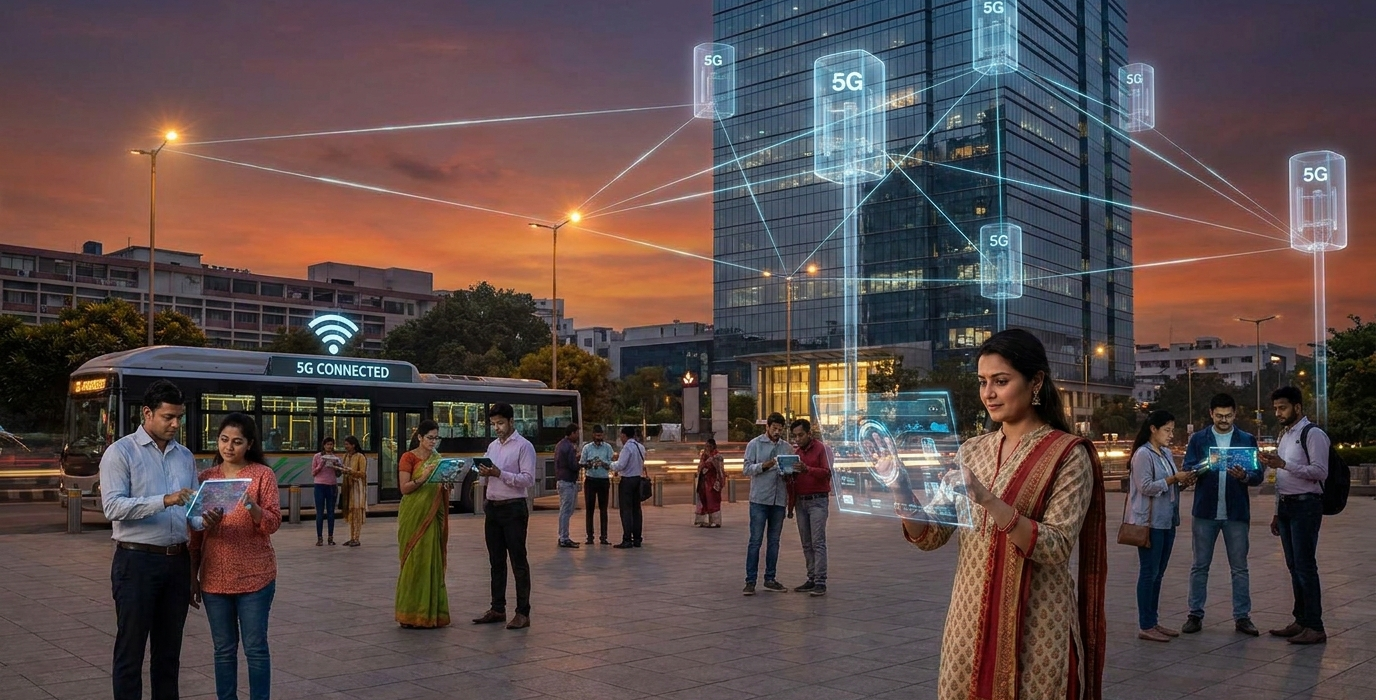
The hum of 5G, once a distant promise for India’s tech-savvy urban centres, is now a palpable reality reaching deeper into the nation’s fabric. As of August 2026, the narrative has shifted decisively from initial deployment in the bustling metropolises like Delhi, Mumbai, and Bengaluru, to a sustained and ambitious expansion into Tier 2 and Tier 3 cities. This isn’t just about incremental speed upgrades; it’s about fundamentally altering the digital landscape and bringing advanced connectivity to a vastly larger population. Operators, spurred by government initiatives and growing consumer demand, are aggressively pushing network infrastructure into regions previously underserved.
You’ll notice this transformation if you’re in cities like Nashik, Indore, Coimbatore, or even smaller towns like Jhansi. Public Wi-Fi hotspots are increasingly being augmented with 5G capabilities, and the availability of 5G-enabled devices is no longer a niche luxury but a mainstream expectation. This geographical leap is crucial for bridging the digital divide, ensuring that the benefits of high-speed, low-latency communication are accessible to a broader spectrum of Indian citizens. The next phase of 5G rollout will focus on densification within these expanding areas and the integration of advanced network features like network slicing.
A surprising statistic that underscores this rapid growth is the sheer volume of towers being upgraded and new ones being erected. India has already surpassed many developed nations in its 5G site deployment density for its population size, a testament to the focused efforts of both the government and the private sector. This aggressive pace ensures that the infrastructure is being built ahead of, rather than behind, mass adoption curves, setting the stage for a robust digital ecosystem. The focus now is on ensuring service quality and expanding the ecosystem of 5G-enabled applications.
Transforming Industries: From Fields to Factories
The impact of 5G is far from being confined to faster downloads and smoother video calls. Its true power lies in its ability to revolutionise industries, driving efficiency and creating new paradigms of operation. In agriculture, for instance, 5G is enabling precision farming techniques that were once theoretical. Farmers in states like Punjab and Haryana are now leveraging IoT sensors connected via 5G to monitor soil conditions, crop health, and weather patterns in real-time. This data, transmitted with minimal latency, allows for optimised irrigation, targeted fertiliser application, and early detection of pests and diseases, leading to significant yield improvements and reduced resource wastage.
Manufacturing, particularly in industrial hubs like Pune and Chennai, is witnessing a similar metamorphosis. The concept of the “smart factory” is becoming a tangible reality. 5G’s low latency and high bandwidth are facilitating the deployment of advanced robotics, enabling remote monitoring and control of machinery, and optimising supply chain logistics through real-time tracking. Predictive maintenance, powered by 5G-connected sensors, is preventing costly downtime and improving operational efficiency. This digital transformation is making Indian manufacturing more competitive on a global scale.
Even the traditionally slower-moving sectors are feeling the ripple effects. In healthcare, telemedicine is evolving beyond basic consultations. High-definition video conferencing, coupled with the ability to transmit large medical imaging files instantaneously, is allowing specialists to consult on critical cases from afar. Remote patient monitoring, especially for chronic conditions, is becoming more sophisticated, with wearable devices feeding data back to healthcare providers in real-time. This is particularly impactful in rural areas where access to specialized medical expertise is limited. The integration of AI and 5G is unlocking potential for rapid diagnostics and personalised treatment plans.
The 5G Ecosystem: Devices, Services, and Opportunities
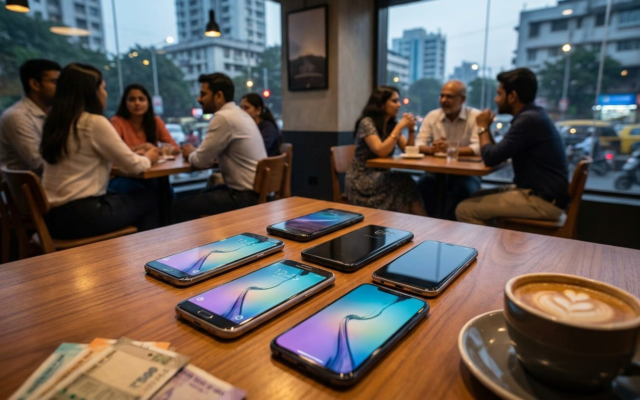
The expansion of 5G networks is intrinsically linked to the proliferation of compatible devices and the emergence of innovative services. As 5G coverage blankets more of India, the availability and affordability of 5G-enabled smartphones have seen a dramatic increase. You can now find a wide array of options, from premium flagship models to budget-friendly devices, making the transition to 5G accessible to a much larger segment of the population. This democratisation of access is a key driver of widespread adoption.
Beyond smartphones, the Internet of Things (IoT) is experiencing an unprecedented surge. Smart home devices, connected cars, and industrial sensors are all benefiting from the robust connectivity that 5G provides. Imagine a scenario where your smart home in a Bengaluru apartment complex communicates seamlessly with your connected car, pre-heating it on a chilly morning based on your calendar. In cities like Hyderabad, you’re starting to see early trials of 5G-powered smart traffic management systems that can dynamically adjust signal timings based on real-time traffic flow, reducing congestion and travel times.
This burgeoning ecosystem also creates a fertile ground for new services and applications. Augmented Reality (AR) and Virtual Reality (VR) experiences are becoming more immersive and interactive, moving beyond gaming to applications in education, retail, and remote collaboration. Students in cities like Kolkata might soon be able to attend virtual field trips to historical sites, interacting with 3D models and expert commentary. The economic opportunities are vast, with startups and established companies alike innovating in areas such as cloud gaming, enhanced mobile broadband, and mission-critical communication services. The ability to deploy edge computing solutions, processing data closer to the source, is further enhancing the responsiveness of these applications.
Navigating the Challenges: Spectrum, Infrastructure, and Adoption
Despite the impressive progress, the journey of 5G expansion in India is not without its hurdles. One of the primary considerations remains spectrum availability and allocation. While significant spectrum auctions have taken place, ensuring sufficient bandwidth across all necessary frequency bands for all operators is an ongoing process. The government’s continued commitment to a transparent and efficient spectrum allocation policy is vital for sustained network growth. Balancing the needs of different applications, from enhanced mobile broadband to critical IoT, requires careful spectrum management.
Infrastructure development, particularly in rural and remote areas, presents another significant challenge. While urban centres are well-connected, extending fibre optic backhaul and deploying cell sites in geographically dispersed regions requires substantial investment and time. The cost of deploying new infrastructure, coupled with the operational expenses, necessitates a viable business model for operators to achieve profitability and justify further expansion. Public-private partnerships and government subsidies play a crucial role in making these investments feasible.
Consumer adoption also has its nuances. While the demand for 5G-enabled devices is growing, the full potential of the network can only be realised when users understand and adopt the new services it enables. Educating consumers about the benefits beyond faster speeds, such as low latency applications and new immersive experiences, is key. Furthermore, ensuring affordability of 5G services and devices for all segments of society remains a priority to prevent a new digital divide from emerging. Addressing these challenges head-on will be critical for India to fully harness the transformative power of 5G.
The Promise of Low Latency: Real-Time Everything
Perhaps the most revolutionary aspect of 5G, often spoken about but rarely fully grasped, is its ultra-low latency. While 4G networks typically have latencies of around 50 milliseconds, 5G can bring this down to as little as 1 millisecond. This dramatic reduction in delay is not just a technical jargon; it’s the enabler of applications that require instantaneous response, opening up a world of possibilities that were previously science fiction.
Consider the implications for autonomous vehicles. For a self-driving car to navigate complex urban environments, it needs to make split-second decisions based on a constant stream of data from its sensors. 5G’s low latency ensures that the vehicle can react to unexpected obstacles or changing traffic conditions almost instantaneously, significantly enhancing safety and reliability. While fully autonomous vehicles are still some years away from mass deployment in cities like Gurugram, the underlying infrastructure and testing are actively underway, powered by these advancements.
In industrial settings, low latency is transforming robotics and remote operations. Imagine a surgeon in a hospital in Ahmedabad remotely controlling a robotic arm to perform a delicate procedure in a rural clinic miles away. The tactile feedback and precision required for such a feat are only possible with the near-instantaneous communication that 5G provides. This is also crucial for critical infrastructure management, where real-time control and monitoring of power grids or water systems can prevent disruptions and ensure efficient resource allocation. The ability to remotely operate heavy machinery in hazardous environments, like mines in Odisha, with the same responsiveness as being on-site, is another game-changer.
5G and the Future of Digital India
As we look ahead, the trajectory of 5G in India points towards a future where digital connectivity is not just a utility but an integral enabler of progress and prosperity. The ongoing expansion means that by the end of 2027, a significant majority of India’s population, including those in remote corners, will have access to 5G services. This pervasive connectivity will foster a more inclusive digital economy, empowering small businesses and entrepreneurs across the country.
The synergies between 5G, Artificial Intelligence (AI), and the Internet of Things (IoT) are poised to create a powerful feedback loop of innovation. As more devices become connected and generate data, AI algorithms will become more sophisticated in analysing this information, leading to smarter systems and more personalised services. This is already being seen in areas like personalised education platforms and smart city initiatives being piloted in cities like Indore, where data from various sensors helps optimise public services.
The true measure of 5G’s success in India will be its ability to translate technological advancements into tangible improvements in the lives of its citizens, fostering innovation, efficiency, and inclusivity across all sectors.
The government’s vision for a ‘Digital India’ is intrinsically linked to the success of its 5G rollout. Beyond consumer benefits, the focus is on leveraging 5G for national development, from advanced defence applications to enhancing disaster management capabilities. The ability to deploy high-speed, reliable communication networks in challenging terrains will be critical for these strategic objectives. The continued investment and focus on this transformative technology promise to reshape India’s digital future in profound ways, making it a leading digital economy in the coming years.
Frequently Asked Questions
Will 5G significantly improve my mobile internet speed?
Yes, absolutely. You can expect a substantial increase in download and upload speeds compared to 4G, often several times faster. This means quicker app downloads, seamless streaming of high-definition content, and more responsive online gaming, even on congested networks. The improved speed is one of the most immediate and noticeable benefits for most users.
Are 5G services available in smaller Indian cities and towns?
The rollout is rapidly expanding beyond major metros. Many Tier 2 and Tier 3 cities now have significant 5G coverage, and operators are actively working to extend it further. While coverage might not be as dense as in larger cities yet, you will likely find 5G services available in a growing number of smaller urban centres across India.
What are the main differences between 5G and 4G?
The key differences lie in speed, latency, and capacity. 5G offers significantly higher speeds, much lower latency (the delay in data transmission), and can handle a far greater number of connected devices simultaneously compared to 4G. This enables new applications like real-time AR/VR, advanced IoT, and mission-critical communications.
When can I expect 5G in my specific locality?
Network expansion is ongoing and depends on the operator’s rollout plans and local infrastructure. Many operators are prioritizing densely populated areas and key economic centres. You can check your mobile operator’s website or app for their specific 5G coverage maps and expected rollout timelines for your region.