Key Takeaways
- India is rapidly becoming a global leader in green hydrogen production, driven by ambitious government policies and significant private investment.
- Key projects are coming online across the country, from large-scale manufacturing hubs in Gujarat to pilot initiatives in remote areas, showcasing diverse applications.
- While challenges like infrastructure and cost remain, the momentum suggests green hydrogen will play a pivotal role in India’s decarbonization journey and energy security.
- New collaborations and technological advancements are emerging, promising further cost reductions and wider adoption in sectors like transportation and industry.
The Hydrogen Horizon: India’s Ambitious Leap Forward
India’s journey towards a sustainable future is gaining unprecedented momentum, and at its heart lies the burgeoning green hydrogen industry. As of August 2026, the nation stands on the cusp of a remarkable transformation, moving from ambitious policy pronouncements to tangible project deployments. The National Green Hydrogen Mission, launched with significant fanfare, is now yielding demonstrable results, with several key projects commencing operations and others nearing completion. This isn’t just about meeting climate targets; it’s about forging a new path to energy independence and establishing India as a formidable player in the global clean energy market.
The sheer scale of investment and the diverse range of players involved, from established energy conglomerates to agile startups, underscore the seriousness of India’s commitment. We are witnessing the birth of an entire ecosystem, encompassing electrolyzer manufacturing, renewable energy integration, and end-user applications. The narrative has shifted from “if” to “how and when,” with the focus now on scaling up, driving down costs, and ensuring grid integration. This proactive approach is crucial for a nation that historically relies heavily on imported fossil fuels, making green hydrogen a strategically vital component of its long-term economic and environmental planning.
Gujarat’s Hydrogen Hub: A Beacon of Industrial Transformation
Gujarat, long recognized as India’s industrial powerhouse, is emerging as the undisputed epicentre of its green hydrogen revolution. The state’s proactive industrial policies and access to vast renewable energy potential, particularly solar, have made it an attractive destination for global and domestic investors. Major energy giants and new-age startups are establishing massive production facilities here, transforming coastal and hinterland regions into vibrant hubs of hydrogen innovation.
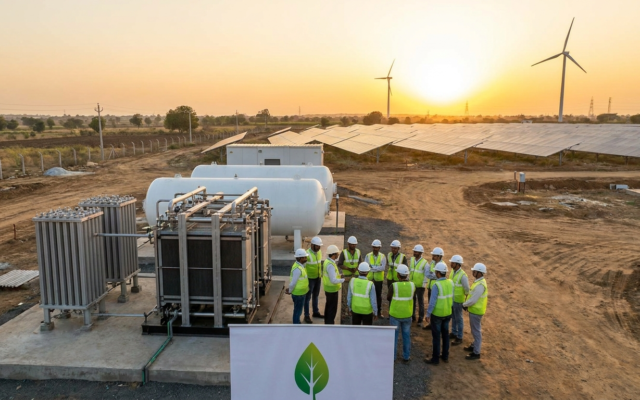
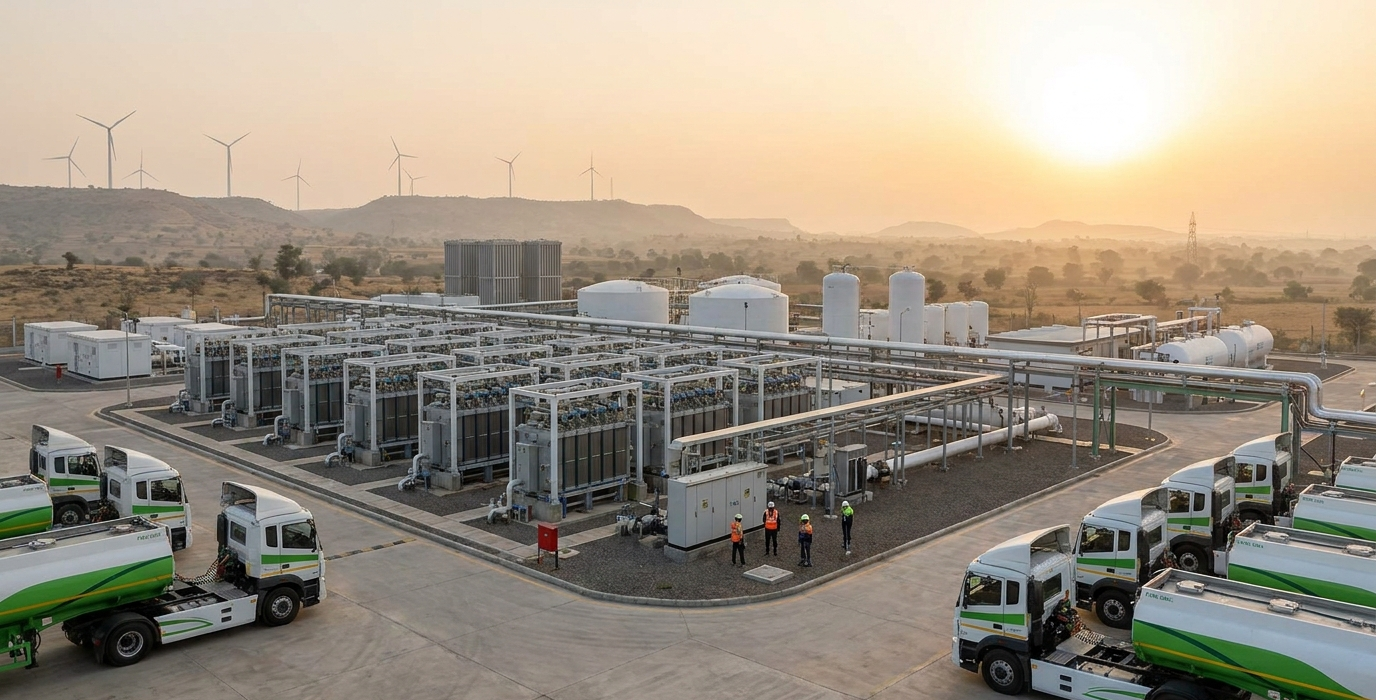
Consider the Sanand Green Hydrogen Project, a flagship initiative that commenced its first phase of operations in early 2026. This facility, a collaboration between a consortium of Indian energy firms and a leading international technology provider, boasts an initial capacity of 10,000 tonnes per annum of green hydrogen. Its strategic location near major industrial consumers, including petrochemical plants and fertilizer units, ensures immediate off-take, demonstrating a clear pathway to commercial viability. The project leverages dedicated solar farms, ensuring the ‘green’ credentials of the hydrogen produced are undeniable.
Furthermore, the Gujarat Maritime Board has announced plans for green hydrogen bunkering facilities at its major ports, aiming to support the growing fleet of green-fuelled shipping. This forward-thinking approach positions Gujarat not just as a producer, but as a critical enabler of a sustainable maritime ecosystem. The economic ripple effects are already being felt, with job creation and the development of ancillary industries becoming increasingly prominent across the state.
Scaling Up Electrolyzer Manufacturing
A crucial aspect of Gujarat’s success is its aggressive push towards domestic electrolyzer manufacturing. Several international players have announced joint ventures or wholly-owned subsidiaries in the state, aiming to produce state-of-the-art electrolyzer stacks locally. This not only reduces import dependence but also fosters technological know-how and creates high-skilled employment. The aim is to achieve a significant percentage of India’s electrolyzer needs from domestic sources by 2030, a goal that Gujarat’s industrial infrastructure is well-positioned to meet.
Beyond Gujarat: Diversified Projects Fueling National Ambition
While Gujarat rightfully garners significant attention, India’s green hydrogen ambitions are spread far and wide, showcasing the nation’s commitment to a decentralized and inclusive energy transition. From the arid plains of Rajasthan to the lush landscapes of Kerala, pilot projects and early-stage commercial ventures are demonstrating the versatility and potential of green hydrogen across diverse geographical and socio-economic contexts.
In Rajasthan, the focus is on leveraging abundant solar power for large-scale production. Companies are investing in integrated projects that combine massive solar farms with dedicated electrolyzer plants, aiming to supply green hydrogen to nearby industrial clusters and potentially for transportation fuel. These projects are crucial for demonstrating the scalability of the technology in resource-rich, but often remote, regions.
Meanwhile, in Kerala, innovative approaches are being explored to integrate green hydrogen into existing industrial processes and to support the state’s tourism sector. A particularly intriguing pilot involves powering a fleet of ferries on the backwaters with hydrogen fuel cells. This initiative, supported by the Kerala State Water Transport Department and a local research institution, aims to showcase the potential of green hydrogen in reducing emissions from public transportation and offering a unique, eco-friendly tourism experience. The success of such localized projects is vital for building public acceptance and understanding.
These diverse initiatives highlight a strategic national approach: replicate success stories, adapt technologies to local conditions, and foster a pan-India green hydrogen ecosystem. It’s about ensuring that the benefits of this energy transition are felt across the length and breadth of the country, not just concentrated in a few industrial belts. The learning curve is steep, but the commitment to innovation is palpable.
Surprising Fact: Hydrogen for Remote Power
One of the more surprising yet impactful applications emerging is the use of green hydrogen for reliable power generation in remote, off-grid locations. Companies are developing compact, modular green hydrogen production units that can be powered by local renewable sources, providing clean electricity for communities in regions like Ladakh or the Northeast. This offers a sustainable alternative to diesel generators, drastically improving air quality and reducing logistical challenges associated with fuel transport.
The Road Ahead: Tackling Challenges and Embracing Innovation
Despite the palpable excitement and significant progress, the path to a fully realized green hydrogen economy in India is not without its hurdles. The primary challenges revolve around cost competitiveness, infrastructure development, and the need for robust policy frameworks to ensure sustained growth. The current production cost of green hydrogen, while declining, is still higher than that of grey hydrogen (produced from natural gas). Bringing these costs down to parity is critical for widespread adoption.
Infrastructure, particularly the transportation and storage of hydrogen, represents another significant bottleneck. Hydrogen is a highly diffuse gas, requiring specialized pipelines, storage tanks, and distribution networks. Building this infrastructure is a capital-intensive undertaking that needs coordinated efforts from both government and private entities. The initial focus is on co-locating production facilities with demand centres to minimize transport costs, but a broader network will be essential for scaling up.
However, these challenges are being met with a wave of innovation and strategic partnerships. Research and development into more efficient electrolyzer technologies, advanced storage solutions, and novel applications is progressing rapidly. We are seeing increased collaboration between Indian research institutions, universities, and industry players, fostering a culture of innovation aimed at overcoming these technical and economic barriers. The government’s continued focus on incentives, tax breaks, and long-term policy certainty is also providing much-needed reassurance to investors.
“The true measure of our success won’t just be the tonnes of hydrogen we produce, but the tangible improvements in air quality, energy security, and economic opportunity it brings to every corner of India.”
Moreover, international collaborations are playing a crucial role. Joint ventures and technology transfer agreements are enabling India to access cutting-edge expertise and accelerate its learning curve. This global synergy is vital for navigating the complexities of a nascent industry and for positioning India as a leader rather than a follower in the green hydrogen race.
The Electrolyzer Dilemma: Cost and Capacity
The cost of electrolyzers remains a significant factor in the overall price of green hydrogen. While prices have fallen substantially over the past few years due to scaling up manufacturing and technological improvements, they still represent a substantial upfront investment. Efforts are underway to further optimize manufacturing processes, explore new materials, and develop more durable and efficient electrolyzer designs. The ambition is to bring down the cost of electrolyzers by at least 30-40% in the next five years.
Emerging Applications: Beyond Industrial Feedstock
While the initial focus for green hydrogen in India has rightly been on decarbonizing heavy industries like refining, ammonia production, and steel manufacturing, the scope of its application is rapidly expanding. As production scales up and costs decrease, we are witnessing exciting developments in sectors previously thought to be difficult to decarbonize.
The transportation sector is a prime example. Public and private enterprises are piloting hydrogen fuel cell electric vehicles (FCEVs) for heavy-duty trucking and long-haul logistics. These vehicles offer significant advantages, including longer ranges and faster refueling times compared to battery-electric alternatives, making them ideal for commercial applications. Several states are actively exploring setting up hydrogen refueling stations along major national highways, creating the necessary infrastructure to support this transition.
Another significant area of growth is the power sector. While renewable energy sources like solar and wind are crucial for producing green hydrogen, hydrogen itself can also be used for energy storage and grid balancing. Green hydrogen can be produced when renewable energy is abundant and stored for later use in fuel cells or turbines to generate electricity during peak demand or when renewable generation is low. This flexibility is invaluable for ensuring grid stability as India continues to increase its reliance on intermittent renewable sources.
We are also seeing innovative uses in specialty chemicals and metallurgy. For instance, green hydrogen can be used in the direct reduction of iron ore, offering a cleaner alternative to traditional blast furnace methods for steel production. Its application in producing green methanol and other chemicals is also gaining traction, further diversifying the demand base and reinforcing the strategic importance of this clean fuel.
Surprising Fact: Hydrogen for Cooling?
Perhaps one of the most surprising, yet potentially revolutionary, applications being explored is the use of hydrogen in absorption chillers for large-scale cooling systems, especially in regions with high ambient temperatures. While still in the R&D phase, the potential to use a clean fuel source for industrial and commercial cooling, reducing reliance on electricity-intensive conventional AC units, could be a game-changer for energy efficiency and carbon footprint reduction in sectors like data centers and large manufacturing plants.
Policy and Investment: The Twin Pillars of Progress
India’s remarkable progress in green hydrogen is inextricably linked to the robust policy framework and the significant influx of investment it has attracted. The National Green Hydrogen Mission, with its multi-pronged approach, has provided the essential roadmap and incentives to catalyze this growth. The mission’s emphasis on domestic manufacturing, pilot projects, and research and development has created a fertile ground for innovation and deployment.
Government incentives, including production-linked incentives (PLI) for electrolyzer manufacturing and tax benefits for green hydrogen projects, have been instrumental in de-risking investments and making them attractive to private capital. This has spurred significant interest from both domestic conglomerates and international energy companies looking to establish a footprint in India’s rapidly expanding clean energy market. The clarity and long-term vision embedded in these policies have instilled confidence among investors, encouraging substantial financial commitments.
Beyond direct financial incentives, the government is actively working on streamlining regulatory processes and facilitating land acquisition for renewable energy and hydrogen production projects. This proactive approach helps in accelerating project timelines and reducing execution risks. Furthermore, the establishment of dedicated task forces and nodal agencies ensures efficient coordination between various ministries and stakeholders, fostering a collaborative environment for the industry’s growth.
The investment landscape is diverse, ranging from large-scale funding from public sector undertakings and major private banks to venture capital funding for innovative startups in the hydrogen value chain. This multi-stakeholder investment approach ensures that capital is available across different stages of project development, from R&D to large-scale commercial deployment. As the industry matures, we can expect to see even more sophisticated financial instruments and public-private partnerships emerge, further strengthening the foundations of India’s green hydrogen future.
| Aspect | Government Policy Support | Private Investment Focus | Impact on Green Hydrogen Growth |
|---|---|---|---|
| Incentives | Production-Linked Incentives (PLI), Tax Benefits, Viability Gap Funding | Strategic investments in manufacturing, project development, and R&D | Reduces upfront costs, improves project economics, attracts capital |
| Infrastructure | Facilitating land acquisition, developing port infrastructure, supporting pilot projects | Building production facilities, storage solutions, and distribution networks | Enables scaling up of production and wider adoption |
| Regulation | Streamlining approvals, setting quality standards, creating market mechanisms | Developing business models, ensuring off-take agreements, seeking policy certainty | Reduces execution risks, provides a stable operating environment |
| Technology & Innovation | Funding R&D, fostering academic-industry collaboration, promoting pilot projects | Investing in new electrolyzer tech, storage solutions, and emerging applications | Drives cost reduction, efficiency improvements, and diversification of uses |
Frequently Asked Questions
What is the primary goal of India’s National Green Hydrogen Mission?
The mission aims to make India a global hub for green hydrogen production and export, reduce dependence on fossil fuel imports, decarbonize key sectors of the economy, and promote the development of indigenous manufacturing capabilities for electrolyzers and other related equipment.
How is green hydrogen produced in India?
Green hydrogen is produced through electrolysis of water using electricity generated from renewable energy sources, such as solar and wind power. This process ensures that the hydrogen produced has a very low carbon footprint.
What are the main challenges facing India’s green hydrogen industry?
Key challenges include the high cost of production compared to grey hydrogen, the need for significant investment in infrastructure for storage and transportation, and the development of a robust regulatory framework to support large-scale deployment.
Which industries are expected to be the biggest adopters of green hydrogen in India?
Initially, heavy industries like refining, ammonia production, steel, and methanol manufacturing are expected to be the largest consumers. However, the transportation sector (especially heavy-duty vehicles) and the power sector for energy storage are also significant growth areas.
Are there any specific government schemes supporting green hydrogen adoption?
Yes, the Production Linked Incentive (PLI) scheme for battery storage and electrolyzer manufacturing, along with other fiscal incentives and grants, are in place to encourage domestic production and adoption of green hydrogen technologies.