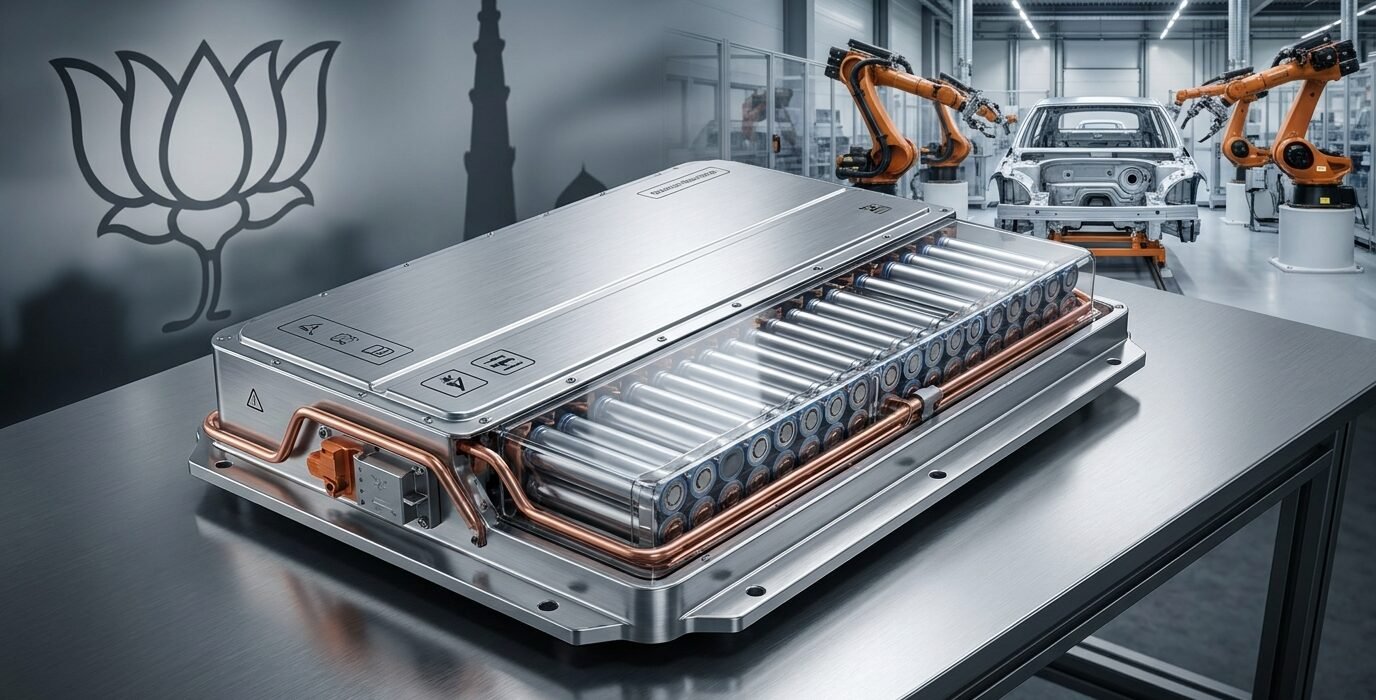
The hum of innovation echoes through Bavaria. Not just any factory floor, but a crucible where the future of mobility is being forged. This is a German auto plant, yes, but its engine of progress is increasingly fueled from afar. From India.
The old narrative is shifting. German engineering, once the sole beacon of automotive innovation, is now sharing its spotlight. The new power source? Indian electric vehicle battery technology. This isn’t a gentle flow; it’s a surging current, reshaping the German auto industry. It brings opportunities. It brings challenges.
Key Takeaways:
Advertisement300×250 / native
- German automakers are increasingly turning to Indian companies for advanced EV battery technology, driven by cost, innovation, and supply chain diversification.
- Major German players like Volkswagen and BMW are actively forging partnerships and investments with Indian firms, signaling a deep strategic shift.
- This trend presents a significant opportunity for India to become a global hub for EV battery manufacturing and R&D, moving beyond raw material supply.
- German manufacturers face the challenge of integrating new technologies and ensuring quality while navigating complex international business relationships.
- The long-term implications include a potential rebalancing of global automotive power, with India playing a more central role in the EV revolution.
The Shifting Sands of Automotive Power in Stuttgart
Stuttgart’s Mercedes-Benz Museum. It breathes automotive history. For over a century, German carmakers have defined excellence. Performance. Luxury. Reliability. But the electric revolution is a different beast entirely.
The internal combustion engine, the very heart of German automotive pride, is fading. Replaced by the electric motor. And at its core? The battery. This is the new battleground. For years, Japanese and Korean giants dominated. Now, India is rising. Not just for raw materials. It’s a hub of innovation.
The investment scale is immense. Tata Motors, with its growing EV division, isn’t just building cars. They’re pouring money into battery R&D. Often, this is with international partners. This creates ripples. European giants are paying attention. They need a stable, cost-effective, advanced battery supply.
Sourcing lithium, cobalt, nickel is complex. Geopolitics adds another layer of risk. India’s location is strategic. Its manufacturing is growing. Its government champions EV adoption. It’s becoming a prime partner. This isn’t just boardroom talk. It’s evident in new research centers. Joint ventures are being announced. The pace of this shift is astonishing.
We’re seeing a fundamental supply chain rethink. For decades, German automakers relied on established suppliers. Often European or East Asian. But recent global disruptions proved these networks vulnerable. India offers a compelling alternative. A vast population. A growing middle class. A government pushing manufacturing and self-reliance.
The ambition is clear. India aims to be more than a technology consumer. It wants to be a producer. An innovator. Especially in critical sectors like EV batteries. This is a story of adaptation. Foresight. Established titans are seeking new horizons. For the power that will drive their electric future.
The Chennai-Munich Connection: A New Era of Collaboration
The industrial belt around Chennai. It once pulsed with Tamil Nadu’s manufacturing might. Now, a new energy vibrates. The electric vehicle ecosystem. Ola Electric. Ather Energy. They’re assembling scooters and motorcycles. But more importantly, they’re developing and making their own battery packs.
This grassroots innovation is catching global attention. Whispers of collaborations between German giants and Indian battery startups are growing louder. Specifics remain confidential. Competitive sensitivities run high. But the direction is clear.
Consider Volkswagen. Ambitious electrification targets. A reliable, advanced battery supply is crucial. They’ve invested in European gigafactories. But demand is astronomical. Exploring all options is vital. This is where India shines.
Indian companies offer more than competitive pricing. They bring unique innovations. Especially in battery management systems (BMS). And thermal management. These are key for battery longevity and safety. Especially in diverse climates. Imagine engineers from Wolfsburg. Collaborating with counterparts in Pune. Optimizing battery chemistry for extreme weather. This is not fiction. It’s global automotive R&D evolving.
The cultural exchange is also significant. German precision. Legendary quality control. Indian agility. Renowned rapid prototyping. When these meet, innovation explodes. A senior executive from a German auto supplier, speaking anonymously, shared: “We’re seeing ingenuity from Indian R&D teams that is frankly astonishing. They’re thinking outside established boxes. That’s precisely what we need.” This isn’t just about capacity. It’s a genuine meeting of minds. Forging a new path.
Beyond Raw Materials: India’s Leap in Battery Technology
India’s role in the global EV supply chain was once viewed narrowly. Raw material extraction. Processing. Mineral wealth elsewhere often overshadowed India’s potential. But that perception is rapidly fading. Indian companies are no longer content with just supplying lithium and cobalt.
They are investing heavily in R&D. Aiming for leadership. In battery cell manufacturing. Energy storage solutions. Intelligent battery management systems. This is a major strategic pivot.
Look at Reliance Industries. Their commitment to a new energy ecosystem. Including advanced battery manufacturing. It signifies a national effort. To climb the value chain. This isn’t just domestic demand. It’s about positioning India. As a global battery technology hub.
Patents are increasing. Indian entities are filing in areas like solid-state batteries. Novel cathode materials. These are cutting-edge technologies. They will define the next generation of EVs. India is striving for the forefront. German automakers can leverage this. Rapidly advancing domestic innovation.
The advantage for German manufacturers is twofold. Cost competitiveness. And speed of innovation. Indian startups, unburdened by legacy systems, adapt faster. This agility is critical in the fast-paced EV market. A senior analyst in Frankfurt noted: “The Indian battery sector is demonstrating remarkable innovation. Their focus on proprietary technologies, not just replication, makes them attractive.” This highlights India’s growing intellectual capital. Its commitment to self-reliance.
The Gigafactory Dream: Opportunities and Hurdles
The dream of gigafactories. Massive, state-of-the-art battery production facilities. It’s a shared ambition. For India, it’s a leap toward modernization. Global leadership. For Germany, it’s de-risking its supply chain. Securing its electric future.
Discussions are reportedly underway. Involving governments and private players. Exploring joint ventures. Significant investments in Indian battery manufacturing. The economic benefits are colossal. Job creation. Technology transfer. Export opportunities.
But the path is difficult. Land acquisition. Environmental clearances. Skilled labor availability. These are major hurdles. For any large-scale project in India. The capital investment is astronomical. Billions of dollars. For German automakers, investing outside their traditional base requires immense trust. Confidence in Indian capabilities. The regulatory environment. Intense due diligence is a certainty.
Despite obstacles, momentum is undeniable. The Indian government’s PLI scheme. For advanced chemistry cell batteries. It’s a strong commitment signal. Financial incentives for manufacturing facilities. Reducing initial capital burden. Making India attractive. A report from the Ministry of Heavy Industries confirms significant interest. Both domestic and international. A strong pipeline of potential gigafactory projects. This gives German companies a tangible reason. To consider India a key manufacturing hub. The “Make in India” initiative is resonating globally.
Navigating the Technobabble: What Makes Indian Batteries Different?
What exactly is “Indian EV battery technology”? It’s easy to get lost in jargon. But the innovation lies in key areas. Appealing to German automakers.
First, advanced battery management systems (BMS). These are the battery’s brains. Monitoring voltage, temperature, current. Ensuring optimal performance. Longevity. Indian engineers are developing sophisticated algorithms. They predict battery health. Optimize charging cycles. Enhance safety. Making EVs more reliable. User-friendly.
Second, thermal management. EV batteries generate heat. Managing it is critical. Preventing degradation. Ensuring safety. Especially in hot Indian climates. Innovations in liquid cooling. Advanced thermal insulation. Smart ventilation. These keep batteries in their ideal range. Even in extreme conditions. This directly benefits German automakers. Their vehicles are global. They must perform everywhere. Better thermal management means a longer-lasting, safer battery. For German consumers.
A surprising revelation: sodium-ion battery technology. Lithium-ion dominates. But lithium is scarce. Geographically concentrated. Long-term supply risks exist. Indian researchers and startups are advancing sodium-ion batteries. They use abundant materials like sodium. Found in common salt. Cost-effective. Environmentally friendly. While still earlier stage than lithium-ion, the potential is immense. For a sustainable, cost-effective battery future. India is positioning itself as a leader. This could fundamentally alter EV economics.
The Road Ahead: A Symbiotic Future or a Competitive Standoff?
German automakers’ growing reliance on Indian EV battery tech. It’s a complex picture. Promising symbiotic growth. Hinting at competitive tensions. For India, it’s a golden opportunity. To move beyond manufacturing. To become a global advanced technology powerhouse. Investment and research can accelerate its clean energy transition. The vision: innovate. Set global standards. Not just supply.
For German manufacturers, benefits are tangible. Cost-effective. Technologically advanced. Diversified battery supply chains. This helps accelerate their EV transition. Meet production targets. Remain competitive. Partnerships forged now will shape the future. Imagine a sleek Mercedes-Benz EQ. Its silent power source. A collaboration between German engineering. Indian innovation. This is the tangible outcome.
However, interdependence brings challenges. Consistent quality control. Protecting intellectual property. Navigating differing regulatory frameworks. Constant vigilance is needed. Strong diplomatic efforts. The underlying question: long-term strategic advantage. As India develops its own EV market. Battery manufacturing. Will it remain a supplier? Or become a competitor? The answer lies in the partnerships. Built today. A true symbiosis. Both benefit. Both grow. This is the most optimistic outcome. The road ahead isn’t smooth. But the destination is shared. A cleaner, electrified future.