Key Takeaways
- This year’s Durga Puja 2026 in Bengal is seeing a significant rise in eco-friendly pandal designs, blending tradition with sustainability.
- Innovations include the widespread use of biodegradable materials like jute, bamboo, and recycled plastics, alongside energy-efficient lighting solutions.
- Community participation is crucial, with many local artisans and residents actively involved in creating these green structures.
- Beyond aesthetics, these pandals are designed for minimal environmental impact, focusing on responsible waste management and material reuse post-Puja.
The Green Revolution Sweeps Bengal’s Puja Pandals
The air in Kolkata, and indeed across West Bengal, is already beginning to hum with anticipation for Durga Puja 2026. This year, however, the usual fervour for grand decorations and elaborate themes is being matched, if not surpassed, by a powerful undercurrent of environmental consciousness. We’re witnessing a genuine revolution in pandal construction, one that prioritises our planet as much as the divine. Gone are the days when mere scale and opulence dictated the best pandals; the true stars of Durga Puja 2026 are those that demonstrate innovation in sustainability. This shift isn’t just a fleeting trend; it’s a deeply ingrained commitment by communities, artisans, and organisers to celebrate tradition responsibly.
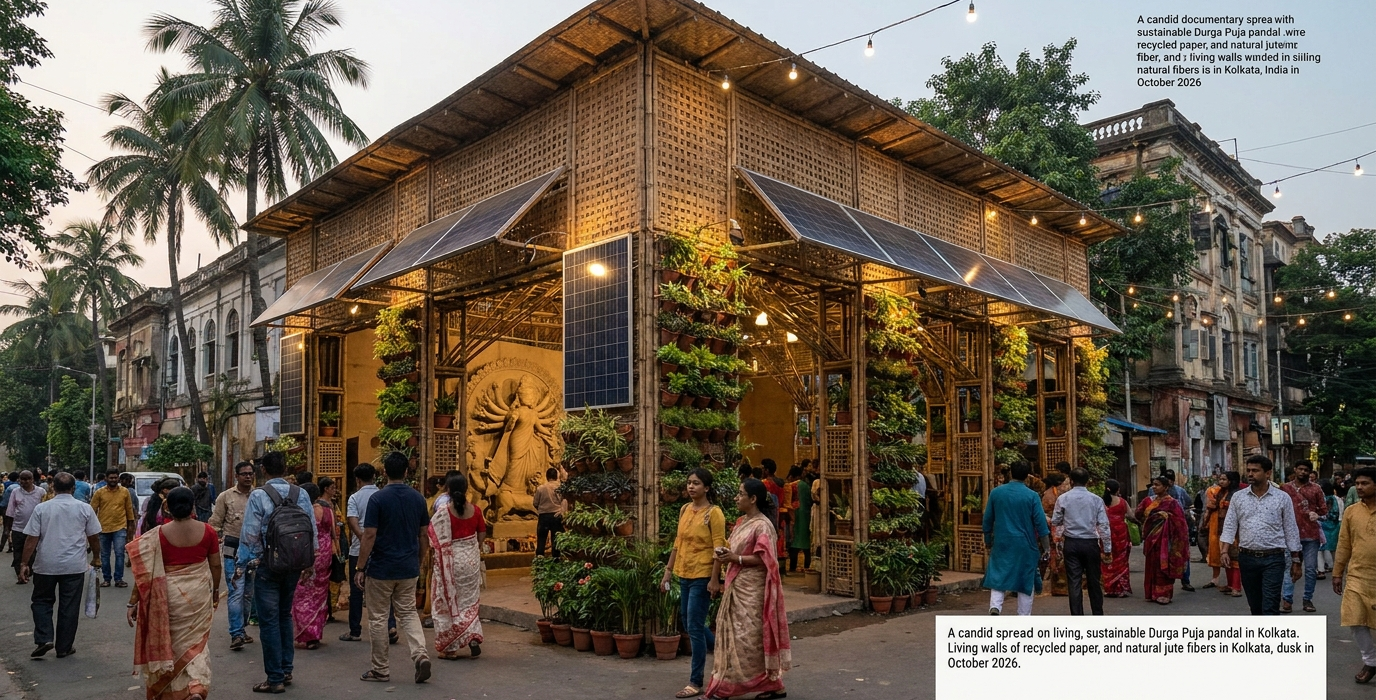
From the bustling lanes of North Kolkata to the serene outskirts, you’ll find pandals crafted from materials that would have seemed radical just a few years ago. Think intricate artistry woven from jute fibres, majestic structures sculpted from sustainable bamboo, and vibrant mosaics fashioned from recycled plastics. This conscious choice reflects a growing awareness of the environmental footprint left behind by the grand celebrations. The goal is clear: to honour Goddess Durga while safeguarding the natural world she represents. This movement is not just about averting waste; it’s about creating art that speaks to a deeper respect for nature.
Innovations in Biodegradable Materials
The most striking change you’ll notice in Durga Puja 2026 pandals is the innovative use of biodegradable and sustainable materials. Traditionalists might recall pandals made from bamboo and clay, but the 2026 season takes this a step further. Artisans are now expertly crafting complex designs using jute, a versatile and abundant natural fibre. You’ll see everything from the structural framework to intricate decorative elements fashioned from jute ropes and woven mats. This not only reduces reliance on plastics and paints but also adds a unique, earthy aesthetic that resonates with the spirit of Bengal.
Beyond jute, bamboo is experiencing a renaissance as a primary construction material. Its strength, flexibility, and rapid renewability make it an ideal choice for building large, temporary structures. We’re seeing architects and designers pushing the boundaries of what’s possible with bamboo, creating awe-inspiring pandals that mimic natural forms or showcase intricate geometric patterns. Another surprising material making waves is recycled plastic. Organisations and community groups are actively collecting and processing plastic waste to create vibrant, durable decorative elements, turning a problem into a centrepiece.
This focus on biodegradable materials isn’t just about being “green” for show. It’s about creating pandals that can be easily dismantled and their components composted or recycled with minimal environmental damage. The impact is tangible: reduced landfill waste, lower carbon emissions from material production, and support for local economies that cultivate and process these sustainable resources. It’s a win-win for tradition and the environment.
Energy-Efficient Lighting and Decors
The dazzling lights that traditionally illuminate Durga Puja pandals are also undergoing a significant transformation in 2026. While the desire for vibrant illumination remains, the focus has firmly shifted towards energy-efficient lighting solutions. You’ll find far fewer incandescent bulbs and a dramatic increase in the use of LED technology. LEDs consume a fraction of the electricity compared to their older counterparts, drastically reducing the overall power demand of each pandal. This not only lowers electricity bills for organising committees but also significantly reduces the carbon footprint associated with the festival.
Beyond LEDs, many pandals are incorporating solar-powered lighting systems. Small solar panels are being integrated into the pandal designs, often discreetly, to power decorative lights and even smaller sound systems. This is particularly effective for pandals located in open spaces where sunlight is readily available during the day. The visual impact is just as stunning, if not more so, as the eco-friendly approach adds a layer of conscientious beauty to the festivities. Some innovative designs even use natural daylight to their advantage, with cleverly designed openings and reflective surfaces to maximise ambient light.
Furthermore, the decorative elements themselves are being re-imagined. Instead of using synthetic paints and materials that can be harmful, many artisans are opting for natural dyes derived from plants and minerals. They are also experimenting with recycled glass, metal scraps, and even upcycled fabric to create stunning visual effects. This holistic approach ensures that the entire pandal, from its structure to its illumination and adornment, reflects a commitment to environmental stewardship. The result is a festival that is as visually captivating as it is ethically sound.
Community Participation: The Heart of Green Pujas
The success of eco-friendly pandals in Durga Puja 2024-2025 and continuing into 2026 is not solely driven by innovative designs or materials; it’s powered by the enthusiastic participation of local communities. These green initiatives often begin at the grassroots level, with neighbourhood clubs and resident welfare associations taking the lead. They organise workshops for artisans and local youth, teaching them techniques for working with jute, bamboo, and recycled materials. This hands-on involvement fosters a sense of ownership and pride in creating a sustainable celebration.
In many parts of Kolkata, like Behala and Dum Dum, you’ll find residents actively contributing to the pandal construction. Children are encouraged to collect clean plastic waste, while elders share traditional craft skills that can be adapted to eco-friendly designs. This communal effort transforms the creation of the pandal from a purely aesthetic exercise into a valuable learning experience and a bonding opportunity. It reinforces the idea that Durga Puja is a collective celebration, and its environmental impact is a shared responsibility.
This deep community engagement also ensures that the sustainability practices extend beyond the pandal itself. Many neighbourhood pujas are implementing comprehensive waste management systems, including composting organic waste from food stalls and setting up separate collection points for recyclable materials. This collaborative spirit is the true engine driving the green revolution in Durga Puja, making it more meaningful and impactful for everyone involved. It’s a testament to how collective action can lead to significant positive change.
Waste Management and Post-Puja Responsibility
A critical aspect of the eco-friendly pandal movement for Durga Puja 2026 is the renewed emphasis on responsible waste management and the lifecycle of the pandal materials. Gone are the days when pandals were simply dismantled and their debris left to the mercy of overflowing landfills. Organising committees are now actively planning for the post-Puja phase from the very inception of the design process. This foresight is crucial for minimising the festival’s environmental footprint.
Many pandals constructed with bamboo and jute are designed for easy disassembly. The materials are then collected and either reused for future decorations, donated to local schools for craft projects, or sent for composting. For pandals that incorporate recycled plastics, the focus is on ensuring these materials can be effectively reprocessed or repurposed. Some innovative committees are partnering with recycling agencies to ensure their plastic waste is handled responsibly, preventing it from entering waterways or polluting the environment.
Furthermore, there’s a growing trend of “zero-waste” puja initiatives. This involves meticulous planning to reduce waste generation at the source. Food stalls are encouraged to use biodegradable plates and cutlery, and water dispensing stations are set up to discourage the use of disposable plastic bottles. The idol immersion process is also being addressed, with many communities opting for artificial ponds or symbolic immersions to prevent pollution of rivers like the Hooghly. This holistic approach ensures that the spirit of devotion is extended to the care of our planet, making the celebration truly divine.
A Surprising Fact: The Jute Revival
One of the most fascinating developments in eco-friendly pandals is the unprecedented revival of jute as a primary construction material. While jute has always been a significant commodity in West Bengal, its use in large-scale artistic installations like Durga Puja pandals has seen a remarkable surge. Artisans are now experimenting with treated jute fibres that offer enhanced durability and water resistance, making them suitable for complex outdoor structures. This not only supports the traditional jute industry but also provides a cost-effective and aesthetically rich alternative to conventional materials. The intricate weave and natural texture of jute are proving to be a canvas for artistic expression like never before, proving that sustainability can be both beautiful and structurally sound.
The Future of Durga Puja: A Sustainable Spectacle
As we look ahead to Durga Puja 2026 and beyond, it’s clear that the integration of sustainability into the heart of this beloved festival is not a temporary fad but a permanent shift. The innovations we are seeing in pandal design, material sourcing, lighting, and waste management are setting a new benchmark for cultural celebrations in India and globally. This evolution is driven by a deeper understanding of our environmental responsibilities and a collective desire to preserve our traditions for future generations without compromising the health of our planet.
The move towards eco-friendly pandals is inspiring a wave of creativity among artisans and organisers. They are constantly exploring new techniques and materials, pushing the boundaries of what is possible. This fusion of ancient traditions with modern ecological consciousness is creating a Durga Puja that is not only visually spectacular but also ethically enriching. It’s a celebration that resonates with the values of harmony and respect for nature, aligning perfectly with the spirit of Goddess Durga herself.
This year, when you visit a Durga Puja pandal in Bengal, take a moment to appreciate the ingenuity and effort behind its creation. You’ll likely be looking at a structure that has been thoughtfully designed to minimise its environmental impact, a testament to the power of collective action and a hopeful glimpse into the future of our festivals. The future of Durga Puja is undoubtedly green, vibrant, and profoundly inspiring.
A Surprising Fact: Idol Immersion Innovations
An often-overlooked aspect of the green puja movement is the innovation surrounding idol immersion. While artificial ponds have been established in many urban areas, the 2026 season is seeing a rise in the use of dissolvable clay for idols. These idols are made from a special blend of clay and natural binders that break down harmlessly and rapidly in water, significantly reducing the pollution of natural water bodies. Some artists are even experimenting with seeds embedded within the clay, so that upon immersion, the idol contributes to new plant life, a beautiful metaphor for renewal and rebirth. This is a remarkable shift from the traditional practice, ensuring that the act of devotion doesn’t harm the environment.
| Feature | Traditional Pandal (Pre-2020s) | Eco-Friendly Pandal (2026) |
|---|---|---|
| Primary Materials | Bamboo, thermocol, plastic sheets, synthetic paints | Bamboo, jute, recycled plastic, natural clay, biodegradable wood |
| Lighting | Incandescent bulbs, basic LEDs | Energy-efficient LEDs, solar-powered lighting, natural light integration |
| Decoration | Synthetic fabrics, plastic ornaments, chemical paints | Natural dyes, recycled materials (glass, metal), jute fabrics, plant-based decorations |
| Waste Management | Minimal planning, often ends up in landfills | Integrated waste segregation, composting, material reuse, partnerships with recyclers |
| Environmental Impact | High (plastic waste, pollution, energy consumption) | Significantly reduced (biodegradability, lower energy use, waste diversion) |
“This isn’t just about building a beautiful structure; it’s about building a conscious future. Every recycled bottle, every jute fibre, is a step towards honouring our planet as much as we honour the Goddess.”
Frequently Asked Questions
What are the main eco-friendly materials used in Durga Puja 2026 pandals?
The primary eco-friendly materials include sustainable bamboo, jute fibres, recycled plastics, natural clay, and biodegradable wood. Artisans are showcasing incredible creativity in utilising these resources to build visually stunning and structurally sound pandals.
How does energy-efficient lighting benefit the puja celebrations?
Energy-efficient lighting, particularly LEDs and solar-powered systems, significantly reduces electricity consumption, lowering costs for organisers and minimising the festival’s carbon footprint. It allows for vibrant illumination without excessive energy usage.
Are there specific community initiatives promoting green pujas?
Yes, many community clubs and resident welfare associations are actively promoting green pujas by organising workshops, encouraging waste segregation, and adopting sustainable practices like using biodegradable foodware and setting up artificial immersion ponds.
What happens to pandal materials after Durga Puja?
Eco-friendly pandals are designed for easy disassembly. Materials like bamboo and jute are often reused, composted, or donated. Recycled plastics are sent to specialised recycling units, and there’s a growing focus on repurposing or responsibly disposing of all components.
How is the idol immersion process becoming more sustainable in 2026?
Innovations include the use of artificial immersion ponds in urban areas and the development of dissolvable clay for idols that break down harmlessly. Some artists are even embedding seeds in idols, promoting growth after immersion.