Key Takeaways
- India’s edtech sector is undergoing a significant transformation, moving beyond rote learning to focus on skills-based, personalized, and AI-driven education.
- New platforms are integrating virtual and augmented reality, gamification, and adaptive learning to boost engagement and comprehension for students from K-12 to professional development.
- The ‘Phygital’ approach, blending physical and digital learning experiences, is gaining traction, offering hybrid models that cater to diverse student needs and geographical locations.
- Beyond traditional academics, edtech is crucial for upskilling and reskilling the Indian workforce, particularly in emerging tech fields, addressing the nation’s demographic dividend.
The Dawn of Personalized Learning: Beyond the One-Size-Fits-All Model
The hum of servers and the click of keyboards are no longer just background noise; they are the symphony of India’s evolving educational landscape. We are witnessing the second wave of EdTech, a powerful resurgence that is fundamentally reshaping how millions of Indian students learn, from the bustling metropolises of Mumbai and Delhi to the quieter towns of Rajasthan. This isn’t just about putting textbooks online; it’s about crafting deeply personalized learning journeys. Gone are the days of a singular pedagogical approach meant to serve an entire classroom.
Today’s leading platforms leverage sophisticated data analytics and artificial intelligence to understand each student’s unique pace, learning style, and knowledge gaps. Imagine a student in Chennai struggling with algebraic equations. Instead of a generic video, an AI-powered tutor identifies the precise concept they misunderstand and offers targeted explanations, interactive exercises, and even real-world applications to solidify their grasp. This adaptive learning is the bedrock of EdTech 2.0, ensuring no child is left behind and every child is pushed to their potential. This precision in teaching is what makes these new platforms so revolutionary.
Immersive Technologies: Bringing Classrooms to Life
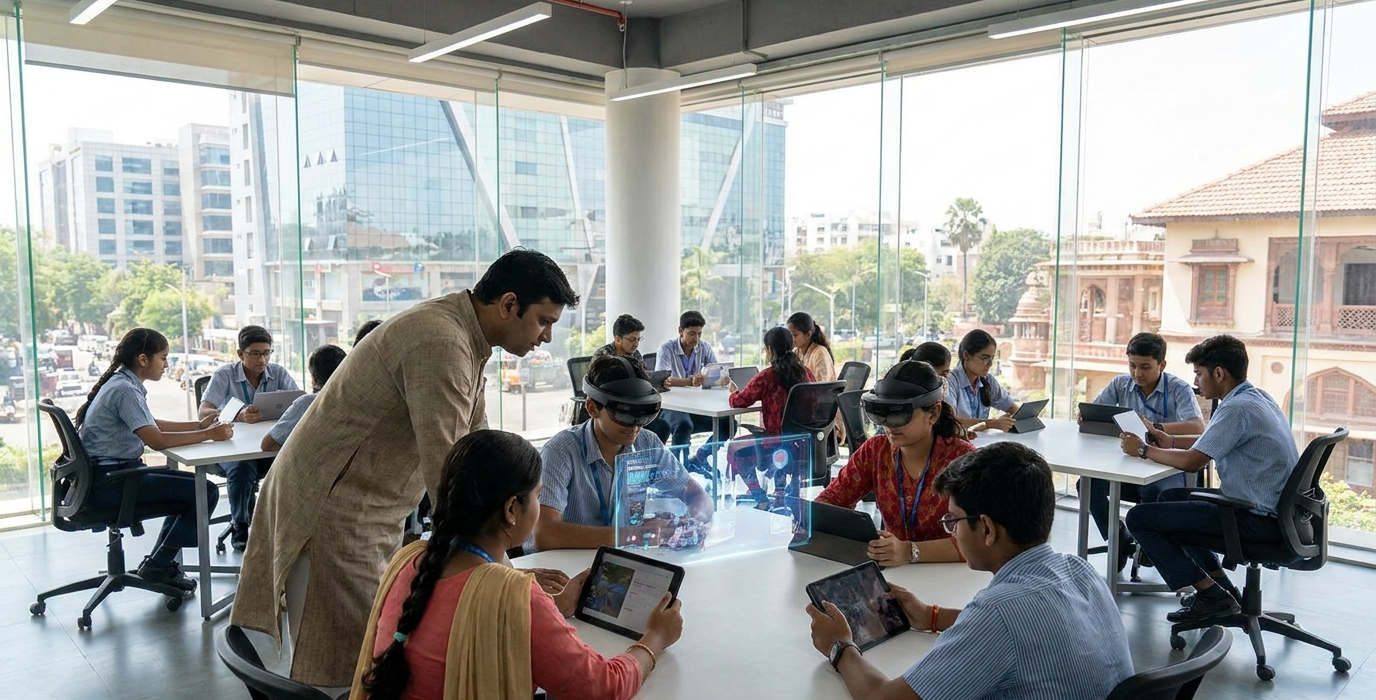
One of the most exciting frontiers in India’s EdTech revolution is the integration of immersive technologies like virtual reality (VR) and augmented reality (AR). For too long, subjects like history and science have relied on static imagery and abstract descriptions. Now, students can virtually walk through the ruins of Hampi, witness the grandeur of the Mughal Empire firsthand, or dissect a virtual frog without the ethical or practical concerns. This hands-on, experiential learning fosters deeper understanding and ignites curiosity in ways traditional methods simply cannot match.
Think about a geography lesson on the Himalayas. With AR, students can project a 3D model of Mount Everest onto their classroom desk, exploring its geological features and understanding its scale. VR can transport them to a bustling market in Chandni Chowk, Delhi, for a language or cultural immersion experience. These technologies transform passive observation into active participation, making learning an adventure. The engagement levels are skyrocketing as a result, proving that seeing, and in a way, *doing*, is believing.
Gamification and Skill-Building: Making Learning Engaging and Relevant
The traditional Indian classroom often equates learning with drudgery. EdTech 2.0 is actively dismantling this perception by infusing learning with the addictive power of gamification. Points, badges, leaderboards, and interactive challenges are no longer confined to video games; they are now integral to educational platforms. This approach taps into our innate desire for achievement and competition, making even complex subjects feel like a rewarding quest. Students are more motivated to practice, revise, and master concepts when learning is framed as a game.
But it’s not just about making learning fun; it’s about making it relevant to the future job market. A surprising fact is that by 2030, India is projected to have the world’s largest young workforce. EdTech platforms are stepping up to bridge the skills gap. They offer courses in emerging technologies like AI, machine learning, data science, blockchain, and cybersecurity, often with direct industry partnerships for internships and job placements. For instance, platforms are now offering specialized modules on drone piloting and ethical hacking, directly addressing the needs of sectors poised for rapid growth. This proactive approach ensures that India’s demographic dividend translates into a skilled and employable population.
The Rise of ‘Phygital’ Learning: Bridging the Digital Divide
While digital access is expanding rapidly across India, the ‘Phygital’ model—a seamless blend of physical and digital learning—is emerging as the most inclusive and effective strategy. Recognizing that not all students have consistent internet access or dedicated devices, many edtech providers are partnering with brick-and-mortar institutions and community centers. These hybrid models offer the best of both worlds: the structured guidance of a physical classroom combined with the flexibility and personalized resources of online learning.
Consider a rural student in Kerala. They might attend regular physical classes at a local learning center equipped with shared tablets. These tablets provide access to adaptive learning modules, supplementary videos, and interactive quizzes, all tailored to their progress. Teachers at the center can monitor their digital performance and provide targeted one-on-one support. This approach ensures that learning doesn’t stop when the school bell rings or when internet connectivity falters. It’s about creating resilient learning ecosystems that cater to diverse socio-economic realities. This thoughtful integration is key to ensuring equitable access to quality education for all.
AI Tutors and Mentors: The Future of One-on-One Support
The dream of having a dedicated tutor for every student is a luxury few can afford. However, Artificial Intelligence is making personalized, one-on-one support more accessible than ever. AI-powered tutors can now provide instant feedback, explain complex concepts in multiple ways, and even identify emotional cues indicating frustration or disengagement. These intelligent systems learn from every interaction, constantly refining their approach to match the student’s evolving needs. This allows students to practice and ask questions without the fear of judgment, fostering confidence and a proactive learning attitude.
Beyond academic tutoring, AI is also finding its way into mentorship. Platforms are developing AI-driven career counselors that analyze a student’s interests, strengths, and academic performance to suggest potential career paths and the necessary skill development. This is particularly impactful in guiding students through the often overwhelming choices available in higher education and vocational training. A surprising statistic often overlooked is that by 2026, AI in education is projected to handle over 40% of routine administrative tasks for educators, freeing them up for more impactful student interaction. This allows human educators to focus on the critical aspects of emotional intelligence, critical thinking, and complex problem-solving.
Bridging the Gap: Upskilling and Reskilling for India’s Workforce
India’s economic growth is inextricably linked to its massive youth population. However, this demographic dividend can quickly become a liability if the workforce isn’t equipped with the skills demanded by a rapidly evolving global economy. EdTech 2.0 is playing a pivotal role in this national imperative of upskilling and reskilling. Universities and professional bodies are increasingly collaborating with edtech platforms to offer micro-credentials, specialized certifications, and executive education programs.
These programs are designed for working professionals who need to acquire new skills without interrupting their careers. For example, a software engineer in Bengaluru might enroll in an advanced AI ethics course delivered entirely online, earning a certification that enhances their employability. Similarly, individuals in traditional industries are turning to edtech to gain competencies in digital marketing, e-commerce management, or sustainable business practices. This continuous learning ecosystem ensures that India remains competitive on the global stage, fostering innovation and economic prosperity. The sheer scale of this undertaking is unprecedented, aiming to transform millions of careers.
Frequently Asked Questions
What are the main differences between EdTech 1.0 and EdTech 2.0 in India?
EdTech 1.0 primarily focused on digitizing existing content, offering online versions of textbooks and lectures. EdTech 2.0 emphasizes personalized, adaptive learning, immersive technologies (VR/AR), gamification, and AI-driven support, focusing on skills development and a ‘Phygital’ approach.
How is EdTech addressing the digital divide in India?
The ‘Phygital’ model, blending physical and digital learning, is key. This involves partnerships with local institutions and community centers, providing shared devices and offline access to digital content, ensuring that students with limited connectivity can still benefit from advanced learning resources.
What kind of new skills are Indian edtech platforms focusing on?
Platforms are heavily focused on future-ready skills such as Artificial Intelligence, Machine Learning, Data Science, Cybersecurity, Blockchain, Digital Marketing, and advanced manufacturing technologies. They also offer courses in soft skills like critical thinking, problem-solving, and emotional intelligence.
Can EdTech help students prepare for competitive entrance exams in India?
Yes, many EdTech platforms offer specialized courses and mock tests for highly competitive exams like JEE (for engineering), NEET (for medicine), UPSC (civil services), and CAT (MBA). They use AI to identify weak areas and provide targeted practice.
What is the role of AI in the new wave of Indian EdTech?
AI is fundamental. It powers personalized learning paths, adaptive assessments, AI tutors for instant feedback, intelligent career counseling, and also helps educators by automating administrative tasks, allowing them to focus more on teaching and student interaction.