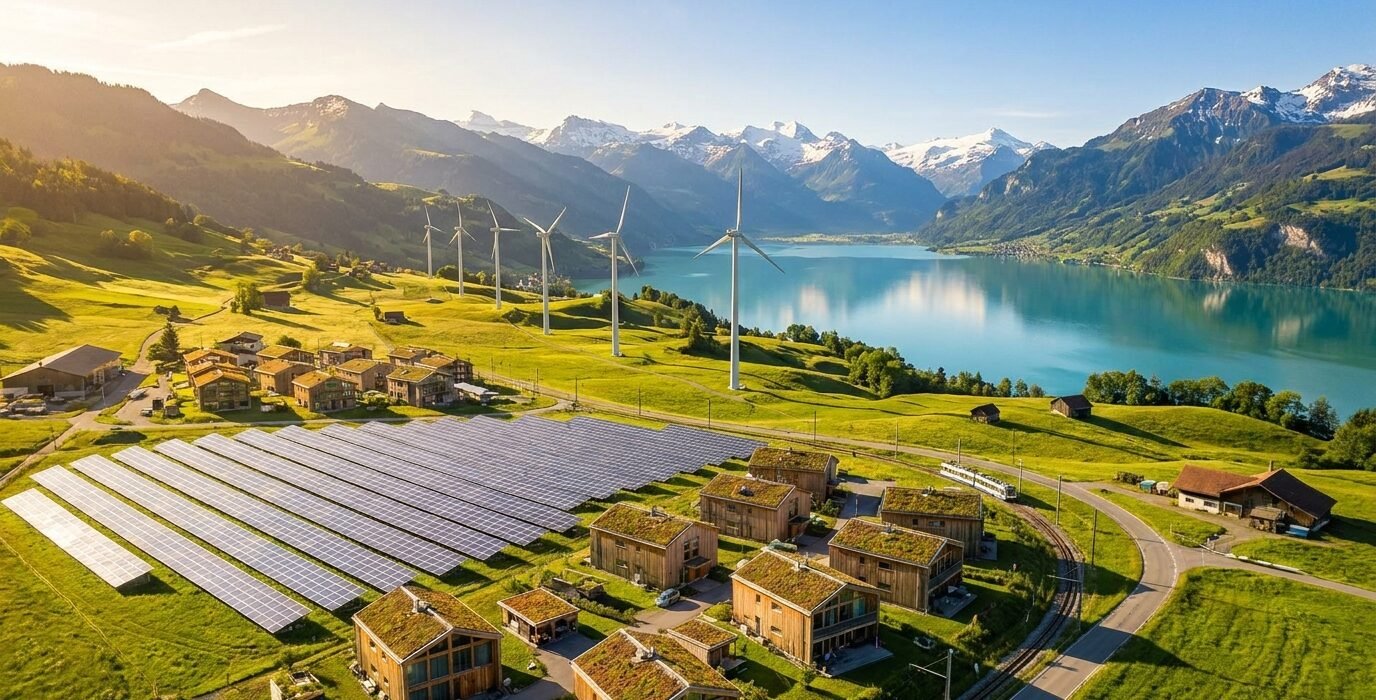
Imagine standing in the Swiss Alps. Crisp mountain air fills your lungs. Majestic peaks surround you. Pristine lakes gleam. This is the Switzerland many dream of.
Now, imagine that same pristine beauty being protected. Enhanced by the very financial engines that power the nation. That’s the powerful narrative unfolding. Switzerland’s financial sector is at the heart of it. “Green” investments are moving from niche to mainstream. They are reshaping how money is made. They’re altering where it flows.
This isn’t just about feel-good gestures. It’s about smart financial strategy. It’s a growing recognition. A healthy planet is intrinsically linked to long-term economic prosperity. The shift is palpable. It’s felt from Zurich’s bustling financial districts. It reaches Geneva’s quiet boardrooms.
Key Takeaways:
- Switzerland is rapidly becoming a global leader in sustainable and ESG investing. Investor demand and regulatory tailwinds are driving this.
- The country’s strong tradition of responsible financial management provides a fertile ground for green finance.
- Key Swiss banks and asset managers are launching innovative green financial products. These range from bond funds to impact investments.
- Despite rapid growth, challenges like greenwashing and data standardization persist. Investors must navigate these carefully.
- The long-term outlook for green investments in Switzerland is exceptionally bright. It promises both financial returns and positive societal impact.
The Alpine Foundation: Why Switzerland is Ripe for Green Finance
Switzerland. A nation synonymous with precision. Stability. Impeccable financial stewardship. It has always had an inherent advantage. Especially when it comes to responsible investing. For decades, Swiss banks have been trusted with managing wealth. Often with a long-term perspective.
This ingrained culture of prudence and reliability now forms the bedrock. It supports the burgeoning green investment movement. Think of it like tending a meticulously kept garden. The Swiss are accustomed to nurturing assets with care and foresight. This isn’t a sudden fad. It’s an evolution. An extension of their existing financial DNA.
The country’s political neutrality and stable economic environment have historically attracted global capital. Now, that same stable environment is proving ideal for sustainable finance. Long-term horizons are crucial here. Investors are increasingly looking beyond immediate profits. They consider the broader impact of their capital. They want their money to work for them. And for the world around them.
This desire aligns perfectly with Switzerland’s own values. The picturesque town of Verbier, for instance, is known for its skiing. But it also sees local initiatives focused on preserving its natural beauty. This mirrors the broader national sentiment towards environmental preservation. This deep-seated respect for nature is a powerful, albeit often unspoken, driver.
Furthermore, Switzerland boasts a sophisticated financial infrastructure. A highly skilled workforce. A robust regulatory framework. These elements are essential. They are needed for developing and managing complex green financial products. The Swiss Financial Market Supervisory Authority (FINMA) plays an increasingly active role. It ensures the integrity of these offerings. This helps to build trust.
This commitment to quality and oversight is critical. It’s an era where investors are wary of “greenwashing.” That’s superficial claims of environmental friendliness. The nation’s commitment to high standards means something. When a Swiss financial institution declares something is “green,” there’s a strong expectation of genuine substance behind the label. The sheer density of financial expertise, particularly in cities like Zurich, provides a concentrated pool of talent. They are ready to innovate in this space. This established ecosystem is precisely why Switzerland isn’t just participating in the green investment trend. It’s leading it.
From Zurich to Geneva: The Financial Giants Embrace Sustainability
The transformation is most evident. It’s seen in the actions of Switzerland’s leading financial institutions. Major players like UBS and Credit Suisse (now integrated into UBS) are involved. Prominent asset managers such as Pictet Group and Vontobel are too. They aren’t just dabbling in green finance. They are making it a central pillar of their strategy.
It’s a strategic pivot. It reflects both market demand and a genuine commitment to future sustainability. These institutions have deep roots. They are in Swiss financial history. They are leveraging their global reach and expertise. They develop and market a wide array of sustainable investment products.
Take the example of Pictet Group. It’s a venerable private bank. Established in 1805. They have been at the forefront of developing sustainable investment strategies. They offer funds focused on themes like clean energy. Water scarcity is another focus. Sustainable agriculture too.
Their commitment goes beyond simply launching new products. It involves integrating ESG criteria into their core investment processes. This means that when their portfolio managers select companies, they look beyond financial metrics. They also examine how companies manage their environmental footprint. Their social impact is considered. Corporate governance is too. It’s a holistic approach to value creation.
Similarly, Vontobel has been actively expanding its offering of sustainable investment solutions. They have introduced various ESG-focused funds. They actively engage with companies on sustainability issues. Their approach often involves thematic investing. They identify specific sectors poised for growth. This is due to global sustainability trends. For instance, they might highlight opportunities in renewable energy infrastructure development. Or companies developing innovative solutions for waste management.
This active approach demonstrates proactive engagement. It’s engagement with the sustainability transition. It’s not a passive response to market trends. The scale of these commitments is significant. These are not small, boutique initiatives. They are core strategies adopted by some of Europe’s most established financial names. The sheer volume of assets now being managed under sustainable mandates by these firms underscores the profound shift occurring.
Unpacking the Green Investment Toolkit: Funds, Bonds, and More
For the everyday investor, understanding what constitutes a “green investment” can sometimes feel complex. In Switzerland, the landscape is becoming increasingly sophisticated. It offers a range of options. These suit different risk appetites and impact goals. It’s not just about buying shares in a solar panel company. It’s a much broader spectrum of financial instruments. They are designed to channel capital towards positive environmental and social outcomes. This evolution has been driven by investor demand. More people want their money to align with their values.
One of the most common avenues is green bonds. These are fixed-income instruments. The proceeds are specifically earmarked for projects with environmental benefits. Think of infrastructure projects. Developing renewable energy plants is one. Improving energy efficiency in buildings is another. Investing in sustainable public transportation too.
Swiss banks are actively issuing and underwriting these bonds. They provide a clear and traceable way for investors to support green initiatives. For example, a Swiss canton might issue a green bond. It could fund the expansion of its electric public transport network. This offers investors a way to directly contribute to reducing carbon emissions in urban areas. The transparency around the use of funds is a key selling point.
Beyond bonds, there’s a burgeoning market for sustainable equity funds. These funds invest in companies. They invest in companies that demonstrate strong ESG performance. This can include companies committed to reducing their carbon footprint. Promoting diversity and inclusion in their workforce is another factor. Adhering to high ethical standards in their supply chains is also considered.
Managers of these funds actively screen companies. They often use proprietary ESG ratings. They do this to identify those best positioned for long-term success. This is in a world increasingly focused on sustainability. For instance, a fund might invest in a Swiss pharmaceutical company. This company not only develops life-saving drugs. It also has robust programs for ethical clinical trials. Minimizing its environmental impact through sustainable manufacturing processes is also key.
Furthermore, the concept of impact investing is gaining traction. This goes a step further than traditional ESG investing. It seeks to generate measurable, positive social and environmental impact. It aims for this alongside a financial return. This could involve investing in companies. They provide affordable housing. Access to clean water in developing regions is another example. Innovative technologies that address climate change too.
These investments often require a deeper level of due diligence. A longer-term commitment is often needed. But they offer the potential for significant, tangible change. A Swiss foundation, for example, might invest in a social enterprise. This enterprise provides job training and employment opportunities for refugees. This addresses both social inclusion and economic development. This multi-faceted approach caters to a growing desire for investments that do good.
The Greenwashing Gauntlet: Navigating the Challenges
As the green investment wave gathers momentum, a significant challenge emerges. It’s the pervasive risk of greenwashing. This is the practice of making misleading claims. Claims about the environmental benefits of products, services, or investment strategies. The goal is to attract socially conscious investors.
In a rapidly expanding market, it can be difficult for investors. Especially those new to sustainable finance. They need to discern genuine environmental impact from mere marketing spin. The desire to capitalize on the trend can sometimes overshadow the commitment to real change.
The Swiss financial sector, with its emphasis on reputation and trust, is acutely aware of this challenge. Regulators like FINMA are working to establish clearer guidelines and standards. These are for ESG disclosures and sustainable finance products. However, the landscape is still evolving. Investors need to be vigilant.
A key strategy for investors is to look beyond the glossy brochures and marketing slogans. They should scrutinize the underlying methodologies and data. Data used by fund managers is important. Are ESG ratings based on robust, independent research? Or are they simply a checkbox exercise? What specific metrics are used to measure environmental impact? How is this impact verified?
A surprising fact for many might be the lack of a single, universally accepted definition for “sustainable” or “green” investments. Different organizations may use varying criteria. Even different countries. This ambiguity creates an opening for greenwashing. For instance, a fund might claim to be “green.” It might do so simply because it excludes a small number of the most polluting industries. Yet, its core holdings may still contribute significantly to environmental degradation.
Investors should seek out funds with clear, measurable objectives. A proven track record of delivering on those objectives is crucial. Transparency is paramount. A fund manager based in Lausanne might offer an “eco-friendly” investment. But without clear reporting on how much carbon emissions were reduced. Or how much waste was diverted, its green credentials remain questionable.
Moreover, investors should consider the active ownership practices of fund managers. Do they engage with the companies they invest in? Do they encourage better environmental and social performance? This engagement, often through shareholder voting and direct dialogue, can be a powerful tool. It can drive real change. Simply divesting from problematic companies is one approach. But actively working to improve their practices can have a more profound and lasting impact. This proactive stance is what truly distinguishes genuine sustainable investing from superficial claims. The journey towards truly impactful green finance requires constant vigilance. It needs a commitment to understanding the substance behind the sustainability label.
The Future is Green: Outlook and Opportunities for Indian Investors
The trajectory for green investments in Switzerland, and indeed globally, points towards continued robust growth. As awareness about climate change and social inequality intensifies, so too will the demand for financial products. Products that align with these concerns. For Indian investors, the Swiss market offers a unique opportunity. They can tap into a mature, well-regulated, and innovative ecosystem for sustainable finance. This isn’t just about accessing foreign markets. It’s about investing in a future. A future that is both financially rewarding and environmentally responsible.
Several factors point to this optimistic outlook. Firstly, the increasing commitment from governments worldwide to achieve net-zero emissions. Implementing stricter environmental regulations creates a favorable environment. This is for green businesses and technologies. This regulatory push is a powerful tailwind for sustainable investments. Secondly, institutional investors, such as pension funds and sovereign wealth funds, are increasingly allocating significant portions of their portfolios to ESG mandates. This institutional demand provides liquidity. It drives further innovation in the green finance space. Think of a major Swiss pension fund, like Pensionskasse Basel-Stadt, divesting from fossil fuels and reinvesting in renewable energy infrastructure.
Secondly, the technological advancements in areas like renewable energy, electric vehicles, and sustainable agriculture are making these sectors increasingly competitive and profitable. This translates into attractive investment opportunities for those looking for both financial returns and positive impact. For example, Swiss innovation in battery technology for electric vehicles could unlock significant growth potential.
For Indian investors, this translates into several opportunities. They can gain exposure to leading Swiss green bond issuances. This provides a stable income stream. It also supports tangible environmental projects. They can also invest in Swiss-based ESG equity funds. These funds focus on companies at the forefront of sustainability innovation. They potentially offer capital appreciation as these sectors grow. Furthermore, the rise of green fintech solutions in Switzerland could offer new ways for retail investors to access and manage their sustainable portfolios. Even understanding the strategies of Swiss banks in Geneva, known for their wealth management expertise, can provide insights. These insights can help in diversifying an Indian investment portfolio with a green tilt. The commitment to long-term value creation, a hallmark of Swiss finance, is perfectly suited to the enduring importance of sustainability.
A Legacy of Stewardship, A Future of Impact
Standing in the heart of Europe, Switzerland has long been a beacon of financial stability and responsible management. Now, it’s stepping onto a new stage. It’s not just managing wealth. It’s actively shaping a more sustainable future. It’s doing so through the power of green investments. The transition from traditional finance to a model that prioritizes environmental and social well-being is not a fleeting trend. It’s a profound evolution. It’s a testament to how deeply held values can be integrated. Integrated into the very fabric of economic activity.
The growth of sustainable funds, the issuance of green bonds, and the increasing focus on impact investing are all indicators of this powerful shift. It’s a journey that requires diligence. It needs a keen eye for genuine impact. It demands a willingness to move beyond superficial claims. But the rewards, both financial and societal, are immense.
For investors around the world, including those in India, Switzerland offers a compelling pathway. A pathway to align their capital with their values. This is more than just about making money. It’s about building a legacy of positive change. The serene landscapes of Switzerland are a constant reminder of what is at stake. The nation’s financial sector is now actively working to protect and enhance them. For generations to come.
#