Key Takeaways
- India’s EV charging network is expanding rapidly, with a significant increase in public charging stations across major cities and highways by August 2026.
- While progress is evident, charging accessibility and speed remain key challenges, particularly in Tier 2 and Tier 3 cities and for longer inter-state journeys.
- The cost of charging varies considerably, influenced by electricity tariffs, charging speed, and operator policies, making cost-effectiveness a crucial factor for widespread adoption.
- Government incentives and private sector investment are driving infrastructure development, but a unified, interoperable network is still some years away.
The Evolving Landscape of EV Charging in India: A 2026 Snapshot
As we navigate August 2026, India’s electric vehicle (EV) revolution is gaining significant momentum, and central to this surge is the burgeoning charging infrastructure. Gone are the days when finding a charging point was akin to a treasure hunt. Today, the landscape is dramatically different, with charging stations popping up in more locations than ever before. We are witnessing a tangible shift, driven by both government policy and the entrepreneurial spirit of private players.
From bustling metropolises like Delhi and Mumbai to the rapidly developing corridors connecting cities, the availability of charging points has seen a substantial uplift. This expansion is not merely about quantity; there’s a growing emphasis on quality and speed, with more fast-charging options becoming accessible. For the average Indian EV owner or prospective buyer, this means a more reassuring and practical ownership experience is slowly but surely coming within reach. We’re moving from a niche offering to a more mainstream necessity.
Public Charging Stations: Growth and Geographic Spread
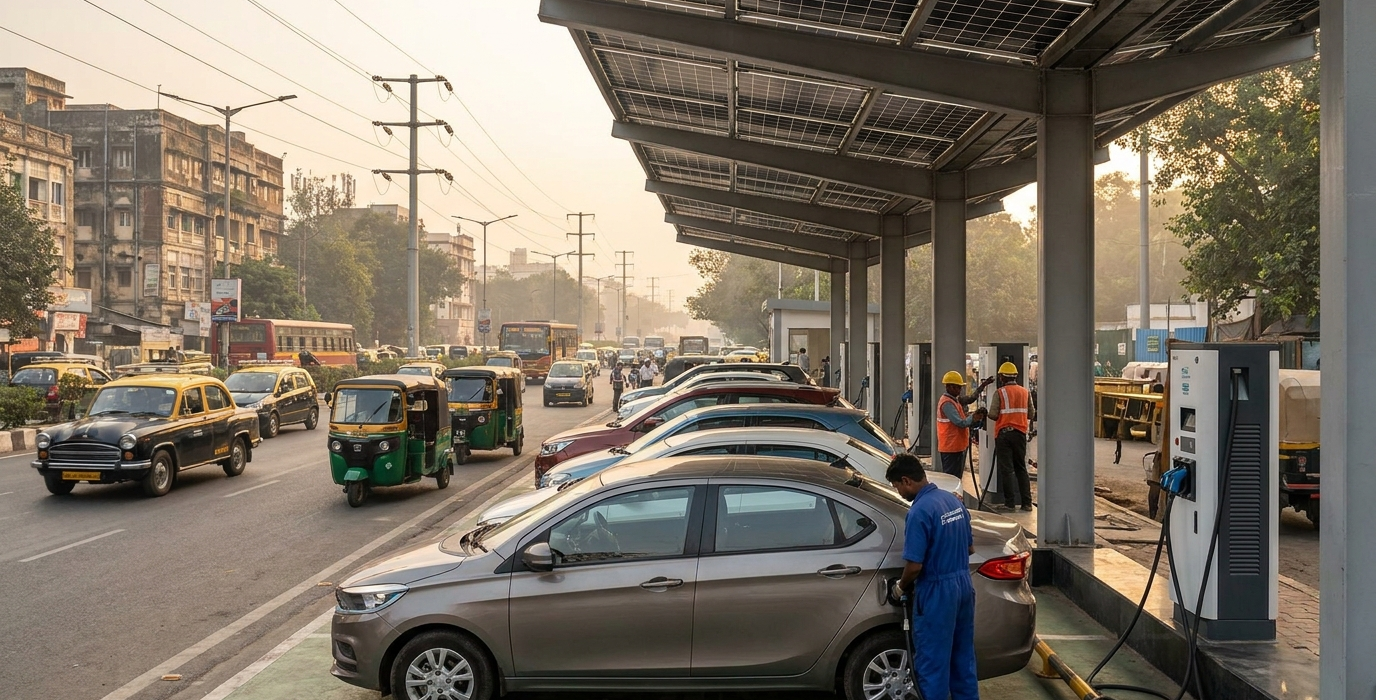
The most striking change by mid-2026 is the sheer proliferation of public charging infrastructure. Government initiatives, such as the Faster Adoption and Manufacturing of (Hybrid &) Electric Vehicles (FAME) scheme, have provided a crucial impetus. We’ve seen a significant increase in the number of AC and DC fast chargers installed across the country. Major national highways are now dotted with charging points, making inter-city travel a more viable proposition for EV users. Think of the Delhi-Chandigarh route or the Mumbai-Pune Expressway; these are now significantly better equipped.
Cities like Bengaluru, Hyderabad, and Chennai are leading the charge in urban deployments, with charging stations integrated into residential complexes, commercial hubs, and public parking lots. However, the pace of adoption and density of these stations still heavily favours Tier 1 cities. While progress is undeniable, the gap between these urban centres and Tier 2 and Tier 3 cities, as well as rural areas, remains a considerable hurdle. We are still some distance from a truly pan-India, uniformly accessible network. This uneven distribution can create range anxiety for those venturing beyond the well-trodden paths.
The All-Important Question: What Does Charging Cost?
Understanding the economics of EV charging is crucial for potential adopters. By 2026, the cost of charging an EV in India is far from uniform. It’s a complex interplay of several factors, including the type of charger used, the electricity tariff applicable, and the specific policies of the charging station operator. AC chargers, typically slower, generally leverage domestic electricity tariffs, which are often lower. Conversely, DC fast chargers, capable of significantly reducing charging times, come with a premium.
For instance, charging at a public DC fast charger could range anywhere from ₹15 to ₹30 per kilowatt-hour (kWh), depending on the location and the operator. Some operators are also experimenting with subscription models or per-session fees. In contrast, charging at home overnight using a standard AC charger might cost you as little as ₹7-₹10 per kWh, making it the most economical option for daily commutes. The emergence of battery swapping stations, particularly for two-wheelers and three-wheelers, offers another cost-effective alternative, providing a fully charged battery for a fixed fee.
A Surprising Cost Factor: Standby Power Consumption
One often overlooked aspect of charging costs, especially with unattended public chargers, is standby power consumption. Many charging stations, even when not actively charging a vehicle, consume a small amount of electricity to keep their systems operational. While seemingly minor, over thousands of stations and extended periods, this can add up. Some newer, more efficient chargers are designed to minimise this, but it remains a subtle cost that contributes to the overall operational expenses for station owners, which can eventually be passed on to consumers.
Technological Advancements and Interoperability Challenges
The charging technology itself is evolving at a breakneck pace. We are seeing an increasing number of ultra-fast chargers (350kW and above) being deployed, drastically cutting down charging times for compatible vehicles. Battery technology is also improving, with higher energy densities and faster charging capabilities becoming standard in new EV models. Smart charging solutions, which allow for load balancing and optimisation of charging based on grid conditions and electricity prices, are also gaining traction.
However, a significant challenge that persists in 2026 is the lack of complete interoperability between different charging networks and connectors. While the CCS2 (Combined Charging System) standard is gaining prominence, many older chargers may still use CHAdeMO or Type 2 connectors. This means EV owners might need multiple apps to access different charging networks, leading to a fragmented user experience. Efforts are underway to standardise these aspects, but for now, navigating this landscape requires a degree of technical awareness and patience.
The Two-Wheeler Advantage: Swapping and Standardisation
Interestingly, the two-wheeler and three-wheeler segments have seen more rapid standardisation and adoption of battery swapping. Companies like Sun Mobility and Bounce Infinity have built extensive networks where riders can quickly swap out depleted batteries for fully charged ones in a matter of minutes. This model bypasses the need for extensive charging infrastructure at every corner and addresses range anxiety effectively for these high-volume segments. This offers a practical and often cheaper alternative to per-kilometre charging costs.
The Role of Private Sector Investment and Government Policy
The remarkable growth in India’s EV charging infrastructure by 2026 is a testament to the synergistic efforts of the government and the private sector. The FAME scheme, as mentioned, has been instrumental in providing subsidies for the purchase of EVs and the establishment of charging infrastructure. Beyond FAME, policies like the National Electric Mobility Mission Plan and various state-level EV policies have created a conducive environment for investment. We’ve seen major energy companies, startups, and even automotive manufacturers investing heavily in building charging networks.
Companies like Tata Power, ChargeZone, and Statiq are expanding their footprint rapidly. Oil marketing companies (OMCs) like IOCL, BPCL, and HPCL are also integrating charging facilities at their fuel stations, leveraging their vast existing real estate. This influx of capital and competition is driving innovation and pushing down costs. However, the policy framework still needs to evolve to address issues like land acquisition for charging stations, standardisation of tariffs, and ensuring grid stability with the increasing load from EVs.
Navigating the Charging Ecosystem: A Practical Guide for 2026
For the everyday EV owner in India in August 2026, successfully navigating the charging ecosystem requires a bit of planning. Firstly, familiarise yourself with the charging standards supported by your vehicle. Most new four-wheeler EVs predominantly use CCS2, while many older models or specific brands might use CHAdeMO. For two and three-wheelers, battery swapping is becoming increasingly popular.
Secondly, download multiple charging aggregator apps. While a unified app is the dream, the reality is that different networks operate on different platforms. Apps like PlugShare, ChargeNet, and operator-specific apps will be your best friends. These apps not only help you locate chargers but also provide real-time availability, charging speeds, and user reviews. Always check the pricing structure before you initiate a charge. For longer journeys, plan your stops in advance, especially if you are relying on public chargers, as availability can still be a concern in less developed areas.
A Surprising Data Point: Charger Occupancy Rates
One of the lesser-discussed metrics impacting the user experience is charger occupancy rates. While the total number of chargers is increasing, at peak times, especially in popular urban locations or along major transit routes, popular fast chargers can experience high occupancy. This means you might have to wait for a charger to become free. Understanding these patterns, often available through some aggregator apps or local EV community forums, can help you avoid frustrating wait times. Planning your charging during off-peak hours can significantly improve your experience.
The Road Ahead: Challenges and Opportunities
Despite the impressive strides made by August 2026, India’s EV charging infrastructure is still a work in progress. The primary challenges remain ensuring equitable access across all regions and demographics, standardising payment and access systems, and reinforcing the grid to handle the increased electricity demand. Rural electrification and the integration of renewable energy sources into charging infrastructure are also critical for sustainable growth.
The opportunities, however, are immense. The development of a robust charging network will not only accelerate EV adoption but also create jobs, foster technological innovation, and contribute to India’s climate goals. We are likely to see further advancements in wireless charging, vehicle-to-grid (V2G) technology, and smart grid integration. The next few years promise to be transformative as India strives to build a truly comprehensive and user-friendly EV charging ecosystem.
“The rapid expansion of EV charging stations across India in 2026 is a critical indicator of our nation’s commitment to a cleaner, more sustainable transportation future. While challenges persist in ensuring universal accessibility and seamless interoperability, the current trajectory, fueled by strong public-private collaboration, is undeniably promising.”
Frequently Asked Questions
What is the average cost to charge an EV in India in 2026?
The cost varies significantly. Home charging typically costs ₹7-₹10 per kWh. Public AC chargers may be similar or slightly higher. Public DC fast chargers can range from ₹15-₹30 per kWh, depending on the operator and location. Battery swapping services for two-wheelers often have a fixed fee per swap or per day.
Are fast chargers readily available on Indian highways?
Yes, major national highways have seen a substantial increase in DC fast charger installations by 2026. However, availability can still be less consistent in more remote or less-travelled stretches compared to urban centres. It’s advisable to check charging station aggregator apps before embarking on long journeys.
Do I need multiple apps to charge my EV in India?
Unfortunately, yes, for many users. The EV charging ecosystem in India is still fragmented, with various operators and networks. You will likely need to download apps from different charging providers or use aggregator apps that consolidate multiple networks to locate and pay for charging sessions.
Is battery swapping a viable option for EV charging in India?
Battery swapping is a very viable and rapidly growing option, especially for electric two-wheelers and three-wheelers. It allows for near-instantaneous “refuelling” and significantly reduces range anxiety for these vehicle types. For four-wheelers, it is less common but is being explored by some manufacturers.