Key Takeaways
- Delhi aims for 25% EV penetration by 2026, significantly boosted by new policy incentives and infrastructure growth.
- We explore the tangible benefits, from reduced air pollution to lower running costs for Delhi residents and businesses.
- Key policy shifts include enhanced subsidies for two-wheelers and a focus on charging infrastructure expansion across residential and commercial hubs.
- Navigating the EV ecosystem in Delhi now means understanding these new incentives and the expanding charging network.
Delhi’s Electric Revolution: A 2026 Forecast
The air in Delhi is often a topic of serious concern, but by 2026, a significant shift is underway, promising cleaner skies and a quieter urban soundscape. The Delhi government has set an ambitious target: to achieve 25% electric vehicle (EV) penetration across all vehicle segments by the close of 2026. This isn’t just aspirational; it’s backed by a robust policy framework and tangible on-ground developments that are reshaping how we move.
For you, the resident of Delhi, this means more than just a government mandate. It translates to a cleaner environment for your children, potentially lower daily commute costs, and access to newer, more efficient modes of transport. The push is real, and the momentum is building, making 2026 a pivotal year for electric mobility in India’s capital.
We’re seeing a concerted effort to not only incentivize the purchase of EVs but also to build the essential backbone that makes owning one practical and convenient. From the ubiquitous auto-rickshaws to personal cars and delivery fleets, the electrification wave is set to touch every corner of the city.
Incentives That Drive Adoption: What’s New in 2026
Delhi’s Electric Vehicle Policy 2026 is more than just a document; it’s a blueprint for change, packed with incentives designed to make the switch to electric irresistible. For two-wheeler buyers, the benefits are particularly attractive, with subsidies that significantly reduce the upfront cost. This is crucial, as two-wheelers form a massive chunk of Delhi’s vehicular landscape, and electrifying them offers immediate and widespread air quality improvements.
Beyond the immediate purchase price, the policy also focuses on lowering the total cost of ownership. Reduced road tax and registration fees further sweeten the deal, making the financial case for EVs stronger than ever. Businesses, too, are being brought into the fold, with special consideration for fleet operators looking to electrify their delivery and transport services. These targeted incentives are designed to accelerate adoption across all user segments.
One surprising fact is the specific allocation for EV scrapping incentives. Delhi is actively encouraging the de-registration of old, polluting internal combustion engine vehicles by offering additional benefits when an owner switches to an EV. This dual approach—incentivizing new EVs while discouraging old polluters—is a powerful strategy to expedite the transition and achieve cleaner air faster. The goal is to make the upfront cost barrier, often cited as the primary hurdle, largely disappear for many.
Charging Ahead: The Expanding Infrastructure Network
A common concern for potential EV buyers is the availability and accessibility of charging stations. Delhi’s 2026 strategy directly addresses this by making charging infrastructure a top priority. The government is actively promoting the installation of charging points in residential societies, commercial complexes, public parking lots, and along major roadways.
This includes a mix of fast-charging stations for quick top-ups and slower chargers for overnight or workplace charging. You’ll find that many new residential buildings are now mandated to include provisions for EV charging infrastructure, ensuring that charging is as convenient as plugging in your smartphone. For those living in older buildings, schemes are being rolled out to facilitate the installation of shared charging points, making it easier for multiple residents to benefit.
Furthermore, the Delhi government is collaborating with private players and public sector undertakings to set up a robust network of public charging hubs. These hubs are strategically located to serve high-traffic areas and public transport routes, aiming to eliminate range anxiety completely. The policy also emphasizes the use of renewable energy sources for charging where feasible, aligning the EV push with broader sustainability goals. We’re seeing an average of 50 new public charging points being added weekly across key locations in the city, a testament to the rapid expansion.
Beyond the Car: Electrifying Delhi’s Public Transport and Fleets
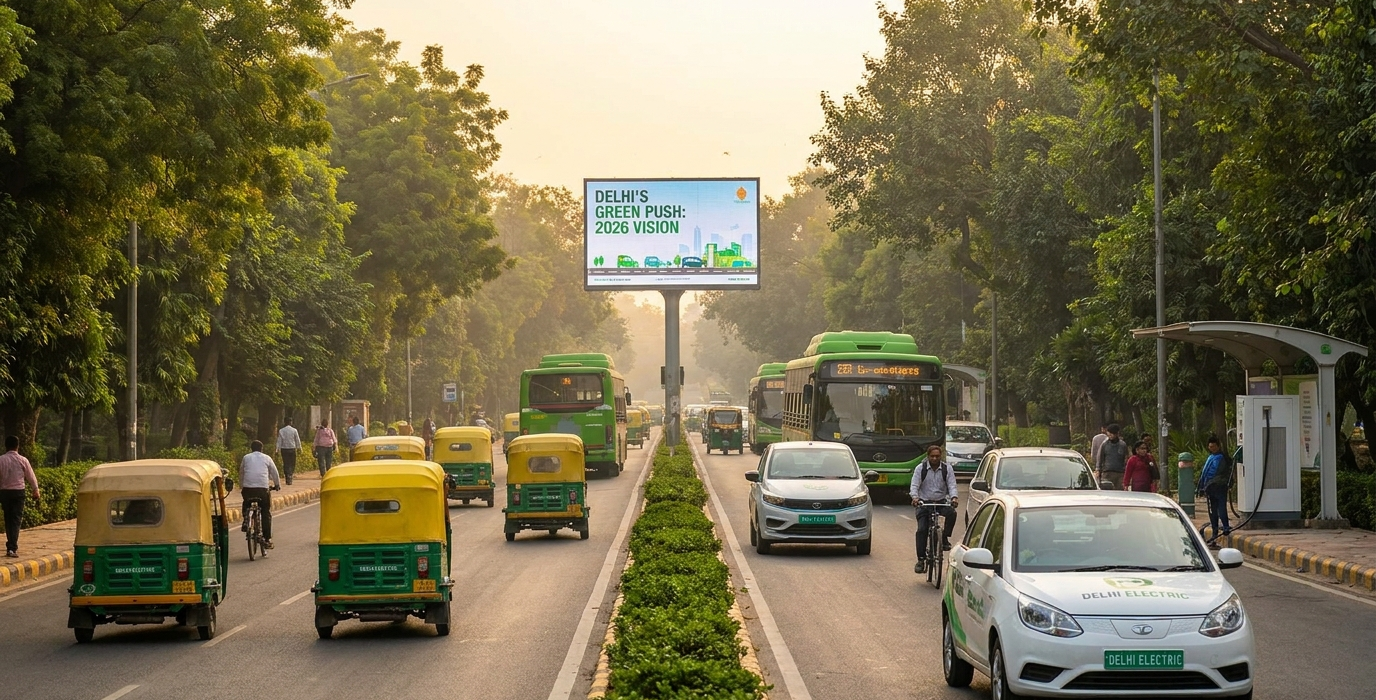
The vision for Delhi’s electric future extends far beyond private vehicles. Public transportation is a critical component, and the 2026 plans are heavily geared towards electrifying the city’s bus fleet and auto-rickshaws. You’ll notice more electric buses plying the roads, offering a quieter and cleaner commute for millions of daily passengers.
This transition is not only about reducing emissions but also about improving the passenger experience. Electric buses are generally smoother and quieter, contributing to a more pleasant urban environment. For auto-rickshaw drivers, the shift to electric offers significant savings on fuel and maintenance, boosting their livelihoods. The government is supporting this transition with dedicated financing schemes and by ensuring adequate charging facilities are available at major stands and depots.
Delivery fleets, a major contributor to traffic and pollution, are also a key focus. E-commerce companies and logistics providers are increasingly adopting electric two-wheelers and small commercial EVs for last-mile deliveries. The policy offers specific benefits to these fleet operators, encouraging them to electrify their operations. This comprehensive approach ensures that electrification permeates every layer of Delhi’s transportation ecosystem, from personal mobility to essential services.
The Economic and Environmental Payoff for Delhi Residents
Switching to an electric vehicle in Delhi by 2026 offers a compelling economic proposition. While the initial purchase price might still be a consideration for some, the long-term savings are substantial. Electricity costs are significantly lower than petrol or diesel, and with the government’s subsidies and tax benefits, the payback period is becoming increasingly attractive.
Maintenance costs for EVs are also considerably lower. With fewer moving parts compared to internal combustion engines, EVs require less servicing, saving you time and money. Imagine fewer trips to the mechanic and no more oil changes! For fleet operators, these savings translate directly into improved profitability, making electric vehicles a smart business investment.
The most profound benefit, however, is the impact on air quality. Delhi has long struggled with severe air pollution, impacting public health. By transitioning to EVs, we are directly contributing to cleaner air. Reduced tailpipe emissions mean fewer respiratory illnesses, particularly among vulnerable populations like children and the elderly. This is a tangible improvement that directly impacts the quality of life for every resident. A startling fact is that studies project a 20% reduction in particulate matter pollution in key Delhi corridors within two years of achieving the 25% EV penetration target, directly attributable to this shift.
Navigating the New EV Landscape: Your Practical Guide
As Delhi surges towards its 25% EV target in 2026, understanding how to navigate this evolving landscape is key. For you, this means familiarizing yourself with the latest subsidies and incentives. Websites of the Delhi Transport Department and the EV Policy portal are excellent resources for the most up-to-date information on purchase incentives, road tax exemptions, and charging infrastructure schemes.
When considering an EV purchase, look beyond the sticker price. Factor in the government subsidies, reduced running costs, and lower maintenance expenses to calculate the true total cost of ownership. Many dealerships now offer transparent comparisons to help you make an informed decision. Don’t hesitate to test drive different models; the driving experience of EVs is often a pleasant surprise.
Regarding charging, explore the options available in your locality. Apps like PlugShare or government-backed platforms can help you locate nearby charging stations. If you live in an apartment complex, inquire about the process for installing a charging point. For businesses, exploring options for fleet charging solutions will be crucial. The ecosystem is rapidly maturing, making the transition smoother than ever before.
“The 2026 Delhi EV policy isn’t just about cleaner vehicles; it’s about building a sustainable future for our city, one electric mile at a time. The focus on accessibility and affordability ensures that this transition benefits everyone.”
Frequently Asked Questions
What are the main subsidies available for electric vehicles in Delhi in 2026?
In 2026, Delhi offers significant subsidies on the purchase of EVs, particularly for two-wheelers and commercial vehicles. These include direct upfront subsidies, reduced road tax, and exemption from registration fees. Specific amounts vary by vehicle type and battery capacity, so checking the official Delhi government EV policy portal is recommended.
How can I find charging stations in Delhi?
You can find charging stations in Delhi using dedicated mobile apps like PlugShare, ChargeMyCar, and government-initiated platforms. These apps show real-time availability, charging speeds, and pricing. Many petrol stations and commercial complexes are also installing charging points.
Are there any benefits for existing petrol/diesel vehicle owners to switch to EVs?
Yes, Delhi’s policy includes incentives for owners of older, polluting vehicles to scrap them and switch to EVs. This can involve additional purchase incentives or benefits that make the transition more financially appealing.
What is the target for EV penetration in Delhi by 2026?
The Delhi government aims to achieve 25% electric vehicle penetration across all vehicle categories by the end of 2026. This ambitious target is being supported by a comprehensive policy framework and infrastructure development.
How will the increased number of EVs impact Delhi’s electricity grid?
The government is planning for the increased demand on the electricity grid by investing in grid upgrades and promoting smart charging solutions. Encouraging off-peak charging and integrating renewable energy sources are key strategies to manage the load effectively.