Key Takeaways
- India’s EV policy is evolving rapidly, with a sharper focus on domestic manufacturing and battery tech in 2026.
- New incentives are likely to favour locally produced EVs and components, potentially lowering costs for consumers in the long run.
- Infrastructure development, especially charging stations in Tier 2 and Tier 3 cities, is a critical focus, easing range anxiety.
- Consumer adoption hinges on affordability, model variety, and robust charging networks – all areas seeing significant 2026 policy attention.
Navigating the New EV Landscape: 2026 Policy Shifts Unpacked
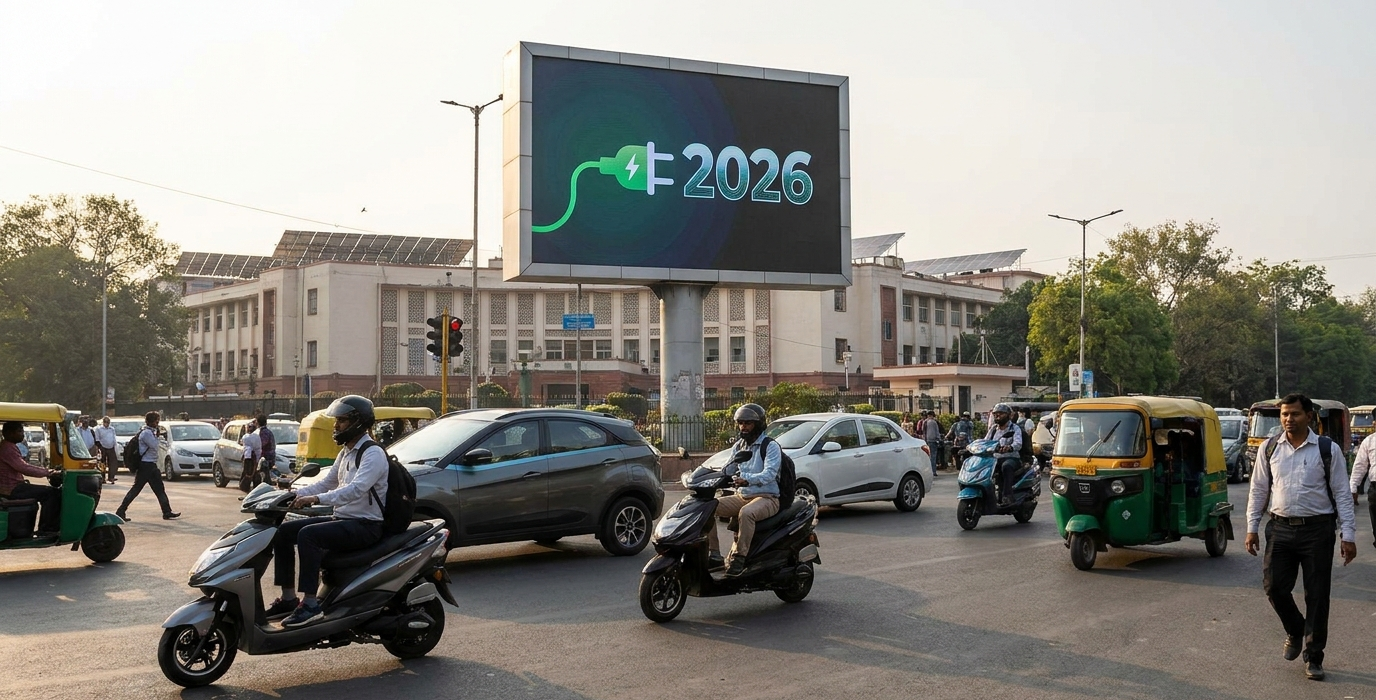
The Indian electric vehicle (EV) revolution is hitting a critical juncture in 2026. As the government doubles down on its ambitious electrification goals, understanding the latest policy shifts is paramount for consumers, investors, and industry players alike. This year marks a significant pivot, moving beyond broad encouragement to targeted strategies designed to accelerate adoption and build a self-reliant EV ecosystem.
We’re seeing a concerted effort to address the core challenges that have, until now, tempered India’s EV growth. The focus is no longer just on subsidizing vehicle purchases, but on fostering a complete value chain – from raw material sourcing and battery manufacturing to charging infrastructure and end-of-life recycling. This comprehensive approach, driven by the latest policy directives, promises to reshape the EV market in ways that directly benefit you, the consumer.
Expect to see a greater emphasis on ‘Make in India’ components, with incentives directly linked to domestic production. This could lead to a more stable and potentially lower cost of ownership for EVs in the coming years. Furthermore, the government is actively working to de-risk investments in the sector, encouraging private players to expand manufacturing capabilities and innovate in battery technology. The aim is clear: to make India a global hub for EV manufacturing and a leader in sustainable mobility.
Boosting Domestic Manufacturing and Battery Innovation
One of the most impactful policy shifts we’re observing in 2026 is the intensified push for domestic manufacturing, particularly in the critical area of battery technology. For years, India’s reliance on imported battery cells has been a significant bottleneck, driving up costs and limiting supply chain resilience. The new policies aim to fundamentally alter this dynamic.
We’re talking about Production Linked Incentive (PLI) schemes that are being recalibrated to heavily favour companies that invest in local battery cell manufacturing. This isn’t just about assembling battery packs; it’s about establishing Giga factories that can produce cells from raw materials. The government recognises that true self-reliance in EVs begins with batteries, the heart of every electric car and two-wheeler.
Specific targets are being set for local value addition in battery manufacturing, with stringent timelines. Companies that meet these benchmarks will unlock significant financial incentives, making it more attractive to set up advanced manufacturing facilities within India. This move is crucial for ensuring a steady supply of batteries at competitive prices, which will directly translate to more affordable EVs for you, the end-user. Imagine a future where your next EV is powered by batteries made right here in India, reducing import dependency and bolstering our economic security.
Beyond manufacturing, there’s a renewed focus on research and development (R&D) in next-generation battery chemistries. India is investing in R&D centres and encouraging collaborations between academic institutions and private companies to explore alternative chemistries, solid-state batteries, and improved recycling processes. This forward-looking approach ensures that India isn’t just catching up but is poised to become a leader in battery innovation.
Charging Forward: Infrastructure Growth in 2026
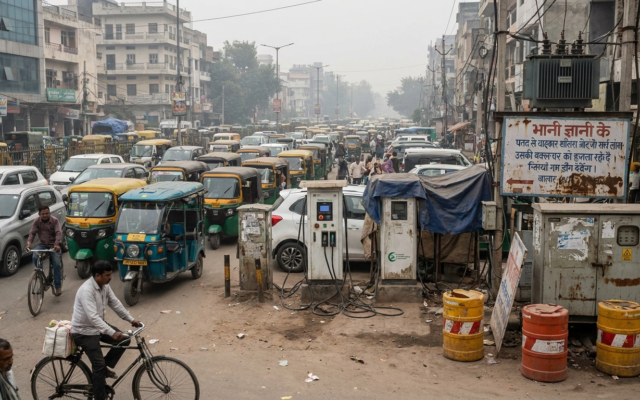
Range anxiety remains a persistent concern for many potential EV buyers. However, the 2026 policy landscape shows a robust commitment to addressing this by massively scaling up charging infrastructure. This is not just about metros anymore; the focus is strategically expanding to Tier 2 and Tier 3 cities, and even rural areas.
We’re seeing new government initiatives and private sector collaborations to set up a dense network of public charging stations. This includes fast-charging DC chargers on national highways, regular AC chargers in residential complexes, and even smaller, slower chargers in commercial spaces and parking lots. The goal is to ensure that charging your EV is as convenient as refuelling a petrol car.
A surprising fact is the government’s push for interoperability standards. This means you won’t need multiple apps or chargers for different EV brands. A single charging point will ideally be compatible with a wide range of vehicles, simplifying the user experience significantly. This standardisation is a game-changer for widespread adoption.
Furthermore, policies are being introduced to incentivise private players, including oil marketing companies and real estate developers, to install charging facilities. Think of charging points becoming a standard amenity in new apartment buildings in cities like Pune or in highway service plazas near Madurai. The aim is to create a charging ecosystem that seamlessly integrates into your daily life, making long-distance travel and urban commutes worry-free. This infrastructure push is one of the most visible and impactful changes you’ll experience in the EV market this year.
Incentives and Affordability: What it Means for Your Wallet
The perennial question for any consumer considering an EV is its affordability. While EV prices have been gradually decreasing, the 2026 policy framework is designed to accelerate this trend, making electric mobility more accessible to a wider segment of the Indian population.
The government continues to support demand-side incentives through schemes like the Faster Adoption and Manufacturing of Hybrid and Electric Vehicles (FAME) program, although the focus is shifting. Instead of broad subsidies, we’re seeing more targeted incentives that favour EVs with higher localization of components, especially battery packs and motors. This directly rewards manufacturers who are building EVs with Indian-made parts, pushing down the cost of locally manufactured vehicles.
Moreover, policies are being implemented to reduce the Goods and Services Tax (GST) on EV components and related charging infrastructure. This makes both the purchase of the vehicle and the setup of home charging solutions more economical. We are also seeing innovative financing options being explored, including lower interest rates on EV loans and attractive leasing schemes, often supported by government-backed financial institutions.
A notable development is the potential for reduced road tax and registration fees for EVs in several states. While this varies by state, many are aligning their policies to encourage EV adoption by making the upfront cost more palatable. For you, this means a lower total cost of ownership, with savings not just on fuel but also on initial purchase and running costs. The aim is to bridge the price gap between EVs and their internal combustion engine (ICE) counterparts, making the switch a financially sound decision for more households across India, from Kochi to Kolkata.
Expanding the Model Basket: More Choices for Indian Consumers
For a long time, the Indian EV market was dominated by a handful of models, primarily in the two-wheeler and compact car segments. This limited choice was a significant deterrent for many buyers. The 2026 policy environment, however, is actively fostering greater diversity and competition within the EV space.
As manufacturers see clearer policy support and a growing market, they are emboldened to invest in developing a wider array of EV models. This includes more SUVs, sedans, and even commercial vehicles, catering to diverse consumer needs and preferences. We are seeing an influx of new models from both established Indian automakers and aggressive new entrants, many of whom are setting up local manufacturing bases to capitalize on incentives.
This increased competition is a boon for consumers. It drives innovation, improves product quality, and, crucially, leads to better pricing. You can expect to see more feature-rich EVs entering the market at various price points, making the transition to electric mobility a more appealing proposition. The government is also encouraging foreign manufacturers to establish local production, bringing global EV technologies and diverse models to India.
A surprising trend is the focus on performance EVs. While affordability remains key, there’s also a growing segment that demands performance and advanced features. Manufacturers are responding by introducing EVs with longer ranges, faster acceleration, and cutting-edge technology, proving that electric can be both sustainable and exciting. This expanded model basket ensures that there’s an EV for almost every type of driver, from the daily commuter in Delhi to the family road-tripping near the Western Ghats.
The Road Ahead: Challenges and Opportunities in 2026
While the 2026 policies paint a bright picture for India’s EV future, it’s crucial to acknowledge the challenges that still lie ahead. The sheer scale of the transformation required is immense, and execution will be key to realizing the full potential of these policies.
One significant hurdle is the development of a robust and efficient battery recycling ecosystem. As more EVs hit the roads, managing end-of-life batteries becomes critical from an environmental and resource perspective. While policies are being drafted to address this, establishing widespread, effective recycling infrastructure will take time and substantial investment. We need to ensure that the ‘circular economy’ aspect of EVs is as strong as its manufacturing base.
Another challenge is skill development. The transition to EVs requires a new set of skills in manufacturing, maintenance, and repair. The government and industry will need to collaborate on comprehensive training programs to ensure a skilled workforce is available to support this burgeoning sector. Imagine the need for technicians proficient in high-voltage battery systems in cities like Chennai, which is becoming an automotive hub.
However, the opportunities far outweigh the challenges. India has the potential to not only electrify its own transport but also to become a global manufacturing and export hub for EVs and their components. The focus on indigenous technology development, coupled with massive investments in infrastructure and manufacturing, positions India for significant growth. For you, this means access to advanced, affordable EVs and a cleaner, greener transportation future.
The 2026 policy shifts in India’s EV sector are a testament to a pragmatic, long-term vision. By focusing on domestic manufacturing, battery innovation, and widespread charging infrastructure, the government is laying a strong foundation for sustainable, affordable electric mobility that directly benefits the Indian consumer.
Frequently Asked Questions
What is the biggest change in India’s EV policy in 2026?
The most significant shift is the intensified focus on domestic manufacturing of batteries and components, with incentives directly tied to local production, aiming to reduce costs and increase supply chain security.
Will EVs become cheaper in India due to these new policies?
Yes, the combination of incentives favouring local production, potential GST reductions on components, and expanded model choices is expected to drive down the overall cost of EVs and their total cost of ownership.
How will charging infrastructure improve in 2026?
Policies are driving a massive expansion of charging stations, not just in major cities but also in Tier 2 and Tier 3 cities, along highways, and in residential areas, with a focus on interoperability and faster charging speeds.
Are there more EV models available in 2026?
Absolutely. The policy environment is encouraging manufacturers to introduce a wider variety of EV models, including SUVs, sedans, and commercial vehicles, catering to diverse consumer needs and preferences.
What are the main challenges for EV adoption in India in 2026?
Key challenges include developing a robust battery recycling ecosystem and ensuring adequate skilled workforce development to support the growing EV industry. However, these are being actively addressed through policy initiatives.