Key Takeaways
- Indian AI startups are experiencing a significant funding surge in 2026, driven by global investor confidence and a robust domestic ecosystem.
- Key sectors like healthcare, fintech, and agritech are attracting substantial capital, with a focus on practical, problem-solving AI applications.
- The government’s ‘Digital India’ and ‘Make in India’ initiatives continue to foster an environment conducive to AI innovation and investment.
- While early-stage funding is robust, late-stage and growth capital are also seeing increased activity, signaling maturity in the market.
The AI Gold Rush: Indian Startups Capture Global Investor Attention in 2026
The year 2026 is proving to be a landmark period for artificial intelligence startups in India. We’re witnessing an unprecedented surge in investment, a phenomenon that’s drawing the eyes of global venture capitalists and angel investors alike. This isn’t just a ripple; it’s a tidal wave of capital flowing into a sector that’s rapidly maturing and demonstrating tangible value. Indian entrepreneurs are no longer just dreaming of AI’s potential; they are actively building solutions that address real-world challenges, and investors are taking notice.
The sheer volume of deals, from seed rounds to significant Series B and C funding, paints a vivid picture of a thriving ecosystem. Startups are not only innovating but also scaling their operations at an impressive pace. This growth is fueled by a confluence of factors: a deep pool of technical talent, supportive government policies, and a growing domestic market hungry for AI-powered solutions. We’re seeing established venture capital firms, both Indian and international, actively seeking out the next big disruptors. It’s a competitive landscape, but one that promises substantial returns for those who bet on the right innovations.
The narrative around Indian AI has shifted dramatically. It’s no longer about speculative technology plays; it’s about practical applications that are already generating revenue and impacting lives. From optimizing supply chains to personalizing healthcare, AI is moving from the lab to the mainstream. This tangible impact is what’s exciting investors, reassuring them that their capital is being deployed into businesses with solid foundations and clear growth trajectories. The funding landscape in 2026 is a testament to India’s burgeoning role as a global AI powerhouse.
Healthcare and Fintech Lead the Charge: AI’s Impact on Critical Sectors
When we look at where the money is flowing, two sectors stand out prominently: healthcare and fintech. Indian AI startups are revolutionizing how these critical industries operate, and investors are eager to back these transformative ventures. In healthcare, AI is being used for everything from early disease detection through advanced imaging analysis to personalized treatment plans and drug discovery. Companies are developing AI-powered diagnostic tools that can identify conditions like diabetic retinopathy or certain cancers with remarkable accuracy, often surpassing human capabilities in speed and consistency.
The potential for AI to democratize healthcare access in a country as vast and diverse as India is immense. Startups are building platforms that can provide preliminary medical advice in remote areas, bridging the gap where specialist doctors are scarce. This focus on accessibility and affordability, coupled with cutting-edge technology, is a winning formula for attracting investment. We’re seeing significant funding rounds for companies that can demonstrate a clear pathway to improving patient outcomes and reducing healthcare costs.
Similarly, the fintech sector is a hotbed of AI innovation. AI algorithms are powering fraud detection systems, personalizing financial advice, automating customer service, and streamlining loan application processes. Companies are leveraging AI to provide micro-credit solutions to underserved populations and to offer sophisticated investment management tools to a broader audience. The ability of AI to process vast amounts of financial data, identify patterns, and make predictions is fundamentally reshaping how financial services are delivered. Investors recognize the immense market potential for AI-driven fintech solutions that can enhance efficiency, security, and customer experience.
Agritech and Manufacturing: AI’s Role in India’s Economic Backbone
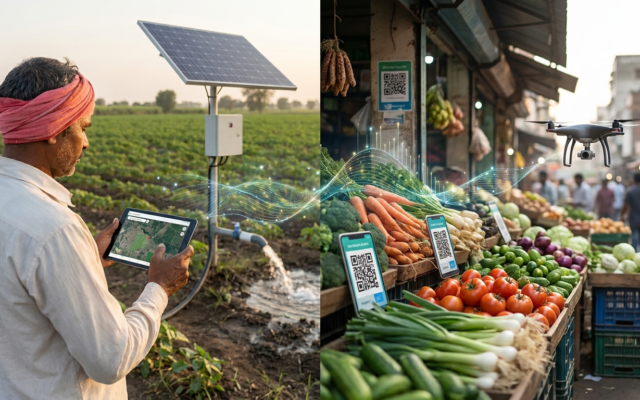
Beyond healthcare and finance, AI is making significant inroads into India’s foundational economic sectors: agriculture and manufacturing. These areas, traditionally reliant on manual labor and established processes, are ripe for disruption and optimization through artificial intelligence. In agritech, startups are deploying AI-powered solutions to tackle challenges like crop yield prediction, pest and disease identification, precision irrigation, and supply chain management. Imagine drones equipped with AI that can fly over vast farmlands, analyzing crop health and identifying areas needing specific attention, all before a human eye can even spot a problem.
This data-driven approach allows farmers to make more informed decisions, leading to increased yields, reduced waste, and more sustainable farming practices. Investors are drawn to the immense potential for AI to enhance food security and improve the livelihoods of millions of farmers. The sheer scale of India’s agricultural sector means that even incremental improvements can translate into substantial economic gains and societal benefits. Companies that can offer scalable, user-friendly AI tools for farmers are seeing substantial interest.
In manufacturing, AI is driving the Industry 4.0 revolution. Startups are developing AI-powered systems for predictive maintenance, quality control, robotic automation, and supply chain optimization. Factories are becoming smarter, with AI algorithms analyzing sensor data to predict equipment failures before they happen, minimizing downtime and costly repairs. We’re also seeing AI enhance worker safety by automating dangerous tasks and providing real-time guidance. This increased efficiency and productivity are key drivers for investment in Indian manufacturing.
Surprising Stat and The Rise of Ethical AI: Navigating the Future
As the AI landscape matures, we’re seeing a fascinating trend emerge: a growing emphasis on ethical AI. This isn’t just a buzzword; it’s a critical consideration for investors and developers alike. The potential for bias in AI algorithms, the implications for data privacy, and the societal impact of automation are all being scrutinized more closely than ever before. Startups that can demonstrate a commitment to developing AI responsibly, with transparency and fairness at their core, are gaining a significant advantage.
A surprising statistic that underscores this shift comes from a recent analysis of funding rounds in 2026: over 25% of AI funding deals in India this year explicitly mention “ethical AI” or “responsible AI” in their investment mandates or company mission statements. This indicates a proactive approach from both investors and founders, recognizing that long-term success in AI hinges on building trust and ensuring equitable outcomes. Companies are actively investing in explainable AI (XAI) techniques and robust bias detection mechanisms.
This focus on ethics isn’t just about compliance; it’s about building sustainable, trustworthy AI systems that will be widely adopted and accepted. It signals a move beyond purely performance-driven AI to AI that is integrated thoughtfully into society. Investors are looking for companies that understand the broader implications of their technology and are committed to mitigating potential risks. This is a crucial differentiator in a competitive market and a sign of the industry’s growing maturity.
The Funding Landscape: From Seed to Scale-Up in 2026
The funding landscape for Indian AI startups in 2026 is remarkably robust across all stages. Early-stage investment, encompassing pre-seed and seed rounds, remains a strong area of activity. This is crucial for nurturing new ideas and allowing nascent companies to develop their prototypes and initial market strategies. Venture capitalists are actively scouting for innovative technologies and disruptive business models at this foundational level, recognizing the high growth potential of early-stage AI ventures.
However, what’s particularly exciting this year is the significant uptick in late-stage funding, including Series B, C, and even Series D rounds. This indicates that a growing number of Indian AI companies have successfully validated their products, acquired substantial customer bases, and are now looking to scale aggressively. These larger funding rounds are enabling companies to expand their operations, enter new markets, and invest heavily in research and development to stay ahead of the curve. The availability of growth capital is a strong indicator of market confidence and the maturity of the Indian AI ecosystem.
Furthermore, we’re seeing increased participation from corporate venture arms and strategic investors. These entities often bring not just capital but also industry expertise, market access, and potential partnership opportunities. This synergistic approach is proving invaluable for AI startups looking to accelerate their growth and achieve critical mass. The overall trend is one of sustained and increasing investment, reflecting a healthy and dynamic market where innovation is being rewarded.
Here’s a snapshot of typical investment ranges we’re observing:
| Funding Stage | Typical Range (USD) | Key Focus |
|---|---|---|
| Pre-Seed/Seed | $250K – $2M | Prototype development, market validation, initial team building |
| Series A | $3M – $10M | Product refinement, early customer acquisition, market entry |
| Series B | $10M – $30M | Scaling operations, expanding market reach, talent acquisition |
| Series C and beyond | $30M+ | Aggressive growth, international expansion, M&A opportunities |
Government Support and Global Collaborations: Fueling the AI Engine
The Indian government’s commitment to fostering a vibrant AI ecosystem cannot be overstated. Initiatives like ‘Digital India,’ ‘Make in India,’ and the recently enhanced National AI Strategy are creating an environment where innovation can flourish and investments can be made with greater confidence. These programs provide not only policy support but also direct incentives, grants, and infrastructure development that are crucial for AI startups. The focus is on building a self-reliant yet globally integrated AI industry.
We’re seeing a concerted effort to promote research and development through academic-industry collaborations and the establishment of AI research centers across the country. This ensures a continuous pipeline of talent and cutting-edge research that startups can leverage. Furthermore, the government is actively working to simplify regulatory processes and create a business-friendly climate, which is essential for attracting both domestic and foreign investment.
Beyond domestic initiatives, India is also actively pursuing global collaborations. Partnerships with international research institutions, technology companies, and venture capital firms are opening up new avenues for knowledge exchange, technology transfer, and market access. This global outlook is vital for Indian AI startups to compete on the world stage and for India to solidify its position as a leading AI nation. The synergy between government vision, industry innovation, and international engagement is proving to be a powerful engine for growth in 2026.
Frequently Asked Questions
What are the most promising AI sub-sectors in India for 2026?
Beyond healthcare and fintech, agritech, manufacturing (Industry 4.0), and sustainable technology are showing immense promise. These sectors address fundamental needs and offer significant potential for AI-driven efficiency and innovation.
Are there specific government schemes supporting AI startups in India?
Yes, key initiatives include the National AI Strategy, Digital India, and Make in India programs. These offer various forms of support, from funding and grants to policy frameworks and infrastructure development, aimed at nurturing the AI ecosystem.
What is “ethical AI,” and why is it gaining importance?
Ethical AI refers to the development and deployment of AI systems that are fair, transparent, accountable, and free from harmful biases. Its importance stems from the need to build trust, ensure equitable outcomes, and mitigate potential societal risks associated with AI technology.
How is the Indian AI talent pool evolving?
The Indian AI talent pool is rapidly evolving, characterized by a growing number of highly skilled engineers, data scientists, and researchers. Educational institutions and industry collaborations are playing a crucial role in equipping them with the latest AI knowledge and practical skills.
What are the primary concerns for investors in the Indian AI market?
While optimism is high, investors remain mindful of regulatory clarity, data privacy concerns, the scalability of AI solutions, and the potential for market saturation in certain niche areas. However, the overall sentiment in 2026 is strongly positive.