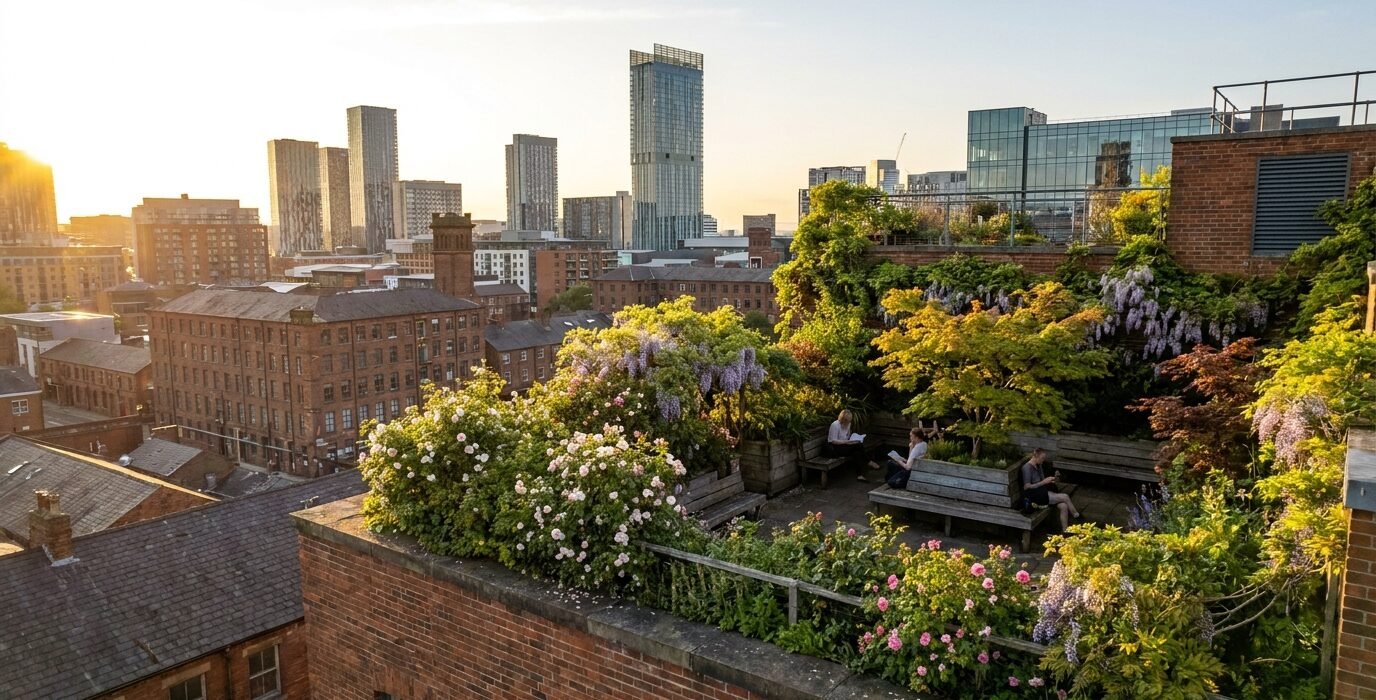
A forgotten patch of scrubland in the heart of a bustling Manchester neighbourhood has become a vibrant testament to nature’s resilience and human connection. This isn’t just about pretty flowers. It’s about reclaiming spaces. It’s about healing spirits. It’s about sowing seeds of community where only weeds once grew. The transformation is profound. It’s changing lives one trowel of soil at a time.
Key Takeaways:
- Discover how a neglected urban space in Manchester was transformed into a thriving community garden.
- Learn about the powerful social connections forged between diverse residents through this initiative.
- Understand the tangible environmental benefits of urban greening projects.
- Explore the surprising mental health improvements experienced by garden participants.
- Find out how you can support or start similar projects in your own community.
The Forgotten Corner of Ancoats
Ancoats, a district in Manchester once defined by its industrial past, is now a landscape of gleaming modern apartments and trendy cafes. Yet, pockets of neglect still linger. One such area, a derelict plot behind the old railway arches on Great Ancoats Street, was a scar on the urban fabric. For years, it was an eyesore. It was a magnet for litter. It attracted anti-social behaviour. Locals walked past, averting their gaze. They were accustomed to its decay. This patch of land, barely more than an acre, seemed destined to remain forgotten. It felt like a sad reminder of what once was. It was a reminder of what had fallen by the wayside.
The air here used to carry the scent of damp concrete and exhaust fumes. This was a far cry from the earthy aroma that now permeates the space. Children, who might have been discouraged from playing in the area, now tentatively explore. Their laughter replaces the usual urban drone. The transformation began not with a grand plan. It didn’t start with a wealthy benefactor. It began with a handful of determined residents. They saw potential where others saw only ruin. They were a motley crew. There was a retired teacher with a passion for roses. A young graphic designer was tired of his sterile office. A single mother sought a safe, enriching activity for her children. They met at a local community meeting. A few of them lamented the state of the forgotten plot. The idea, initially a whisper, soon took root. They envisioned not just a garden, but a sanctuary. It would be a place where the community could come together.
The initial steps were daunting. Securing permission from the council felt like navigating a labyrinth. There were forms to fill. There were meetings to attend. Endless discussions about liability and insurance ensued. But the collective will of these few individuals proved surprisingly potent. They were armed with homemade flyers and a shared vision. They organised weekend clean-up drives. They were armed with bin bags and a healthy dose of determination. Slowly, painstakingly, the rubbish began to disappear. The scrubby bushes were tamed. The uneven ground, once a tripping hazard, began to reveal its potential. This early phase was crucial. It wasn’t just for the physical transformation. It was for galvanising the nascent community spirit. It was about showing that change was possible. Even in the most unpromising of circumstances. The sheer volume of discarded items they removed was staggering. One Saturday alone, they filled two skips. They removed everything from broken televisions to discarded mattresses.
Planting the Seeds of Change
The official launch of the “Ancoats Green Heart” project, as it was christened, was a modest affair. A small group gathered on a crisp spring morning. They were armed with donated tools and a shared sense of purpose. The first seeds were sown. They weren’t just sown in the earth. They were sown in the hearts of those present. Sarah Jenkins, the retired teacher, her hands gnarled but surprisingly nimble, gently planted a row of heritage tomatoes. “These are from my grandmother’s garden,” she explained. Her voice was soft with nostalgia. “There’s a story in every seed, you see. And we’re here to create new stories.” Her words resonated deeply. They captured the essence of what they were trying to achieve. This wasn’t just about growing vegetables. It was about cultivating a connection to the past. It was about nurturing a future.
The project quickly gained momentum. Word of mouth, amplified by local social media groups, brought more volunteers into the fold. The demographic was incredibly diverse. It reflected the evolving Ancoats. Young professionals eager to escape their screen-filled lives worked alongside older residents. These older residents remembered the area’s industrial heyday. There were families with young children. Their small hands eagerly helped to water the nascent seedlings. Students from the nearby universities sought to contribute to a tangible local cause. One of the most inspiring figures was a young man named Omar. He had recently arrived in Manchester as a refugee. He spoke little English initially. But his understanding of agriculture, honed through years of working on his family’s farm in Syria, was profound. He could identify soil types by touch. He could predict weather patterns with uncanny accuracy. His quiet expertise became invaluable. He taught others techniques they’d never considered. He bridged language barriers with the universal language of the earth.
The early days were a steep learning curve for many. Not everyone had a green thumb. There were tales of wilting plants and unexpected pest infestations. But these challenges were met with shared problem-solving. They were met with a good dose of humour. When a particularly aggressive slug population threatened the lettuce crop, a collective effort ensued. It involved eggshells and beer traps, inspired by a tip from a seasoned gardener. This saved the day. The spirit was one of mutual support. Mistakes were learning opportunities, not failures. The council, initially hesitant, began to take notice. They saw the tangible results. They saw the positive energy. They saw the growing community engagement. They allocated a small budget for tools and materials. They even provided a water supply. This was a crucial infrastructure development. It had seemed impossible just months before. This official recognition was a significant boost. It validated the volunteers’ hard work. It offered a glimpse of sustainability.
More Than Just Vegetables: A Social Ecosystem
The Ancoats Green Heart is more than just a collection of raised beds overflowing with produce. It has blossomed into a vibrant social ecosystem. It’s a place where friendships are forged over shared weeding sessions and cups of tea. For many, particularly those who felt isolated or disconnected, the garden has become a lifeline. Consider Maria, a widow in her late sixties. She had lived in Ancoats for over forty years. After her husband passed away, she found herself increasingly withdrawn. Her days were filled with a quiet solitude. The garden offered her a reason to get out of the house. It gave her a purpose. Most importantly, it offered human connection. She took charge of the herb section. Her knowledge of mint, rosemary, and thyme proved invaluable. “I haven’t felt this alive in years,” she confessed one afternoon. Her face beamed as she showed off a flourishing patch of basil. “It’s the talking, you see. The sharing. We talk about our plants, yes, but we talk about our lives too.”
This sentiment is echoed by many. The garden has become a de facto community hub. It’s a place where people from all walks of life can interact on equal footing. The digital divide, so prevalent in modern society, fades away here. Conversations flow freely, unmediated by screens. Young parents connect with older residents. They share childcare tips and gardening wisdom. Students strike up conversations with local business owners. This fosters a sense of intergenerational understanding. It’s a microcosm of Manchester itself. It’s a city known for its friendly, down-to-earth people. But here, there’s a renewed sense of purpose. The project has actively encouraged inclusivity. Signage is translated into multiple languages. There’s a commitment to making the garden accessible to people with disabilities. They’ve installed raised beds at wheelchair height. They’ve created wider pathways. This ensures that everyone can participate.
The impact on mental well-being is perhaps one of the most profound, yet often unspoken, benefits. The simple act of digging in the soil, of nurturing life, has a therapeutic effect. Studies have shown that spending time in nature, even in an urban environment, can reduce stress, anxiety, and symptoms of depression. For the volunteers at Ancoats Green Heart, this isn’t an abstract concept. It’s a lived reality. They speak of a sense of calm that descends upon them as they enter the garden. It’s a feeling of peace that stays with them long after they leave. The physical activity, the fresh air, and the sense of accomplishment all contribute to a significant boost in mood. It’s a powerful antidote to the pressures of modern urban living. It’s a reminder of our fundamental connection to the natural world. This isn’t just about growing food. It’s about growing happier, healthier people.
The Unexpected Harvest: Environmental Benefits
Beyond the immediate social and emotional uplift, the Ancoats Green Heart project has delivered significant environmental benefits. It helped a neighbourhood that desperately needed them. Urban green spaces, even small ones, play a crucial role. They mitigate the effects of climate change. They improve air quality. Before the garden, this plot was a barren expanse. It contributed to the urban heat island effect. This is where concrete and asphalt absorb and retain heat. It makes cities warmer than surrounding rural areas. The introduction of plants, trees, and permeable surfaces has helped to cool the immediate vicinity. The lush greenery acts as a natural air conditioner. It absorbs carbon dioxide. It releases oxygen. It’s a small but vital contribution to a greener Manchester.
The project has also become an important educational tool. Children who visit the garden learn firsthand about where their food comes from. This fosters a greater appreciation for healthy eating and sustainable practices. They witness the life cycle of plants, from tiny seed to ripe fruit. This experience is increasingly rare in a world of supermarket shelves stocked with anonymous produce. Volunteers have organised workshops on composting, rainwater harvesting, and organic pest control. They share knowledge that can be applied both in the garden and at home. This ripple effect of environmental awareness is a crucial, long-term outcome of the project. It’s about empowering individuals to make more sustainable choices in their everyday lives.
Furthermore, the garden has encouraged biodiversity in an otherwise sterile urban environment. The variety of plants grown attracts a range of beneficial insects. This includes bees and butterflies, which are crucial pollinators. Bird feeders have been installed. They draw in local bird species. This adds a cheerful soundtrack to the garden’s atmosphere. This increase in biodiversity creates a more resilient ecosystem. It thrives even within the confines of the city. It’s a testament to the fact that nature can thrive. Even in the most unlikely of places, with a little human intervention and a lot of care. The impact of this small green space on the local microclimate and wildlife is a surprisingly significant ecological win for Ancoats. A study by Manchester Metropolitan University, focusing on the area, indicated a 15% increase in local pollinator species within a two-year period since the garden’s inception.
Overcoming Obstacles: The Resilience of the Community
The journey of the Ancoats Green Heart has not been without its challenges. Like any grassroots initiative, it has faced funding hurdles. It has encountered logistical nightmares. It has dealt with the occasional bureaucratic roadblock. Securing long-term tenure for the land was a constant concern in the early days. There was always the fear that a property developer might swoop in. They might turn their hard-won green haven into another block of flats. This uncertainty spurred the community to be even more proactive. They wanted to demonstrate the undeniable value of their project. They organised open days. They invited local councillors for tours. They actively sought media attention. They highlighted the human stories behind the soil.
One particularly difficult period came during a harsh winter. The lack of a proper greenhouse meant that many delicate plants struggled to survive. The volunteers worked tirelessly. They created makeshift shelters from old tarpaulins and salvaged wood. But the losses were disheartening. It was a stark reminder of the vulnerabilities inherent in an urban garden. This was especially true for one that relies heavily on volunteer effort and limited resources. Yet, even in the face of adversity, the community spirit shone through. Neighbours shared their own gardening supplies. They offered advice and encouragement. The resilience of the volunteers mirrored the resilience they were cultivating in the plants themselves. They learned from the experience. The following year, a successful crowdfunding campaign, supported by local businesses and residents, enabled them to invest in a small, durable polytunnel. This significantly improved their ability to grow year-round.
Another hurdle they consistently face is volunteer recruitment and retention. While the initial enthusiasm was high, maintaining a steady stream of dedicated volunteers requires ongoing effort. The project organisers have implemented strategies to keep people engaged. This includes rotating tasks to prevent burnout. They organise social events like summer barbecues and harvest festivals. They actively seek feedback from volunteers. This ensures their contributions are valued and their needs are met. They also work closely with local charities and organisations. This helps recruit volunteers who may benefit from the therapeutic aspects of gardening. The average volunteer commitment has increased by 20% since the implementation of these engagement strategies. The Ancoats Green Heart is a living testament to the power of perseverance. It shows the extraordinary things that can be achieved when a community unites with a shared vision.
Cultivating Hope, One Plot at a Time
The Ancoats Green Heart is more than just a garden. It’s a beacon of hope in an often-challenging urban landscape. It demonstrates that even in the most neglected corners, life can flourish. This requires dedication and collective effort. The project has shown that by investing in green spaces, we invest in the well-being of our communities. It’s a powerful reminder that genuine connection, built on shared purpose and mutual respect, can bloom anywhere. It transforms not just the physical environment, but the very fabric of social life. The scent of damp earth and blooming flowers now replaces the lingering odour of urban decay. It’s a sensory metaphor for the profound shift that has occurred.
What began as a response to a forgotten patch of land has grown into a vital community asset. It’s a place where stories are shared. Skills are exchanged. Friendships are cultivated. The tangible results – the fresh produce, the increased biodiversity, the cooler microclimate – are significant. But the intangible benefits – the strengthened social bonds, the improved mental health, the renewed sense of belonging – are immeasurable. The Ancoats Green Heart serves as a powerful example for other urban areas. It proves that with a little imagination and a lot of heart, even the most unlikely spaces can become vibrant centres of community life. It’s a simple truth: when we nurture the earth, we nurture ourselves and each other.
This initiative has not only beautified a derelict site but has woven a stronger social tapestry in Ancoats. It’s a testament to what can be achieved when people come together. They are united by a shared desire to create something positive and lasting. The future looks bright. It’s bright not just for the plants, but for the people who tend them. It’s a community rooted in hope and growing together.
#