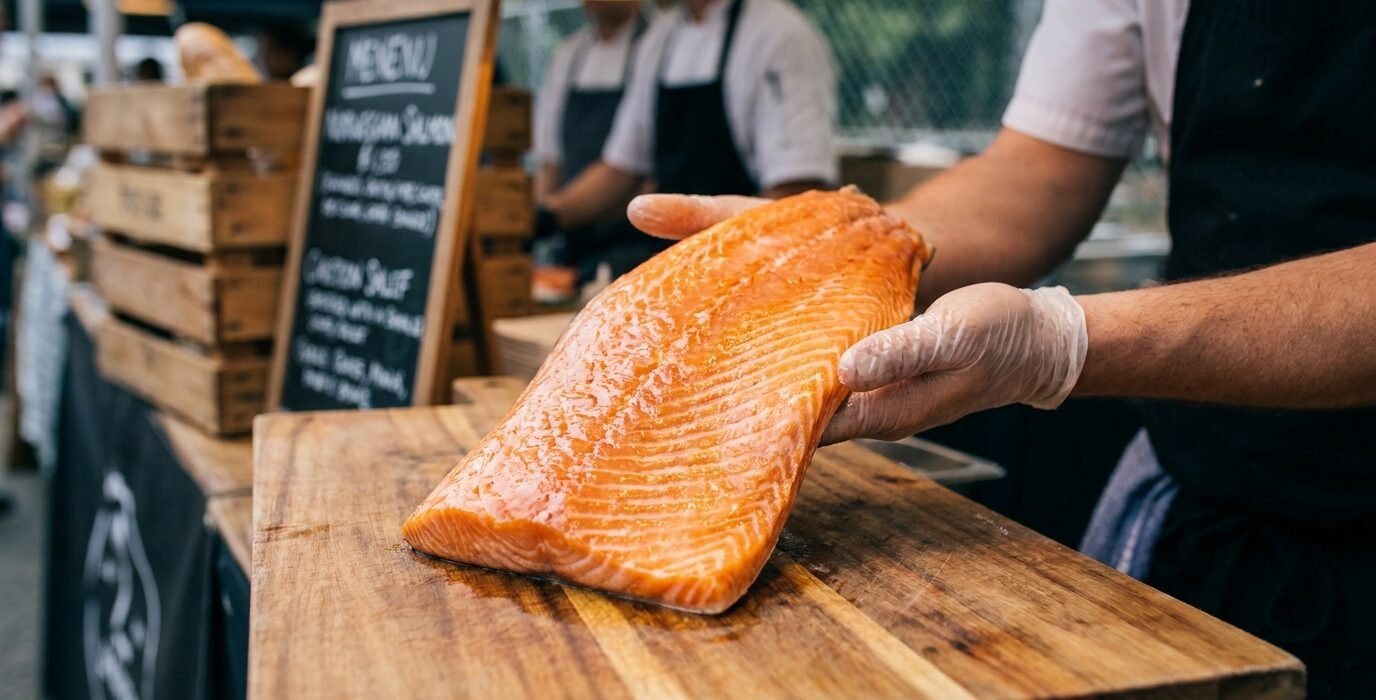
The aroma of freshly grilled salmon, once a symbol of luxury and increasingly a staple in Indian kitchens, is now clouded by a new economic reality. For years, Norwegian salmon has graced the plates of discerning Indian consumers, a testament to a burgeoning trade relationship. But a recent shift in Indian trade policy has thrown a significant spanner in the works. This has raised tariffs on this prized import. It’s creating waves of concern for Norwegian exporters and Indian importers alike.
This isn’t just about a fish. It’s about the intricate dance of global trade. It’s about the delicate balance of economic interests. And it’s about the aspirations of a growing Indian middle class. We’re looking at how this tariff hike could reshape a vibrant market. What does it mean for the future of Norwegian seafood in India? You might be wondering, what’s behind this move? Can Norway swim against this rising tide of protectionism?
Key Takeaways:
Advertisement300×250 / native
- India’s recent tariff increase on Norwegian salmon poses a significant challenge for exporters, impacting pricing and market access.
- The move is part of a broader Indian strategy to boost domestic production and protect local industries, mirroring global protectionist trends.
- Norwegian exporters face increased costs, potentially leading to higher prices for Indian consumers or reduced demand.
- Strategies like exploring alternative markets, diversifying product offerings, and engaging in bilateral discussions are crucial for navigating this hurdle.
- The long-term impact will depend on India’s domestic policies and Norway’s ability to adapt to evolving trade landscapes.
The Taste of Success: Norway’s Salmon Conquest of India
For a decade, the journey of Norwegian salmon to Indian shores has been a remarkable success story. Imagine the cool, pristine fjords of Norway. Think of those near Bergen, where salmon are farmed with meticulous care. These fish, renowned for their rich flavour and healthy omega-3 fatty acids, embarked on an extraordinary voyage. They crossed continents and oceans. They landed in bustling Indian metropolises like Mumbai and Delhi.
Indian chefs, always eager to incorporate premium ingredients, embraced the Norwegian salmon. They transformed it into delectable dishes. These adorned the menus of high-end restaurants and sophisticated household tables. The demand was palpable. It was a clear indicator of India’s growing affluence and evolving palate.
The numbers speak for themselves. Before this recent tariff adjustment, the growth trajectory for Norwegian salmon exports to India was nothing short of impressive. We saw a steady climb, year on year. It was a testament to the quality of the product. It highlighted the increasing purchasing power of the Indian consumer. This wasn’t just a niche market anymore. It was becoming a significant segment for Norwegian aquaculture. Families in Chennai began to include salmon in their celebratory meals. They sought out its distinct taste and perceived health benefits. The perception of salmon shifted. It moved from an exotic delicacy to an accessible, albeit premium, choice. This evolving consumer behaviour created a robust demand. It encouraged Norwegian exporters to invest further in this promising market. It felt like a win-win. Norway found a lucrative new market. India gained access to a world-class seafood product. Its culinary landscape was enriched. The sheer volume of trade, reaching thousands of tonnes annually, underscored the deepening economic ties. It showed a shared appreciation for quality produce. It was a culinary diplomacy of sorts. It bridged cultures through shared gastronomic experiences. The silvery sheen of Norwegian salmon was at its heart.
The Price of Protection: India’s Tariff Gambit
The Indian government’s decision to raise tariffs on imported salmon, including those from Norway, has sent ripples of concern through the industry. This isn’t an isolated incident. It reflects a broader trend in India’s trade policy. This is often driven by a desire to foster domestic industries. It aims to reduce reliance on imports. Think of it as a strategic manoeuvre. It’s meant to level the playing field. Or perhaps, to tilt it in favour of local producers.
The rationale often cited is the need to support India’s own burgeoning aquaculture sector. This sector is keen to grow and capture a larger share of the domestic seafood market. While Norway has perfected salmon farming over decades, India is still developing its capabilities in this specific area.
This move, however, comes with a direct economic consequence for Norwegian exporters. The increased tariffs translate to higher landed costs for salmon in India. For exporters like Jonas Andersen, a representative from a leading Norwegian salmon producer based in Trondheim, this means a significant challenge to their pricing competitiveness. “We’ve spent years building this market,” Jonas explained, his voice tinged with frustration. “Our product is known for its quality and sustainability. Now, we have to contend with a tariff that makes it significantly more expensive for our Indian partners. It feels like a barrier has been erected overnight.”
The aim, ostensibly, is to make domestically farmed fish more attractive to Indian consumers. This is achieved by making imports pricier. This is a common tactic employed by governments. They seek to stimulate local economies. This can sometimes lead to retaliatory measures from affected countries. The Indian government’s stance is clear: prioritize national economic development and self-sufficiency. This is even if it means adjusting existing trade relationships. This policy adjustment is a delicate balancing act. It aims to stimulate domestic production. It does so without completely alienating international partners or consumers who have come to appreciate the imported variety.
Navigating the Currents: Challenges for Norwegian Exporters
The imposition of higher tariffs by India presents a multi-faceted challenge for Norwegian salmon exporters. It’s not just about a simple percentage increase. It’s about the ripple effects that permeate the entire supply chain and market dynamics. For starters, the increased cost directly impacts the profitability of Norwegian companies. When the cost of bringing salmon to the Indian market rises, exporters have to absorb some of that cost. They might reduce their profit margins. Or they might pass it on to their Indian importers. The latter often leads to increased prices for the end consumer in India. This can dampen demand. This is especially true for a product that is already considered a premium offering.
Consider the logistics and marketing efforts that have been invested in the Indian market. Exporters have worked diligently to build brand recognition. They’ve established distribution networks. They’ve educated consumers about the benefits of Norwegian salmon. This tariff increase threatens to undermine those efforts. A slightly higher price might be manageable. But a substantial tariff can make Norwegian salmon uncompetitive. It becomes uncompetitive against other imported seafood. It can even be uncompetitive against locally sourced alternatives.
This is particularly concerning for smaller exporters. They may not have the financial buffer to absorb significant cost increases. They might lack the marketing muscle to overcome price resistance. Kristin Larsson, a trade analyst specializing in Scandinavian-Indian relations, noted, “This tariff hike forces Norwegian companies to re-evaluate their entire Indian strategy. They need to ask themselves if the market still offers the same return on investment as before. It’s a significant strategic decision that could involve scaling back operations or seeking alternative markets.” The fear is that this could lead to a reduction in the volume of Norwegian salmon entering India. This impacts not just exporters. It also affects the Indian businesses that rely on these imports for their operations and customer base. It creates an environment of uncertainty. This makes long-term planning a much more precarious affair for all involved.
The Indian Consumer’s Dilemma: Quality vs. Cost
For the Indian consumer, the tariff hike on Norwegian salmon translates into a more complex decision at the point of purchase. For years, the allure of Norwegian salmon lay in its superior quality. It had a distinct flavour profile. It was associated with healthy eating. It was the go-to choice for special occasions. It was for those seeking a taste of international culinary excellence. It was for health-conscious individuals. Now, that premium experience comes at an even higher price. This forces consumers to weigh the perceived value of Norwegian salmon against its increased cost.
The affluent segment of the Indian population, those who have become accustomed to enjoying this delicacy, might still be willing to pay the premium. However, for a broader segment of the market that was beginning to embrace salmon as an occasional treat, the price increase could be a deterrent. They might opt for more affordable options. These could include locally sourced fish or other types of imported seafood that are not subject to the same tariffs.
This is a critical point: the tariff isn’t just an economic policy. It has a direct impact on consumer choice and dietary habits. A family in Kolkata, who might have been saving up for a salmon dinner for a special anniversary, might now reconsider. They might opt for a more budget-friendly alternative. This shift in consumer behaviour can have a significant impact on the demand for Norwegian salmon. It could potentially lead to a decrease in sales volume. It also presents a challenge for the Indian hospitality sector. Restaurants and hotels that have built their reputation on offering premium imported ingredients will have to either absorb the increased costs or pass them on. This could potentially impact their own customer base. The decision to increase tariffs, therefore, is not just about trade figures. It’s about subtly reshaping the Indian culinary landscape. It influences what ends up on the dinner plates of millions.
Unpacking the “Make in India” Angle
India’s decision to impose higher tariffs on imported salmon is intrinsically linked to its broader economic vision. This is particularly true for the “Make in India” initiative. This ambitious program, launched in 2014, aims to transform India into a global manufacturing hub. It seeks to boost domestic production across various sectors. In the context of seafood, the government is keen to nurture and expand its own aquaculture industry. India has a vast coastline. It has significant freshwater resources. These offer immense potential for fish farming. However, the sector faces challenges. These include technological adoption, infrastructure development, and quality control.
By making imported salmon more expensive, the government aims to create a more favourable environment for domestic producers. This allows them to compete and grow. The idea is that Indian consumers, faced with a price disparity, will increasingly turn to locally farmed fish. This, in turn, is expected to stimulate investment in India’s aquaculture sector. It will create jobs. It will enhance the country’s self-sufficiency in seafood production.
This strategy is not unique to India. Many countries employ similar protectionist measures. They do this to safeguard their nascent industries. For example, a farmer in Andhra Pradesh, cultivating indigenous fish varieties, might see a renewed opportunity. This happens as imported alternatives become less economically viable. However, this approach often sparks debate. Critics argue that protectionist policies can stifle innovation. They can lead to higher prices for consumers in the short term. They can potentially invite retaliatory measures from trading partners. The success of the “Make in India” approach in the salmon sector will depend on the government’s ability to effectively support and develop the domestic aquaculture industry. It needs to ensure it can indeed deliver quality products at competitive prices. This is to meet the growing demand. It’s a long-term play. The tariff is just one piece of a much larger economic puzzle.
Strategies for Survival: Norway’s Next Moves
Faced with these new tariff hurdles, Norwegian salmon exporters are not sitting idly by. The industry, known for its resilience and adaptability, is exploring various strategies. These will help navigate this challenging trade landscape. One immediate approach is to diversify their export markets. While India represents a significant and growing market, it’s not the only one. Norway can leverage its strong relationships with other established markets in Europe, North America, and Asia. It can potentially redirect some of the volume that might have been destined for India.
Another crucial strategy involves product differentiation and value addition. Instead of solely focusing on fresh, whole salmon, exporters can emphasize higher-value products. Think of smoked salmon, salmon fillets, or pre-marinated portions. These value-added products often command higher prices. They can be less sensitive to import tariffs. Their perceived value extends beyond the raw commodity. Furthermore, investing in marketing and consumer education within India, even with the tariff in place, can help maintain brand loyalty. It can highlight the unique selling propositions of Norwegian salmon – its superior quality, sustainability certifications, and health benefits.
Engaging in direct dialogue with Indian trade bodies and government officials is also paramount. Understanding the precise rationale behind the tariff increase is key. Exploring possibilities for bilateral negotiations or phased tariff reductions could be a long-term objective. Torstein Olsen, a seasoned Norwegian diplomat with experience in trade negotiations, emphasizes the importance of a proactive approach. “We need to understand India’s domestic priorities and work collaboratively to find solutions that benefit both our nations,” he states. “It’s about building bridges, not walls, even when facing economic headwinds.” The industry is also looking at optimizing their supply chains and logistics. This will minimize any additional costs associated with the tariffs. This ensures that the final product, despite the hurdles, remains as appealing as possible to the Indian consumer. This is a test of their agility and their commitment to the Indian market.
A Surprising Twist: The Unforeseen Impact on Local Fisheries
It might seem counter-intuitive, but the increased tariffs on imported Norwegian salmon could have an unexpected and perhaps even detrimental impact on India’s own domestic fisheries. This is particularly true in regions like Kerala. While the intention is to boost local aquaculture, the sudden shift in demand could overwhelm existing local supply chains. It could lead to unintended consequences. For instance, if the price of Norwegian salmon becomes prohibitively high, Indian consumers might simply reduce their overall seafood consumption. They might not switch en masse to local alternatives. This could lead to a decrease in demand for all types of fish. This impacts local fishermen and their livelihoods.
Moreover, the infrastructure and expertise required for large-scale, high-quality salmon farming are significantly different from those used for traditional Indian fish varieties. Simply increasing tariffs doesn’t automatically create the capacity or quality standards needed. It won’t replace the gap left by Norwegian imports. There’s a risk that the market might experience shortages. There could be a decline in the quality of seafood available. This might happen even as domestic aquaculture aims to ramp up. We’ve seen in other sectors where protectionist measures, while well-intentioned, can sometimes create market distortions. For example, a surge in demand for local fish, if not met with adequate supply, can lead to a speculative price increase for those very local varieties. This negates the intended benefit for consumers. This is a complex economic equation. It’s not just about replacing one product with another. It’s about managing consumer behaviour, supply chain capabilities, and the broader economic ecosystem. The focus on salmon tariffs might inadvertently overlook the intricate web of India’s diverse and already established fishing communities. They could find themselves on the receiving end of unintended negative consequences. The hope is that policymakers are carefully considering these broader implications. They need to ensure that the pursuit of domestic growth doesn’t inadvertently harm existing, vital sectors of the Indian economy.
The Future of Fish on Indian Plates
The recent tariff adjustments on Norwegian salmon represent more than just a trade dispute. They signal a shift in India’s economic strategy. They mark its evolving relationship with global markets. For Norway, it’s a wake-up call to adapt and diversify. For India, it’s a bold step towards nurturing its own industries. It holds the hope of fostering greater self-reliance and economic growth. The ultimate outcome will be a complex interplay of these ambitions and the realities of the market.
We are witnessing a dynamic evolution. The taste for premium seafood meets the imperative of national economic development. The journey of Norwegian salmon in India is far from over. But it will undoubtedly take a new course. The resilience of both the Norwegian industry and the Indian consumer will be tested. What remains clear is that the global trade landscape is in constant flux. Navigating these changes requires foresight, adaptability, and a deep understanding of the cultural and economic currents at play.