Key Takeaways
- Mumbai’s proposed Sky Rail, slated for a 2030 debut, promises to revolutionize intra-city travel with elevated, high-speed transit.
- The project prioritizes sustainability, aiming to significantly reduce road congestion and carbon emissions through electric propulsion and integrated green spaces.
- Beyond mere transport, Sky Rail envisions a multi-modal network connecting key commercial hubs, residential areas, and even extending towards Navi Mumbai, enhancing regional connectivity.
- Early projections suggest a substantial impact on daily commute times, potentially halving travel duration for many Mumbaikars and boosting economic activity.
The Dawn of Elevated Commuting: Mumbai’s Sky Rail Vision
Imagine a Mumbai where the frustrating crawl of traffic is a distant memory. This isn’t a scene from a futuristic film; it’s the tangible future being engineered for our city. By 2030, the ambitious Mumbai Sky Rail project aims to lift our commutes, quite literally, above the persistent congestion that defines our daily lives. This isn’t just another metro line; it’s a paradigm shift, a bold vision to transform how millions navigate the sprawling metropolis.
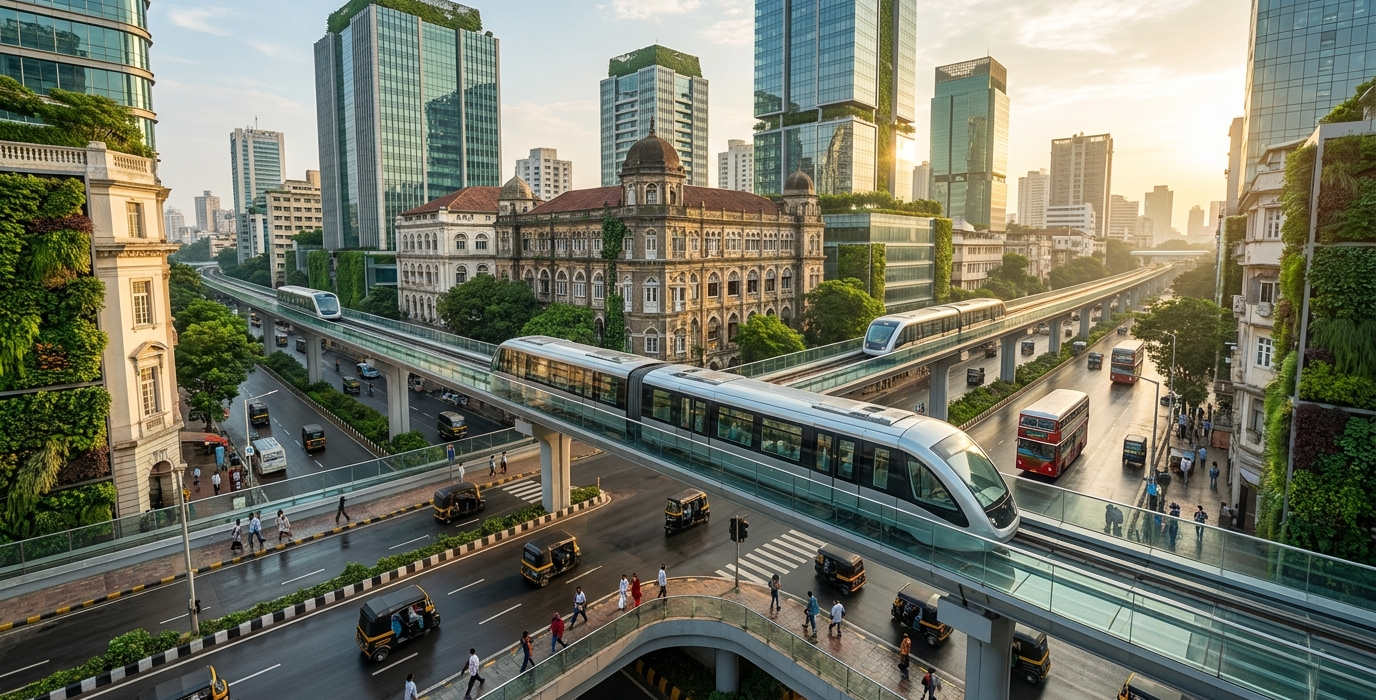
The project, currently in advanced planning stages with significant headway made in 2026, envisions a network of sleek, elevated trains gliding silently above our bustling streets. Think of it as a modern-day answer to the city’s growing pains, a testament to innovation meeting necessity. The core idea is to create a high-speed, high-capacity transit system that bypasses road-level bottlenecks entirely. This elevated infrastructure is designed to be more than just tracks in the sky; it’s a carefully integrated part of the urban fabric.
We’re talking about a system that promises to reclaim valuable time for Mumbaikars, turning hours spent stuck in traffic into productive or leisurely moments. The initial phases are targeting some of the city’s most congested corridors, offering a much-needed respite. This initiative represents a significant investment in the city’s future, a commitment to making Mumbai more liveable, efficient, and sustainable for generations to come.
Engineering the Future: Design and Sustainability Pillars
The Mumbai Sky Rail is being designed with a deep commitment to environmental consciousness and cutting-edge engineering. The elevated structure itself is a marvel of modern civil engineering, designed to be aesthetically pleasing and minimally intrusive to the existing urban landscape. We’re looking at sleek, modern designs for the stations and the trains, incorporating elements of biophilic design to blend with nature.
A surprising fact is that the project’s architectural design mandates the integration of vertical gardens and green walls on the support pillars. This isn’t just for show; these green spaces will help mitigate air pollution and noise levels, creating a more pleasant environment around the stations. The trains will be entirely electric, powered by renewable energy sources wherever possible, drastically reducing the carbon footprint of daily commutes. This focus on sustainability is paramount, aligning with India’s broader goals for a greener future.
Furthermore, the Sky Rail stations are being conceived as integrated mobility hubs. This means seamless connectivity with existing suburban rail networks, bus services, and dedicated pathways for pedestrians and cyclists. Imagine stepping off a Sky Rail train and directly accessing a climate-controlled waiting area for your next bus, or easily renting a bicycle to cover the last mile. This multi-modal approach is key to encouraging a shift away from private vehicle usage.
Route Planning and Connectivity: Reaching Every Corner
The proposed routes for the Sky Rail are ambitious, aiming to connect not just within the island city but also extending its reach to the sprawling suburbs and beyond. Early planning released in 2026 indicates a phased rollout, with the first corridors focusing on the most critical chokepoints. These initial lines are expected to link major business districts like Bandra-Kurla Complex (BKC) and Nariman Point with densely populated residential areas in the western and eastern suburbs.
Consider the potential impact on commutes from areas like Andheri or Borivali. Instead of navigating traffic-laden roads, residents could potentially reach South Mumbai in a fraction of the time. The project also has a strategic vision to integrate with the upcoming Navi Mumbai airport, creating a fast link between the two economic powerhouses. This expansionist approach is crucial for the long-term viability and impact of the Sky Rail system.
One of the most exciting aspects is the proposed extension of certain lines towards Thane and beyond. This foresight acknowledges that Mumbai’s commuter basin extends far beyond its administrative boundaries. The goal is to create a cohesive transit network that fosters economic growth and improves the quality of life for a much wider population. We’re looking at a future where the concept of “commute time” is drastically redefined.
Technological Innovations: Speed, Safety, and Smart Features
The Mumbai Sky Rail is not just about elevated tracks; it’s about embracing the latest in transit technology to ensure a superior passenger experience. The trains themselves will be state-of-the-art, designed for speed, comfort, and safety. Expect advanced braking systems, automated train operation (ATO) for enhanced efficiency, and real-time passenger information systems.
The system will incorporate predictive maintenance, using sensors and AI to monitor the health of the tracks and trains. This proactive approach will minimize disruptions and ensure the reliability of the service. Safety is paramount, with the elevated structure designed to withstand seismic activity and extreme weather conditions. Emergency evacuation protocols will be integrated into the design of every station and train, providing peace of mind for every passenger.
A fascinating detail is the planned integration of ‘smart windows’ on the trains. These windows will be able to adjust their tint automatically based on sunlight intensity, providing comfort and reducing glare without the need for manual blinds. Furthermore, stations will feature advanced crowd management systems, including smart sensors and digital signage, to ensure smooth passenger flow. High-speed Wi-Fi and charging ports will be standard, allowing you to stay connected and productive during your journey.
Economic and Social Impact: A Catalyst for Growth
The ripple effects of the Mumbai Sky Rail extend far beyond improved commute times. Economically, it’s poised to be a massive catalyst. By reducing travel time and improving connectivity, it will unlock new opportunities for businesses and enhance the overall productivity of the workforce. Access to talent will be broadened, as employees can more easily reach job centers from a wider geographical area.
The development of the Sky Rail project itself has already generated thousands of jobs, from engineering and construction to skilled labor and project management. In the long term, it will spur further development around station areas, creating new commercial and residential opportunities. This regeneration will breathe new life into urban spaces, transforming them into vibrant community hubs.
Socially, the impact will be profound. Reduced stress from commuting, more time for family and leisure, and improved access to education and healthcare facilities are all significant benefits. It has the potential to bridge geographical divides within the city, fostering a greater sense of community and inclusivity. The improved air quality and reduced noise pollution will also contribute to a healthier urban environment for all residents.
What to Expect: The Passenger Experience in 2030
For Mumbaikars, the year 2030 will usher in a fundamentally different commuting experience. Imagine stepping onto a spacious, air-conditioned Sky Rail carriage, a world away from the crowded local trains or the chaotic bus stops. The journey will be smooth, swift, and offer panoramic views of the evolving cityscape from an elevated perspective. The quiet hum of electric propulsion will replace the roar of traffic.
Stations will be modern, clean, and well-lit, designed for easy navigation. You’ll find real-time information displays in multiple languages, helping you plan your onward journey. The integrated mobility hubs at each station will ensure that your transition to other modes of transport is seamless. Whether you’re heading to work, school, or a weekend outing, the Sky Rail aims to make every trip effortless and enjoyable.
The ticketing system will likely be fully integrated with digital payment options, including contactless cards and mobile apps, making boarding quick and easy. You’ll be able to track your train’s arrival in real-time, eliminating the uncertainty that often accompanies public transport. This focus on convenience and reliability is central to the Sky Rail’s promise of transforming your daily commute into a more pleasant and productive part of your day.
| Feature | Current Suburban Rail (Approx.) | Projected Sky Rail (2030) | Potential Benefit |
|---|---|---|---|
| Average Commute Time (Island City to Western Suburbs) | 60-90 minutes | 25-40 minutes | Saves 30-50 minutes daily per person |
| Passenger Capacity per Train | ~1500 (crush load) | ~2000-2500 (seated comfort) | Reduced overcrowding, improved comfort |
| Environmental Impact | High (diesel, congestion) | Low (electric, reduced road traffic) | Improved air quality, reduced noise pollution |
| Connectivity | Limited to existing routes | Extensive, multi-modal hubs | Seamless travel across city and beyond |
| Technology | Basic signalling, manual operation | Advanced ATO, predictive maintenance, real-time info | Enhanced safety, reliability, passenger experience |
The Mumbai Sky Rail is more than just a transportation project; it’s an investment in the future well-being and economic prosperity of our city and its people.
Frequently Asked Questions
What is the expected completion date for the Mumbai Sky Rail?
The primary operational phases of the Mumbai Sky Rail are projected to commence by 2030, with ongoing expansions planned in subsequent years.
Will the Sky Rail be accessible to all?
Yes, accessibility is a core design principle. Stations and trains will be equipped with features for people with disabilities, including ramps, lifts, and tactile paving, ensuring universal access.
How will the Sky Rail impact existing traffic congestion?
By offering a fast, reliable, and high-capacity alternative to road travel, the Sky Rail is expected to significantly reduce the number of private vehicles and buses on the road, thereby easing congestion.
What is the projected cost of a Sky Rail ticket?
While specific fare structures are still under development, the aim is to offer competitive pricing that is attractive compared to existing options, balancing affordability with operational sustainability.
Will the Sky Rail be affected by Mumbai’s monsoon season?
The elevated structure is being engineered to withstand extreme weather conditions, including heavy monsoon rains, ensuring reliable operation throughout the year.