In a world that often feels relentlessly fast-paced, the concept of mindful eating is gaining traction. It’s not just a fleeting trend; it’s a profound shift in how we approach food, encouraging us to savor each bite, understand our hunger cues, and appreciate the nourishment we receive. For us in India, and particularly those familiar with the rich culinary traditions of South India, this philosophy isn’t entirely new. Our ancestral practices, especially the way a traditional South Indian thali is presented and consumed, offer a blueprint for mindful eating that we can all learn from.
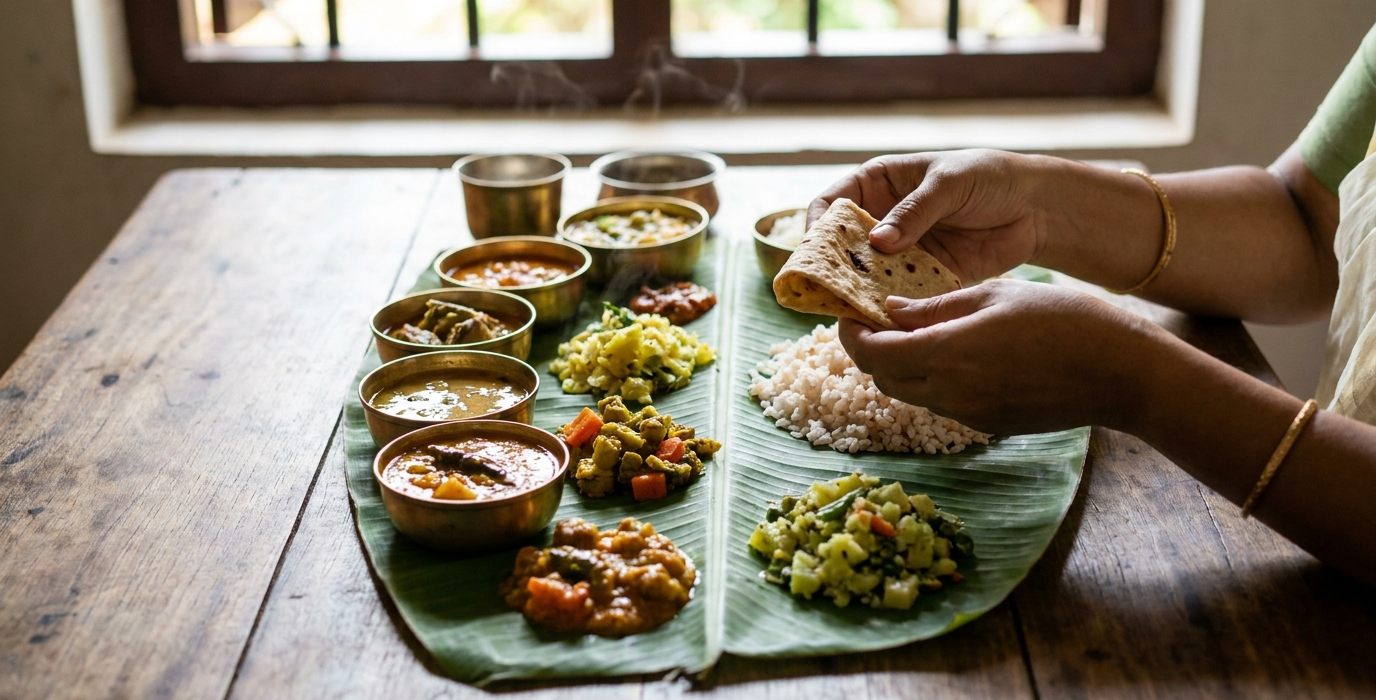
Think about the last time you sat down to a well-arranged South Indian thali. It’s a vibrant spectacle, a symphony of colours, textures, and aromas. This deliberate presentation is more than just aesthetically pleasing; it’s designed to engage all your senses, drawing you into the experience of eating. It’s an invitation to slow down, to observe, and to connect with the food before you. This initial visual engagement is the first step in mindful eating – acknowledging the food, its origins, and the effort that went into its preparation.
We often rush through meals, scrolling on our phones or lost in thought. The thali, however, demands our attention. Its very structure encourages us to consider each component individually before blending them into a harmonious whole. This practice helps us develop a deeper appreciation for the diverse flavours and nutritional profiles present on our plates. It’s a gentle reminder that food is not merely fuel, but a source of pleasure and well-being.
The Art of Balance: More Than Just a Plate
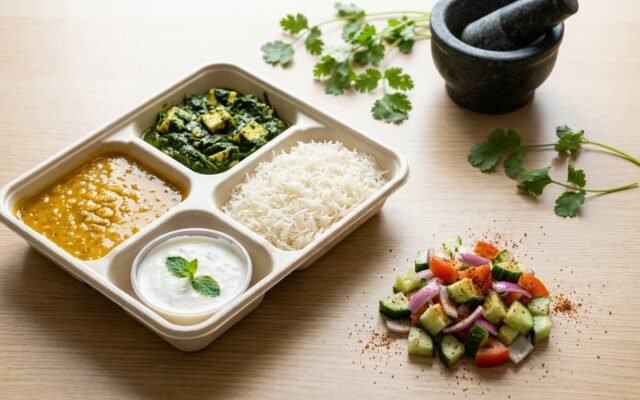
The South Indian thali is a masterclass in balance, a principle at the heart of mindful eating. It’s not just about the quantity of food, but the careful curation of different food groups and taste profiles. You’ll find a harmonious blend of carbohydrates from rice or roti, proteins from dals and legumes, healthy fats from coconut and ghee, and a generous serving of vegetables and greens. This thoughtful composition ensures that your body receives a wide spectrum of nutrients in a single meal.
Consider the placement of each dish on the thali. Typically, the rice sits centrally, often accompanied by sambar or rasam, the soupy gravies that provide moisture and flavour. Then come the dry vegetable preparations (poriyal), yogurt-based curries (curd rice, pachadi), and accompaniments like pickles and papad. Each element plays a specific role, contributing to the overall taste and nutritional completeness of the meal. This deliberate arrangement guides your eating experience, prompting you to consider the interplay of flavours and textures.
A truly remarkable aspect of the thali is its ability to cater to different dietary needs and preferences within a single meal. For instance, a vegan thali will feature plant-based proteins and avoid dairy, while a vegetarian option might include paneer or curd. This inherent flexibility underscores the thali’s adaptability and its focus on nourishing the individual. It teaches us to be mindful of what our bodies need, offering a variety of choices that can be combined to create a satisfying and wholesome meal.
Sensory Engagement: Tasting with Intention
Mindful eating is fundamentally about engaging your senses. The South Indian thali provides a perfect canvas for this. Before you even take a bite, pause. Observe the vibrant colours – the fiery red of a tomato chutney, the emerald green of a spinach poriyal, the creamy white of curd rice. Inhale the aromas – the comforting fragrance of cooked lentils, the zesty hint of tamarind, the subtle sweetness of coconut. This sensory immersion primes your palate and your mind for the experience ahead.
When you take your first bite, do so with intention. Chew slowly, allowing the flavours to unfold on your tongue. Notice the texture – is it crunchy, soft, chewy, smooth? Does the sambar’s tanginess complement the slight bitterness of a bitter gourd preparation? This deliberate exploration of taste and texture deepens your connection to the food and helps you recognize satiety cues more effectively. It’s about truly tasting your food, not just consuming it.
A surprising fact about the traditional thali is the intentional order in which certain dishes are often consumed. For instance, the rasam, a thin, peppery broth, is often savoured towards the end of the meal. It’s believed to aid digestion and cleanse the palate, preparing you for the final, cooling element – curd rice. This subtle sequencing, often passed down through generations, highlights a deep understanding of how food interacts with our bodies and senses, a practice that aligns perfectly with mindful eating principles.
The Rhythmic Flow: A Dance of Flavours
Eating a South Indian thali is often a rhythmic experience, a gentle dance of flavours and textures that unfolds with each spoonful. We learn to pair different elements, creating unique combinations with every bite. Perhaps you’ll mix a little sambar with your rice, then add a spoonful of a dry vegetable, followed by a dollop of curd. This intuitive process of combining and tasting is a form of mindful exploration, where you are actively involved in constructing your meal’s flavour profile.
This rhythmic consumption also encourages a natural pace. You’re not rushing to finish; you’re savoring the journey. The inclusion of cooling elements like curd rice, or a refreshing pachadi made with cucumber or yogurt, acts as palate cleansers and helps to regulate the intensity of other flavours. This thoughtful addition of contrasting elements ensures that your taste buds remain engaged without becoming overwhelmed, promoting a more enjoyable and sustained eating experience.
What many outside India might not realize is the deliberate way hands are used to eat a thali. While spoons are common, traditionally, eating with the right hand is a deeply ingrained practice. This tactile connection with food enhances the sensory experience, allowing you to feel the texture and temperature more directly. It’s a practice that fosters a more intimate connection with your meal, an aspect often lost when we rely solely on utensils.
Digestive Harmony: Nourishing from Within
Mindful eating extends beyond the act of consumption; it encompasses how our bodies digest and utilize the food. The South Indian thali, with its emphasis on a balanced mix of carbohydrates, proteins, fats, and fibre, is inherently designed to support digestive harmony. The inclusion of ingredients like ginger, asafoetida (hing), and tamarind in various preparations is not just for flavour; these are known for their digestive properties.
The slow, deliberate pace of eating a thali also contributes significantly to better digestion. When we eat mindfully, we chew our food more thoroughly, breaking it down into smaller particles and mixing it with saliva, which contains digestive enzymes. This initial stage of digestion, often rushed in fast eating, is crucial for efficient nutrient absorption and can help prevent common digestive issues like bloating and indigestion. The thali’s structure naturally encourages this thorough chewing.
A surprising insight into the digestive benefits of the thali lies in the traditional use of banana leaves as serving platters. These leaves are not just eco-friendly; they are believed to impart subtle health benefits and are naturally antibacterial. The slight moisture and natural compounds released from the leaf can interact with the food, potentially enhancing its digestibility and adding a unique, earthy flavour that’s hard to replicate. This ancient practice speaks volumes about the holistic approach to food and well-being.
Beyond the Plate: Cultivating a Mindful Lifestyle
The lessons learned from a South Indian thali can extend far beyond the dining table, influencing our overall lifestyle. By practicing mindful eating, we develop a greater awareness of our body’s signals – when we are truly hungry, when we are full, and what foods make us feel energized versus sluggish. This self-awareness is a powerful tool for making healthier choices in all aspects of our lives.
Taking the time to prepare and share meals, as is often the case with a traditional thali, also fosters a sense of connection and gratitude. It’s an opportunity to pause, reflect on the journey of the food from farm to plate, and appreciate the people involved in its creation. This sense of appreciation can transform our relationship with food from one of obligation to one of joy and respect.
Ultimately, embracing the principles inherent in the South Indian thali allows us to cultivate a more conscious and fulfilling existence. It’s about finding joy in simplicity, appreciating balance, and nurturing our bodies and minds with intention. As we navigate the complexities of modern life, these ancient culinary wisdoms offer a pathway to greater well-being, proving that sometimes, the most profound lessons are served on a simple, yet magnificent, plate.