The aroma of spices, the vibrant colours, the sheer comfort of a home-cooked Indian meal – it’s a sensory symphony that many of us crave. Yet, the reality of modern life often leaves us reaching for less-than-ideal options. We envision elaborate preparations, hours spent chopping and simmering, a culinary marathon that feels impossible on a Tuesday evening. But what if I told you that the secret to enjoying authentic, wholesome Indian food, even on your busiest days, lies not in more time, but in smarter strategies? It’s about embracing the art of meal prep, Indian-style, making delicious and healthy eating an achievable everyday joy.
Key Takeaways:
- Discover time-saving techniques for prepping Indian ingredients and meals.
- Learn how to build balanced, nutritious Indian meals that taste incredible.
- Explore smart storage solutions to keep your prepped food fresh and flavourful.
- Understand the cultural significance of batch cooking in Indian households.
- Gain confidence to adapt traditional recipes for modern meal prep.
The Humble Dabba: A Legacy of Prepped Meals
Long before the concept of “meal prep” became a global trend, Indian kitchens were masters of it. Think of the iconic dabba, the tiered lunchbox carried by thousands of dabbawalas in Mumbai. Each dabba is a meticulously prepared, individually portioned meal, often assembled from components cooked in advance. This isn’t just about convenience; it’s deeply ingrained in our culture, a testament to the love and care that goes into feeding our families. My grandmother, who lived in a small village near Jaipur, would spend her mornings preparing a variety of chutneys, pickles, and doughs. These weren’t just condiments; they were flavour bases, ready to be transformed into a quick sabzi or a comforting dal by midday. The principles she employed – batch cooking grains, pre-chopping vegetables, and making versatile spice pastes – are the very foundations of effective meal prep today. We can learn so much from these traditional methods, adapting them for our modern, often faster-paced lives, without losing the soul of our cuisine. The sheer efficiency and resourcefulness of these culinary practices are truly inspiring. It’s about using your time wisely, understanding which elements can be prepared ahead and how they can be combined later. The dabba system itself, a marvel of logistics and home cooking, proves that delicious, healthy Indian food can be a daily reality, even for those on the go. Imagine the satisfaction of opening your dabba to find perfectly cooked rice, a flavourful dal, and a vibrant vegetable stir-fry, all prepared with intention and foresight. This isn’t a distant dream; it’s a time-honoured tradition we can all embrace.
Mastering the Spice Base: Your Flavor Foundation
The heart of any great Indian dish lies in its spice blend, and for meal prep, the secret weapon is the spice base, or masala. Instead of dicing onions, mincing ginger, and crushing garlic every single time you want to cook, you can create these flavour powerhouses in advance. Picture this: a Sunday afternoon dedicated to making a large batch of onion-tomato masala. You can sauté a generous amount of finely chopped onions until golden brown, then add ginger-garlic paste and your core ground spices like turmeric, coriander, and cumin. Cook this down until oil separates, a sign of a well-developed masala. Let it cool completely, then portion it into airtight containers or ice cube trays and freeze. This single step dramatically reduces your cooking time on busy weekdays. A typical onion-tomato masala forms the base for countless dishes, from simple lentil dals and vegetable curries to richer gravies. You can pull out a portion, sauté it briefly, add your main ingredient (lentils, vegetables, paneer), and have a delicious meal ready in under 20 minutes. Another essential base is a ginger-garlic paste, which lasts for a week in the refrigerator or can be frozen for longer. Freshly ground spice powders are also key. Dedicate some time to grinding whole spices like cumin seeds, coriander seeds, and even chilies if you use them frequently. Storing these freshly ground spices in airtight jars preserves their potency and aroma, a far cry from pre-ground versions that lose their punch quickly. The depth of flavour achieved by starting with a well-made spice base is unparalleled. It’s the difference between a bland, hastily made dish and one that sings with authentic Indian character. I remember visiting a friend in Delhi who had a freezer stocked with various pre-made masala cubes – one for dum aloo, another for chana masala, and a general purpose one. It was a revelation in efficient home cooking. This proactive approach to flavour building is what transforms meal prep from a chore into a culinary advantage.
The Art of Batch Cooking Grains and Lentils
Grains and lentils are the bedrock of Indian cuisine, providing essential carbohydrates, protein, and fiber. Batch cooking these staples is a game-changer for weeknight meals. Imagine the time saved by having perfectly cooked rice, quinoa, or even millets ready to go. For rice, you can cook a large batch of basmati or brown rice and refrigerate it for up to three days. When you need it, simply reheat it in a pan with a splash of water or in the microwave. For a flavour boost, you can even infuse your cooking water with a bay leaf, cardamom pod, or a clove for subtly aromatic rice. Lentils, or dal, are another meal prep hero. Different dals require varying cooking times, so it’s wise to cook them separately based on your weekly menu. For instance, cooking a pot of simple yellow moong dal takes about 20 minutes and can be used as a base for a quick dal tadka or added to vegetable stews. Red lentils (masoor dal) cook even faster. Once cooked, you can refrigerate the plain dal and then temper it with spices, onions, tomatoes, or herbs just before serving. This tempering, or tadka, is where the magic happens, transforming a simple lentil into a flavourful dish. Don’t underestimate the power of cooking larger quantities of whole grains like barley or millets. These are fantastic for adding texture and nutrition to salads, soups, or as a standalone side dish. Many Indian families also prepare large batches of roti or paratha dough. While the cooked rotis are best fresh, having the dough ready means you can whip up a few hot rotis in minutes. You can also freeze portions of the dough, thawing them overnight in the refrigerator. A surprising fact is that some traditional Indian methods involve cooking grains like rice in large clay pots over slow-burning embers, a form of batch cooking that ensured sustenance for the entire day. This ancient wisdom highlights the enduring importance of preparing staples in advance. The consistency and ease of having these foundational elements ready cannot be overstated. It liberates you from the daily grind of cooking these basic components, allowing you to focus on the more exciting parts of assembling your meal.
Strategic Vegetable Prep: Chopping Smarter, Not Harder
Vegetables are the vibrant soul of Indian cooking, offering a spectrum of flavours and nutrients. Prepping them efficiently for meal prep is key to unlocking healthy Indian meals throughout the week. The most common approach is pre-chopping. Onions, garlic, and ginger, as mentioned, are crucial. But extend this to other vegetables too. Carrots, bell peppers, and cauliflower can be chopped and stored in airtight containers. For leafy greens like spinach or fenugreek leaves (methi), wash them thoroughly, dry them completely (a salad spinner is your best friend here), and then chop. Store them in a bag lined with a paper towel to absorb excess moisture. Harder vegetables like potatoes and sweet potatoes can be peeled and cubed, but it’s best to store them submerged in water in the refrigerator to prevent browning. Blanching is another excellent technique for certain vegetables. For example, blanching florets of cauliflower or broccoli for 2-3 minutes in boiling water, then shocking them in ice water, helps retain their colour and crispness, making them ready to be added to stir-fries or curries. Even chopping herbs like cilantro and mint can be done ahead. Store them in a small container with a damp paper towel, or even better, freeze them in ice cube trays with a little water or oil. This preserves their freshness and makes them easy to add to your dishes. A fascinating aspect of Indian vegetable preparation is the concept of bhunao, the slow sautéing of ingredients until they soften and release their flavours. When you pre-chop your vegetables, you’re essentially setting yourself up for a faster bhunao process later. Instead of spending 15-20 minutes just getting your vegetables ready, you might only spend 5-10 minutes sautéing pre-prepped ingredients. This strategy is particularly effective for dishes like mixed vegetable curries or sabzis. Remember to separate vegetables that brown easily (like potatoes and apples) from those that don’t. A common mistake is to chop everything together. By being mindful of how different vegetables react to air exposure, you can ensure your prepped components remain fresh and appealing. This deliberate approach to vegetable prep is what makes spontaneous healthy Indian meals a reality.
The Power of Versatile Pre-Cooked Components
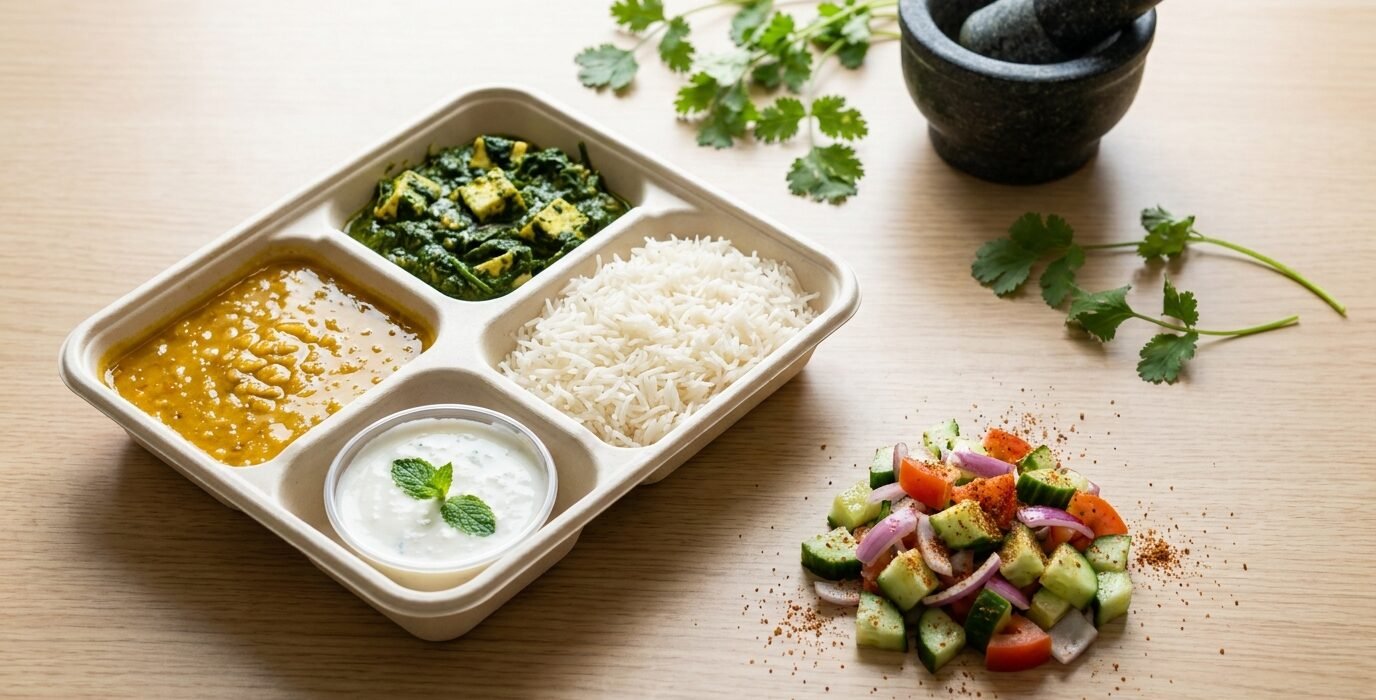
Beyond grains, lentils, and basic vegetable prep, think about creating pre-cooked components that can be mixed and matched to create a variety of meals. This is where the true artistry of Indian meal prep shines. For example, cook a large batch of plain paneer (Indian cottage cheese) or tofu. You can then use this as a protein base for dishes like Palak Paneer (spinach and paneer), Matar Paneer (peas and paneer), or simply sauté it with spices and vegetables for a quick stir-fry. Similarly, pre-cook some chickpeas or kidney beans. These are incredibly versatile and can be added to salads, used to make chana masala, or even blended into dips. Another fantastic component to prepare in advance is a good quality yogurt or curd. While fresh curd is best, you can make a large batch and use it as a base for raitas, smoothies, or even as a cooling accompaniment to spicy meals. For those who enjoy them, pre-roasting vegetables like eggplant or bell peppers can save significant time. Roasted eggplant, for instance, can be mashed to make Baingan Bharta, a smoky and flavourful dish, or added to curries. Roasted bell peppers add a sweet, smoky dimension to salads and sandwiches. Consider also making a batch of simple fried onions. These crispy, golden onions (birista) are a flavour enhancer for so many dishes, from biryanis to dals, and can be stored in an airtight container for weeks. I once learned from a home cook in Lucknow that she always keeps a jar of her homemade tamarind pulp ready. This concentrated tamarind extract can be used to add a tangy flavour to dals, chutneys, and various gravies, saving the time and effort of soaking and straining tamarind each time. This “component cooking” approach allows you to assemble diverse meals with minimal effort on the day of eating. It’s about having building blocks that can be quickly transformed. This strategy also helps reduce food waste, as you’re using ingredients more efficiently. The ability to pull together a complex-tasting Indian meal from pre-prepared elements is incredibly empowering. It demonstrates that with a little foresight, you can enjoy the richness of Indian cuisine without sacrificing precious time.
Rethinking Traditional Recipes for the Meal Prep Kitchen
Adapting traditional Indian recipes for meal prep requires a nuanced understanding of ingredients and cooking methods. Not every dish is a prime candidate for advance preparation. Delicate dishes like dosas or idlis are best made fresh. However, many classics can be deconstructed and reassembled, or slightly modified. For curries and dals, the principle is to cook the base and the main ingredients separately if possible, or to cook them together but store them in a way that allows for reheating without compromising texture. For instance, a rich Korma or Butter Chicken can be made and frozen, but it’s often best to cook the paneer or chicken separately and add it when reheating the gravy to prevent it from becoming tough. For vegetable dishes (sabzis), consider the texture. Root vegetables like potatoes and carrots hold up well. Softer vegetables like okra or certain gourds might become mushy if overcooked or reheated. In such cases, it’s better to prep these vegetables and add them towards the end of cooking on the day you plan to eat. Another key adaptation is in the use of tempering or tadka. Often, the final tadka is what gives a dish its final burst of flavour and aroma. While you can pre-make a tadka and store it, it’s often more impactful to add it fresh just before serving. This might involve a quick sauté of mustard seeds, cumin seeds, curry leaves, and dried red chilies in ghee or oil. This step takes mere minutes and elevates the dish significantly. Consider the humble poha (flattened rice). While it’s typically a breakfast dish, a well-prepped version can be a quick lunch. You can pre-wash and drain the poha, and pre-chop your vegetables. When ready to eat, it’s a matter of a few minutes to sauté the spices and vegetables, then add the poha and mix. A surprising revelation is that some Indian regional cuisines already have built-in meal prep elements. For example, in South India, preparing a large batch of sambar powder or a tamarind-based gravy like rasam concentrate can be considered a form of meal prep. These concentrates can then be quickly diluted and simmered with fresh vegetables or lentils. Embracing this adaptable mindset is crucial. It’s not about abandoning tradition, but about finding intelligent ways to weave its flavours into the fabric of our busy lives. The goal is delicious, healthy, and authentic Indian food, made accessible every single day.