The skies opened up this week, not with a gentle sigh of relief, but with a torrent that has utterly swamped communities across India. From the jam-packed arteries of Mumbai to the tranquil hamlets of Assam, this monsoon has unleashed its raw power, leaving behind a landscape etched with devastation and the unwavering strength of the human spirit. Homes lie submerged, livelihoods have been swept away by the churning waters, and countless lives have been irrevocably altered by this annual, yet perpetually surprising, force of nature.
Key Takeaways:
- The current monsoon season has delivered a deluge, with rainfall records shattered in several regions, leading to widespread flooding and the displacement of thousands.
- The states of Assam, Gujarat, Maharashtra, and Bihar are bearing the brunt, each confronting distinct and formidable challenges.
- The economic fallout is immense, with agriculture, vital infrastructure, and local businesses facing catastrophic damage.
- While rescue and relief efforts are in full swing, the sheer scale of this disaster demands sustained support, both nationally and from the global community.
- The increasing intensity and erratic nature of these monsoon events are becoming inextricably linked to the undeniable reality of climate change.
Assam’s Endless Tears: The Brahmaputra’s Wrath
Assam finds itself, yet again, at nature’s mercy. The mighty Brahmaputra River, a lifeline for millions, has transformed into a terrifying behemoth, bursting its banks and gobbling up vast swathes of land. Villages that once stood with pride are now underwater tombs, their inhabitants forced to clamber onto rooftops or seek shelter in makeshift relief camps. We witnessed families wading through water that reached their chests, clutching their few salvaged belongings, their faces a tapestry of fear and utter exhaustion. The sheer scale of the destruction is enough to break your heart. Children, their eyes wide with a bewildering confusion, are being carried by their parents on precarious rafts fashioned from whatever they could find. The iconic Kaziranga National Park, a sanctuary for the endangered one-horned rhinoceros, is also submerged, sparking grave concerns for the safety of its precious wildlife. Reports indicate that over 70% of the park is under water, forcing animals to seek higher ground, often leading to perilous encounters with humans or making them tragically vulnerable to poachers. The district of Dhemaji, in particular, has been devastated, with accounts of entire villages vanishing beneath the relentless flow. The rice paddies, the very bedrock of the region’s economy, lie drowned, casting a long, bleak shadow over the upcoming harvest season. This is not merely a natural disaster; it is an existential threat to communities that have coexisted with this river for generations. The annual cycle of floods has always been a part of life here, but the intensity and duration this year feel different, more menacing, a harbinger of what’s to come.
Gujarat’s Resilience Tested: A Coastal Calamity
In Gujarat, the monsoon has brought a different, yet equally devastating, kind of havoc. While the Brahmaputra’s fury is marked by overflowing rivers, Gujarat is battling a relentless downpour that has turned its vibrant cities and coastal towns into waterlogged battlegrounds. Ahmedabad, a city synonymous with entrepreneurial spirit, has seen significant portions submerged, bringing traffic to a standstill and plunging daily life into chaos. The historic walled city, a UNESCO World Heritage site, now faces the alarming risk of damage to its ancient edifices. The coastal districts, including Kutch and Jamnagar, have been hit with particular ferocity. The sea, usually a source of livelihood through fishing, has become a menacing threat, with high tides exacerbating the inland flooding. We spoke to Ramesh Bhai, a fisherman from Mandvi, his voice thick with sorrow as he recounted losing his entire fleet of boats. “My grandfather and father were fishermen. This is all I know. Now, everything is gone. The sea gave us life, and now it has taken it away,” he lamented, his voice choked with emotion. The agricultural heartland of Saurashtra, famed for its groundnuts and cotton, has suffered immense losses, with standing crops rotting in the sodden fields. The government has deployed the National Disaster Response Force (NDRF) and the State Disaster Response Force (SDRF) to spearhead rescue operations, evacuating thousands from low-lying areas. However, the sheer volume of rainfall – some areas receiving over 400 mm in a single day – has overwhelmed drainage systems and infrastructure designed for a different era. The resilience of Gujarat is legendary, but this year, the challenge is truly immense.
Maharashtra’s Urban Deluge: Mumbai’s Familiar Struggle
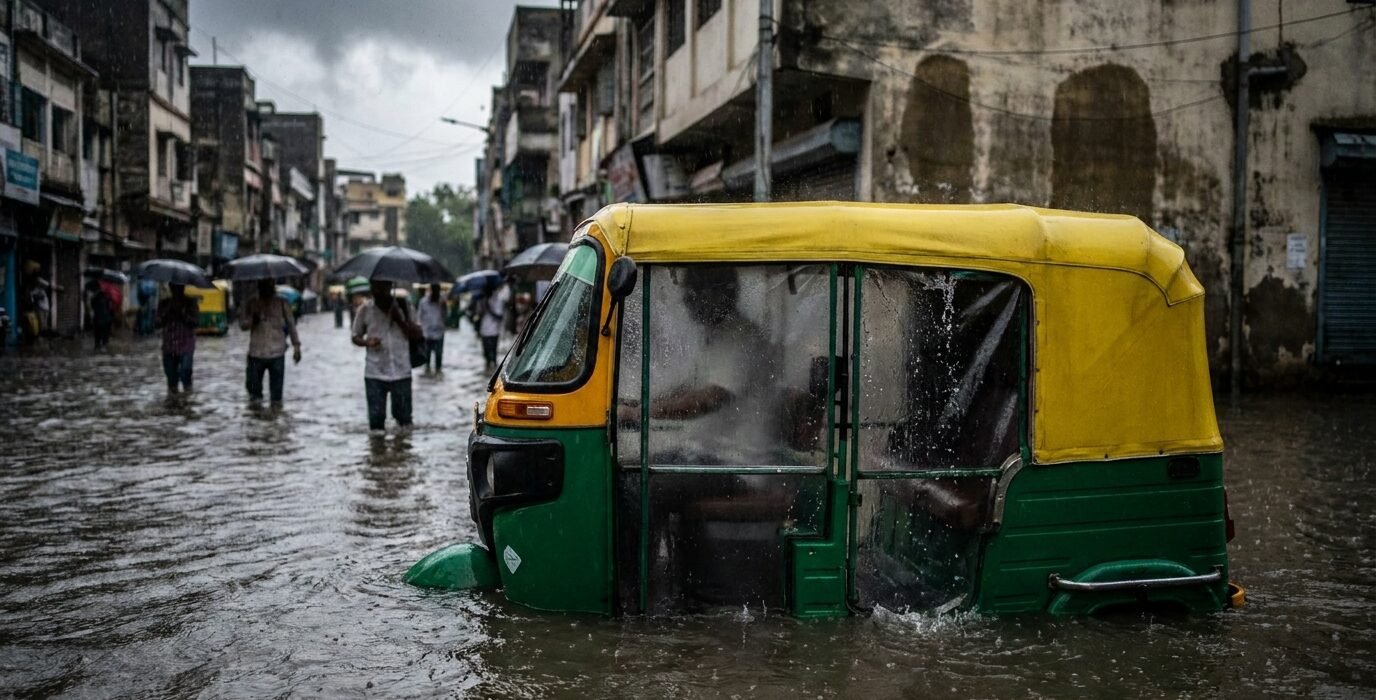
For Mumbai, the monsoon is an annual ritual, a stern test of its indomitable spirit. This year, however, the rains have pushed the city to its absolute limits. The financial capital, with its teeming population and often strained urban planning, has once again succumbed to the deluge. Local trains, the very lifeline of millions, have been crippled, roads have transformed into makeshift swimming pools, and lakhs of Mumbaikars have found themselves stranded. The familiar, unsettling scenes of auto-rickshaws bravely navigating waterlogged streets and weary commuters wading through knee-deep water are a stark reminder of the city’s persistent vulnerability. The suburban areas, often built on reclaimed marshy land, are the worst affected. Dharavi, one of Asia’s largest slums, faces a heightened risk of waterborne diseases due to the overflowing sewage systems. Dr. Anjali Sharma, a public health expert, voiced her grave concerns: “With stagnant water and compromised sanitation, the risk of cholera, dengue, and leptospirosis is extremely high. We need immediate public health interventions.” The Indian Meteorological Department (IMD) has issued red alerts for the city, signalling the likelihood of extremely heavy rainfall. While the city’s infrastructure has seen improvements over the years, the sheer intensity of this year’s rainfall has brutally exposed its limitations. The sight of the iconic Marine Drive partially submerged is a powerful, humbling symbol of nature’s might against urban ambition. The loss of property and the disruption to businesses, even for a few days, send ripples through the entire national economy.
Bihar’s Flood Plains: A Cycle of Misery
Bihar, a state perpetually caught in the relentless grip of floods, is facing yet another year of widespread inundation. The Kosi River, often tragically dubbed the “Sorrow of Bihar,” has once again lived up to its grim moniker, leaving a trail of extensive damage in its wake. Villages in districts like Supaul, Madhepura, and Saharsa are submerged, forcing hundreds of thousands to abandon their homes. The sheer force of the Kosi’s flow has eroded riverbanks and obliterated homes and agricultural land. Relief camps are overflowing, and the challenge of providing adequate food, water, and medical aid to the displaced population is staggering. We spoke to Sunita Devi, a teacher from a village near the Kosi embankment, her voice trembling with despair. “Every year, we prepare for the floods. We build our houses higher, we store our grain. But this year, the water came so fast, so high. It washed away everything. My school is gone. My home is gone. What will become of us?” she asked, tears streaming down her weathered face. The recurring nature of these floods in Bihar highlights a deep-seated systemic issue of inadequate flood management and the urgent need for long-term solutions that go beyond temporary relief. The agricultural sector, the very backbone of Bihar’s economy, has been decimated, with standing crops of rice and maize completely destroyed. This will undoubtedly lead to food shortages and immense economic hardship for months to come. The state government is working tirelessly, but the sheer scale of this disaster is, quite simply, overwhelming.
The Economic Undercurrent: Beyond the Devastation
The human toll of these floods is immeasurable, but the economic consequences are equally significant and far-reaching. India’s economy, so heavily reliant on its agricultural sector, is particularly vulnerable to such climate-related disruptions. The damage to crops translates directly into devastating losses for farmers, reduced food supplies, and inevitably, increased food prices for consumers across the country. This year’s monsoon has already dealt a severe blow to standing crops like rice, cotton, and pulses in several key agricultural states. Beyond agriculture, the floods wreak havoc on essential infrastructure. Roads are washed away, bridges collapse, and power lines are damaged, leading to prolonged power outages and communication disruptions. The cost of repairing this damaged infrastructure runs into billions of rupees, diverting precious funds that could be channeled into vital development projects. Local businesses, especially the small and medium enterprises (SMEs) operating in flood-affected areas, face immense challenges. Inventory is destroyed, supply chains are severed, and customers are displaced. For many, recovery means starting from absolute scratch. The tourism sector, another vital contributor to India’s economy, also suffers. Popular tourist destinations are often rendered inaccessible or damaged, leading to a cascade of cancellations and significant revenue losses. The insurance sector braces itself for a surge in claims, impacting profitability and potentially leading to increased premiums in the future. A surprising economic consequence, often overlooked, is the strain on public health spending. With the inevitable increase in waterborne diseases and injuries, the healthcare system faces an additional burden, diverting resources from other critical areas.
A Warming Planet’s Fury: Climate Change and the Monsoon
The increasing intensity and unpredictability of India’s monsoons are no longer isolated incidents; they are a stark and undeniable manifestation of a warming planet. While monsoons have always been characterized by their inherent variability, scientists are increasingly linking the extreme weather events we are witnessing to anthropogenic climate change. The Indian subcontinent, with its vast coastline and a predominantly agrarian population, is particularly susceptible to the impacts of global warming. Rising sea temperatures contribute to more intense cyclones and fundamentally altered rainfall patterns. Melting glaciers in the Himalayas, the very source of many of India’s major rivers, can lead to both increased flooding in the short term and critical water scarcity in the long term. The Intergovernmental Panel on Climate Change (IPCC) reports have consistently highlighted the extreme vulnerability of South Asia to climate change impacts, including an increased frequency and intensity of extreme rainfall events. This year’s monsoon serves as a potent wake-up call. It underscores the urgent need for India to accelerate its transition to renewable energy sources, enhance its climate adaptation strategies, and crucially, invest in climate-resilient infrastructure. The question is no longer if climate change will impact India, but rather how severely it will continue to do so. The resilience of communities, while deeply inspiring, cannot indefinitely compensate for systemic environmental shifts. The global community also has a crucial role to play in reducing greenhouse gas emissions and providing essential financial and technological support to vulnerable nations like India.
Hope Amidst the Waters: Stories of Resilience and Relief
Despite the overwhelming devastation, the spirit of India shines through in remarkable acts of courage, profound compassion, and unwavering resilience. In the midst of submerged villages and overflowing rivers, we witness extraordinary stories of human fortitude. Local fishermen in coastal Gujarat, even after losing their own boats, have voluntarily offered their services to rescue stranded villagers. In Assam, communities are rallying together to share scarce resources, with neighbours helping neighbours reach safer ground. The Indian Army, Navy, and Air Force are working round the clock, deploying helicopters, boats, and rescue teams to reach marooned populations. NDRF and SDRF personnel are demonstrating incredible bravery, often risking their own lives to save others. We heard about a young volunteer, Priya, from Bihar, who organized a makeshift relief camp in her partially submerged home, providing food and shelter to over fifty people. “We are all in this together,” she said, her voice tired but resolute. “We must help each other. This is our home, and we will rebuild it.” The government, while grappling with immense logistical challenges, has mobilized resources for relief and rehabilitation, distributing essential food, water, and medical supplies. International aid organizations are also stepping in, providing much-needed support. These stories of resilience are a powerful reminder that even in the face of nature’s relentless fury, the human spirit remains unbroken. They offer a beacon of hope, illustrating that collective action and unwavering determination can indeed pave the way for recovery and rebuilding.
A Call to Action: Looking Beyond Immediate Relief
As the waters slowly recede, the long and arduous process of rebuilding will begin. This monsoon season has been a brutal, unforgettable reminder of India’s vulnerability to extreme weather events. While immediate relief efforts are undeniably crucial, the nation must also confront the underlying causes and develop long-term strategies for disaster preparedness and climate resilience. Investing in robust flood management systems, improving urban planning to withstand heavy rainfall, and strengthening early warning systems are paramount. Furthermore, India’s commitment to climate action needs to be significantly amplified. This includes accelerating the transition to clean energy, promoting sustainable land use practices, and crucially, protecting its vital ecosystems like forests and wetlands, which act as natural buffers against floods. The narrative surrounding monsoons needs to shift from one of annual inevitability to one of proactive management and adaptation. We must learn from each flood event, integrate those lessons into our policies, and foster a culture of preparedness at every level of society, from individual households to national policy-making bodies. The resilience shown by the people of India is remarkable, but it is time for a proactive, rather than reactive, approach to this recurring crisis.