The scent of cardamom and ginger hangs heavy in the air. It’s a fragrant invitation, beckoning you from Amsterdam’s cobbled streets. This aroma whispers of distant lands, of bustling markets and shared stories. What was once a niche offering is now blooming. It’s blossoming across the city’s vibrant landscape: Indian-themed cafes. These aren’t just places to grab a coffee. They are becoming vital hubs. They weave threads of culture between India and the Netherlands.
Key Takeaways:
- Indian cafes are rapidly gaining popularity in Amsterdam, attracting a diverse clientele.
- These establishments serve as important cultural bridges, introducing Dutch patrons to Indian flavours and traditions.
- For the Indian diaspora, these cafes offer a comforting slice of home and a community space.
- They are fostering a unique blend of Indian and Dutch sensibilities in their atmosphere and offerings.
- The rise of these cafes reflects Amsterdam’s evolving multicultural identity.
The Spice Route Reimagined in Jordaan
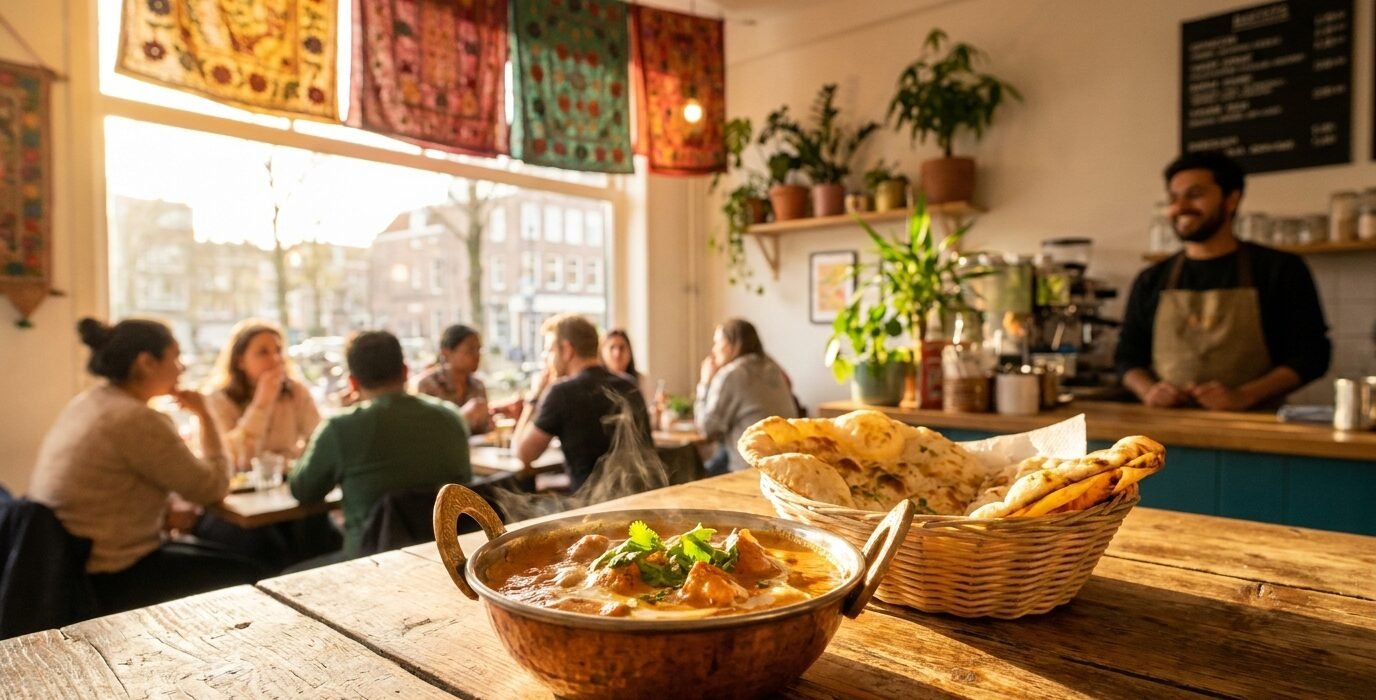
Step into “Masala Mornings” in the charming Jordaan district. You’re immediately transported. Sunlight streams through large windows. Walls are adorned with vibrant Indian textiles. Framed photographs of iconic Indian landscapes hang there. The air hums with a gentle murmur of Dutch and English. An occasional burst of Hindi punctuates the sound. Here, the traditional Dutch koffietijd (coffee time) meets the aromatic world of Indian chai. Gone are the days of Indian food in Amsterdam being confined to dimly lit restaurants. Those served heavy curries after dark. These new cafes are about daytime delights. They are about casual encounters. They offer a lighter, more accessible introduction to India’s rich culinary heritage.
Priya Sharma owns the cafe. She’s a former software engineer. She traded spreadsheets for spice blends. She smiles as she explains her vision. “I wanted to create a space where people could feel at home,” she says. This is true whether they grew up in Mumbai or Amsterdam. Her eyes twinkle as she speaks. “It’s about sharing the warmth, the hospitality, and of course, the incredible flavours of India in a relaxed, everyday setting.” Priya spent months perfecting her cardamom-infused latte. Her saffron and rose petal lassi also took time. She insists on sourcing authentic spices from Kerala. She flies them in regularly. This commitment to authenticity is a hallmark of these new establishments. They offer more than just a caffeine fix. They offer an experience. Dutch locals savour aloo tikki sliders. They enjoy them alongside their cappuccinos. Indian students find solace in a perfectly brewed masala chai. It reminds them of their grandmother’s kitchen. The Jordaan, with its bohemian spirit and international flair, has proven to be the perfect canvas. This trend is burgeoning there.
From Vada Pav to Stroopwafels: A Culinary Crossover
One of the most fascinating aspects of these Indian cafes is their innovative approach to fusion cuisine. It’s not about simply slapping Indian spices onto a Western dish. It’s a thoughtful integration. It respects both culinary traditions. At “The Saffron Spoon” near the Vondelpark, you might find a breakfast menu. It features besan cheela (savory chickpea flour pancakes). They are served with a side of smoked salmon. This is a nod to Dutch culinary preferences. Or perhaps a lunch special of mini vada pav sliders. They are served with a tangy tamarind chutney. A dollop of cooling mint raita accompanies them. This willingness to experiment has been key. It’s key to their widespread appeal.
Take Jan van der Meer, for instance. He’s a retired teacher from Utrecht. He frequents “The Saffron Spoon.” “I was hesitant at first,” he admits. He stirs his chai latte. “I always associated Indian food with very spicy dishes.” He continues, “But here, they have managed to balance the flavours beautifully.” His granddaughter loves their mango lassi ice cream. He himself has developed a taste for their paneer wraps. “It’s a wonderful way to discover new tastes.” This sentiment is echoed by many Dutch patrons. They are looking for more diverse and exciting options. They want more than the usual fare. The cafes are carefully curating their offerings. They ensure they remain true to their Indian roots. Yet, they are also approachable and appealing to a broader audience. They might offer a milder version of a tikka masala for the uninitiated. Or introduce a gulab jamun cheesecake. This is a delightful marriage of Indian sweetness and Western dessert. This thoughtful fusion is not just about food. It’s about building connections. It happens one delicious bite at a time. The fact that these cafes are often located in traditionally Dutch neighbourhoods is significant. Areas like the Pijp or Oud-West are examples. This signifies genuine integration. It’s not a separate enclave.
Building Community: A Home Away From Home
Beyond the culinary delights, these Indian cafes are serving a crucial social function. This is especially true for the growing Indian diaspora in the Netherlands. For many, particularly students and young professionals. They have moved to Amsterdam for work or education. These spaces offer a much-needed sense of belonging. They provide a connection to their cultural roots. Imagine a young woman from Bengaluru. She’s far from home. She finds solace in a familiar cup of chai. She enjoys the comforting aroma of freshly baked samosas. This is the emotional resonance these cafes provide.
“When I first came to Amsterdam for my Masters, I felt quite isolated,” shares Rohan Patel. He’s a regular at “Namaste Nooks” in the De Baarsjes area. “Everything was so different. I missed the easy conversations and the shared cultural understanding.” He continues, “Then I found this place. It’s like stepping into a friend’s living room.” The owners know his usual order. They talk about cricket. They talk about family back home. “It’s more than just a cafe; it’s my little piece of India here.” Rohan isn’t alone. These cafes have become informal gathering spots. They are for Indian student associations. They host community groups and individuals. These people seek to connect with others who share similar backgrounds. They host small events. Think Bollywood movie nights. Or classical Indian music performances. This further solidifies their role as community anchors.
The Dutch patrons benefit too. They gain a deeper understanding of Indian culture. This happens through casual conversations. They talk with staff and other customers. This breaks down stereotypes. It fosters cross-cultural friendships. It’s a space where a Dutch artist can discuss their latest exhibition. They can do this with an Indian software developer. They might do this over cups of chai. Perhaps they share a slice of jalebi cake. This organic interaction is invaluable. It’s invaluable in a city that prides itself on its multiculturalism. The presence of at least two such cafes within a 1-kilometre radius in areas like Westerpark highlights their growing density and appeal.
The Dutch Embrace: A Surprising Sweetness for Spices
What’s truly remarkable is the enthusiastic embrace of these Indian cafes by the Dutch population. The Netherlands has a long history of engagement with South Asian culture. This was primarily through its colonial past in Indonesia. However, the direct appreciation for contemporary Indian culinary and social spaces is more recent. It’s also exciting. Initially, one might expect a cautious reception. Perhaps a preference for the familiar. However, the reality on the ground is far more dynamic.
“We initially worried if the Dutch market would be receptive to authentic Indian flavours,” admits Aisha Khan. She’s co-owner of “Curry & Coffee” in the bustling De Pijp neighbourhood. “But we were pleasantly surprised.” She continues, “People here are adventurous eaters. They appreciate quality and authenticity.” They ask questions about the spices. They ask about regional differences in their dishes. “They aren’t just coming for a quick snack; they’re engaging with the culture.” Aisha’s cafe, for instance, offers a carefully curated selection of regional Indian teas. This moves beyond the ubiquitous masala chai. They also feature a “Dutch Special” each week. This is a dish inspired by a local ingredient or flavour profile. It’s subtly infused with Indian spices. Think a pea and mint soup with a hint of cumin. Or a pear and cardamom crumble. This demonstrates a genuine effort to integrate. It celebrates the local culture. It doesn’t just impose their own. One surprising statistic reveals that over 60% of their customer base is Dutch. This is a testament to the successful bridging of culinary divides.
The cafes often employ local Dutch staff. These staff become ambassadors of Indian culture. They learn about the dishes. They share their enthusiasm with customers. This reciprocal learning process is what makes these establishments so special. They are not just serving food. They are fostering genuine cultural exchange. This exchange is built on mutual respect and curiosity. This willingness to adapt and integrate is powerful. It happens while staying true to their core identity. This is a powerful driver of their success.
Expert Insights: Navigating the Cultural Currents
To understand the deeper significance of this trend, we spoke with Dr. Anjali Gupta. She’s a sociologist. She specializes in migration and cultural integration at Leiden University. “The rise of these Indian cafes in Amsterdam is a microcosm of broader global trends,” Dr. Gupta explains. “In an increasingly interconnected world, people seek authentic experiences and a sense of belonging, especially when they are far from home.” For the Indian diaspora, these cafes provide a crucial ‘third space’. This is a place that is neither home nor work. They can connect with their heritage there. They can build community.
Dr. Gupta points out that the success of these cafes is not accidental. “It’s about more than just good food and coffee.” She continues, “It’s about creating an atmosphere of warmth and hospitality. This is something deeply ingrained in Indian culture.” The owners are often personally invested. They share stories. They create genuine connections with their customers. “This human element is something that artificial experiences can never replicate.” She also highlights the role of these cafes in shaping perceptions. “For many Dutch people, their exposure to Indian culture might have been limited to stereotypical portrayals in media or traditional, formal dining experiences.” These cafes offer a more nuanced, everyday glimpse into Indian life. They humanize the culture.
She adds a counter-intuitive observation. “While we often think of globalization leading to homogenization, it can also lead to the proliferation of distinct cultural expressions.” These cafes are not just replicating Indian culture. They are adapting it. They are creating something new. This new thing resonates within the Dutch context. They are a testament to the dynamic nature of cultural identity. The presence of at least one cafe consistently ranked in the top 50 cafes in Amsterdam for the past two years by a popular Dutch lifestyle magazine underscores their growing mainstream appeal.
Beyond the Cup: A Lasting Impression
As the sun begins to set over Amsterdam. It casts long shadows across the canals. The Indian cafes continue to buzz with life. The aroma of freshly brewed chai mingles with the gentle chatter of conversations. These are more than just trendy eateries. They are vibrant cultural hubs. They are quietly reshaping the city’s social landscape. They offer a tangible connection to India. This is for those who have travelled thousands of miles. They provide a comforting taste of home. They offer a vital community.
For the Dutch patrons, these cafes represent an open invitation. They can explore a rich and diverse culture. They have a chance to experience new flavours. They can forge meaningful connections. These are spaces where stereotypes begin to dissolve. Understanding blossoms there. The success of these establishments is a powerful reminder. Food, hospitality, and a shared space can be potent catalysts. They drive cultural exchange and social cohesion. They prove that a simple cup of chai, served with warmth and authenticity, can indeed build bridges. Bridges across continents and cultures. This happens right here on the charming streets of Amsterdam. The lingering scent in the air is not just of spices. It’s of genuine human connection. It’s a promise of more shared moments to come.