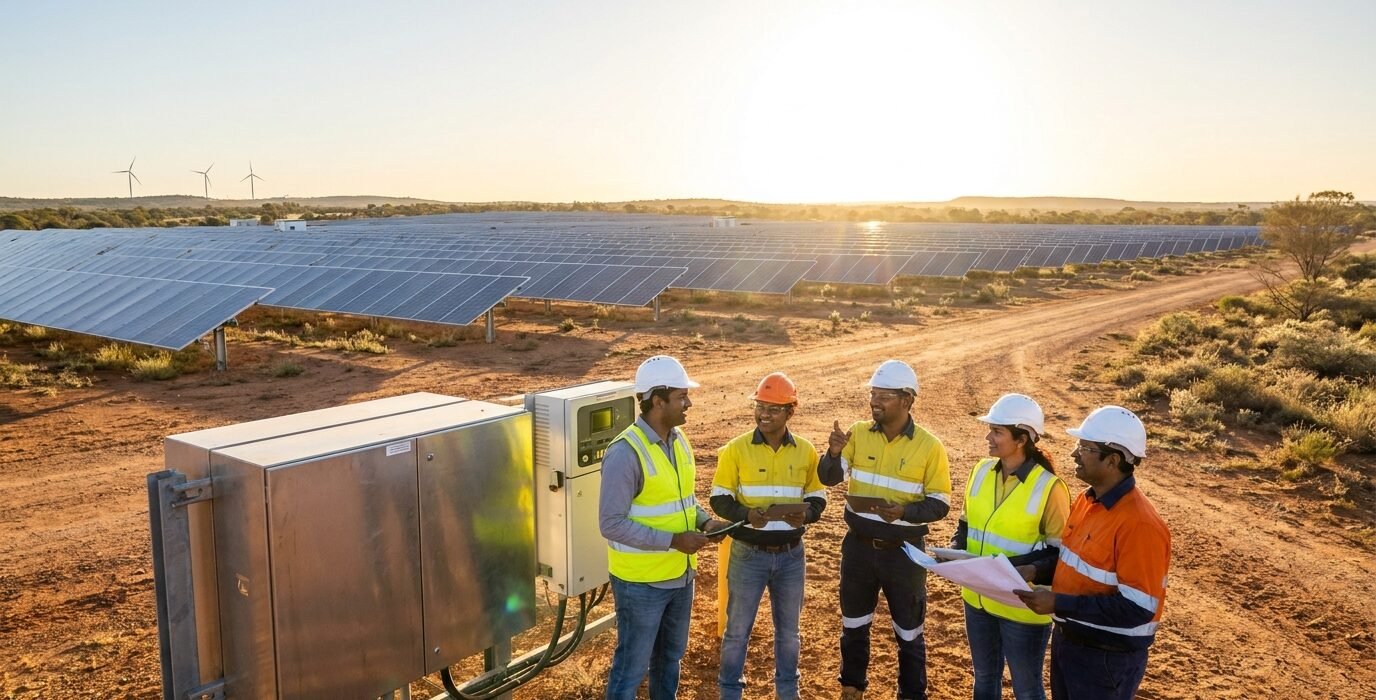
The vast, sun-drenched landscapes of Australia are increasingly mirroring the ambition of a nation thousands of kilometres away. India, a global leader in renewable energy adoption, is making significant inroads into Australia’s burgeoning green energy sector. This isn’t just about foreign investment; it’s a burgeoning partnership. It’s a strategic alliance. It’s powered by shared climate goals and economic opportunity. From the scorching plains of the Outback to the windswept coasts, Indian companies are not just investing capital. They are also bringing expertise and a long-term vision to Australia’s transition away from fossil fuels.
Key Takeaways:
- Indian companies are making substantial investments in Australia’s solar and wind energy projects.
- This collaboration extends beyond finance, involving technology transfer and project development expertise.
- The partnership is driven by Australia’s ambitious renewable energy targets and India’s growing demand for clean energy solutions.
- The influx of Indian investment is creating jobs and fostering innovation within the Australian green energy landscape.
- This trend signifies a deeper geopolitical and economic alignment between the two nations in the critical field of energy security.
The Outback’s New Sunrise: Indian Solar Dominance
The sun beats down relentlessly on the Nullarbor Plain, a vast expanse of semi-arid country in southern Australia. It’s a landscape synonymous with isolation. Yet, it’s becoming a hotbed for renewable energy innovation. This is largely driven by Indian enterprise. Companies like Adani Green Energy, though not solely Indian-owned, possess significant Indian leadership and operational focus. They are transforming these seemingly barren lands into powerhouses. Their Carmichael project, while controversial for its environmental impact debates, highlights the sheer scale of investment and ambition. But the story goes beyond one mega-project. Across Australia, from Queensland’s Darling Downs to the Western Australian hinterland, you’ll find Indian firms actively developing and operating solar farms. These aren’t just small, local initiatives. They are utility-scale projects. They are designed to power entire cities and regions. The sheer amount of land required for these solar arrays is staggering. It often spans hundreds, even thousands, of hectares. The technology itself is becoming more sophisticated. Advanced tracking systems and efficient panel designs are common. Many of these are manufactured by Indian companies. Or they incorporate Indian technological advancements. The economic implications are profound. These projects create thousands of jobs during construction and ongoing maintenance. They inject vital capital into regional economies. These economies have historically relied on mining or agriculture. The Australian government’s renewable energy targets, ambitious as they are, have created fertile ground for such investment. India, with its own massive domestic renewable energy push, sees Australia not just as a market. It sees it as a strategic partner. A partner in building a global clean energy future. The sheer volume of solar potential in Australia, particularly in the north and west, is almost unparalleled. It’s a natural synergy. India’s expertise in deploying large-scale solar initiatives finds a perfect match. Australia offers abundant sunshine and land availability. This isn’t just about generating electricity. It’s about reshaping the Australian energy grid for decades to come. Indian companies are playing a crucial role in this fundamental transformation. The statistics are compelling. India is increasingly a dominant force in the development of new solar capacity in Australia. It contributes significantly to the nation’s decarbonisation goals. It solidifies its position as a key player in the global clean energy transition.
Wind Beneath Australia’s Wings: Indian Investments in Turbines
It’s not just the sun that’s attracting Indian interest; the wind, too, is a powerful draw. Australia’s extensive coastline and open plains offer some of the best wind resources in the world. Indian energy giants are increasingly setting their sights on developing large-scale wind farms. They often do this in partnership with established Australian entities or as lead developers. Consider the burgeoning wind farm developments in Victoria, a state with a strong commitment to renewable energy. Companies with Indian roots or significant Indian investment are actively participating. They are involved in the tendering and construction phases of these projects. The sheer scale of these wind turbines is a marvel. They are towering structures. Their blades span the length of a Boeing 747. The technical expertise required to design, manufacture, and install these behemoths is immense. Indian companies are bringing a wealth of experience. This experience was gained from their own rapid renewable energy expansion. They are not just procuring turbines. They are often involved in the entire project lifecycle. This includes site selection and environmental impact assessments. It also covers grid connection and long-term operational management. This comprehensive approach is highly valued by Australian stakeholders. The economic benefits extend beyond the initial investment. The manufacturing and maintenance of wind turbines create highly skilled jobs. These jobs are often in regional areas that need them the most. For instance, the development of a new wind farm in South Australia might involve local engineering firms and technicians. This fosters a domestic supply chain. This supply chain benefits from the international expertise brought by Indian companies. There’s a growing trend of Indian companies looking to acquire stakes in existing Australian wind projects. They also partner with local developers to accelerate the pace of development. This strategic acquisition strategy allows them to quickly expand their portfolio. It also helps them leverage existing infrastructure. The geopolitical dimension is also significant. As India pursues its ambitious climate goals, securing reliable and sustainable energy sources is paramount. Investing in Australian wind farms provides India with a stable, long-term energy asset. It strengthens bilateral ties. The narrative here is one of mutual benefit. Australia gains much-needed clean energy infrastructure and economic development. India secures its energy future and expands its global renewable energy footprint. The wind, once a symbol of nature’s untamed power, is now being harnessed. It’s harnessed with the precision and ambition of Indian industry.
Beyond Solar and Wind: Diversifying into a Greener Future
While solar and wind energy dominate the headlines, India’s influence in Australia’s renewable sector is becoming more nuanced and diversified. Indian companies are exploring opportunities in emerging green technologies and infrastructure. These will underpin the transition to a low-carbon economy. This includes investments in battery storage solutions. These are crucial for ensuring the stability of grids powered by intermittent renewables like solar and wind. The sheer scale of Australia’s renewable energy ambitions necessitates massive investment in energy storage. Indian firms, with their experience in developing large-scale grid infrastructure, are well-positioned to play a role here. Imagine massive battery farms, the size of several football fields. These would store solar energy harvested during the day. They would power homes and businesses at night. Companies are also looking at green hydrogen production. Australia’s abundant renewable energy resources make it an ideal location for producing hydrogen. This is done using electrolysis powered by solar and wind. Indian companies are not just investing in the technology. They are also looking to secure offtake agreements for this clean fuel. This fuel is seen as a critical component of future global energy security. The potential for Australia to become a major exporter of green hydrogen to India is a significant driver of this interest. Furthermore, Indian expertise in grid modernisation and smart grid technologies is invaluable. As Australia integrates more renewable energy sources, its grid infrastructure needs to become more sophisticated and resilient. Indian technology providers are offering solutions. These can enhance grid efficiency, manage demand fluctuations, and improve overall reliability. This includes advanced metering, data analytics, and intelligent control systems. The engagement is also extending to the circular economy aspects of renewable energy. As solar panels and wind turbines reach the end of their operational life, the question of recycling and disposal becomes paramount. Indian companies with expertise in waste management and material recovery are exploring partnerships. They aim to develop sustainable end-of-life solutions for renewable energy components. This forward-thinking approach demonstrates a commitment to the entire lifecycle of green energy. It’s not just about its generation. The implications are far-reaching. By diversifying their investments beyond traditional solar and wind, Indian companies are helping Australia build a comprehensive and sustainable clean energy ecosystem. They are securing its energy future and fostering innovation across multiple sectors.
The Economic Equation: Mutual Benefits and Strategic Alignments
The growing collaboration between India and Australia in the renewable energy sector is underpinned by a compelling economic logic. It offers significant mutual benefits and fosters deeper strategic alignments. For Australia, the infusion of capital from Indian companies is critical. It helps meet its ambitious renewable energy targets. Developing large-scale solar farms, wind parks, and battery storage facilities requires billions of dollars in investment. Indian conglomerates, with their vast financial resources and proven track record in executing complex energy projects, are stepping in to fill this funding gap. This investment not only accelerates the transition away from fossil fuels but also stimulates economic growth. It creates jobs in construction, engineering, manufacturing, and maintenance. Regional communities, often facing economic challenges, stand to gain significantly from these projects. Moreover, Indian companies often bring advanced technological expertise and project management skills. They have a deep understanding of deploying renewable energy solutions at scale. This capability was honed by India’s own rapid energy transition. This transfer of knowledge and technology benefits Australian businesses and workers. It fosters a more skilled and competitive local industry. For India, the engagement in Australia’s renewable energy sector serves multiple strategic objectives. Firstly, it’s a crucial element of India’s own energy security strategy. As India’s energy demand continues to soar, diversifying its energy sources and securing long-term, stable energy assets abroad is paramount. Owning stakes in Australian renewable projects provides India with a reliable supply of clean energy. This can be integrated into its domestic grid or used to meet its growing industrial needs. Secondly, it aligns with India’s commitment to its climate goals. By investing in and developing green energy projects globally, India demonstrates its leadership in the fight against climate change. This enhances its international standing. It positions it as a key player in the global transition to a low-carbon economy. Thirdly, it offers a significant return on investment. Australia’s mature and stable regulatory environment, coupled with its abundant renewable resources, makes it an attractive destination for foreign investment. The economic partnership is more than just a transaction. It’s a strategic alignment of interests. Both nations recognise the growing importance of clean energy for economic prosperity, national security, and environmental sustainability. This shared vision is creating a powerful momentum. It is reshaping the energy landscape of both countries and beyond.
Navigating the Challenges: Policy, Permitting, and Local Acceptance
While the momentum behind India’s growing influence in Australia’s renewable energy sector is undeniable, it’s not without its hurdles. Navigating the complex landscape of Australian policy, permitting processes, and local community acceptance requires a nuanced and patient approach from Indian investors. One significant challenge lies in the regulatory environment. Australia has a federal system. Energy policies and regulations vary across states and territories. This can create a complex web of approvals and compliance requirements for large-scale projects. Indian companies must diligently understand and adhere to these diverse frameworks. This can sometimes lead to delays and increased project costs. Permitting processes, particularly for large infrastructure projects, can be lengthy. They involve multiple government agencies and stakeholders. Obtaining environmental approvals, land-use permits, and grid connection agreements can be a time-consuming undertaking. The sheer scale of renewable energy projects, often located in remote areas, also brings its own set of logistical and administrative complexities. Beyond the regulatory maze, gaining local community acceptance is paramount. Large-scale solar and wind farms can have a visual impact on the landscape. They may raise concerns about noise pollution, wildlife impact, or land use changes. Indian companies are increasingly learning the importance of engaging early and transparently with local communities, Indigenous groups, and landowners. This involves not just consultation but also genuine partnership. It ensures that projects provide tangible benefits to the local economy. This includes job creation, training opportunities, and community development initiatives. The success of the Adani Group’s Carmichael coal mine, for instance, has been heavily debated. It illustrates the intense scrutiny and public discourse surrounding major resource and energy projects in Australia. While this project is primarily focused on coal, the lessons learned from the intense community and environmental activism surrounding it are relevant for all large-scale energy developments. Indian firms are increasingly adopting best practices in community engagement. They learn from past experiences and adapt their strategies to foster goodwill. They aim to ensure a social license to operate. Building trust and demonstrating a long-term commitment to the Australian landscape and its people is as crucial as securing the necessary capital and technology. Overcoming these challenges requires a deep understanding of the local context. It demands a commitment to sustainability. It also requires a willingness to collaborate closely with Australian partners and communities.
A Shared Horizon: The Future of India-Australia Energy Partnership
Looking ahead, the trajectory of India’s engagement with Australia’s renewable energy sector points towards an even deeper and more integrated partnership. This isn’t a fleeting trend; it’s a strategic evolution. It’s driven by shared global imperatives and converging national interests. The sheer scale of Australia’s untapped renewable potential, coupled with India’s insatiable and growing demand for clean energy, creates a powerful gravitational pull for continued collaboration. We are likely to see Indian companies not just investing in project development. They will also play a more significant role in the manufacturing and supply chain aspects of Australia’s renewable energy industry. This could involve establishing local manufacturing hubs for solar panels, wind turbine components, or even battery storage systems. This would further boost Australian jobs and technological capabilities. The concept of a “green energy corridor” between India and Australia, while ambitious, is gaining traction. This envisions a seamless flow of renewable energy and related technologies. It would strengthen energy security for both nations and foster a more resilient global energy system. Imagine Australia exporting green hydrogen produced from its abundant solar and wind resources to power India’s industries. Or Indian advancements in smart grid technology being deployed across Australia to manage its increasingly complex renewable energy network. The geopolitical implications are also substantial. As both nations navigate a complex global landscape, a strong partnership in a critical sector like renewable energy serves as a powerful anchor for bilateral relations. It fosters economic interdependence. It creates shared strategic interests that extend beyond immediate commercial gains. Furthermore, as the world grapples with the existential threat of climate change, the collaborative efforts of India and Australia in driving the renewable energy transition can serve as a model for other nations. It demonstrates that ambitious climate action can go hand-in-hand with economic prosperity and technological innovation. This partnership is not just about megawatts and investment figures. It’s about building a sustainable future, fostering innovation, and creating a more resilient and prosperous world for generations to come. The sun and wind of Australia are, increasingly, powering a brighter future for both nations. India’s ambition and expertise are at the forefront.