From the Dust of Bundelkhand to the Boardrooms of Mumbai: The Unlikely Ascent of Kishan Lal
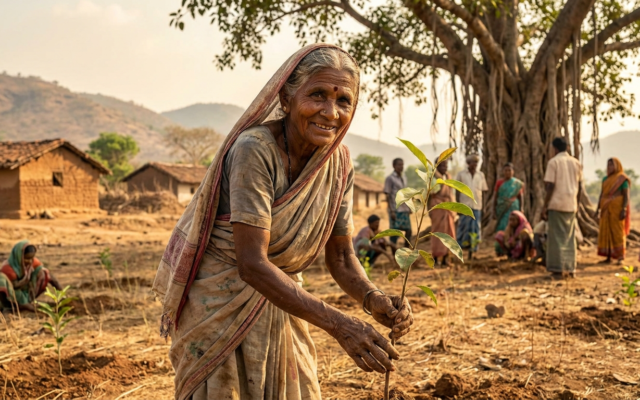
Kishan Lal’s story is not just a tale of ambition; it’s a testament to the indomitable spirit that flickers within millions of Indians, often hidden away in the country’s vast rural heartland. Born in a small village in the drought-prone Bundelkhand region of Uttar Pradesh, Kishan’s early life was a stark illustration of scarcity. His parents, landless labourers, toiled under the relentless sun, their meager earnings barely enough to keep hunger at bay. Schooling was a luxury they could ill afford, and Kishan’s education was limited to a few years in a dilapidated local government school before he was pulled out to help supplement the family income.
He recalls his childhood vividly, the parched earth of his village, the constant worry etched on his mother’s face, and the gnawing emptiness in his stomach. Yet, even as a boy, Kishan possessed a fierce intelligence and an insatiable curiosity about the world beyond his dusty village. He would spend hours listening to the stories of travelling merchants and the occasional visitor from the city, his imagination ignited by tales of bustling markets and opportunities unknown. These whispers of a different life became the seeds of his own extraordinary journey.
The turning point, as it often is for many in such circumstances, arrived in the form of a chance encounter. A distant relative, who had managed to secure a humble job in Mumbai, visited the village and was struck by Kishan’s bright eyes and earnest demeanor. Seeing a spark of potential, he offered the young boy a chance to come to the city and work as a helper in a small tea stall. It was a daunting prospect, leaving behind everything familiar for the unknown vastness of India’s financial capital, but for Kishan, it was a doorway to a world of possibility.
The Crucible of Mumbai: Grit, Hustle, and the Taste of Opportunity
Mumbai, a city that never sleeps, proved to be a harsh but ultimately rewarding teacher for Kishan. His initial days were a blur of long hours, endless chores, and the cacophony of a million lives converging. He washed dishes, swept floors, and served countless cups of chai to a diverse clientele – from harried office workers to dreaming artists. The pay was paltry, barely enough to send a few rupees back home, but Kishan saved every paisa, his resolve hardening with each passing day.
It was in this bustling tea stall, amidst the aroma of spices and the clatter of cups, that Kishan began to learn the true language of business. He observed keenly, noticing the subtle nuances of customer service, the art of negotiation, and the flow of commerce. He started to pick up rudimentary English from overheard conversations, a skill that would prove invaluable. He devoured any scrap of newspaper he could find, piecing together the stories of India’s economic growth and the opportunities it presented.
One particularly striking memory for Kishan is the sheer pace of life. He would often see people from all walks of life rushing past, their faces a mixture of determination and exhaustion. He learned to anticipate needs, to offer a polite word, and to remember faces and orders. These small acts of attentiveness, born out of necessity and a desire to please, were the first steps in his journey towards understanding human connection and its role in any successful enterprise. He also discovered the power of observation in a city where every interaction held a lesson.
His entrepreneurial spirit, dormant for years, began to stir. He noticed a gap in the market for affordable, yet hygienic, snacks that could be easily consumed on the go. Using his meager savings and a small loan from a kind employer, he began to experiment with simple recipes after his long working hours. He started by selling homemade samosas and pakoras to his regular customers, a side venture that quickly gained popularity.
The Leap of Faith: From Tea Stall to Tandoor
The success of his small snack venture gave Kishan the confidence to dream bigger. He realized that his passion lay not just in serving tea, but in creating food that brought joy and satisfaction to people. He spent his evenings meticulously researching recipes, learning about different culinary techniques, and understanding the economics of running a food business. He would frequent local markets, observing the supply chains and the pricing of ingredients.
With a significant portion of his savings and a loan secured from a microfinance institution, Kishan took a leap of faith. He rented a tiny, nondescript space in a busy Mumbai locality, far from the glitz of the prime areas but strategically located near offices and residential complexes. He named his eatery “Bundelkhand Kitchen,” a nod to his roots, and began by offering a limited menu of North Indian specialties, focusing on quality and affordability. The early days were a struggle, with long hours and the constant pressure of making ends meet.
He remembers vividly the initial skepticism from some customers, who were unsure about a new, small establishment. However, Kishan’s unwavering commitment to taste and hygiene soon began to win people over. He personally oversaw every aspect of the operation, from sourcing fresh produce at the crack of dawn from the Mandi to ensuring the cleanliness of his kitchen. His mother’s simple recipes, perfected over generations, formed the heart of his menu, and her blessings, he often says, were his secret ingredient. He also learned the importance of adapting his offerings to local tastes, a crucial lesson in the diverse culinary landscape of Mumbai.
A surprising fact Kishan often shares is that his initial investment was less than what many Indian families spend on a wedding. Yet, through sheer hard work and a keen understanding of customer needs, he managed to build a loyal following. The aroma of his dal makhani and butter chicken, cooked with authentic spices, began to draw crowds, and soon, “Bundelkhand Kitchen” became a local favorite.
Scaling Up: Navigating Challenges and Embracing Technology
As “Bundelkhand Kitchen” grew in popularity, so did the challenges. Managing increased demand, ensuring consistent quality, and finding and retaining reliable staff became pressing issues. Kishan, who had never formally studied business management, found himself learning on the job, adapting his strategies as he went. He realized the need for standardized processes and efficient inventory management.
He began to explore technology to streamline his operations. He was an early adopter of online ordering platforms, recognizing the convenience they offered to his busy clientele. This decision proved to be a game-changer, significantly expanding his reach beyond walk-in customers. He also implemented a simple point-of-sale system, which helped him track sales, manage inventory, and analyze customer preferences more effectively.
One of the most significant hurdles he faced was securing funding for expansion. Banks were hesitant to lend to a small, relatively unproven business owner with no collateral. Undeterred, Kishan continued to re-invest his profits and sought out smaller, more accessible loans, demonstrating his financial prudence and commitment to growth. He also learned the importance of building strong relationships with his suppliers, ensuring a steady flow of high-quality ingredients at competitive prices.
He recalls a particularly stressful period when a major supplier suddenly increased prices. Kishan spent days negotiating, exploring alternative sources, and even considering bulk purchasing to lock in better rates. This resilience and problem-solving approach became hallmarks of his leadership. He also discovered the power of positive word-of-mouth, actively encouraging satisfied customers to leave reviews online, further boosting his reputation.
From Local Eatery to National Brand: The Vision of a Restaurateur
Kishan’s vision extended far beyond a single successful eatery. He dreamt of creating a recognizable brand that stood for authentic Indian flavors, quality ingredients, and exceptional customer service. This ambition led him to explore franchising opportunities, carefully selecting partners who shared his commitment to excellence and ethical business practices. He meticulously developed training programs to ensure that every “Bundelkhand Kitchen” outlet maintained the same high standards.
The expansion was not without its complexities. Each new location presented unique challenges, from understanding local market dynamics to navigating different regulatory environments. Kishan, now a seasoned entrepreneur, approached each expansion with meticulous planning and a willingness to adapt. He understood that replicating success required more than just good food; it demanded strong operational frameworks and a deep understanding of consumer behavior in diverse regions.
A surprising aspect of his expansion was his focus on rural sourcing. He actively sought out partnerships with farmer cooperatives in regions like his native Bundelkhand, aiming to provide fair prices for their produce while ensuring the freshest ingredients for his restaurants. This not only strengthened his supply chain but also gave back to the communities he came from, a commitment that resonated deeply with his personal journey. He believed that authentic Indian cuisine deserved authentic Indian ingredients, sourced responsibly.
Today, “Bundelkhand Kitchen” is a recognized name across several Indian cities, a far cry from the humble tea stall where Kishan’s journey began. He has built a team of dedicated professionals, many of whom have grown with the company, reflecting his belief in nurturing talent. His story serves as a powerful reminder that with grit, determination, and a clear vision, even the most challenging circumstances can be overcome.
The Legacy and the Future: Inspiring a Generation
Kishan Lal’s journey is more than just a success story; it’s an inspiration for countless individuals across India who face similar obstacles. He actively engages with aspiring entrepreneurs, sharing his experiences and offering guidance. He believes that education and mentorship are crucial for unlocking potential, especially in underserved communities. He has established a small foundation that provides vocational training and financial assistance to young people from rural backgrounds interested in the food industry.
He often returns to his village, not with tales of grand riches, but with a message of hope and possibility. He emphasizes that success isn’t just about financial gain, but about making a positive impact and contributing to the well-being of others. He understands the unique challenges faced by those in rural India and aims to create pathways for them to achieve their dreams, just as he did.
Looking ahead, Kishan envisions “Bundelkhand Kitchen” not just as a restaurant chain, but as a platform for promoting authentic Indian culture and cuisine on a global scale. He is exploring opportunities for international expansion, believing that the world is ready to embrace the rich and diverse flavors of India. His ultimate goal is to create a legacy that transcends business, a legacy of empowerment, opportunity, and the enduring power of the human spirit.
His advice to young people dreaming big is simple yet profound: “Believe in yourself, work harder than you think you can, and never forget where you came from.” It’s a philosophy that has guided him through every challenge and continues to fuel his remarkable ascent from the dusty plains of Bundelkhand to the bustling culinary landscape of India and beyond. He is a living embodiment of the idea that with unwavering determination, the seemingly impossible can indeed become reality.