Key Takeaways
- Gen Alpha in India is growing up immersed in AI-powered tools and personalised digital experiences from an early age.
- Their primary modes of learning and entertainment are shifting towards interactive apps, educational games, and AI tutors, often accessed via smart devices.
- Concerns around screen time, digital well-being, and data privacy are paramount for parents navigating this new landscape.
- The rapid evolution of EdTech and AI presents both unprecedented opportunities and significant challenges for Gen Alpha’s development in India.
The Dawn of the AI-Native Child: Gen Alpha’s Digital Landscape in 2026
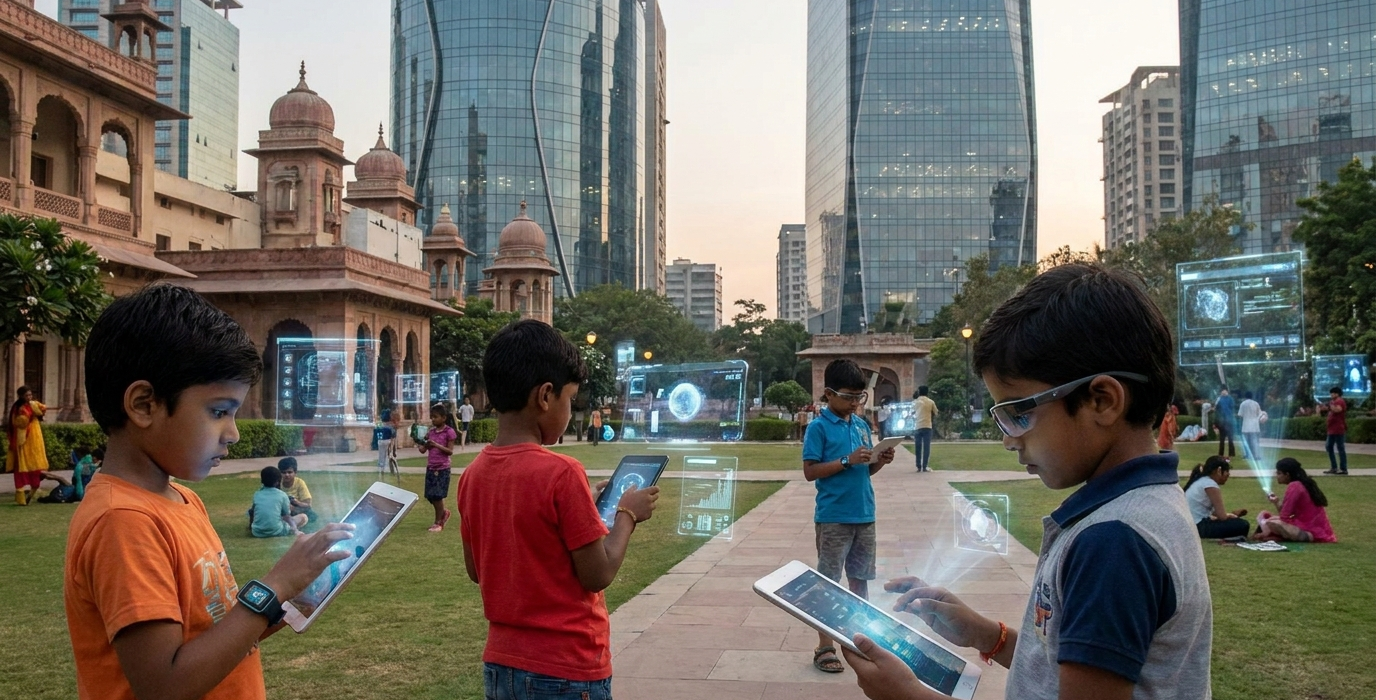
As we stand in mid-2026, a new generation is rapidly shaping the digital discourse in India and across the globe. These are the children of Gen Alpha, born roughly between 2010 and 2024. Unlike their Millennial and Gen Z predecessors, who witnessed the dawn of the internet and the smartphone revolution, Gen Alpha are true digital natives, born into a world where artificial intelligence is not a futuristic concept, but a daily tool. Their interactions, learning, and entertainment are intrinsically linked to algorithms, personalised content, and increasingly sophisticated smart devices. For parents and educators across bustling metros like Mumbai and Bengaluru, to smaller towns in Uttar Pradesh, understanding this generation’s unique digital footprint is no longer optional; it’s essential.
We are seeing a profound shift in how these young minds engage with technology. From voice-activated assistants that help with homework to AI-driven educational apps that adapt to their learning pace, the digital environment is a constant companion. This immersion is creating unique cognitive pathways, raising questions about their future skill sets and societal integration. As we delve deeper, we will explore the specific platforms they favour, the educational paradigms they are influencing, and the critical parental guidance required to navigate this ever-evolving digital frontier. Understanding Gen Alpha today means preparing for the society they will build tomorrow.
Interactive Learning and Play: AI as the New Teacher and Playmate
For Gen Alpha in India, the concept of passive learning is becoming increasingly archaic. Their educational journey, even at the pre-school and primary levels, is heavily influenced by interactive apps and AI-powered educational platforms. Imagine a child in Chennai learning their ABCs not from a static textbook, but from a vibrant, animated app that uses voice recognition to correct pronunciation and offers personalised challenges based on their performance. Platforms like Byju’s, Vedantu, and others are constantly innovating, integrating AI to create adaptive learning paths. These aren’t just digital flashcards; they are sophisticated systems that can identify a child’s specific learning gaps and provide targeted exercises, essentially acting as a one-on-one tutor.
Beyond formal education, AI is also redefining playtime. Games are no longer just about reflexes; they are about problem-solving, critical thinking, and even emotional intelligence, often with AI characters that learn and adapt. Think of virtual companions that can engage in simple conversations, assist with creative tasks, or even offer emotional support within a safe digital environment. This fusion of education and entertainment, often termed ‘edutainment’, is profoundly shaping how Gen Alpha develops cognitive and social skills. It’s a stark contrast to the video cassettes and board games of previous generations, offering a more dynamic and personalised form of engagement. The key here is the personalisation: AI tailors the experience, making it more effective and engaging for each child.
The Screen Time Dilemma: Balancing Digital Immersion with Real-World Engagement
The ubiquitous presence of smart devices – from tablets and smartphones to smart TVs and even smart toys – means that Gen Alpha is constantly exposed to digital content. This has inevitably sparked widespread concern among parents and child psychologists regarding screen time. While educational apps offer significant benefits, the sheer volume of digital interaction raises questions about its impact on physical activity, social development, and mental well-being. Many parents in cities like Pune are actively trying to implement digital detox periods, setting strict limits on usage, and encouraging a balance with outdoor play and face-to-face interactions. The challenge, however, is that much of Gen Alpha’s social world and entertainment is intrinsically linked to these digital platforms.
Navigating this requires a proactive approach. Simply banning devices is often counterproductive in a world where digital literacy is a crucial life skill. Instead, the focus is shifting towards mindful usage. This involves parents actively engaging with their children’s digital activities, understanding the content they are consuming, and fostering critical thinking about online information. For instance, discussing the characters in an educational game or explaining why a certain advertisement appeared can turn passive consumption into an active learning experience. The surprising reality is that many AI-driven tools, when used judiciously, can actually help monitor and manage screen time by providing insights into usage patterns and suggesting breaks.
Personalisation is Key: How AI is Shaping Content Consumption
One of the most striking characteristics of Gen Alpha’s digital diet is its hyper-personalisation. Algorithms are now sophisticated enough to understand individual preferences, tailoring everything from YouTube recommendations and streaming service suggestions to in-app advertisements. For a child growing up in India, this means their digital world is curated to a degree unimaginable just a decade ago. Whether it’s a curated playlist of nursery rhymes on Spotify or a series of cartoon episodes on Disney+ Hotstar recommended based on past viewing habits, the content is constantly adapting. This personalised approach can be highly effective, ensuring children are exposed to material they find engaging and relevant, thereby enhancing their learning and entertainment.
However, this hyper-personalisation also presents its own set of challenges. Critics and child development experts voice concerns about the creation of ‘filter bubbles’, where children might be exposed only to content that reinforces their existing viewpoints, limiting their exposure to diverse perspectives. Furthermore, the constant barrage of targeted content, even if educational, can be overwhelming. Parents are increasingly advised to actively curate their children’s digital environments, not just passively accept the algorithmic suggestions. This might involve setting up specific child-friendly profiles on streaming services or using parental controls to block certain types of content. The goal is to leverage the power of personalisation without sacrificing breadth of experience and critical exposure.
The Rise of AI-Powered Creators and Digital Identity
Gen Alpha is not just consuming digital content; they are increasingly becoming creators within these digital spaces, often with the assistance of AI tools. Platforms that allow for simple video editing, AI-generated art, and interactive storytelling are becoming immensely popular. Imagine a pre-teen in a small town like Alwar using an AI-powered app to create animated short films or design unique characters for a game they are building. These tools lower the barrier to entry for creative expression, empowering children to bring their imagination to life in novel ways. This generation is growing up with an innate understanding of digital tools as extensions of their creativity.
This trend also extends to the formation of digital identity. While older generations might have carefully managed their online personas, for Gen Alpha, a digital presence is often an organic extension of their personality. They might have curated social media profiles, participate in online communities, and even develop virtual avatars that represent them. This raises important questions about data privacy and digital citizenship from a very young age. Parents need to educate their children about the permanence of online content, the importance of respectful online behaviour, and the need to protect personal information. The surprising aspect is how seamlessly they navigate these complex digital social structures, often intuitively understanding the unwritten rules of online interaction.
Preparing for an AI-Driven Future: Skills and Challenges for Gen Alpha
As Gen Alpha matures, the skills they acquire will need to align with an increasingly AI-driven workforce and society. While traditional academic subjects remain important, there will be a greater emphasis on skills that complement AI, such as critical thinking, complex problem-solving, creativity, emotional intelligence, and collaboration. The ability to work alongside AI, understand its outputs, and leverage its capabilities will be paramount. India’s education system, from primary schools in Kochi to universities in Delhi, is beginning to grapple with this reality, exploring curriculum reforms that integrate digital literacy and AI concepts from an early age.
The challenge lies in ensuring equitable access to these advanced digital learning tools and opportunities. The digital divide, though shrinking, remains a significant factor. Ensuring that children from all socioeconomic backgrounds have access to high-quality AI-powered educational resources is crucial for their future success. Furthermore, fostering resilience and adaptability in a rapidly changing technological landscape is a key parental and educational goal. The ability to learn, unlearn, and relearn will be the most valuable asset for Gen Alpha as they navigate careers and challenges we can only begin to imagine. We must equip them not just with knowledge, but with the mindset to thrive.
Frequently Asked Questions
What are the primary devices Gen Alpha uses in India?
Gen Alpha in India primarily uses smartphones, tablets, and smart TVs. They are also increasingly interacting with voice-activated assistants like Alexa and Google Assistant, and engaging with wearable technology designed for children.
How is AI impacting Gen Alpha’s learning process?
AI is making learning highly personalised and interactive. It powers adaptive learning platforms that adjust to a child’s pace, offers AI tutors for specific subjects, and enhances educational games for better engagement.
What are the biggest concerns for parents regarding Gen Alpha’s digital habits?
Parents are most concerned about excessive screen time, its impact on physical and mental health, the potential for exposure to inappropriate content, and the need to foster real-world social skills alongside digital literacy.
Are AI tools helping Gen Alpha become creators?
Yes, AI tools are democratising content creation. They enable Gen Alpha to easily create animated videos, digital art, and interactive stories, lowering the technical barriers to creative expression.
What skills will be most important for Gen Alpha in the future?
Beyond traditional academics, critical thinking, problem-solving, creativity, emotional intelligence, and the ability to collaborate with AI will be essential for Gen Alpha’s success in the future workforce.