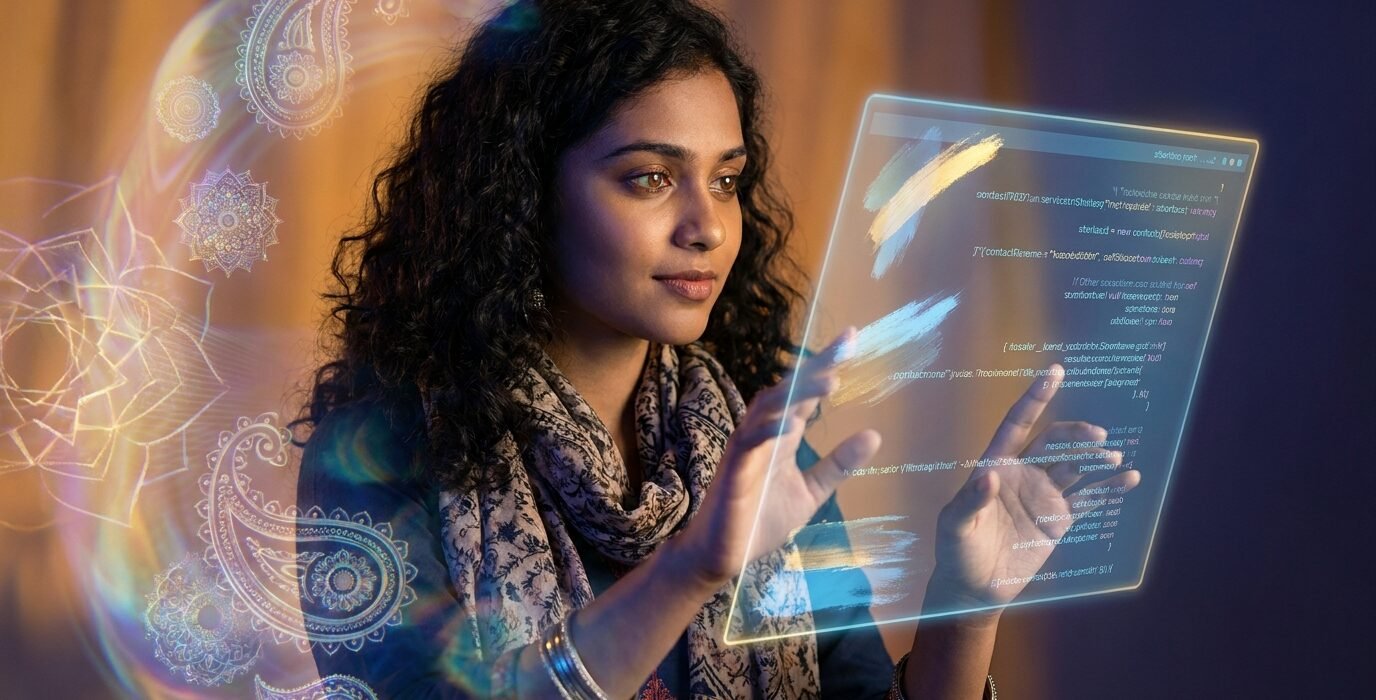
Imagine a Pichwai painting, not brushed by human hands, but conjured by algorithms. Picture a Madhubani mural, its intricate patterns born from lines of code. This isn’t science fiction; it’s the unfolding reality of AI artistry in India, a vibrant fusion of ancient traditions and cutting-edge technology. The very essence of Indian culture, with its rich visual heritage, is being reinterpreted and reimagined through the lens of artificial intelligence.
Key Takeaways:
- AI is transforming artistic creation in India, blending traditional motifs with modern tech.
- Tools like Midjourney and DALL-E are empowering artists and hobbyists to explore new visual frontiers.
- Concerns around copyright, authenticity, and the displacement of traditional artists are being actively debated.
- AI art is creating new avenues for cultural preservation and global dissemination of Indian aesthetics.
- The future of Indian art involves a symbiotic relationship between human creativity and AI capabilities.
The air in Bengaluru crackles with a unique energy, a hum of innovation that seems to permeate everything. Here, amidst the bustling tech hubs and ancient temples, a new generation of creators is experimenting with AI art generators. They’re not just replicating existing styles; they’re using these powerful tools to breathe new life into centuries-old artistic legacies. Think of the vibrant chaos of a Delhi street market, or the serene beauty of a Kerala backwater, rendered with an AI’s interpretation. It’s a fascinating dialogue between the digital and the deeply cultural. This exploration is not merely about generating pretty pictures; it’s about understanding how technology can serve as a powerful amplifier for human expression, especially when that expression is rooted in a heritage as profound and diverse as India’s. The sheer volume of artistic output possible is staggering, and the accessibility of these tools means that anyone with a creative spark and an internet connection can begin their own artistic journey. This democratization of art creation is a significant shift, opening doors that were once perhaps closed to many. The initial outputs might seem experimental, even crude, but with each prompt, each iteration, users are learning to communicate their vision to the AI, coaxing out increasingly sophisticated and meaningful results. It’s a learning curve for both the human and the machine, a collaborative dance in the digital realm.
The Rise of the Algorithmic Artisan
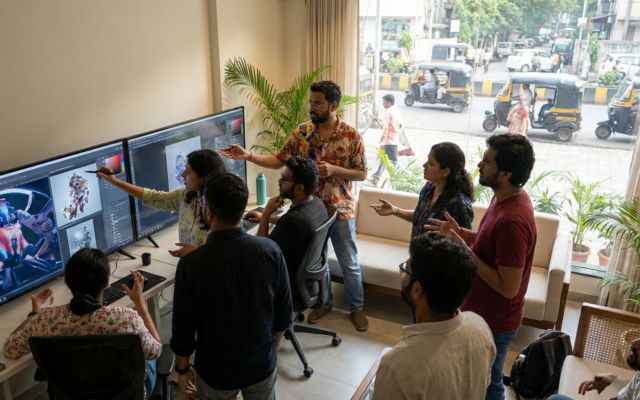
In a small studio in Jaipur, renowned miniature artist, Ravi Sharma, once painstakingly applied each delicate stroke to his canvases, a tradition passed down through generations. Now, Ravi finds himself experimenting with Midjourney, feeding it prompts like “Mughal miniature depicting a tiger hunt in the style of the Akbar Nama, with a touch of bioluminescent flora.” The results are often breathtaking, a blend of his ingrained aesthetic sensibilities and the AI’s ability to synthesize vast amounts of visual data. He marvels at how the AI can capture the intricate detail of a jeweled turban or the subtle play of light on silk, elements that take him weeks to perfect. This isn’t about replacing his skill, he explains, but about augmenting it. “It’s like having an assistant who has seen every painting ever created,” he muses, his eyes twinkling. “It helps me explore ideas I might not have had the time or resources to bring to life otherwise.” Ravi’s experience is not unique. Across India, from the bustling art colleges of Mumbai to the quiet villages of Rajasthan, artists and enthusiasts are embracing these tools. They’re using them to create everything from contemporary interpretations of Warli art to fantastical visions inspired by ancient Indian mythology. The accessibility of tools like Stable Diffusion and DALL-E 3 has lowered the barrier to entry significantly, allowing individuals without formal artistic training to visualize their ideas. This has led to an explosion of creativity, with platforms like Instagram and dedicated AI art communities showcasing a remarkable diversity of styles and themes. The speed at which these tools can generate variations of an idea also allows for rapid prototyping of artistic concepts, enabling creators to iterate and refine their vision much faster than traditional methods would allow. It’s a paradigm shift, where the conceptualization and visualization phases of art creation are dramatically accelerated, freeing up human artists to focus on refinement, storytelling, and the emotional core of their work.
Reimagining Indian Motifs for a Digital Age
The visual language of India is incredibly rich, a kaleidoscope of symbols, colours, and forms that have evolved over millennia. Think of the geometric precision of Rangoli patterns adorning thresholds during festivals, or the divine imagery found in temple architecture across the country. AI art generators are proving to be remarkably adept at understanding and reinterpreting these visual cues. Artists are prompting the AI with descriptions of traditional motifs, asking for them to be rendered in novel ways. Imagine a Buddha depicted with the vibrant colours and bold lines of a Warli painting, or a scene from the Ramayana reimagined in the style of a futuristic cyberpunk city, complete with neon lights reflecting off ancient palaces. This process isn’t just about novelty; it’s about finding new ways to connect with and appreciate India’s cultural heritage. For instance, a young designer in Chennai used DALL-E to generate a series of abstract patterns inspired by the intricate Kolam designs her grandmother used to draw. She then incorporated these AI-generated patterns into modern textile designs, bridging the gap between tradition and contemporary fashion. The AI’s ability to break down and recombine elements of these traditional art forms allows for unexpected and captivating juxtapositions. It can take the symmetry of a mandala and embed it within the organic flow of a landscape, or it can extract the essence of a Rajput miniature and apply it to a hyper-realistic portrait. This iterative process of prompting and refining allows for a deep exploration of visual themes. One surprising revelation is how AI can sometimes generate interpretations that feel both alien and deeply familiar, tapping into a subconscious visual memory that resonates with Indian viewers. The data sets these AI models are trained on often include vast archives of Indian art and imagery, giving them an inherent understanding of these aesthetic principles. However, the true magic happens when human intention guides the AI’s vast knowledge, pushing it to create something truly original rather than merely derivative. This is where the artistry truly lies – in the human ability to curate, direct, and imbue the AI’s output with meaning and emotion.
The Palette of Possibilities: Tools and Techniques
The tools available for AI artistry are rapidly evolving, offering a spectrum of functionalities for creators in India. Platforms like Midjourney, known for its artistic flair and ability to generate highly aesthetic images from simple text prompts, has become a favourite for many. Users often describe the experience as akin to having a highly imaginative collaborator. Then there’s DALL-E 3, integrated with ChatGPT, which allows for more nuanced and conversational prompting, enabling users to refine their ideas through dialogue. For those who prefer more control over the generation process, Stable Diffusion offers an open-source solution, allowing for greater customization and the ability to run the models locally. This has empowered a community of developers and artists to build upon the core technology, creating specialized tools and workflows. A graphic designer in Kolkata, Ananya Sen, shared her process using Stable Diffusion. “I started with a base image of an old Bengali folk painting,” she explained, “and then used control nets to guide the AI in adding specific elements – a flock of birds in the style of Jamini Roy, and a river flowing through the scene with the texture of a watercolor wash.” This level of granular control is what distinguishes advanced AI art creation from simply typing in a prompt. It requires an understanding of the underlying principles of image generation, much like a traditional artist learns about colour theory and composition. The availability of these diverse tools means that the approach to AI artistry can be as varied as the artists themselves. Some prefer the serendipity of highly abstract prompts, while others meticulously craft detailed instructions to achieve a specific vision. This technological landscape is not static; it’s a dynamic ecosystem where new features and models are released with astonishing frequency. Keeping up with the latest advancements is a challenge, but also an exciting opportunity for those at the forefront of this creative revolution. The sheer number of parameters and options available can be overwhelming initially, but with practice, users learn to navigate this complexity to unlock the full potential of these powerful generative models. It’s a testament to the ingenuity of both the AI developers and the artists who are finding innovative ways to harness their capabilities.
Navigating the Ethical Canvas: Copyright and Authenticity
As AI-generated art gains traction, a crucial conversation is emerging in India and globally: the complex landscape of copyright and authenticity. When an AI generates an image based on prompts, who owns the copyright? Is it the person who wrote the prompt, the company that developed the AI, or perhaps no one at all? This question is particularly pertinent in India, a country with a rich tradition of artisanal crafts and intellectual property rights tied to cultural heritage. A legal scholar at the Indian Institute of Technology Bombay, Professor Arishta Singh, highlights the challenges. “Current copyright laws were not designed for AI-generated works,” she states. “We are in uncharted territory, and it will require significant legal and societal adaptation to address these issues fairly.” Many artists worry about their work being used to train AI models without their consent, leading to AI-generated art that closely mimics their unique style. This raises concerns about economic displacement and the dilution of artistic value. The debate is not just academic; it has real-world implications for artists making a living from their creations. Consider the vibrant block printing traditions of Gujarat. If an AI can generate prints that look identical, how do the artisans who have perfected this craft for generations protect their livelihood? Some platforms are exploring solutions, like watermarking AI-generated images or implementing systems to track the origin of training data. However, a definitive legal framework is still elusive. Counter-intuitively, some argue that AI art, while challenging existing notions of authorship, can also foster new forms of appreciation for human artistry. By highlighting the unique qualities and laborious processes involved in traditional art, AI can paradoxically drive greater value and recognition towards human creators. It forces us to define what truly constitutes art and where the line between human intention and machine execution lies. The conversation is ongoing, and finding a balance that respects creators, consumers, and the evolution of technology is paramount for the healthy growth of the artistic ecosystem.
The Future Canvas: Human-AI Collaboration
The most exciting prospect for AI artistry in India isn’t about machines replacing humans, but about a profound collaboration. Imagine an architect in Mumbai using AI to generate countless design iterations for a new skyscraper, exploring forms and structures that would be impossible to conceive manually. The AI can rapidly prototype, offering variations on a theme, while the architect provides the vision, the aesthetic judgment, and the understanding of human needs and cultural context. This symbiotic relationship is already taking shape. A documentary filmmaker in Kerala might use AI to generate stunning, dreamlike visuals that complement their narrative, creating a visual language that enhances emotional impact. The AI can produce surreal landscapes or abstract representations of emotions, while the filmmaker guides the direction and imbues the work with personal meaning. One surprising outcome of this collaboration is the potential for AI to help preserve endangered artistic traditions. By analyzing and digitizing the techniques and styles of fading art forms, AI can create accessible digital archives and even generate new works in those styles, keeping them alive for future generations. This is crucial for India, where many unique art forms are at risk of disappearing due to a lack of interest or the emigration of skilled artisans. The AI becomes a digital custodian, a silent partner in cultural continuity. The speed at which AI can generate variations allows human artists to explore a wider range of creative possibilities within a shorter timeframe, leading to more innovative and diverse artistic expressions. It’s a partnership where the AI offers computational power and vast data synthesis, while the human brings intuition, emotion, and a deeply ingrained cultural understanding. This isn’t just about efficiency; it’s about expanding the very definition of creativity. The future canvas is one where the boundaries between human and machine blur, resulting in art that is richer, more complex, and more deeply resonant than ever before. The journey is just beginning, and the potential for discovery is immense, promising a new era of artistic innovation rooted in India’s timeless cultural wealth.