Key Takeaways
- India is rapidly emerging as a global AI powerhouse, with significant investments and a burgeoning ecosystem of startups and research institutions.
- AI adoption is no longer confined to tech giants; SMEs across sectors like manufacturing, healthcare, and agriculture are leveraging AI for unprecedented growth and efficiency.
- The government’s proactive policies and focus on AI ethics are fostering a responsible and sustainable AI future for the nation.
- Expect to see AI playing an even more critical role in solving India’s unique challenges, from climate resilience to inclusive education, in the coming years.
The AI Surge: India’s Ascent on the Global Stage
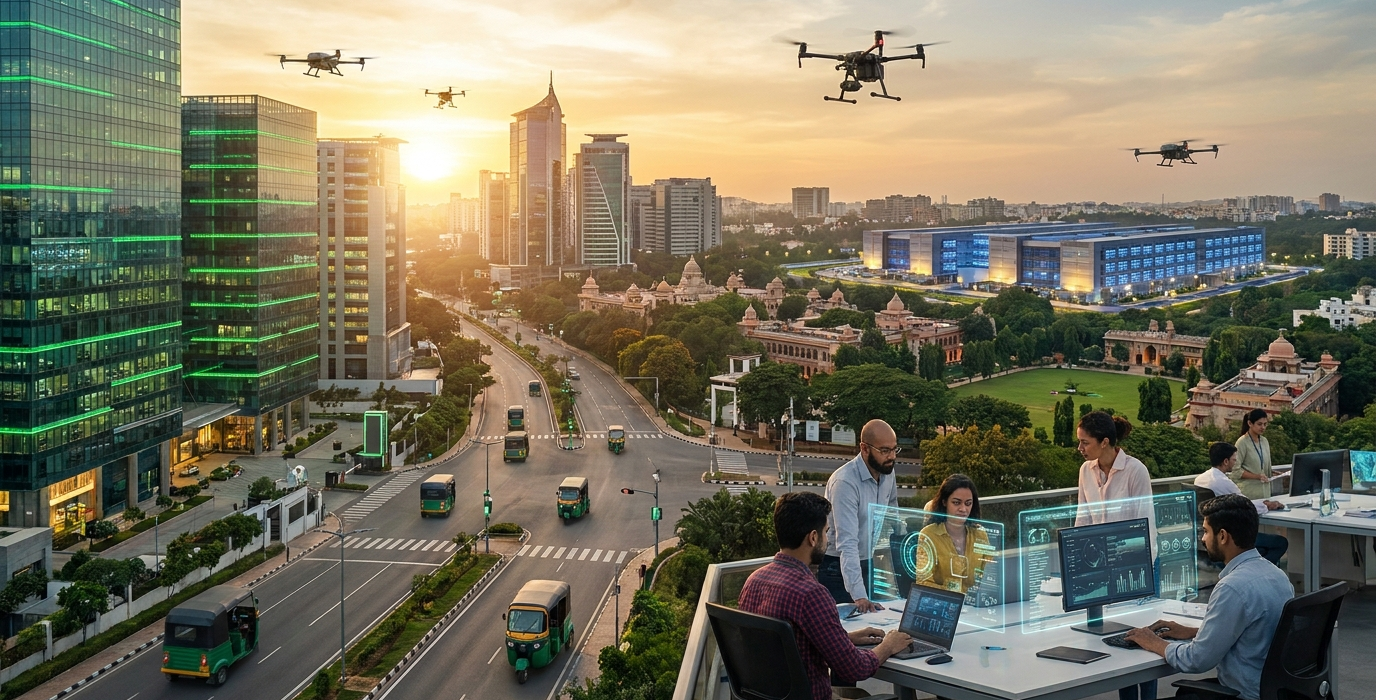
As we navigate the dynamic landscape of 2026, India stands not just as a participant, but as a burgeoning leader in the global artificial intelligence revolution. The initial whispers of AI’s potential have transformed into a resounding roar, echoing from the bustling tech hubs of Bengaluru to the historic lanes of Kolkata. This isn’t just about adopting foreign AI solutions; India is actively shaping the future of AI with its own innovations, research, and a rapidly growing talent pool.
The sheer scale of AI integration across industries is breathtaking. From optimizing supply chains in the textile sector to predicting crop yields in rural Maharashtra, AI is no longer a futuristic concept but a present-day driver of economic progress. We’re witnessing a democratisation of AI, where even small and medium enterprises (SMEs) are finding accessible and impactful ways to harness its power. This widespread adoption is fueling job creation, enhancing productivity, and fundamentally altering how businesses operate.
Moreover, the Indian government’s commitment to AI is evident in its strategic initiatives and substantial funding allocations. These efforts are not merely about technological advancement; they are intrinsically linked to national development goals. By fostering a robust AI ecosystem, India aims to address complex societal challenges and solidify its position as a knowledge-driven economy on the world stage. The narrative of India’s AI journey in 2026 is one of ambition, innovation, and a deep-seated commitment to leveraging technology for collective good.
AI in Action: Transforming Indian Industries
The impact of artificial intelligence across India’s diverse industrial spectrum is nothing short of transformative. In manufacturing, for instance, AI-powered predictive maintenance systems are revolutionising factory floors. Companies in Gujarat’s industrial belts are now able to anticipate equipment failures before they happen, drastically reducing downtime and saving millions in repair costs. This shift from reactive to proactive maintenance is a direct result of AI algorithms analysing sensor data in real-time.
Healthcare is another sector experiencing a profound AI-driven metamorphosis. Hospitals in Tier-2 and Tier-3 cities are increasingly deploying AI for diagnostic assistance, particularly in medical imaging. Radiologists are now collaborating with AI tools that can detect anomalies in X-rays and CT scans with remarkable accuracy, often spotting subtle signs that might be missed by the human eye. This not only speeds up diagnosis but also extends the reach of quality healthcare to underserved populations.
Even the agricultural sector, the backbone of the Indian economy, is benefiting immensely. Farmers in Punjab are using AI-powered crop monitoring systems that analyse satellite imagery and weather data to provide tailored advice on irrigation, pest control, and optimal harvesting times. This precision agriculture approach is leading to increased yields, reduced resource wastage, and a more sustainable farming future. These are not isolated examples; they represent a broad-based adoption of AI that is reshaping the very fabric of Indian enterprise.
AI’s Role in Empowering SMEs
The narrative of AI adoption often centres on large corporations, but in India, the real story of 2026 is the empowerment of small and medium enterprises. Many SMEs, previously daunted by the complexity and cost of AI, are now finding user-friendly, cloud-based AI solutions. These platforms offer everything from intelligent customer service chatbots to automated inventory management, significantly levelling the playing field.
Consider a small e-commerce business in Jaipur struggling to manage customer queries across multiple channels. By integrating an AI chatbot, they can now handle a surge in inquiries 24/7, freeing up their limited human resources to focus on core business operations. Similarly, artisanal handicraft producers in Rajasthan are using AI-driven market analytics to understand consumer trends and tailor their product offerings, leading to increased sales and better market penetration.
The availability of open-source AI tools and the growing Indian AI talent pool further contribute to this SME revolution. Developers are creating bespoke AI applications tailored to the specific needs of these smaller businesses, making advanced technology more accessible and affordable than ever before. This democratisation of AI is a crucial factor in India’s continued economic growth.
Government Initiatives and Ethical AI Frameworks
India’s commitment to fostering a robust AI ecosystem is underpinned by strategic government initiatives and a strong emphasis on ethical development. The National AI Strategy, continuously evolving since its inception, has laid a clear roadmap for AI research, development, and deployment. Significant investments are being channelled into AI research centres and the development of AI talent, ensuring a steady pipeline of skilled professionals.
One of the most commendable aspects of India’s AI journey is its proactive approach to ethical considerations. Recognising the potential societal implications of AI, the government has been actively involved in developing ethical guidelines and regulatory frameworks. These frameworks aim to ensure fairness, transparency, accountability, and privacy in AI systems, preventing biases and promoting responsible innovation. This foresight is crucial for building public trust and ensuring AI benefits all sections of society.
Beyond policy, there’s a tangible focus on creating AI solutions for India’s unique challenges. Initiatives like AI for agriculture, AI for healthcare accessibility, and AI for climate resilience are not just buzzwords; they are supported by dedicated funding and collaborative efforts between government, academia, and industry. This holistic approach, balancing technological advancement with societal well-being, positions India as a responsible global AI player. A surprising fact is that India is one of the few nations to have a dedicated government body, the National Centre for Artificial Intelligence, focused solely on developing and implementing AI for public good applications.
The Future of AI in Public Services
Looking ahead, the integration of AI into public services promises to revolutionise how citizens interact with their government. Imagine a citizen in Bhopal no longer needing to visit multiple offices for permits; instead, an AI-powered portal can guide them through the entire process seamlessly. This is becoming a reality with AI solutions being piloted for land record digitisation, tax collection, and even disaster management.
AI’s ability to process vast amounts of data is invaluable for urban planning and resource allocation. Cities like Pune are leveraging AI to optimise traffic flow, reduce congestion, and improve public transportation efficiency. By analysing real-time traffic patterns and predicting demand, AI algorithms can dynamically adjust traffic signals and suggest optimal routes, leading to smoother commutes for millions.
Furthermore, AI is being employed to enhance transparency and combat corruption. AI-powered systems can detect anomalies in financial transactions and identify potential fraudulent activities, thereby improving governance and public trust. The vision is a more responsive, efficient, and citizen-centric public service delivery system, driven by the intelligent application of AI technologies. This focus on public service application is particularly strong, with a growing number of AI startups specifically targeting government tenders for social impact projects.
India’s AI Talent Pool: A Global Advantage
India’s most significant asset in the AI race is its vast and rapidly growing pool of talent. The country consistently produces millions of STEM graduates each year, with an increasing number specialising in artificial intelligence, machine learning, and data science. This human capital is the engine driving innovation and adoption across the nation.
Universities and research institutions are at the forefront of this talent development. Leading institutions like the Indian Institutes of Technology (IITs) and the Indian Institute of Science (IISc) are not only conducting cutting-edge AI research but also producing highly skilled graduates sought after by global tech giants. The curriculum is constantly being updated to reflect the latest advancements in AI, ensuring students are equipped with relevant, in-demand skills.
Beyond academia, a vibrant startup ecosystem is nurturing AI talent and fostering entrepreneurship. Thousands of AI startups, many founded by young innovators, are pushing the boundaries of what’s possible. These companies are attracting significant investment, both domestic and international, and are creating a dynamic environment for AI professionals to thrive. This synergy between academia and industry, fuelled by a young and ambitious workforce, gives India a distinct competitive edge on the global AI stage. It’s remarkable to note that a significant percentage of AI patents filed globally now originate from or have significant contributions from Indian researchers and companies.
| Area of Specialisation | Typical Skillset | Emerging Roles in 2026 |
|---|---|---|
| Machine Learning Engineering | Python, TensorFlow, PyTorch, algorithm design, model deployment | AI Ethics Engineer, MLOps Specialist, Edge AI Developer |
| Data Science | SQL, R, Python, statistical modelling, data visualisation, big data technologies | AI Product Manager, AI Business Analyst, AI Governance Lead |
| Natural Language Processing (NLP) | Python, NLTK, SpaCy, transformer models, sentiment analysis | Conversational AI Designer, AI Language Model Fine-tuner, Multilingual AI Specialist |
| Computer Vision | Python, OpenCV, deep learning frameworks, image recognition, object detection | Robotics Vision Engineer, Autonomous Systems Integrator, AI for Medical Imaging Specialist |
The Road Ahead: Challenges and Opportunities
As India strides confidently into the AI-driven future, the path is not without its hurdles. While the talent pool is robust, ensuring equitable access to AI education and skills development across all socio-economic strata remains a critical challenge. Bridging the digital divide and providing relevant training to rural populations and those in less developed regions is paramount for inclusive AI growth.
Data privacy and cybersecurity concerns also loom large. As AI systems become more pervasive, the need for stringent data protection measures and robust cybersecurity infrastructure intensifies. India’s commitment to developing ethical AI frameworks is a good start, but continuous adaptation to evolving threats and sophisticated AI applications will be necessary.
However, the opportunities far outweigh the challenges. The potential for AI to solve India’s unique problems—from water scarcity to affordable housing—is immense. AI can drive unprecedented economic growth, create high-value jobs, and improve the quality of life for millions. The government’s supportive policies, coupled with a thriving startup ecosystem and a dedicated talent pool, create a fertile ground for AI innovation. The future of AI in India is not just about technological advancement; it’s about leveraging intelligence to build a more prosperous, sustainable, and equitable nation for all its citizens. The ongoing exploration into federated learning, for instance, promises to unlock new possibilities for data-sensitive AI applications, particularly in healthcare and finance.
“India is not just adopting AI; we are actively co-creating its future, infusing it with our unique perspectives and a deep-seated commitment to leveraging technology for societal upliftment.”
Frequently Asked Questions
What are the key AI investment trends in India for 2026?
Investment in 2026 is heavily focused on AI startups addressing critical sectors like healthcare, agriculture, and sustainable energy. There’s also significant growth in AI infrastructure, including cloud computing and specialised hardware, to support the expanding AI ecosystem. Government funding for AI research and development remains a strong driver.
How is AI impacting job creation in India?
AI is creating new job roles in areas like AI engineering, data science, AI ethics, and MLOps. While some traditional roles may be automated, the overall trend points towards job creation, with a strong emphasis on upskilling and reskilling the workforce to meet the demands of the AI economy.
Can SMEs in India realistically afford and implement AI solutions?
Yes, absolutely. The rise of cloud-based AI platforms and open-source tools has made AI solutions significantly more accessible and affordable for SMEs. Many solutions are designed for ease of implementation, requiring less in-house technical expertise. The ROI for SMEs adopting AI for tasks like customer service or inventory management is often substantial.
What are the main ethical concerns surrounding AI in India?
Key ethical concerns include algorithmic bias, data privacy, job displacement, and the potential for misuse of AI technologies. The Indian government and industry stakeholders are actively working on developing robust ethical guidelines and regulatory frameworks to mitigate these risks and ensure responsible AI deployment.
How does India compare to other countries in AI development?
India is rapidly emerging as a global AI leader, particularly strong in AI talent generation and AI adoption across diverse industries. While countries like the US and China may lead in overall AI R&D spending, India’s focus on AI for social impact, its vast market, and its growing talent pool give it a unique and powerful position in the global AI landscape.