Key Takeaways
- AI is moving beyond predictive analytics to active farm management, offering real-time solutions for Indian farmers.
- Precision irrigation and pest detection systems, powered by AI, are significantly reducing water and pesticide use, boosting yields.
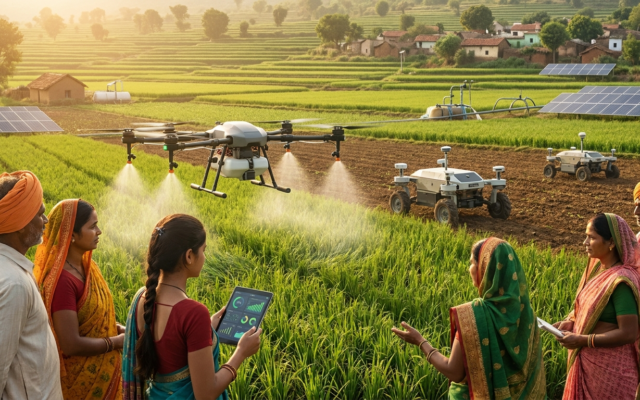
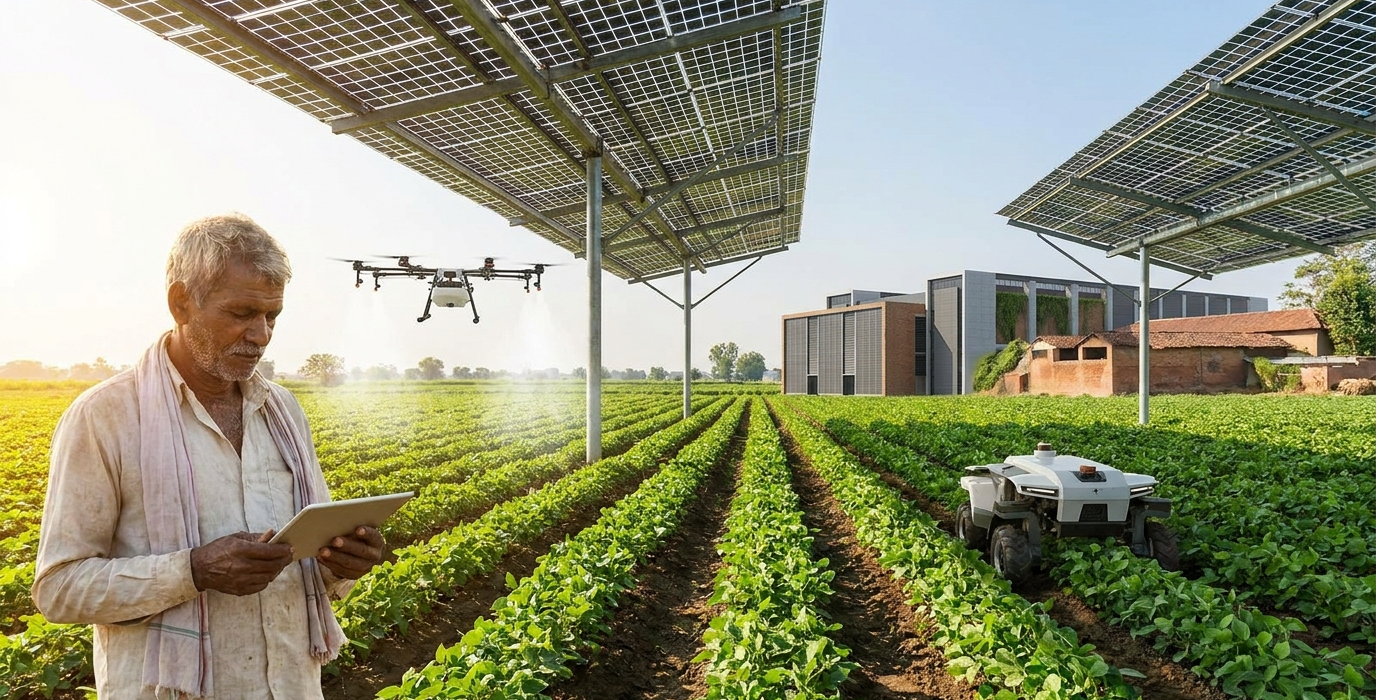
- The integration of AI with drone technology is creating unparalleled opportunities for efficient, large-scale farm monitoring and intervention.
- Government initiatives and accessible AI tools are democratising technology, empowering smallholder farmers across India.
Precision Farming Takes Root: AI’s Intelligent Touch
The whispers of artificial intelligence in Indian agriculture are growing into a resounding chorus, transforming how we cultivate our land. No longer confined to theoretical models or large corporate farms, AI is now a tangible force, reaching into the fields of everyday farmers across the subcontinent. This isn’t just about predicting the weather or crop yields anymore; AI is actively involved in the day-to-day decisions that shape our agricultural landscape, making it more efficient, sustainable, and ultimately, more profitable. From the sun-baked plains of Rajasthan to the fertile deltas of the Godavari, farmers are witnessing a revolution powered by intelligent algorithms and data-driven insights.
We are seeing a shift from traditional, often resource-intensive farming practices to a highly optimized, data-informed approach. This evolution is crucial for India, a nation where agriculture remains a cornerstone of the economy and the livelihood of millions. The challenges are immense: a growing population to feed, climate change impacting weather patterns, and the constant need to improve resource management. AI offers a powerful suite of tools to address these very challenges, enabling us to do more with less. It’s about making every drop of water count and every grain of fertilizer serve its purpose optimally.
Smarter Irrigation and Pest Control: Water and Chemical Reduction
One of the most immediate and impactful applications of AI in Indian agriculture is in precision irrigation and pest management. Traditional irrigation methods often lead to over-watering or under-watering, wasting precious water resources and impacting crop health. AI-powered systems, however, analyse real-time data from soil moisture sensors, weather forecasts, and satellite imagery to determine the exact water needs of specific areas within a field. This granular approach ensures that crops receive the optimal amount of water, precisely when and where it’s needed.
Similarly, AI is revolutionising pest and disease detection. Instead of blanket pesticide applications, which can be costly and environmentally damaging, AI algorithms can identify early signs of infestation or disease through image recognition from drone or ground-based cameras. These systems can pinpoint the exact location and type of pest, allowing for targeted interventions. This not only reduces pesticide usage by up to 30% but also prevents widespread crop damage, leading to higher yields and better quality produce. Farmers in states like Punjab and Haryana are already reporting significant savings in water and chemical costs, alongside a noticeable improvement in crop health.
Drones and AI: Eyes in the Sky for Efficient Management
The synergy between drone technology and AI is creating a powerful new paradigm for farm management in India. Drones equipped with high-resolution cameras and various sensors can now survey vast agricultural lands with unprecedented speed and accuracy. These flying machines act as the eyes in the sky, collecting a wealth of data that AI algorithms can then process and interpret. This includes detailed information on crop health, soil nutrient levels, water stress, and even the presence of weeds or pests.
This aerial intelligence allows farmers to move from broad, field-level assessments to highly specific, plot-level interventions. For instance, a drone might identify a small patch of wilting crops due to a fungal infection. AI then flags this precise area for the farmer, who can then dispatch a targeted spray or even physically inspect the location. This level of detail was previously unimaginable for most farmers, especially those managing large holdings. The efficiency gains are substantial, saving time, labor, and resources. A surprising fact is that AI-powered drone analytics can map nutrient deficiencies across a 100-acre farm in under an hour, a task that would traditionally take days of manual soil sampling.
Democratising Technology: AI for Smallholder Farmers
Historically, advanced agricultural technologies have often been out of reach for smallholder farmers, who form the backbone of Indian agriculture. However, the current wave of AI integration is actively working to democratise this technology. We are seeing the development of user-friendly mobile applications and affordable AI-powered devices that cater to the needs and budgets of these farmers. These platforms often provide simple, actionable insights directly to their phones, requiring minimal technical expertise.
For example, an AI app can analyze a photo of a diseased leaf uploaded by a farmer and provide an instant diagnosis and recommended treatment. Similarly, AI-driven platforms are offering personalized advice on optimal planting times, fertilizer application, and market price predictions, all tailored to the farmer’s specific location and crop. Government initiatives and private sector collaborations are playing a crucial role in providing access to these tools, often through subsidized programs or community training initiatives. This is empowering farmers in villages from Tamil Nadu to West Bengal, enabling them to make more informed decisions and improve their livelihoods.
Predictive Analytics and Crop Health Monitoring: Proactive Solutions
Beyond real-time interventions, AI’s predictive capabilities are also proving invaluable for proactive farm management. By analysing historical data, weather patterns, soil conditions, and disease prevalence, AI algorithms can forecast potential risks and challenges weeks or even months in advance. This allows farmers to take preventative measures, significantly reducing the likelihood of crop failure or substantial yield losses.
Consider the impact of predicting potential pest outbreaks. AI models can identify environmental conditions that favour the proliferation of specific insects, alerting farmers to increase monitoring or implement preventative measures before an infestation takes hold. This proactive approach is a stark contrast to reactive strategies that often come into play only after significant damage has occurred. Furthermore, AI can continuously monitor crop health throughout the growing season, identifying subtle changes that might indicate stress or disease long before they become visually apparent to the human eye. This early detection is key to maintaining healthy, high-yielding crops.
AI in Supply Chain and Market Access: Bridging the Gap
The impact of AI in agriculture extends beyond the farm gate, revolutionising supply chain management and market access. Traditionally, farmers have faced challenges in connecting directly with consumers or larger markets, often relying on intermediaries that reduce their profit margins. AI-powered platforms are now bridging this gap, creating more transparent and efficient food systems.
AI algorithms can analyse market demand, predict price fluctuations, and even optimize logistics for transporting produce. This helps farmers make better decisions about when and where to sell their crops, ensuring they receive fair prices. Furthermore, AI is being used to enhance food traceability, allowing consumers to know the origin and journey of their food, building trust and accountability within the supply chain. Imagine an AI system that can not only predict the optimal time to harvest your mangoes in Ratnagiri but also connect you directly with a bulk buyer in Mumbai, handling the logistics and payment processing seamlessly. This level of integration is transforming the agricultural economy.
Frequently Asked Questions
What are the biggest benefits of AI in Indian agriculture?
The biggest benefits include increased crop yields, reduced usage of water and pesticides, improved resource efficiency, and enhanced profitability for farmers through better decision-making and market access.
Are AI tools affordable for small farmers in India?
Yes, a growing number of affordable and user-friendly AI-powered mobile apps and devices are becoming available, often supported by government subsidies and private sector initiatives, making them accessible to smallholder farmers.
How does AI help in dealing with climate change impacts on farming?
AI helps by providing predictive analytics for weather patterns, enabling more resilient crop choices, optimizing irrigation to conserve water during droughts, and detecting early signs of climate-related crop stress.
Can AI help improve the quality of Indian agricultural produce?
Absolutely. By enabling precision farming techniques, AI ensures crops receive optimal nutrients and care, reducing disease and pest damage, which directly contributes to higher quality produce with better shelf life and nutritional value.