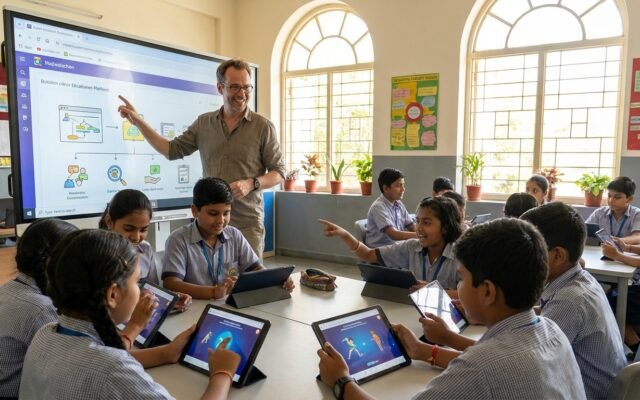
The hum of a German factory floor, a symphony of precision engineering, is a sound many German Mittelstand companies cherish. It speaks of tradition, quality, and reliability.
But across continents, in the bustling heart of India, a different kind of hum is taking over. It’s the digital pulse.
For many of Germany’s famed small and medium-sized enterprises (SMEs), this digital revolution in India presents a complex, sometimes daunting, yet undeniably exciting new frontier. It’s a landscape where ancient traditions meet cutting-edge technology.
Here, the future of global business is being written, byte by byte.
Key Takeaways:
- German SMEs face significant cultural and operational hurdles when implementing digital strategies in India.
- India’s rapidly evolving digital infrastructure and a vast young talent pool offer immense growth potential.
- Successful digital transformation requires a nuanced understanding of local market dynamics and consumer behaviour.
- Partnerships and localized approaches are crucial for German companies to thrive in India’s digital ecosystem.
- Despite challenges, the opportunities for innovation and competitive advantage in India are substantial.
Navigating the Digital Maze: Culture, Infrastructure, and Talent
The journey of a German SME, say, from Bavaria, into India’s digital marketplace is rarely a straight line. It’s more of a winding path.
Imagine Herr Schmidt, a seasoned engineer from Stuttgart, accustomed to the predictable efficiency of German processes. He’s tasked with digitizing his company’s supply chain operations in Delhi. He expects clear communication, adherence to deadlines, and robust technical support.
What he often encounters is a vibrant, sometimes chaotic, yet incredibly adaptive environment. The infrastructure itself can be a significant hurdle.
While major Indian cities boast excellent connectivity, reaching smaller towns or more remote manufacturing hubs can mean dealing with inconsistent internet speeds and power outages. This isn’t the reliable fiber optic cable Herr Schmidt is used to back home. There, a dropped connection can halt production for hours.
Furthermore, the very concept of digital adoption can differ. In Germany, digital tools are often integrated into established workflows with a focus on optimization and efficiency.
In India, digital solutions are sometimes introduced to bridge existing gaps. They can also leapfrog traditional stages of development entirely.
This means German companies might find their meticulously planned digital rollout encountering unexpected local workarounds. They might also face a different pace of adoption.
The talent pool, while vast and often highly skilled, can also present a learning curve. Indian IT professionals are incredibly adaptable. They possess a deep understanding of local user behaviour.
But bridging the communication gap regarding German corporate culture and expectations requires effort. It’s a critical step.
It’s not uncommon for German managers to find themselves explaining the importance of punctuality in a video conference. They might also need to clarify the need for precise documentation. This must be done in a way that resonates with their Indian counterparts.
This cultural dimension is as critical as the technological one. A company like Siemens, with its established presence, might have the resources to navigate these complexities.
But for a smaller firm from Bielefeld, it can feel like learning a new language and a new game simultaneously. It’s a significant undertaking.
The Lure of the Uncharted: India’s Untapped Digital Potential
Despite the initial friction, the sheer scale and dynamism of India’s digital landscape offer an irresistible pull for German SMEs. It’s a magnet.
Consider the burgeoning e-commerce sector. This phenomenon has exploded in recent years. Companies that once relied on traditional distribution channels are now looking at online marketplaces.
They aim to reach millions of new customers. For a German firm specializing in high-quality home goods, the potential is enormous.
They can bypass traditional retail gatekeepers. They can connect directly with Indian consumers through platforms like Flipkart or Amazon India.
This isn’t just about selling products. It’s about building brands in a market that is increasingly digitally native. The consumer is evolving.
Then there’s the burgeoning startup ecosystem. India is a hotbed of innovation. Young entrepreneurs are developing cutting-edge solutions in areas like FinTech, AgriTech, and HealthTech.
German SMEs can find partners here. Not just as vendors, but as collaborators. Imagine a German manufacturer of specialized agricultural machinery partnering with an Indian startup.
This startup uses AI and satellite imagery to optimize crop yields. This kind of synergy can lead to entirely new product lines and market opportunities.
The Indian government’s push for digitalization further fuels this growth. Initiatives like Digital India signal a commitment.
It signals a commitment to building digital infrastructure, promoting digital literacy, and creating a conducive environment for tech-driven businesses. This makes India not just a market for digital goods.
It’s a fertile ground for developing and testing new digital solutions. The sheer volume of data being generated is staggering.
The increasing comfort of consumers with digital transactions means that companies can gain a significant competitive edge. They gain this by effectively leveraging these trends. It’s a market that rewards agility.
It also rewards a willingness to embrace the new. This is a core requirement for success.
Bridging the Gap: Strategies for Digital Success
So, how do German SMEs actually make this digital leap successful? It’s not about simply transplanting German digital strategies onto Indian soil. That’s a common pitfall.
Frau Müller, who runs a medium-sized automotive parts supplier in Wolfsburg, learned this firsthand. Her initial attempt to implement a standard German ERP system in her nascent Indian subsidiary met with resistance and lukewarm adoption. The system was too rigid. It didn’t account for local payment practices. It also lacked integration with popular Indian business communication tools.
The breakthrough came when she decided to engage local IT consultants and developers. They understood the nuances of the Indian market. They knew the preferred software platforms. They also grasped the cultural expectations of employees.
This leads to a crucial strategy: localization. It means adapting digital tools and processes to fit the Indian context. This could involve developing mobile-first solutions. Smartphone penetration is exceptionally high.
It could also mean integrating with popular local payment gateways. It also means investing in training programs. These programs must be culturally sensitive. They should be delivered in local languages where necessary.
Another vital strategy is building strong local partnerships. Instead of trying to go it alone, German SMEs can collaborate. They can collaborate with Indian tech companies, research institutions, or even established local businesses.
These partnerships provide invaluable insights into the market. They help navigate regulatory hurdles. They also offer a ready-made network of contacts.
For instance, a German firm looking to enter the Indian EdTech market could partner with an established Indian online learning platform. This leverages its user base and content expertise. This collaborative approach reduces risk. It also accelerates market entry.
Finally, cultivating a digital-first mindset within the entire organization is paramount. This applies from leadership to the shop floor. It involves continuous learning. It means fostering an environment where experimentation is encouraged.
It also requires being prepared to pivot when necessary. Agility is key.
The Human Element: Trust, Relationships, and Adaptation
Beyond the algorithms and code, the success of any digital transformation in India hinges on the human element. This is where German SMEs often find the most profound differences. It’s also where they find the greatest opportunities for growth.
In Germany, business relationships are often built on formality, contracts, and precise deliverables. While efficiency is king, the emotional and relational aspects can sometimes take a backseat.
In India, however, relationships and trust are foundational. A German manager might be surprised by the importance placed on informal interactions. They might be surprised by building rapport and understanding the personal context of their Indian counterparts.
This isn’t about sacrificing professionalism. It’s about recognizing that business in India often flows through established networks of trust. This is a crucial distinction.
Consider a scenario involving a German software company trying to implement a new customer relationship management (CRM) system for its sales team in Bengaluru. If the German project manager solely focuses on the technical specifications and deadlines, ignoring the need for team lunches, understanding family commitments, or celebrating local festivals, the adoption rate will likely suffer.
The Indian sales team might feel undervalued or misunderstood. This can lead to resistance. However, a manager who takes the time to learn a few basic Hindi phrases will foster a much stronger sense of loyalty and commitment. They will show genuine interest in their team’s well-being. They will celebrate successes with team-building activities.
This human-centric approach isn’t a soft skill. It’s a strategic imperative. It builds a foundation of trust. This trust can weather any technical glitches or unforeseen challenges.
This understanding of ‘Jugaad’ – the Indian spirit of resourceful innovation and finding solutions despite limitations – is also key. It’s about embracing flexibility and creativity. It’s about not rigidly adhering to pre-set plans when faced with unforeseen circumstances.
Counter-Intuitive Insights: What German SMEs Often Get Wrong
One of the most surprising truths for German SMEs entering India’s digital space is that India’s digital leapfrogging is often more about adaptation than pure innovation. While India is renowned for its tech talent, many digital solutions are designed to work within existing infrastructural limitations or cultural norms. They aren’t always about reinventing the wheel from scratch.
For example, a German company might expect a fully integrated cloud-based solution to be the standard. However, in many Indian businesses, especially those in Tier 2 and Tier 3 cities, a hybrid approach might be more practical and cost-effective. This approach combines on-premise servers with selective cloud services. This is due to connectivity issues or data security concerns. This need for robust offline capabilities or tiered connectivity solutions is something many German tech providers initially overlook.
Another counter-intuitive revelation is that the perception of India as a “low-cost” market can be misleading when it comes to sophisticated digital solutions and skilled talent. While labor costs for certain tasks might be lower, the cost of acquiring, retaining, and training top-tier digital talent is rapidly increasing. This is especially true for those with specialized skills in AI, cybersecurity, or data analytics. These costs can be competitive with global standards.
German SMEs expecting to simply outsource cheap labor for digital tasks might be disappointed. Instead, they should focus on partnering with firms that offer high-value expertise. They should seek partners with a deep understanding of the Indian market. The real opportunity lies not in chasing the lowest price. It lies in finding partners who can deliver scalable, customized digital solutions. These solutions drive genuine business growth and competitive advantage in a complex and rapidly evolving market. This requires a shift in perspective. It’s a shift from cost-cutting to value creation.
The Road Ahead: Embracing the Digital Future Together
The digital transformation in India is not a destination; it’s a continuous evolution. For German SMEs, this presents an ongoing opportunity to learn, adapt, and grow. The lessons learned from navigating India’s digital landscape can, in turn, inform strategies for other emerging markets.
The embrace of digital tools, from AI-powered analytics to sophisticated e-commerce platforms, is reshaping Indian businesses and consumer behaviour at an unprecedented pace. German companies that approach this transformation with a blend of their renowned engineering precision and a willingness to embrace local nuances are poised for significant success.
Think of a traditional German bakery in a small town like Freising, deciding to launch an online ordering system. They might initially struggle with the digital interface. But with the right local support and an understanding of Indian online ordering habits, they could tap into a whole new customer base. This adaptability is key.
The future of German business in India will be defined by those who can seamlessly integrate their technical expertise. They must also integrate a deep appreciation for the human and cultural dimensions of digital engagement. It’s about building bridges, not just digital ones, but bridges of understanding and collaboration.
The Indian digital frontier is vast and promising. For those German SMEs willing to explore it with an open mind and a strategic heart, the rewards will be substantial. It’s an exciting time to be a part of this unfolding narrative.