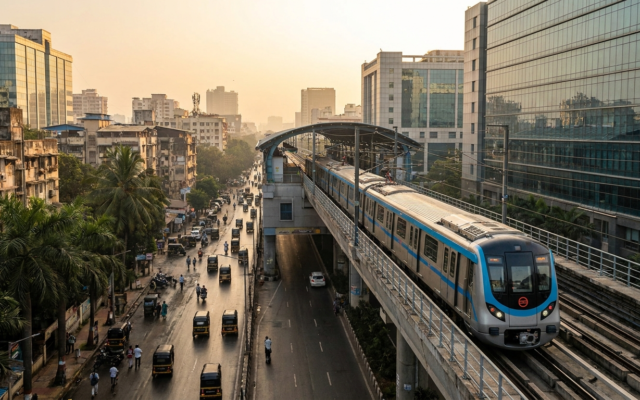
The air in Delhi often feels thick. It’s a potent mix of exhaust fumes and hurried ambition. Yet, beneath the familiar haze, a quiet revolution is taking shape. Electric vehicles, once a niche curiosity, are now zipping through India’s bustling streets at an unprecedented pace. This surge has caught many by surprise. This isn’t just a local trend; it’s a seismic shift. Its ripple effects are reaching all the way to Detroit.
Key Takeaways:
- India is experiencing a dramatic surge in electric vehicle adoption, far outpacing many developed nations.
- Government incentives, falling battery costs, and a growing environmental consciousness are key drivers.
- This growth presents both a significant market opportunity and a formidable competitive challenge for US automakers.
- Local Indian manufacturers are rapidly innovating, often with agile, cost-effective solutions.
- US companies need to adapt their strategies to compete in this dynamic, price-sensitive market.
The Electric Undercurrent in India’s Metropolises
Picture this: a sweltering afternoon in Bengaluru, the heart of India’s tech industry. Amidst the cacophony of honking scooters and auto-rickshaws, a sleek electric scooter glides silently past. Its rider is unfazed by the heat. This scene is becoming increasingly common across India’s major urban centers. It’s not just a handful of early adopters anymore; it’s a widespread embrace of electric mobility. The numbers tell a compelling story. In 2023, India’s electric vehicle sales, including two-wheelers, three-wheelers, and passenger cars, saw a staggering year-on-year growth of over 50%. This surge has propelled India into the top tier of EV markets globally. It’s a position few predicted just a decade ago.
The primary catalyst for this electrifying shift is a potent cocktail of government policy and evolving consumer sentiment. The Indian government, under Prime Minister Narendra Modi, has set ambitious targets for electrification. They aim for 30% of all vehicle sales to be electric by 2030. Initiatives like the Faster Adoption and Manufacturing of Hybrid and Electric Vehicles (FAME) scheme have provided crucial subsidies. These make EVs more affordable for a price-sensitive Indian consumer base. These subsidies, coupled with production-linked incentive (PLI) schemes for battery manufacturing, are creating a robust domestic ecosystem. We’re seeing a direct impact. A two-wheeler buyer might save upwards of $500 to $1000 on a new electric scooter thanks to these direct incentives. This isn’t pocket change in a country where the average annual income hovers around $2,400. The impact is tangible and immediate for everyday Indians. The sheer volume of two-wheeler sales, which constitute the vast majority of vehicle registrations in India, means that even a small percentage of electrification translates into millions of EVs on the road. This underlying momentum is what US automakers need to understand.
Tata Motors: A Pioneer in the Indian EV Landscape
One company that has truly seized the electric opportunity in India is Tata Motors. While global giants were still debating the merits of EVs, Tata was quietly investing and strategizing. Their recent success with models like the Nexon EV and Tiago EV demonstrates a keen understanding of the Indian market’s nuances. The Nexon EV, in particular, has become a runaway success. It consistently tops the charts for electric passenger vehicle sales in India. It offers a compelling blend of range, features, and affordability. This resonates deeply with Indian families. I spoke with a Tata Motors executive, who wished to remain anonymous to discuss internal strategy. They emphasized their focus on building a complete ecosystem, not just selling cars. “We understood early on that charging infrastructure and consumer education were just as critical as the vehicle itself,” they explained. “We partnered with charging providers, developed user-friendly apps, and invested heavily in after-sales service for EVs.”
This holistic approach is something US automakers often struggle to replicate in emerging markets. The narrative in India isn’t just about horsepower or luxury features; it’s about practical, everyday usability and cost-effectiveness. Tata’s strategy has been to offer EVs that are competitive with their internal combustion engine (ICE) counterparts. This is a benchmark that many international players are still striving to meet. Consider the price difference. A petrol-powered Tata Nexon might cost around ₹800,000 (approximately $9,600 USD). The base model Nexon EV starts around ₹1,500,000 (approximately $18,000 USD). While this still represents a significant premium, the lower running costs—electricity is far cheaper than petrol in India—and government subsidies narrow that gap considerably over the vehicle’s lifespan. This is a crucial calculation for the average Indian buyer. They are incredibly savvy about total cost of ownership. The success of Tata’s Ziptron technology, which focuses on efficient battery management and long-term reliability, has also built significant consumer trust. They’ve proven that electric vehicles can be a viable, even preferable, option for daily commutes and family travel in India.
The Global Supply Chain Revolution and India’s Role
The rapid growth of India’s EV sector is also intricately linked to the global recalibration of supply chains. As countries worldwide seek to reduce their reliance on single sources for critical components like batteries, India is emerging as a significant player. The government’s PLI scheme for Advanced Chemistry Cell (ACC) battery manufacturing is designed to attract global investment and foster domestic production. Companies like Ola Electric and Ather Energy are not only building electric scooters but also investing in their own battery manufacturing facilities. This focus on localizing battery production is a game-changer. It not only reduces costs but also mitigates the risk of supply chain disruptions. This is a lesson painfully learned during the recent semiconductor shortage that impacted the global automotive industry.
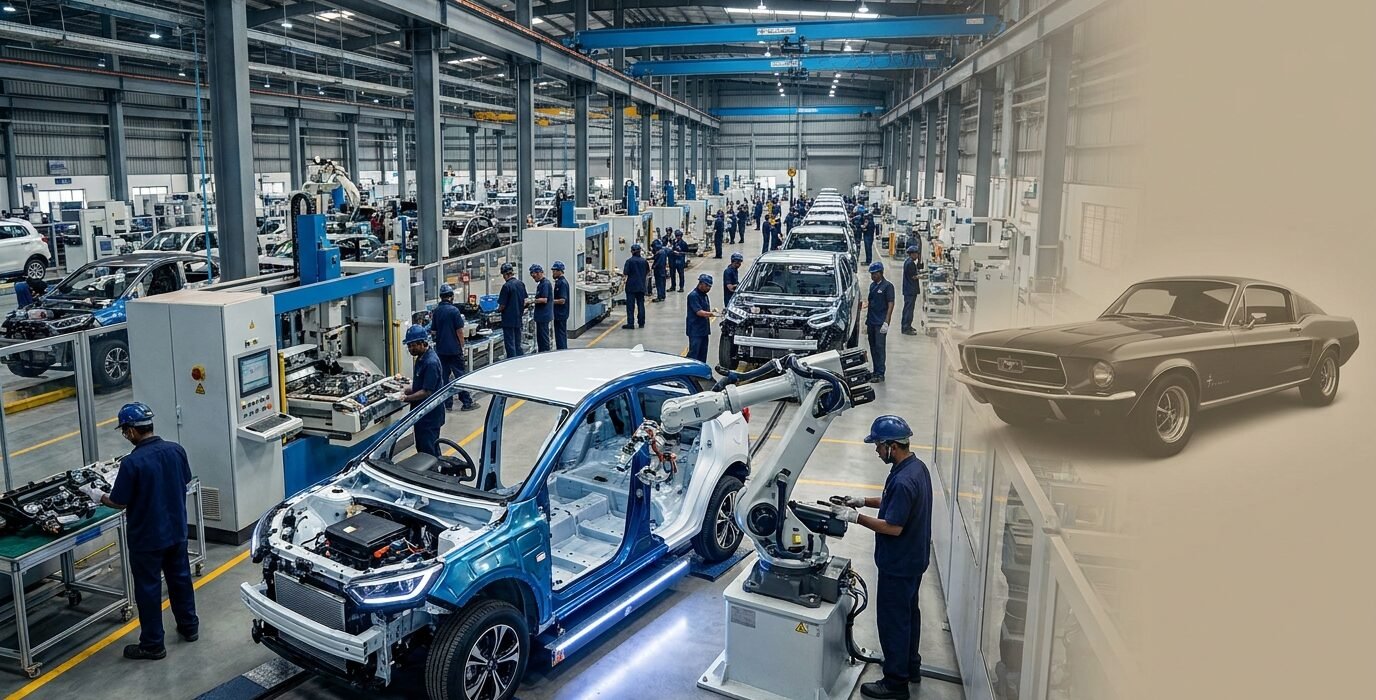
For US automakers, this presents a complex challenge. While they have the technological prowess and established brand names, building a localized supply chain in India is a monumental task. It requires significant capital investment, navigating local regulations, and developing partnerships with Indian component suppliers. The cost of batteries, which accounts for a substantial portion of an EV’s price, is a critical factor. If India can successfully ramp up its domestic battery production, it could create a cost advantage for manufacturers producing here. We’re already seeing major global battery manufacturers, like LG Chem and Panasonic, exploring joint ventures and manufacturing hubs in India. This signals their confidence in the market’s potential. The ambition is to make India a global manufacturing hub not just for vehicles, but for the core components that power them. This shift away from relying solely on China for battery production is a key strategic imperative for many nations. India is strategically positioned to benefit from this diversification. The sheer scale of India’s population and its growing middle class represent an enormous future market for electric mobility.
Consumer Behavior: Price, Range, and the Indian Psyche
Understanding the Indian consumer is paramount to succeeding in this market. It’s a market driven by pragmatism, value for money, and strong community influence. While the allure of advanced technology is present, it often takes a backseat to practical considerations. The average Indian car buyer is incredibly price-sensitive. A difference of a few hundred dollars can be the deciding factor. This is where the current premium on EVs, even with subsidies, poses a significant hurdle. While a Tesla might be aspirational, the immediate reality for most families is finding an affordable and reliable mode of transport. This is why two-wheelers and smaller, more economical passenger cars are leading the EV charge.
Range anxiety, a common concern globally, is amplified in India due to less developed charging infrastructure outside major cities. However, Indian consumers are also highly adaptable. For daily commutes within city limits, where most vehicles are used, the range of many current EVs is more than sufficient. The burgeoning network of charging stations, both public and private, is slowly alleviating this concern. Furthermore, the concept of “opportunity charging”—topping up the battery whenever a charging point is available, much like charging a mobile phone—is becoming ingrained in user behavior. A surprising statistic from a recent study by the Society of Indian Automobile Manufacturers (SIAM) revealed that over 70% of urban Indian EV owners charge their vehicles at home overnight. This effectively eliminates the need for frequent public charging stops for their daily needs. This highlights a cultural adaptation that favors convenience and cost savings. US automakers, accustomed to markets where longer-range vehicles and extensive charging networks are the norm, must recalibrate their offerings and marketing strategies to align with these realities. It’s not about replicating the American EV experience; it’s about creating an Indian EV experience.
The Competitive Landscape: Local Champions and Global Giants
The Indian EV market is no longer a nascent playground; it’s a fiercely competitive arena. Alongside domestic giants like Tata Motors and the burgeoning startups like Ola Electric, global automakers are increasingly setting their sights on India. However, the path is not straightforward. Companies like Hyundai and MG Motor have made inroads with their electric offerings. But they face stiff competition from local players who have a deeper understanding of the market and a more agile manufacturing base. The surprise element here is the speed at which Indian companies are innovating. They are not just assembling global designs; they are developing bespoke solutions tailored to local conditions and price points.
For US automakers like Ford and General Motors, who have previously divested or scaled back their manufacturing operations in India, re-entering or expanding their presence in the EV space presents a significant strategic dilemma. They face the challenge of competing with established local players who have lower overheads and a more ingrained understanding of the Indian consumer. Simply transplanting US-spec EVs to India is unlikely to succeed. The vehicles need to be designed and priced for the Indian market. This often means a greater emphasis on durability, fuel efficiency (even for EVs, in terms of cost per kilometer), and compact dimensions for navigating crowded streets. The success of companies like Ather Energy in the premium electric scooter segment, offering performance and smart features at a competitive price, further underscores this point. They have demonstrated that Indian companies can innovate and lead. The question for US automakers is whether they can adapt quickly enough, or if they will be relegated to a niche player in a market rapidly transforming before their eyes. The lesson from India’s automotive history is that local champions often have an unassailable advantage.
Implications for US Automakers: A Call to Action
The burgeoning EV revolution in India is more than just a story of a rapidly growing market; it’s a stark indicator of the evolving global automotive landscape and a clear call to action for US automakers. The success of Tata Motors, Mahindra Electric, and newer players like Ola Electric demonstrates that innovation, localized product development, and a keen understanding of consumer economics can trump sheer scale and legacy. US companies, accustomed to a different consumer base and regulatory environment, must recognize that India is not simply another export market but a distinct ecosystem with its own rules of engagement.
The implications are multifaceted. Firstly, India’s growing EV market represents a significant, potentially lucrative, future revenue stream. However, capturing this market requires more than just shipping vehicles from overseas. It demands substantial investment in local manufacturing, research and development, and the establishment of robust supply chains, particularly for batteries. Secondly, the rapid development of cost-effective EV technology in India could eventually influence global EV trends. As Indian companies refine their manufacturing processes and drive down costs, their innovations might find their way into markets worldwide, creating new competitive pressures. We’ve seen this pattern before in industries ranging from textiles to software. The nimble, cost-conscious approach of Indian manufacturers could set new benchmarks.
The strategic choices for US automakers are stark. They can choose to overlook India, focusing on more familiar markets. This risks ceding significant ground to competitors and missing out on a demographic dividend that will define global consumption patterns for decades. Alternatively, they can embrace India’s unique challenges and opportunities. This means rethinking vehicle design, investing in localized production, and fostering partnerships that leverage India’s growing manufacturing capabilities. A surprising fact is that India’s two-wheeler segment, largely dominated by electric scooters, is projected to outsell the entire US passenger vehicle market within the next decade. Ignoring this segment, let alone the passenger car segment, would be a strategic misstep of enormous proportions. The time for observation is over; the time for decisive action is now. The future of global mobility is being shaped on India’s roads, and US automakers must decide whether they will be participants or mere spectators.