Key Takeaways
- Discover the story of Priya Sharma, a student who defied immense challenges to secure a seat at IIT Bombay.
- Learn about the innovative study methods and community support that were crucial to her success.
- Understand the unique educational landscape in rural India and the hurdles aspiring students face.
- Gain insights into the unwavering spirit required to achieve academic excellence against all odds.
The Unlikely Path to IIT Bombay
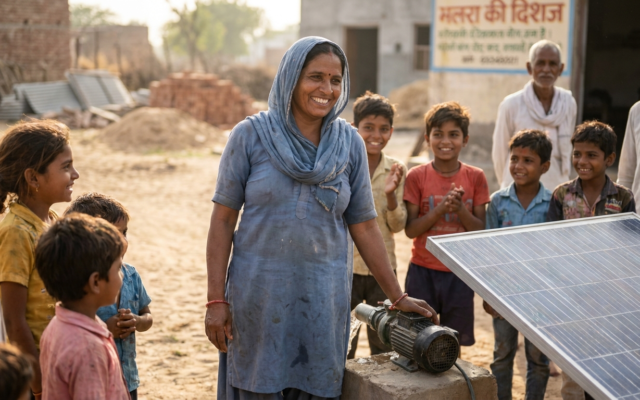
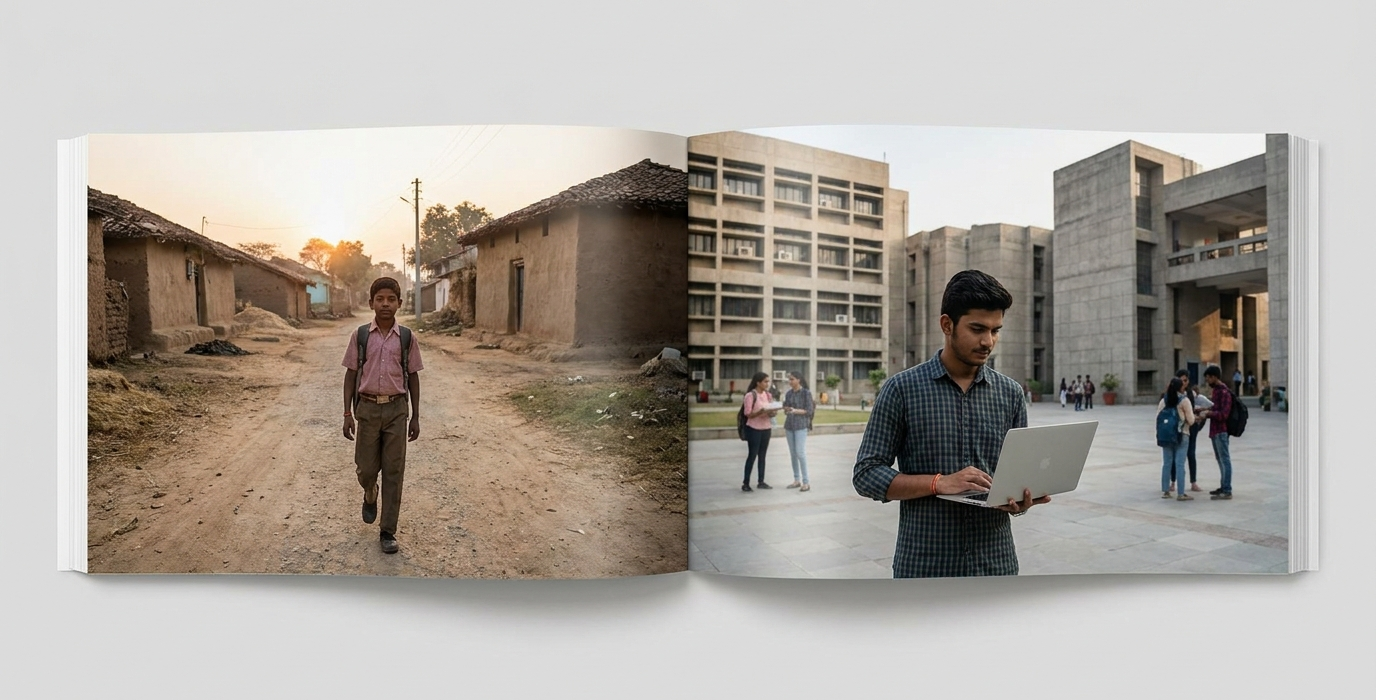
The air in the small village of Rampur, nestled deep within the arid landscapes of Rajasthan, rarely hums with talk of Silicon Valley or advanced quantum physics. Life here, for generations, has been dictated by the rhythm of the monsoons and the demands of the land. Yet, within this quietude, a remarkable story of ambition and perseverance has taken root. Priya Sharma, a young woman whose childhood was marked by the constant struggle for basic amenities, has achieved what many in her position could only dream of: a coveted seat at the Indian Institute of Technology (IIT) Bombay, one of India’s premier engineering institutions. Her journey is not just a personal triumph; it’s a beacon of hope for countless aspiring students in rural India who face systemic disadvantages.
Priya’s early years were a stark contrast to the privileged environments many IIT aspirants come from. Her father, a farmer, often faced unpredictable yields, and her mother juggled household chores with small-scale embroidery work to supplement their meager income. Access to quality education in Rampur was limited. The local government school had overcrowded classrooms, scarce resources, and often, a shortage of qualified teachers. Books were a luxury, and the internet, a distant concept. Still, Priya possessed an insatiable curiosity and a fierce determination to learn. She would often spend hours under the dim glow of a kerosene lamp, poring over borrowed textbooks, her dreams fueled by the few success stories that trickled down to her village.
The path to IIT is notoriously competitive, with millions of students vying for a limited number of seats each year. For a student from a remote village with limited resources, the odds are exponentially stacked against them. Priya’s initial exposure to the IIT entrance exam, the Joint Entrance Examination (JEE), came through a worn-out newspaper clipping. The sheer scale of the examination and the rigorous preparation it demanded seemed daunting. However, instead of succumbing to the overwhelming reality, Priya embraced it as a challenge. She understood that her current circumstances were not a barrier, but a launchpad for a different kind of determination.
Bridging the Digital Divide: Priya’s Resourceful Learning
Priya’s educational journey was a masterclass in resourcefulness, showcasing how determination can triumph over a lack of conventional advantages. In Rampur, a dedicated computer or a high-speed internet connection was an unimaginable luxury. Priya’s primary interaction with the digital world, and thus with wider educational resources, was through the village’s single, often unreliable, internet cafe. This cafe, run by a benevolent local elder, was her gateway to a universe of knowledge that lay far beyond the dusty lanes of her village.
She would meticulously plan her visits, often saving up her small earnings from helping her mother to pay for the internet access. Her study sessions at the cafe were intense, focused affairs. Priya would download study materials, watch educational videos on YouTube, and practice mock tests, all within the limited time she could afford. This required immense discipline and a sharp ability to absorb information quickly, as bandwidth was slow and power outages were frequent. She learned to prioritize her learning, identifying the most crucial topics and concepts that were likely to appear in the JEE.
Her parents, despite their own financial constraints, were her staunchest supporters. They ensured she had a quiet space to study at home and encouraged her relentlessly. They couldn’t afford expensive coaching classes, the norm for most serious IIT aspirants in urban India. Instead, Priya relied on older, well-worn textbooks and the generosity of her teachers at the local school, who recognized her potential and often lent her their personal notes. She also formed a small study group with a few other bright students from nearby villages, pooling their limited resources and sharing knowledge. This informal network provided a crucial support system, fostering a sense of camaraderie and shared purpose.
One of the most surprising aspects of Priya’s preparation was her innovative use of analog methods to compensate for digital limitations. She meticulously created her own flashcards, hand-drawn diagrams, and summarized complex theories in notebooks that became her personal encyclopedias. These physical tools were a tangible representation of her effort and helped her internalize concepts far more effectively than passive online learning might have. She also practiced solving past JEE papers under timed conditions, simulating the exam environment as closely as possible, often using a simple stopwatch.
The Power of Community and Mentorship
While Priya’s personal drive was the engine of her success, the role of her community and unexpected mentors cannot be overstated. In many urban settings, students have access to dedicated coaching centers, study circles, and a plethora of paid resources. Priya’s path was different, relying on the organic support system that emerged from her village and beyond. The local school teacher, Mr. Ramesh Singh, became an instrumental figure. He saw Priya’s exceptional talent early on and took it upon himself to guide her.
Mr. Singh would often stay back after school hours to clarify doubts, provide extra practice problems, and more importantly, offer encouragement. He understood the psychological toll that such an ambitious pursuit could take, especially for someone from a disadvantaged background. He would share stories of his own struggles and the importance of resilience, helping Priya maintain her focus and morale. He also connected her with a network of former students who had pursued higher education, creating a chain of mentorship that transcended geographical boundaries.
This network proved invaluable. A young engineer, working in Bengaluru, who hailed from a similar village, learned about Priya through Mr. Singh. He began to regularly email her, offering advice on study strategies, the JEE syllabus, and even tips on managing stress. He would also send her digital notes and links to online resources that she might have missed. This remote mentorship, built on shared experience and a desire to uplift others, provided Priya with insights and encouragement that were otherwise inaccessible. It demonstrated that the spirit of community and support can thrive even in the digital age, bridging vast distances.
Furthermore, the village itself, in its own way, rallied around Priya. Neighbors would often offer her small chores to help her earn a little money for her internet cafe visits, or bring her simple meals so she could spend more time studying. There was a collective pride and hope invested in her journey. This communal backing created an environment where her dream felt like a shared endeavor, alleviating some of the isolation that often accompanies intense academic preparation. The success of one, in this instance, was seen as the upliftment of many.
Navigating the JEE: Strategies for Success
The Joint Entrance Examination (JEE) is renowned for its challenging syllabus and the sheer breadth of topics it covers. For Priya, preparing for this exam without the benefit of formal coaching required a strategic and disciplined approach. She understood that replicating the methods of urban aspirants was impossible; she had to forge her own path, leveraging her strengths and mitigating her weaknesses. Her study plan was a testament to her analytical mind and her deep understanding of her own learning style.
Priya focused heavily on mastering the fundamental concepts of Physics, Chemistry, and Mathematics. She believed that a strong conceptual base was more important than memorizing rote formulas, especially given her limited access to extensive study materials. She would spend hours dissecting each topic, ensuring she understood the underlying principles before moving on. This deep dive approach meant she covered less ground than some of her peers, but the knowledge she acquired was more robust and enduring. Her hand-drawn diagrams and detailed notes were crucial in this process, acting as visual aids that reinforced her understanding.
Time management was another critical element of her strategy. Knowing her limited access to resources, she made every minute count. She divided her study schedule meticulously, allocating specific hours for each subject and for revision. She also incorporated regular mock tests, even if they were printouts from online resources or questions she painstakingly transcribed. Practicing under timed conditions helped her build speed and accuracy, essential for the high-pressure JEE environment. She learned to quickly identify questions she could answer confidently and those that required more thought, a crucial skill for maximizing her score.
One of Priya’s most ingenious strategies was to create her own “error log.” Whenever she made a mistake in a practice question or a mock test, she wouldn’t just correct it. She would write down the mistake, the reason for it (e.g., conceptual misunderstanding, calculation error, time pressure), and the correct approach. This log became a powerful tool for targeted revision, allowing her to focus on her specific weaknesses. It was a personalized feedback loop that guided her learning and ensured she wasn’t repeating the same errors. This level of self-awareness and analytical self-correction is a hallmark of truly successful students.
“My village taught me the value of hard work and community. My books taught me the power of knowledge. The JEE taught me to believe in myself, even when the odds seemed impossible.” – Priya Sharma.
The Surprising Upsides of Limited Resources
It might seem counterintuitive, but Priya’s journey reveals that a lack of abundant resources can, in fact, foster a unique set of advantages. While the struggle was undeniably real, the constraints she faced forced her to develop skills and resilience that are often underdeveloped in more privileged environments. The constant need to be resourceful meant she became an expert at problem-solving, not just in academics, but in everyday life. Every obstacle became an opportunity to innovate.
One such surprising upside was the development of unparalleled focus. Without the constant distractions of unlimited entertainment options, social media feeds, or a plethora of study materials to choose from, Priya’s mind was trained to concentrate intensely on the task at hand. Her limited internet access meant she couldn’t afford to browse aimlessly; every click had to serve a purpose. This laser-like focus is a rare commodity in today’s hyper-connected world and is a significant asset for deep learning and complex problem-solving.
Another unexpected benefit was the cultivation of a profound appreciation for education. For Priya, every book, every piece of information, was precious. This scarcity fostered a deep respect for the learning process itself. She wasn’t just studying to pass an exam; she was acquiring knowledge that had been hard-won. This intrinsic motivation is far more potent and sustainable than external pressures or rewards. It’s the kind of drive that fuels lifelong learning and innovation, the very qualities IITs aim to nurture.
Perhaps the most significant advantage was the development of extreme resilience. Facing and overcoming daily challenges – be it a power outage during a crucial study session, a difficult concept with no immediate explanation, or the financial strain on her family – built an inner fortitude. This resilience is not just about bouncing back from setbacks; it’s about learning to thrive in adversity. This mental toughness is precisely what is needed to navigate the demanding academic rigor of an IIT and the subsequent challenges of a demanding career. Priya’s journey demonstrates that sometimes, the very things that appear to be limitations can, in fact, be the most powerful catalysts for growth.
The Road Ahead: Dreams Beyond IIT Bombay
Securing a place at IIT Bombay is a monumental achievement for anyone, but for Priya, it represents the opening of a door that was once impossibly shut. Her journey from the dusty fields of Rampur to the hallowed halls of one of India’s most prestigious institutions is an inspiration, but it is also just the beginning. While the immediate goal is to excel in her chosen engineering discipline, Priya’s vision extends far beyond academic success. She is acutely aware of the challenges faced by students in rural India and harbors a deep desire to contribute to their upliftment.
Her immediate focus will be on absorbing as much knowledge and experience as possible during her time at IIT Bombay. She plans to actively participate in research projects, connect with professors, and leverage the vast network of alumni and industry professionals that the institute offers. Priya is particularly interested in areas of technology that can be adapted for rural development, such as sustainable agriculture solutions, low-cost water purification systems, and accessible digital learning platforms. She believes that technology, when applied thoughtfully and contextually, can be a powerful tool for social change.
She also intends to continue her role as a mentor, albeit on a larger scale. Priya wants to establish a program that connects rural students with resources, guidance, and inspirational stories from successful individuals. She envisions a future where geographical location or economic background does not dictate a child’s potential. Her own experience has shown her the immense untapped talent that exists in remote corners of India, talent that simply needs the right opportunities and support to blossom.
Priya’s ambition is not just about personal success; it’s about creating a ripple effect. She wants to inspire other young girls in villages like hers to dream big, to believe in their capabilities, and to pursue education as a pathway to a better future. Her story is a powerful testament to the fact that talent is universal, but opportunity is not. By excelling at IIT Bombay and dedicating herself to social impact, Priya Sharma is poised to become a transformative figure, not just for her village, but for a generation of aspiring minds across India.
Frequently Asked Questions
What is the JEE?
The Joint Entrance Examination (JEE) is a highly competitive entrance examination conducted annually in India for admission to undergraduate engineering programs at the Indian Institutes of Technology (IITs) and National Institutes of Technology (NITs).
How difficult is the JEE compared to other exams?
The JEE is widely considered one of the most challenging undergraduate entrance exams globally due to its vast syllabus, complex problem-solving questions, and the immense competition, with millions of students vying for a limited number of seats.
What are the main subjects tested in the JEE?
The JEE primarily tests students on their understanding of Physics, Chemistry, and Mathematics. The syllabus covers topics typically taught in the 11th and 12th grades of Indian secondary education.
What does “IIT” stand for?
IIT stands for Indian Institute of Technology. These are a group of autonomous public technical universities located across India, recognized for their high standards in engineering and technology education.
Can students from rural backgrounds realistically aspire to IITs?
Yes, absolutely. While challenges exist, the stories of students like Priya Sharma demonstrate that with dedication, smart strategies, and community support, students from rural backgrounds can overcome obstacles and achieve success in competitive exams like the JEE.