Key Takeaways
- India’s electric scooter market is on an unprecedented growth trajectory, projected to capture a significant share of the two-wheeler market by 2030.
- Government incentives, falling battery costs, and a growing environmental consciousness among consumers are the primary drivers of this surge.
- Beyond metros, Tier 2 and Tier 3 cities are emerging as major adoption hubs, presenting unique opportunities and challenges for manufacturers and infrastructure providers.
- While sales are booming, reliable charging infrastructure and battery swapping solutions remain critical for widespread, hassle-free adoption.
The Unstoppable Rise of Electric Scooters in India
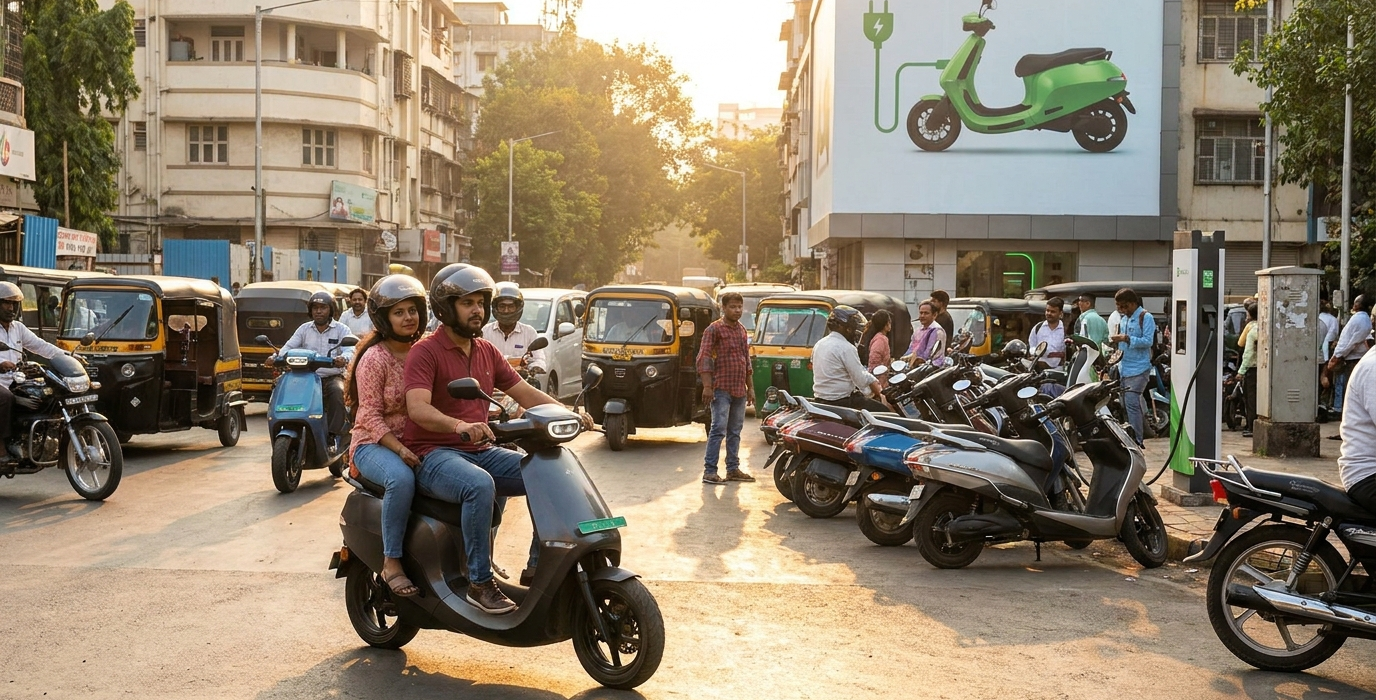
The air in India’s bustling cities is changing, and it’s not just the monsoons bringing a fresh breeze. A silent revolution is underway, powered by lithium-ion batteries and electric motors. We’re witnessing the electric scooter boom, a phenomenon that’s reshaping our commutes and our nation’s automotive landscape. By 2030, it’s not an exaggeration to say that electric scooters will be a dominant force on Indian roads.
This isn’t just a fleeting trend driven by early adopters. From the sprawling metropolises like Delhi and Mumbai to the rapidly developing Tier 2 cities such as Pune and Jaipur, the shift is palpable. The familiar whir of petrol engines is increasingly being replaced by the quiet hum of electric powertrains. This transformation is being fueled by a confluence of factors, making the transition not only desirable but also increasingly practical for millions of Indians.
We’re looking at a market that’s not just growing; it’s accelerating at a pace that few had predicted even a couple of years ago. The numbers are staggering, and the trajectory points towards a future where electric mobility isn’t just an alternative, but the norm. Understanding the forces behind this surge is key to grasping the opportunities and challenges that lie ahead for consumers, businesses, and policymakers alike.
The sheer volume of new models hitting the market, coupled with aggressive pricing strategies, is making electric scooters an attractive proposition. Consumers are increasingly realizing that the long-term savings on fuel and maintenance can outweigh the initial purchase price. This economic logic, combined with a growing sense of civic responsibility towards a cleaner environment, is creating a powerful demand. We are at the cusp of a major industrial and societal shift.
Government Push and Consumer Shift: The Dual Engines of Growth
The Indian government’s unwavering commitment to electrifying its transportation sector is undeniably a primary catalyst for the electric scooter surge. Schemes like the Faster Adoption and Manufacturing of Hybrid and Electric Vehicles (FAME) India Phase II have been instrumental in reducing the upfront cost of electric two-wheelers through subsidies. These incentives directly address the initial price barrier that often deterred potential buyers.
Beyond direct subsidies, the government is also pushing for local manufacturing through initiatives like the Production Linked Incentive (PLI) scheme for the automotive sector. This not only encourages domestic production but also helps in bringing down manufacturing costs over time. The vision is clear: to make India a global hub for electric vehicle manufacturing and adoption.
However, this government push would be largely ineffective without a corresponding shift in consumer perception and behaviour. We are seeing a growing awareness among Indians about the environmental impact of traditional vehicles. Concerns about air pollution in our major cities, coupled with a desire for sustainable living, are increasingly influencing purchasing decisions. Social media and widespread news coverage of climate change are playing a significant role in shaping this consciousness.
Furthermore, the performance and features of the latest electric scooters are no longer a compromise. Many models now offer impressive range, quick charging capabilities, and advanced connectivity features, rivaling or even surpassing their petrol counterparts. This technological advancement, combined with the increasing availability of financing options, is making electric scooters a practical and desirable choice for daily commutes. The convergence of policy, technology, and public sentiment is creating a perfect storm for electric mobility.
Beyond the Metros: The Tier 2 & 3 City Advantage
While the electric scooter revolution began in the bustling metros like Bengaluru and Chennai, its true growth engine is now increasingly found in India’s Tier 2 and Tier 3 cities. These regions, often characterized by more compact urban landscapes and shorter commute distances, present an ideal environment for electric scooter adoption.
Cities such as Nashik, Coimbatore, and even smaller towns in states like Gujarat and Punjab are witnessing a remarkable uptake. The lower average daily travel distances in these areas mean that the current range limitations of many electric scooters are far less of a concern. For residents, the savings on fuel costs, which can be substantial in areas where public transport might be less developed, offer a compelling economic argument.
Moreover, the cost of living and the overall affordability of electric scooters are more aligned with the purchasing power in these emerging urban centers. Manufacturers are recognizing this potential and are tailoring their marketing strategies and product offerings to cater to these specific markets. We are seeing a decentralization of the EV market, moving beyond the traditional urban strongholds.
This expansion also presents unique opportunities for infrastructure development. While charging stations might be concentrated in metros, the growing demand in Tier 2 and Tier 3 cities is pushing for more localized solutions. Battery swapping stations, for instance, could prove particularly effective in these areas, offering a quick and convenient way for riders to continue their journeys without long waiting times for charging. The next wave of EV growth will undoubtedly be powered by these vibrant, developing cities.
Navigating the Charging Conundrum: Infrastructure and Swapping Solutions
Despite the rapid sales growth, the availability and accessibility of charging infrastructure remain a significant hurdle for mass adoption of electric scooters. For many potential buyers, the fear of being stranded due to a depleted battery is a genuine concern, especially in areas where dedicated charging points are scarce.
The current charging ecosystem is a patchwork. While home charging is a viable option for many with private parking, it’s a luxury not afforded by a significant portion of the Indian population, particularly those living in multi-unit dwellings or with limited access to power outlets. Public charging stations, though growing in number, are still not as ubiquitous as petrol pumps.
This is where innovative solutions like battery swapping are gaining serious traction. Companies are investing heavily in establishing networks of battery swapping stations, particularly in urban areas and for fleet operators. Imagine being able to swap your depleted battery for a fully charged one in under two minutes, much like refuelling a petrol scooter. This model eliminates range anxiety and significantly reduces downtime.
The real game-changer for electric scooter adoption in India won’t just be the scooter itself, but the seamless and ubiquitous availability of charging or battery-swapping solutions, making range anxiety a relic of the past.
We are also seeing a rise in smart charging solutions and the integration of charging facilities in residential complexes and commercial spaces. Partnerships between EV manufacturers, charging infrastructure providers, and real estate developers are crucial. The focus needs to be on creating a dense, reliable, and user-friendly charging network that makes owning and operating an electric scooter as convenient as, if not more convenient than, a traditional petrol vehicle. The future of EV charging is about accessibility and speed.
The Evolving Landscape of Battery Technology and Costs
The heart of any electric scooter is its battery, and the rapid advancements in battery technology are a key factor driving down costs and improving performance. For years, the high cost of batteries was a major impediment to the widespread affordability of electric vehicles. However, we are now witnessing a dramatic shift.
Lithium-ion battery prices have been on a steady decline due to economies of scale in manufacturing, improvements in cell chemistry, and increased competition among battery producers. This cost reduction is directly translating into more affordable electric scooters for consumers. It’s a virtuous cycle: lower battery costs lead to lower vehicle prices, which in turn boosts demand, further driving down battery costs.
Beyond cost, battery technology is also evolving in terms of energy density and lifespan. Newer battery chemistries are offering greater power output and longer operational life, meaning scooters can travel further on a single charge and batteries last longer before needing replacement. This enhanced performance makes electric scooters a more practical choice for a wider range of users and use cases.
Furthermore, research into next-generation battery technologies, such as solid-state batteries, promises even greater safety, faster charging times, and higher energy densities. While these technologies are still in their nascent stages of commercialization, their potential to revolutionize the EV market is immense. The continuous innovation in battery technology is not just about incremental improvements; it’s about fundamentally changing the economics and capabilities of electric mobility. A surprising fact is that India’s reliance on imported battery cells, while still significant, is gradually decreasing as domestic manufacturing capabilities expand, supported by government policies.
Future Outlook: What Lies Ahead for India’s EV Two-Wheeler Market
Looking ahead to 2030 and beyond, the trajectory of India’s electric scooter market appears robust and continues to accelerate. We can expect to see an even greater market share captured by electric two-wheelers, potentially reaching 50% or more of total two-wheeler sales, a significant leap from current figures. This will be driven by continued technological advancements, policy support, and growing consumer acceptance.
The market will likely become more consolidated, with established automotive players increasing their EV offerings and new, agile startups carving out their niches. We can anticipate a wider spectrum of electric scooters, from ultra-affordable models designed for basic commuting to high-performance variants offering advanced features and longer ranges. The competition will intensify, benefiting consumers with more choices and competitive pricing.
The infrastructure will need to keep pace. We will likely see a significant expansion of public charging networks, with smart charging solutions becoming standard. Battery swapping will mature into a mainstream service, especially for commercial fleets and shared mobility services. The integration of EVs into the broader energy grid, perhaps even enabling vehicle-to-grid (V2G) capabilities, could become a reality in the longer term.
A truly surprising insight is the potential for electric scooters to transform last-mile logistics and delivery services. Companies are already heavily investing in electric fleets for e-commerce and food delivery, reducing operational costs and environmental impact. By 2030, it’s highly probable that the dominant mode of transport for delivery personnel across India will be electric scooters, silently weaving through city streets, delivering goods and contributing to a cleaner urban environment. The future of mobility in India is undeniably electric, and the scooter is leading the charge.
Frequently Asked Questions
What is the current market share of electric scooters in India?
As of August 2026, electric scooters have captured approximately 25-30% of the total two-wheeler market in India, a significant increase from just a few years ago. This share is projected to grow substantially by 2030.
Are electric scooters cheaper to run than petrol scooters in India?
Yes, electric scooters are significantly cheaper to run. The cost of electricity per kilometer is substantially lower than that of petrol, and they also have lower maintenance costs due to fewer moving parts.
What are the main challenges for electric scooter adoption in India?
The primary challenges include the need for widespread, reliable charging infrastructure, the initial purchase price (though decreasing), and consumer range anxiety. Battery lifespan and replacement costs are also a consideration for some.
Which are the leading electric scooter brands in India as of 2026?
Leading brands include Ola Electric, Ather Energy, TVS Motor Company (with its iQube), Bajaj Auto (with its Chetak), and Hero Electric. Several new players are also making significant inroads.
How long does it take to charge an electric scooter in India?
Charging times vary significantly by model and charger type. Standard home charging can take anywhere from 4 to 8 hours for a full charge, while fast chargers can reduce this time to 1-3 hours. Battery swapping offers a charge in minutes.