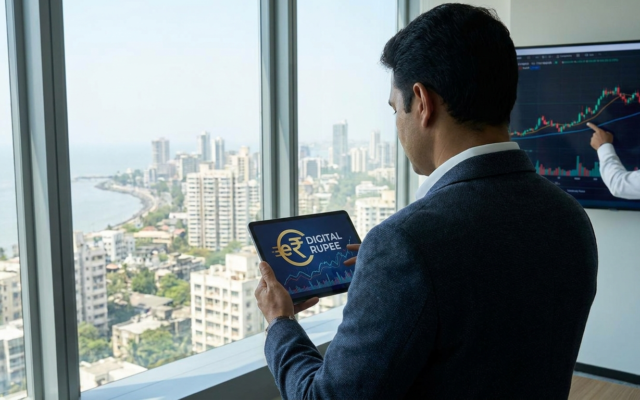
Key Takeaways
- The Digital Rupee (e₹) offers new avenues for investment and savings, distinct from traditional bank deposits.
- Understand the different e₹ wallets and their features, crucial for managing your digital assets effectively.
- Explore yield-generating e₹ products that provide competitive returns, with a focus on security and accessibility.
- Be aware of regulatory frameworks and security protocols safeguarding your digital rupee investments.
The Dawn of a New Financial Era: Understanding e₹ Investments
The year is 2026, and India’s digital journey has taken a significant leap forward with the widespread adoption of the Digital Rupee, or e₹. This isn’t just a new payment method; it represents a paradigm shift in how we manage, save, and invest our money. For savvy individuals across India and beyond, understanding the opportunities presented by e₹ is no longer optional – it’s essential for financial growth. We’re moving beyond traditional fixed deposits and savings accounts, entering an era where digital currency can offer enhanced returns and greater flexibility. This guide will demystify the world of e₹ investments, empowering you to make informed decisions and capitalize on this exciting new financial landscape.
Think of e₹ as a digital representation of the Indian Rupee, issued by the Reserve Bank of India (RBI). Unlike cryptocurrencies, it’s a direct liability of the central bank, offering the same safety and stability as physical currency. This digital form allows for near-instantaneous transactions and opens up innovative financial products. We’ll delve into how you can leverage these features for your personal investments, ensuring your wealth grows securely in this evolving digital economy. Get ready to explore a future where your money works harder and smarter for you, right from your smartphone.
Navigating Your e₹ Wallet Ecosystem
The gateway to your Digital Rupee investments is your e₹ wallet. These are not just for making payments; they are becoming sophisticated financial hubs. Several types of wallets exist, each catering to different needs and user preferences. Understanding these differences is paramount to choosing the right platform for your investment goals.
You’ll encounter institutional wallets, often provided by banks and authorized financial institutions. These typically offer robust security features and seamless integration with your existing banking services. For instance, if you bank with SBI or HDFC, their dedicated e₹ wallets will likely provide a familiar and secure environment. Then there are standalone digital wallets, which might offer specialized features like direct integration with decentralized finance (DeFi) platforms or unique loyalty programs. These can be particularly attractive for those looking for more advanced investment strategies or seeking specific benefits.
Crucially, consider the transaction limits, security protocols, and user interface of each wallet. Some wallets might have daily transaction caps, which could be a limiting factor for larger investments. The security measures, such as multi-factor authentication and end-to-end encryption, are non-negotiable. A user-friendly interface will also make managing your investments a breeze. We’ve seen instances where users mistakenly choose wallets with limited functionality, hindering their ability to access the full spectrum of e₹ investment opportunities.
Surprising Fact: e₹ Wallets and Biometric Security
Did you know that by 2026, many leading e₹ wallets are integrating advanced biometric authentication beyond fingerprints? Think iris scans and even voice recognition for enhanced security, making your digital assets virtually impenetrable. This level of security was unimaginable even a few years ago, underscoring the rapid innovation in this space.
Yield-Generating e₹ Products: Beyond Savings Accounts
The most compelling aspect of e₹ for investors lies in its potential to generate attractive yields, often surpassing traditional savings and even some fixed deposit rates. The RBI, in collaboration with financial institutions, has launched a suite of innovative products designed to put your digital currency to work. These products are designed to be both accessible and secure, making them ideal for a wide range of investors.
One primary avenue is e₹-linked savings accounts. Unlike conventional savings accounts, these offer a variable interest rate that is often benchmarked against short-term market rates, providing greater potential for growth. You can earn interest on your e₹ holdings daily, with interest credited monthly. This dynamic approach means your savings can adapt to changing economic conditions, potentially yielding higher returns during periods of economic expansion.
Another exciting development is e₹ fixed deposits (eFDs). These function similarly to traditional FDs but are entirely digital, offering faster account opening and liquidation processes. The interest rates on eFDs are typically fixed for the tenor and are generally higher than those offered on savings accounts. You can choose from various tenors, allowing you to tailor your investment to your financial goals, whether short-term or long-term. For instance, a 1-year eFD could offer a guaranteed return, providing a predictable income stream.
We are also seeing the emergence of e₹ money market instruments and short-term bond funds. These are more sophisticated options, suitable for investors comfortable with slightly higher risk for potentially greater returns. They involve investing in short-duration, high-quality debt instruments, managed by professional fund managers. The yields here can be even more competitive, especially in a stable interest rate environment. Always ensure you understand the risk associated with each product before investing.
Tokenised e₹ and Fractional Ownership Opportunities
The true innovation in e₹ investment often lies in its tokenisation capabilities. This means that assets, whether they are real estate, art, or even future income streams, can be represented as digital tokens on the e₹ blockchain. This opens up unprecedented opportunities for fractional ownership and liquidity, making previously inaccessible assets available to a broader investor base.
Imagine investing in a commercial property in a prime location like Connaught Place, Delhi. Traditionally, this would require substantial capital. However, with tokenised e₹, the property can be divided into thousands of digital tokens. You could then purchase a few tokens, effectively owning a fraction of that valuable asset. This democratizes investment, allowing individuals with smaller capital to participate in high-value asset classes.
These tokenised assets can be traded on specialized digital asset exchanges, offering a level of liquidity that was previously impossible for illiquid assets. This means you can buy and sell your fractional ownership stake much more easily than selling a physical share of property. The underlying e₹ used for these transactions ensures the security and immutability of ownership records. It’s a game-changer for wealth creation, enabling diversification beyond traditional stocks and bonds.
“Tokenisation is not just a technological novelty; it’s a fundamental shift that will unlock trillions in value by making illiquid assets liquid and high-value assets accessible to the everyday investor.”
This technology also extends to other asset classes. Think of investing in royalty rights for a popular Bollywood film or owning a portion of a high-demand agricultural crop before it’s even harvested. The possibilities are vast, and as the e₹ ecosystem matures, we will see even more creative applications of tokenisation for investment.
Understanding the Regulatory Landscape and Security Measures
As with any financial innovation, understanding the regulatory framework and security measures surrounding e₹ investments is crucial. The RBI and the Indian government have been proactive in establishing robust guidelines to ensure investor protection and market integrity. These regulations aim to build trust and confidence in the digital rupee ecosystem.
The e₹ operates under the direct oversight of the RBI, which means it adheres to stringent monetary policies and regulatory standards. Unlike unregulated cryptocurrencies, your e₹ holdings are a direct claim on the central bank, providing an unparalleled level of safety. This is a significant differentiator, ensuring that your investments are not subject to the volatility and speculative risks associated with decentralized digital currencies.
Security protocols are also a top priority. Transactions are secured using advanced cryptographic techniques, and wallets employ multi-layered authentication. You should always ensure that you are using an authorized e₹ wallet provider and that your personal devices are protected with up-to-date antivirus software and strong passwords. Phishing scams and other forms of digital fraud are a constant threat, so vigilance is key. The authorities are continuously updating anti-fraud measures, but user education remains the first line of defense.
Surprising Fact: e₹ and Cross-Border Transactions
By 2026, cross-border transactions using e₹ are becoming increasingly streamlined. India is actively collaborating with other nations to establish interoperable central bank digital currency (CBDC) frameworks, allowing for faster, cheaper, and more transparent international payments, potentially bypassing traditional correspondent banking networks for certain currencies. This could significantly impact global trade and remittances.
Choosing Your Investment Strategy: A Practical Approach
With the diverse range of e₹ investment options available, developing a clear strategy is essential. Your approach should align with your financial goals, risk tolerance, and investment horizon. A well-defined strategy will prevent impulsive decisions and ensure that your e₹ holdings are working effectively towards your objectives.
Start by defining your goals. Are you looking for short-term capital appreciation, long-term wealth accumulation, or a stable source of passive income? For instance, if you’re saving for a down payment on a house in Mumbai within two years, a shorter-tenor eFD or e₹-linked savings account might be appropriate. If you have a longer-term horizon for retirement planning, you might consider tokenised assets or e₹ money market instruments for potentially higher growth.
Next, assess your risk tolerance. Are you comfortable with market fluctuations, or do you prefer guaranteed returns? e₹-linked savings accounts and eFDs offer lower risk but potentially lower returns compared to tokenised assets or e₹ money market funds, which carry higher risk but offer the possibility of greater rewards. It’s wise to diversify your e₹ investments across different product types to spread risk. Never invest more than you can afford to lose, especially in products with higher risk profiles.
Finally, stay informed. The e₹ landscape is dynamic, with new products and regulations emerging regularly. Regularly review your investment performance and adjust your strategy as needed. Attend webinars, read financial news, and consult with financial advisors if necessary. Building a robust investment portfolio with e₹ requires a proactive and informed approach, ensuring your financial future is secure and prosperous.
Frequently Asked Questions
What is the difference between e₹ and cryptocurrency?
The Digital Rupee (e₹) is a digital form of India’s fiat currency, issued and backed by the Reserve Bank of India. It is a liability of the central bank, offering stability and security. Cryptocurrencies, on the other hand, are decentralized digital assets created and managed on a distributed ledger technology (blockchain) and are not backed by any central authority, making them inherently more volatile and speculative.
Can I earn interest on my Digital Rupee holdings?
Yes, you absolutely can. The RBI and financial institutions offer various e₹ investment products that generate interest. These include e₹-linked savings accounts, e₹ fixed deposits (eFDs), and other money market instruments. The rates and mechanisms for earning interest will vary depending on the specific product you choose.
Is it safe to invest in tokenised e₹ assets?
Investing in tokenised e₹ assets carries risks inherent to the underlying asset class. However, the underlying e₹ transactions and ownership records are secured by blockchain technology and regulated by financial authorities, providing a robust framework. It’s crucial to research the specific asset, its potential returns, risks, and the reputation of the platform or issuer before investing. Diversification is also key.
How quickly can I access my money invested in e₹ products?
Access speed depends on the product. e₹-linked savings accounts offer immediate access, similar to traditional savings accounts. e₹ fixed deposits might have early withdrawal penalties, while tokenised assets can be traded on exchanges, with settlement times varying. Generally, e₹ transactions are significantly faster than traditional banking, but specific product terms apply.