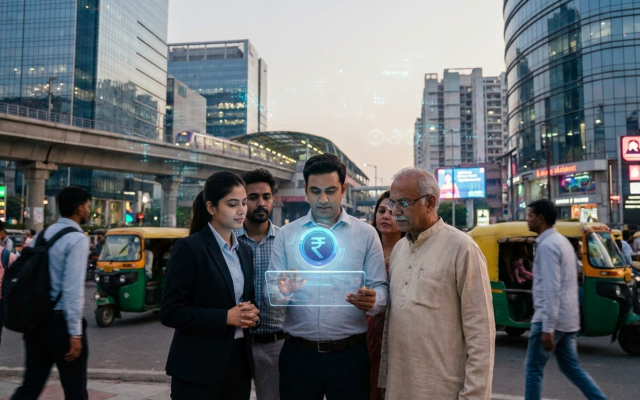
Picture this: you’re trying to send money to your family back home in India. Or perhaps you’re a small business owner in Manchester seeking a smarter way to manage international payments. For years, options felt limited, bogged down by hefty fees and slow processing times. Now, a wave of innovation is crashing onto British shores. It’s coming from an unexpected place: India. These aren’t just small disruptors. They are agile, digitally-native fintech companies. They are fundamentally challenging how traditional UK banks operate. British consumers stand to be the biggest winners.
Key Takeaways:
- Learn how Indian fintech firms are leveraging technology to offer cheaper and faster cross-border payments to the UK.
- Discover new digital banking solutions and investment platforms emerging from India that cater to UK residents.
- Understand the pressure these innovations are putting on established UK banks to adapt and improve their services.
- Explore specific examples of Indian fintech companies making a significant impact in the UK market.
- Gain insights into how British consumers can benefit from increased competition and better financial tools.
The Digital Tide from the East
The City of London, a long-time bastion of global finance, is witnessing a quiet revolution. It’s not the roar of a new stock exchange. It’s the subtle hum of algorithms. It’s the swift click of digital transactions. Indian fintech companies, born from a rapidly digitizing economy and a vast, unbanked population, are now setting their sights on the sophisticated, yet sometimes rigid, UK financial landscape. Think of services like Niyo. It offers a digital banking experience with minimal charges for international transactions. Wise (formerly TransferWise) is another example. It’s a British success story with deep roots in enabling seamless global money transfers. Wise is often seen as a precursor to this new wave. These companies understand user pain points. They’ve often lived them. They aren’t encumbered by legacy systems. They don’t need sprawling branch networks. Instead, they focus on sleek mobile apps. They offer transparent pricing. Lightning-fast execution is key. This agile approach allows them to undercut traditional banks on fees. This applies to remittances, currency exchange, and international money transfers. These are areas where incumbents historically enjoyed substantial margins. The average UK consumer has long accepted these costs. Whether a student sending money home to relatives in Kerala or a professional receiving a salary from a multinational with offices in Mumbai. No longer.
The sheer scale of the Indian diaspora in the UK also plays a crucial role. Millions of people have strong ties to India. This creates a constant flow of money. It supports families, education, and investment. Traditional banks often charge a premium for these services. Sometimes adding as much as 5-7% in hidden fees and poor exchange rates. For a remittance of £1,000, this can mean £50-£70 disappearing. This is a significant sum for many households. Indian fintech innovators see this as a clear market opportunity. They build platforms designed specifically for these cross-border needs. They often partner with Indian banks or payment networks. This ensures seamless integration at both ends. This deep understanding of the user journey is powerful. It spans from a customer in Birmingham to a recipient in Delhi. It’s about more than just moving money. It’s about maintaining connections. It’s about supporting loved ones with minimal friction. This focus on specific, high-demand use cases allows them to build highly effective, user-friendly products. They gain traction quickly. The rapid adoption of smartphones across both countries is a factor. Increasing digital literacy is another. This has created the perfect storm for these innovations to flourish. The UK’s regulatory environment is robust. Yet, it has shown a willingness to embrace new technologies. Initiatives like Open Banking facilitate the integration of innovative fintech solutions.
A New Era of Digital Banking for Britons
Beyond remittances, the impact is being felt in digital banking and investment platforms. Companies like Jupiter, an Indian neobank, are starting to eye the UK market. They offer a seamless digital account opening and management experience. While not directly operating as a bank in the UK yet, their success in India is notable. It’s built on a foundation of zero-fee accounts, instant payments, and personalized financial insights. This offers a glimpse of what’s to come. Imagine opening a bank account in minutes. You could be on your sofa in Leeds. No hidden charges. Instant notifications for every transaction. A budgeting tool that actually makes sense. This is the promise Indian fintechs bring. Traditional banks in the UK often have clunky online interfaces. Their fee structures are complex. They struggle to compete with this level of user-centric design. The average UK consumer today is digitally savvy. They expect their banking experience to be as intuitive as their social media apps. Frustration sets in when a bank requires a branch visit for a simple query. Or when they charge an arm and a leg for an international transfer. This frustration is precisely what fintechs are capitalizing on. They aren’t just offering alternative services. They are offering a fundamentally better user experience.
Consider the rise of digital investment platforms. The UK has its own established players. Yet, Indian fintechs are bringing a fresh perspective. They often focus on micro-investing. They make wealth creation accessible to a broader audience. Platforms allowing users to invest small amounts regularly in diversified portfolios are particularly appealing. Low management fees are a draw. Think of a young professional in Bristol saving for a down payment. They might be intimidated by traditional investment avenues. But a simple, app-based platform could be a game-changer. It could allow them to invest £20 a week in a low-cost ETF. It would offer clear explanations and easy-to-understand performance tracking. This democratisation of finance is a core tenet of the fintech movement. Indian companies are at the forefront. They aren’t afraid to challenge the status quo. They offer products designed for the modern consumer. Not for the financial institutions of the past. The concept of “banking the unbanked” in India has translated into a drive to “empower the financially underserved” in the UK. This mission resonates deeply. It appeals to a population increasingly aware of financial inequality. This focus on accessibility and empowerment is a powerful differentiator.
The Pressure Cooker: Incumbents Under Siege
The established UK banks, from high-street giants like Barclays and Lloyds to more niche players, are not standing still. They see the writing on the wall. The challenge is significant. For decades, their business model has relied on interest margins. They also depend on transaction fees. And often, opaque charges for services like international payments and overdrafts. The agility and digital-first approach of fintechs directly attacks these revenue streams. This is particularly true for those with a global outlook, like many from India. This forces traditional banks into a difficult position. They can try to replicate fintech innovations. This is a slow, expensive process due to legacy systems and bureaucratic structures. Or they can acquire these disruptive companies. This can be costly and sometimes leads to integration issues. Many are opting for a hybrid approach. They invest in their own digital transformation. They also form partnerships with fintechs. This creates a fascinating dynamic.
Take international money transfers as an example. For years, sending £500 to relatives in India via a traditional bank could easily cost £20-£30 in fees and unfavourable exchange rates. Now, services with Indian roots or strong ties to the Indian market can offer similar transfers for a fraction of that cost. They often provide better exchange rates and faster delivery. Remitly and WorldRemit are examples. This direct competition erodes the profitability of traditional banks in this segment. Similarly, the rise of digital wallets and payment gateways is reducing reliance on traditional bank-issued cards and payment networks. Many of these are influenced or developed by Indian fintech innovators. This means banks are potentially losing out on transaction fees, interchange fees, and valuable data. The competition forces them to be more transparent about their fees. It compels them to accelerate their own digital development. It’s a wake-up call. Financial services need to be customer-centric, efficient, and digitally accessible. The pressure isn’t just about price. It’s about the overall experience.
A Tale of Two Cities: Innovation in Birmingham and Beyond
The impact of Indian fintech isn’t confined to abstract digital spaces. It’s felt in communities across the UK. This includes vibrant hubs like Birmingham. Birmingham has a substantial South Asian population. Imagine a family in Sparkhill, Birmingham, needing to send money to support a wedding back in Punjab. Previously, their options might have involved a trip to a local money transfer agent. This meant variable rates and long queues. Now, with a few taps on a smartphone, they can use an app. Xpress Money or Rialto, with strong ties to the Indian subcontinent, are examples. They can send funds quickly and at a significantly lower cost. This isn’t just about saving money. It’s about convenience. It’s about maintaining family connections without logistical hurdles. These services, often developed with a deep understanding of cultural nuances and specific needs of the Indian diaspora, are becoming indispensable tools.
This local impact is mirrored in the growth of small and medium-sized enterprises (SMEs) across the UK. Businesses in Manchester, for instance, that engage in import-export with India are finding fintech solutions. These offer far more efficient and cost-effective ways to manage international trade finance. Instead of dealing with complex paperwork and high fees associated with traditional bank loans or foreign exchange services, they can access streamlined digital platforms. These offer competitive rates and faster processing times. This frees up capital. It reduces administrative burdens. It allows these businesses to focus on growth. The story of a small textile importer in Leeds is becoming increasingly common. They previously struggled with currency fluctuations and high bank charges for payments to Indian suppliers. Now, they use a fintech platform to manage their finances more effectively. These aren’t just abstract financial transactions. They are the lifeblood of local economies. Fintech is making them more accessible and affordable. The ripple effect of these innovations is substantial. It empowers individuals and businesses alike.
Surprising Revelations: What the Incumbents Missed
One of the most surprising aspects of this fintech surge is how much traditional UK banks underestimated the demand for truly digital-first, low-cost financial services. For years, they operated under the assumption that their brand trust, extensive branch networks, and established customer base were insurmountable advantages. They focused on incremental digital improvements. They avoided radical reinvention. This allowed agile startups to identify underserved niches. They built products that directly addressed customer pain points. Many of these startups had a deep understanding of emerging markets like India. For example, many Indian fintechs have excelled at offering simplified investment products. UK banks have complex investment arms. But they haven’t always made it easy for the average person to start investing small sums regularly. This is where platforms offering fractional shares or micro-investment options have gained traction. These are often inspired by successful Indian models.
A counter-intuitive fact is that the UK’s complex financial regulatory landscape has also been a barrier for established banks to innovate rapidly. While it often deters newcomers, it creates its own challenges. Banks are heavily regulated. They have extensive compliance departments. This can slow down the introduction of new products and services. Fintechs, by contrast, often start with a narrower focus. They build out their offerings. They navigate regulations more nimbly. They might start with just remittances. Then they expand into other areas. This “start small, scale fast” approach is common in the Indian startup ecosystem. It has proven highly effective. Furthermore, the focus on building a seamless user experience was a hallmark of many successful Indian apps across various sectors. Traditional banks overlooked this for too long. They assumed functionality was paramount. They didn’t prioritize the intuitive ease of use that younger generations, and indeed many older ones, now demand. The fact that a user can manage their entire financial life from a simple, well-designed app, without ever needing to speak to a human or visit a branch, is a revelation. Many incumbents are still struggling to fully grasp this.
The Future is Frictionless: How You Can Benefit
The rise of Indian fintech companies in the UK isn’t just a story about technological advancement. It’s about empowering you, the consumer. You now have more choices than ever before. If you’re sending money abroad, take a moment to compare rates and fees. Don’t just accept the first option your bank offers. Services like InstaReM offer transparent pricing. They provide competitive exchange rates for remittances to India and other countries. InstaReM has a strong presence in Asia and is expanding globally. You can often save a significant amount of money. This can be reinvested, used for essentials, or simply kept in your pocket. This increased competition forces all providers, including traditional banks, to be more competitive and customer-friendly.
When it comes to your everyday banking, keep an eye on the digital-only banks and payment services emerging. Many of these are inspired by or directly linked to the innovation coming out of India. They offer features like instant notifications, easy budgeting tools, and often no-fee current accounts. For those looking to start investing, look for platforms that make it simple and affordable to begin with small amounts. The goal of fintech is to remove friction. It’s to make financial services accessible to everyone. This means you can potentially build wealth more easily. You can manage your money more effectively. You can save on fees that were once considered unavoidable. The key is to stay informed. Be willing to explore new options. Don’t be afraid to try a new app or service. The future of finance is increasingly about convenience, transparency, and putting the customer first. This wave of innovation is a testament to that.