Key Takeaways
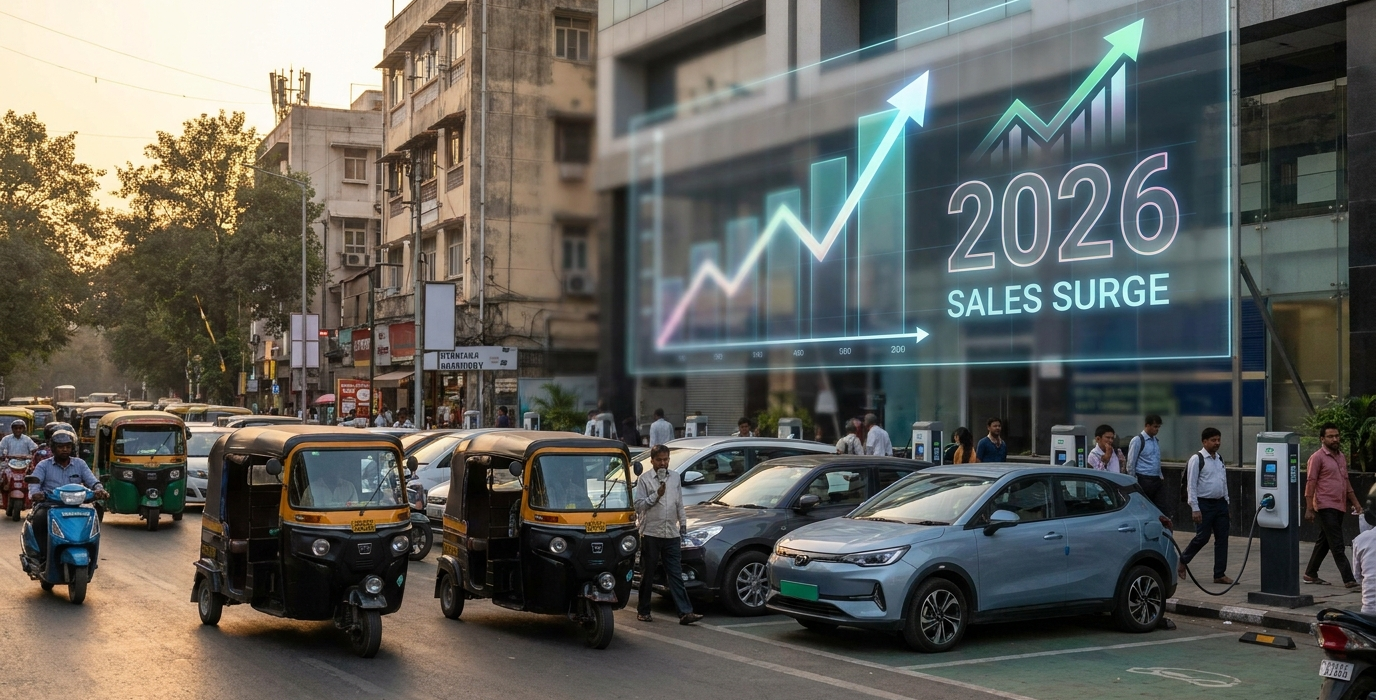
- India’s electric vehicle market has shattered previous records in 2026, driven by a surge in two-wheeler sales and increasing adoption of electric cars.
- Government incentives, falling battery costs, and expanding charging infrastructure are key enablers of this rapid growth.
- The next few years promise further acceleration, with projections indicating EVs could capture a significant market share by 2030.
- Challenges remain, including upfront costs for some segments and the need for robust grid upgrades, but the momentum is undeniable.
2026: A Landmark Year for Indian Electric Mobility
The Indian electric vehicle (EV) market has officially entered a new era, with 2026 marking a historic turning point. We’ve witnessed an unprecedented surge in sales across all segments, from nimble electric scooters zipping through city streets to increasingly popular electric cars gracing our highways. This isn’t just a minor uptick; it’s a fundamental shift in consumer preference and automotive strategy, fuelled by a confluence of factors that have finally made EVs a compelling choice for millions of Indians.
Data emerging from the Society of Manufacturers of Electric Vehicles (SMEV) reveals that cumulative EV sales for the first three quarters of 2026 have already surpassed the entirety of 2025’s figures. This exponential growth is particularly pronounced in the electric two-wheeler (E2W) segment, which continues to dominate the market share. However, the electric passenger vehicle (EPV) segment is also showing remarkable momentum, with new model launches and increasing consumer awareness driving demand. We are no longer talking about a niche market; we are observing the mainstreaming of electric mobility in India.
The impact of this boom is felt far beyond showroom floors. It’s reshaping urban landscapes, influencing energy policy, and creating new job opportunities in manufacturing, charging infrastructure, and battery technology. As we look ahead, the trajectory suggests that 2026 will be remembered as the year the Indian EV revolution truly took flight, setting the stage for an electrified future.
The Two-Wheeler Tidal Wave: Powering the EV Revolution
When we talk about India’s EV success story, the electric two-wheeler (E2W) segment rightfully takes centre stage. It’s the engine driving the current boom, accounting for over 70% of all EV sales in 2026. The reasons are clear and compelling for the average Indian consumer. For daily commutes in congested cities like Delhi, Bengaluru, and Chennai, the affordability, lower running costs, and environmental benefits of electric scooters and motorcycles are increasingly hard to ignore.
Brands like Ather Energy, Ola Electric, and TVS Motor Company have been instrumental in this surge. They’ve not only introduced sleek and feature-rich models but have also focused on building robust charging networks and offering attractive financing options. The perception of range anxiety, once a significant barrier, is slowly diminishing as battery technology improves and charging stations become more accessible, especially in Tier-1 and Tier-2 cities. We’re seeing a generation of young professionals and families opting for electric alternatives for their daily mobility needs, contributing to a significant reduction in fuel expenses and air pollution.
A surprising fact that underscores this trend is the rapid growth in the E2W battery swapping infrastructure. While charging is common, many operators in states like Maharashtra and Gujarat are investing heavily in battery swap stations, allowing riders to exchange a depleted battery for a fully charged one in under a minute. This innovation is a game-changer for fleet operators and individuals who need uninterrupted mobility, mirroring the convenience of refueling a petrol vehicle.
Electric Cars Go Mainstream: Beyond the Early Adopters
While E2Ws are leading the charge, the electric passenger vehicle (EPV) segment is also experiencing an exciting acceleration in 2026. Gone are the days when electric cars were perceived as expensive curiosities for the ultra-rich or niche buyers. A growing number of Indian consumers are now seriously considering EVs for their primary family vehicle, thanks to a wider range of models, improved performance, and more accessible pricing. Manufacturers like Tata Motors, MG Motor India, and Hyundai have been aggressive in launching diverse EV portfolios, catering to different needs and budgets.
The Nexon EV, Tiago EV, and Punch EV from Tata Motors continue to be runaway successes, demonstrating that practical, affordable electric SUVs and hatchbacks can capture the Indian imagination. MG’s ZS EV and Comet EV, along with Hyundai’s Kona Electric and Ioniq 5, offer more premium options that are also finding appreciative buyers. This expanding choice is crucial; it allows consumers to find an electric car that fits their lifestyle, whether it’s for city driving or longer weekend getaways.
Moreover, the expanding charging infrastructure, though still playing catch-up in many regions, is making EV ownership more practical than ever. Public charging stations are becoming more common along national highways and in urban centres, and home charging solutions are increasingly integrated into new residential developments. We are seeing a significant increase in the number of EV-friendly apartment complexes and commercial spaces being developed across India.
The Policy Push: Government Incentives Fueling Growth
It’s impossible to discuss India’s EV boom without acknowledging the pivotal role of government policies and incentives. The commitment from both the central and state governments to promote electric mobility has been unwavering, and 2026 is a testament to their effectiveness. Schemes like the Faster Adoption and Manufacturing of Electric Vehicles (FAME) India Phase II, along with production-linked incentives (PLI) for the automotive sector and battery manufacturing, have significantly de-risked investments for manufacturers and made EVs more attractive to consumers.
These incentives work on multiple fronts. For consumers, subsidies on the purchase of electric vehicles, particularly two-wheelers and three-wheelers, have directly reduced the upfront cost, making them more competitive with their internal combustion engine (ICE) counterparts. For manufacturers, tax benefits and financial support for setting up production facilities have encouraged greater localization and investment in R&D. The emphasis on domestic battery manufacturing through the PLI scheme is also crucial for long-term sustainability and cost reduction.
Furthermore, many state governments have introduced their own attractive policies, such as road tax exemptions, registration fee waivers, and dedicated charging infrastructure development plans. For instance, the Delhi government’s progressive EV policy has been a major driver of EV adoption in the National Capital Region, making it a benchmark for other states to follow. This multi-pronged policy approach is creating a supportive ecosystem that is essential for sustained growth. The continuous evolution and extension of these policies signal a long-term commitment, building consumer confidence and manufacturer investment.
Bridging the Gap: Charging Infrastructure and Battery Technology
The rapid expansion of charging infrastructure and the continuous advancements in battery technology are the two pillars supporting the ongoing EV revolution in India. While the number of electric vehicles on our roads has surged, the corresponding growth in accessible, reliable charging solutions is crucial for maintaining this momentum. We’ve seen a significant increase in the deployment of public charging stations, particularly in major metropolitan areas and along key arterial routes. Companies like Statiq, Magenta, and ChargeZone are at the forefront, establishing a widespread network that is easing range anxiety for EV owners.
Beyond public charging, the focus on home charging solutions and the development of fast-charging technologies are also critical. Many new EV owners are opting for home chargers, which offer the convenience of waking up to a fully charged vehicle every morning. Fast chargers, capable of replenishing a significant portion of a battery’s charge in 20-30 minutes, are becoming increasingly common at retail outlets, highways, and public parking spaces, making longer journeys more feasible. The integration of charging points within residential complexes and corporate offices is also becoming a standard feature.
Simultaneously, battery technology is evolving at a breakneck pace. We are seeing improvements in energy density, leading to longer ranges, and significant reductions in manufacturing costs due to economies of scale and technological breakthroughs. The development of battery swapping solutions for two- and three-wheelers, as mentioned earlier, is a testament to the innovative spirit within the industry. A surprising development in 2026 is the increasing adoption of LFP (Lithium Iron Phosphate) batteries in many entry-level and mid-range EVs. These batteries are not only more cost-effective and safer but also offer a longer lifespan, making them an attractive option for mass-market vehicles, especially in a price-sensitive market like India.
The Road Ahead: Projections and Challenges for 2027 and Beyond
As we stand in late 2026, the future of electric mobility in India looks exceptionally bright, with projections pointing towards continued exponential growth. Analysts predict that by 2030, EVs could constitute upwards of 40-50% of new vehicle sales, a remarkable leap from where we are today. This growth will be sustained by ongoing technological advancements, decreasing battery costs, and supportive government policies that are expected to remain in place. The expansion of charging infrastructure into smaller towns and rural areas will also play a critical role in democratizing EV ownership across the country.
We anticipate further diversification in the EV market. Beyond cars and two-wheelers, the electric three-wheeler (E3W) segment, which is already a significant part of the commercial vehicle landscape, will continue its strong performance, driven by last-mile delivery and ride-hailing services. The electric bus segment is also poised for substantial growth, as public transport authorities across India commit to electrifying their fleets to meet sustainability goals. New segments, such as electric heavy-duty trucks, might also start to see early adoption in niche applications.
However, the path to a fully electrified future is not without its hurdles. The upfront cost of electric cars, while decreasing, still remains a barrier for a significant portion of the Indian population. Grid capacity and stability will need substantial upgrades to handle the increased demand from widespread EV charging. Furthermore, developing a robust domestic supply chain for critical battery components and ensuring the ethical and sustainable sourcing of raw materials are crucial long-term challenges. Addressing these will require continued innovation, strategic partnerships, and sustained policy focus. The journey is exciting, but it demands vigilance and proactive problem-solving.
“The 2026 surge in India’s EV market is not just about numbers; it’s a fundamental shift in consumer behaviour driven by economic sense, environmental consciousness, and technological accessibility. We are witnessing the birth of a cleaner, more sustainable transportation ecosystem.”
Frequently Asked Questions
What are the main government incentives for buying an EV in India in 2026?
The primary incentives include subsidies under the FAME India scheme (though the extent can vary by vehicle type and state), road tax exemptions, and registration fee waivers. Many state governments also offer additional benefits. It’s always best to check the latest state-specific policies for the most up-to-date information.
How is the charging infrastructure developing in India?
Charging infrastructure is expanding rapidly, especially in major cities and along national highways. Numerous public charging stations are being installed by private companies, and home charging solutions are becoming more common. Battery swapping stations are also gaining traction, particularly for electric two- and three-wheelers.
Are electric cars still significantly more expensive than petrol cars in India?
The upfront cost of electric cars can still be higher than comparable petrol models, but the gap is narrowing. Government subsidies, falling battery prices, and lower running costs (electricity vs. petrol) often make EVs more economical over their lifetime. The total cost of ownership is becoming a key factor for buyers.
What is the average range of electric cars available in India in 2026?
In 2026, the average range for electric cars widely available in India typically falls between 300 km and 450 km on a single charge, with some premium models offering even more. This is generally sufficient for most daily commutes and even many inter-city trips, especially with the growing charging network.
What are the most popular electric car brands in India in 2026?
The most popular electric car brands in India in 2026 include Tata Motors, MG Motor India, Hyundai, and BYD. Tata Motors, with its Nexon EV, Tiago EV, and Punch EV, has a dominant market share in the affordable and mid-range segments. MG, Hyundai, and BYD offer a range of options across different price points.